

They tell me thou art rich, my country: gold
In glittering flood has poured into thy chest;
Thy flocks and herds increase, thy barns are pressed
With harvest, and thy stores can hardly hold
Their merchandise; unending trains are rolled
Along thy network rails of East and West;
Thy factories and forges never rest;
Thou art enriched in all things bought and sold!But dost thou prosper? Better news I crave.
O dearest country, is it well with thee
Indeed, and is thy soul in health?
A nobler people, hearts more wisely brave,
And thoughts that lift men up and make them free, —
These are prosperity and vital wealth!Henry Van Dyke (1852-1933) American clergyman and writer
“America’s Prosperity” (1 Oct 1916), The Red Flower: Poems Written in War Time (1917)
(Source)
Quotations by:
Van Dyke, Henry
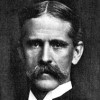
Every mountain is, rightly considered, an invitation to climb.
For men have dulled their eyes with sin,
And dimmed the light of heaven with doubt,
And built their temple-walls to shut thee in,
And framed their iron creeds to shut thee out.Henry Van Dyke (1852-1933) American clergyman and writer
“God of the Open Air”, st. 3 (1904)
If Might made Right, life were a wild-beasts’ cage;
If Right made Might, this were the golden age;
But now, until we win the long campaign,
Right must gain Might to conquer and to reign.Henry Van Dyke (1852-1933) American clergyman and writer
“Might and Right” (1 Jul 1915)
But often faltering feet
Come surest to the goal;
And they who walk in darkness meet
The sunrise of the soul.Henry Van Dyke (1852-1933) American clergyman and writer
“Reliance”, st. 2
There is a loftier ambition than merely to stand high in the world. It is to stoop down and lift mankind a little higher. There is a nobler character than that which is merely incorruptible. It is the character which acts as an antidote and preventive of corruption.
Henry Van Dyke (1852-1933) American clergyman and writer
“Salt,” Baccalaureate Sermon, Harvard University (19 Jun 1898)
(Source)
To be glad of life because it gives you to chance to love and to work and to play and to look up at the stars — to be satisfied with your possessions but not content with yourself until you have made the best of them — to despise nothing in the world except falsehood and meanness, and to fear nothing except cowardice — to be governed by you admirations rather than by your disgusts — to covet nothing that is your neighbors except his kindness of heart and gentleness of manners — to think seldom of your enemies, often of your friends, and every day of Christ; to spend as much time as you can in God’s out-of doors — these are the little guideposts on the foot-path to peace.
Henry Van Dyke (1852-1933) American clergyman and writer
“The Foot-path to Peace,” Tacoma Times (1 Jan 1904)
(Source)
Often shortened to: "Be glad for life because it gives you the chance to love and to work and to look up at the stars."
He that planteth a tree is the servant of God,
He provideth a kindness for many generations,
And faces that he hath not seen shall bless him.Henry Van Dyke (1852-1933) American clergyman and writer
“The Friendly Trees”
Peace without Justice is a low estate,–
A coward cringing to an iron Fate!
But Peace through Justice is the great ideal,–
We’ll pay the price of war to make it real.Henry Van Dyke (1852-1933) American clergyman and writer
“The Price of Peace” (28 Dec 1916)
Self is the only prison that can ever bind the soul.
Henry Van Dyke (1852-1933) American clergyman and writer
“The Prison and the Angel”
Modest egoism is the salt of conversation; you do not want too much of it, but if it is altogether omitted, everything tastes flat.
Henry Van Dyke (1852-1933) American clergyman and writer
“The Ristigouche from a Horse-Yacht,” Little Rivers (1895)
(Source)
Use what talents you possess; the woods would be very silent if no birds sang except those that sang best.
Henry Van Dyke (1852-1933) American clergyman and writer
(Misattributed)
Also frequently misattributed to Thoreau. First found in The Ladies Repository: A Monthly Periodical, Devoted to Literature, Arts and Religion (Sep 1874), without attribution (see here).
What we do belongs to what we are; and what we are is what becomes of us.
Romantic love interests almost everybody, because almost everybody knows something about it, or would like to know.
Henry Van Dyke (1852-1933) American clergyman and writer
The Ruling Passion, Preface (1901)
(Source)
Who seeks for heaven alone to save his soul
May keep the path, but will not reach the goal;
While he who walks in love may wander far,
Yet God will bring him where the blessed are.