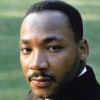
In the end, we will remember not the words of our enemies, but the silence of our friends.
Martin Luther King, Jr. (1929-1968) American clergyman, civil rights leader, social activist, preacher
“The Trumpet of Conscience,” Steeler Lecture (Nov 1967)

I’ve found no verifiable evidence that Martin Luther King, Jr. ever said or wrote that quotation. There wasn’t a verifiable “Steeler lecture,” and there isn’t any instance of that quotation any of his published writings or speeches, including The Trumpet of Conscience or the 1967 “Massey lectures” broadcast and published by the CBC (Canadian Broadcasting Company).
The closest actual quotation to that I could find was by Elie Wiesel, in his forward to “The Courage to Care: Rescuers of Jews During the Holocaust” (1986): “Let us remember: What hurts the victim most is not the cruelty of the oppressor but the silence of the bystander.”
Interesting. Confirmed it doesn’t show up in the book of King’s Massey Lectures, The Trumpet of Conscience (not dispositive, as King often re-used phrases for sermons, lectures, essays, books). I can find persuasive reference to King’s “Steeler Lecture,” though not its content. There’s also reference to it here as “one of five lectures that Dr. King delivered in November 1967 at the Dexter Avenue Baptist Church in Montgomery, Alabama” — which makes it sound like the Massey lectures, which were supposedly reprinted in Trumpet of Conscience (originally published before his assassination as Conscience for Change, which, as noted, does not have this quote.
To provide the best experiences, we use technologies like cookies to store and/or access device information. Consenting to these technologies will allow us to process data such as browsing behavior or unique IDs on this site. Not consenting or withdrawing consent, may adversely affect certain features and functions.
Functional
Always active
The technical storage or access is strictly necessary for the legitimate purpose of enabling the use of a specific service explicitly requested by the subscriber or user, or for the sole purpose of carrying out the transmission of a communication over an electronic communications network.
Preferences
The technical storage or access is necessary for the legitimate purpose of storing preferences that are not requested by the subscriber or user.
Statistics
The technical storage or access that is used exclusively for statistical purposes.The technical storage or access that is used exclusively for anonymous statistical purposes. Without a subpoena, voluntary compliance on the part of your Internet Service Provider, or additional records from a third party, information stored or retrieved for this purpose alone cannot usually be used to identify you.
Marketing
The technical storage or access is required to create user profiles to send advertising, or to track the user on a website or across several websites for similar marketing purposes.
To provide the best experiences, we use technologies like cookies to store and/or access device information. Consenting to these technologies will allow us to process data such as browsing behavior or unique IDs on this site. Not consenting or withdrawing consent, may adversely affect certain features and functions.
Functional
Always active
The technical storage or access is strictly necessary for the legitimate purpose of enabling the use of a specific service explicitly requested by the subscriber or user, or for the sole purpose of carrying out the transmission of a communication over an electronic communications network.
Preferences
The technical storage or access is necessary for the legitimate purpose of storing preferences that are not requested by the subscriber or user.
Statistics
The technical storage or access that is used exclusively for statistical purposes.The technical storage or access that is used exclusively for anonymous statistical purposes. Without a subpoena, voluntary compliance on the part of your Internet Service Provider, or additional records from a third party, information stored or retrieved for this purpose alone cannot usually be used to identify you.
Marketing
The technical storage or access is required to create user profiles to send advertising, or to track the user on a website or across several websites for similar marketing purposes.
Pingback: Words of Inspiration for Black History Month | RumbergerKirk
I’ve found no verifiable evidence that Martin Luther King, Jr. ever said or wrote that quotation. There wasn’t a verifiable “Steeler lecture,” and there isn’t any instance of that quotation any of his published writings or speeches, including The Trumpet of Conscience or the 1967 “Massey lectures” broadcast and published by the CBC (Canadian Broadcasting Company).
The closest actual quotation to that I could find was by Elie Wiesel, in his forward to “The Courage to Care: Rescuers of Jews During the Holocaust” (1986): “Let us remember: What hurts the victim most is not the cruelty of the oppressor but the silence of the bystander.”
Interesting. Confirmed it doesn’t show up in the book of King’s Massey Lectures, The Trumpet of Conscience (not dispositive, as King often re-used phrases for sermons, lectures, essays, books). I can find persuasive reference to King’s “Steeler Lecture,” though not its content. There’s also reference to it here as “one of five lectures that Dr. King delivered in November 1967 at the Dexter Avenue Baptist Church in Montgomery, Alabama” — which makes it sound like the Massey lectures, which were supposedly reprinted in Trumpet of Conscience (originally published before his assassination as Conscience for Change, which, as noted, does not have this quote.
Weird.
It’s thematically in keeping with a number of better-documented King quotes, e.g., https://wist.info/king-martin-luther/2295/ , https://wist.info/king-martin-luther/5597/ , https://wist.info/king-martin-luther/38442/ … so it’s possible he used this phrase, just not where it’s documented to. Or that he did not, and someone made it up from a gestalt of his other expressions, and it was assigned a source that nobody bothered to verify against.
Again, very interesting. Thanks.