We should stop going around babbling about how we’re the greatest democracy on earth, when we’re not even a democracy. We are a sort of militarised republic. The founding fathers hated two things, one was monarchy and the other was democracy, they gave us a constitution that saw to it we will have neither. I don’t know how wise they were.
Gore Vidal (1925–2012) American novelist, dramatist, critic
“Gore Vidal and the Mind of the Terrorist”, interview by Ramona Koval, Australian Broadcasting Corporation (Nov 2001)
(Source)
Quotations about:
democracy
Note not all quotations have been tagged, so Search may find additional quotes on this topic.
The word “security” is a broad, vague generality whose contours should not be invoked to abrogate the fundamental law embodied in the First Amendment. The guarding of military and diplomatic secrets at the expense of informed representative government provides no real security for our Republic.
Hugo Black (1886–1971) American politician and jurist, US Supreme Court Justice (1937–71)
New York Times Co. v. United States, 403 U.S. 713, 719 (1971) [concurring]
(Source)
“Liberal” comes from the Latin liberalis, which means pertaining to a free man. In politics, to be liberal is to want to extend democracy through change and reform. One can see why the word had to be erased from our political lexicon.
Gore Vidal (1925–2012) American novelist, dramatist, critic
“America First? America Last? America at Last?,” Lowell Lecture, Harvard University (20 Apr 1992)
In a virtuous community men of sense and principle will always be placed at the head of affairs. In a declining state of public morals men will be so blinded to their true interests as to put the incapable and unworthy at the helm. It is therefore vain to complain of the follies or crimes of a government. We must lay the hands on our own hearts and say, Here is the sin that makes the public sin.
Ralph Waldo Emerson (1803–1882) American essayist, lecturer, poet
“The Individual and the State,” sermon, Second Church of Boston (1830-04-08)
A Mob’s a Monster; Heads enough, but no Brains.
Benjamin Franklin (1706–1790) American statesman, scientist, philosopher, aphorist
Poor Richard (1747 ed.)
(Source)
Democracy is the theory that intelligence is dangerous. It assumes that no idea can be safe until those who can’t understand it have approved it. It defines truth as anything which at least fifty-one men in every hundred believe. Thus it is firmly committed to the doctrines that one bath a week is enough, that “I seen” is the past tense of “I see,” and that Friday is an unlucky day.
H. L. Mencken (1880–1956) American writer and journalist [Henry Lewis Mencken]
“Pertinent and Impertinent,” Smart Set (Jun 1913) [as Owen Hatteras]
(Source)
No government is perfect. One of the chief virtues of a democracy, however, is that its defects are always visible and under democratic processes can be pointed out and corrected.
Harry S Truman (1884–1972) US President (1945–1953)
Speech, Joint Session of the US Congress (12 Mar 1947)
(Source)
Must a government, of necessity, be too strong for the liberties of its own people, or too weak to maintain its own existence?
Abraham Lincoln (1809–1865) American lawyer, politician, US President (1861–65)
Message (1861-07-04) to Congress, Special Message, Washington, D. C.
(Source)
Lincoln's Special Message to Congress was to discuss the Civil War that had broken out, its origins, and how it represented this fundamental question about representative government.
Lincoln repeated this phrasing at the beginning of his speech (1864-11-10) responding to serenaders celebrating his re-election.Franklin Roosevelt quoted Lincoln during a pre-WW2 Jackson Day radio address (1941-03-29).
The hand of the people has given the mortal blow to a conspiracy, which, in other countries would have called for an appeal to armies; and has proved that government to be the strongest of which every man feels himself a part.
Thomas Jefferson (1743–1826) American political philosopher, polymath, statesman, US President (1801–09)
Letter (1807-02-02) to H. D. Tiffin
(Source)
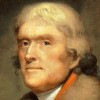
Virtue and Simplicity of Manners, are indispensably necessary in a Republic, among all orders and Degrees of Men. But there is So much Rascallity, so much Venality and Corruption, so much Avarice and Ambition, such a Rage for Profit and Commerce among all Ranks and Degrees of Men even in America, that I sometimes doubt whether there is public Virtue enough to support a Republic.
John Adams (1735–1826) American lawyer, Founding Father, statesman, US President (1797–1801)
Letter (1776-01-08) to Mercy Otis Warren
(Source)
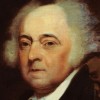
Unjust laws exist: shall we be content to obey them, or shall we endeavor to amend them, and obey them until we have succeeded, or shall we transgress them at once?
Henry David Thoreau (1817–1862) American philosopher and writer
Essay (1849-05), “Resistance to Civil Government [On the Duty of Civil Disobedience],” Æsthetic Papers, No. 1, Article 10
(Source)
Based on an 1848 lecture at the Concord Lyceum.
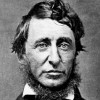
You measure democracy by the freedom it gives its dissidents, not the freedom it gives its assimilated conformists.
Abbie Hoffman (1936–1989) American political activist
In Benny Avni, “An Interview with Abbie Hoffman” (1986), Tikkun (Jul-Aug 1989)
(Source)
The first rule of democracy is to distrust all leaders who begin to believe their own publicity.
Arthur M. Schlesinger, Jr. (1917–2007) American historian, author, social critic
“On Heroic Leadership,” Encounter (Dec 1960)
Whatever barriers we put up are gone. Even if it’s just momentary. We are judging people by not the color of their skin, but the content of their character. You know, all this talk about “These guys are criminal masterminds. They’ve gotten together and their extraordinary guile and their wit and their skill …” It’s, it’s — it’s a lie. Any fool can blow something up. Any fool can destroy. But to see these guys, these firefighters and these policemen and people from all over the country, literally with buckets, rebuilding … that’s extraordinary. And that’s why we have already won … they can’t … it’s light. It’s democracy. They can’t shut that down.
Jon Stewart (b. 1962) American satirist, comedian, and television host. [b. Jonathan Stuart Leibowitz]
The Daily Show (2001-09-20)
(Source)
Monologue on "September 11, 2001."

Democracy stands between two tyrannies: the one which it has overthrown and the one into which it will develop.
Paul Eldridge (1888–1982) American educator, novelist, poet
Maxims for a Modern Man, #642 (1965)
(Source)

It is the besetting vice of democracies to substitute public opinion for law. This is the usual form in which masses of men exhibit their tyranny.
James Fenimore Cooper (1789–1851) American novelist
“On the Disadvantages of Democracy,” The American Democrat (1838)
Self-criticism is the secret weapon of democracy.
Adlai Stevenson II (1900–1965) American politician, diplomat, statesman
Speech (1952-07-21), Welcoming Address, Democratic National Convention, International Amphitheatre, Chicago
(Source)
Stevenson, who was not a declared candidate, gave the convention welcoming address as Governor of Illinois. He was later nominated for President.
Democracy does not give the people the most skillful government, but it produces what the ablest governments are frequently unable to create: namely, an all-pervading and restless activity, a superabundant force, and an energy which is inseparable from it and which may, however unfavorable circumstances may be, produce wonders.
Alexis de Tocqueville (1805–1859) French writer, diplomat, politician
Democracy in America, 1.14 (1835) [tr. Reeve and Bowen (1862)]
I know no safe depository of the ultimate powers of the society, but the people themselves: and if we think them not enlightened enough to exercise their controul with a wholsome discretion, the remedy is, not to take it from them, but to inform their discretion by education. this is the true corrective of abuses of constitutional power.
Thomas Jefferson (1743–1826) American political philosopher, polymath, statesman, US President (1801–09)
Letter (1820-09-28) to William Charles Jarvis
(Source)
A popular government without popular information, or the means of acquiring it, is but a prologue to a farce or a tragedy; or, perhaps, both. Knowledge will forever govern ignorance. And a people who mean to be their own governors must arm themselves with the power which knowledge gives.
James Madison (1751–1836) American statesman, political theorist, US President (1809–17)
Letter to W. T. Barry (4 Aug 1822)
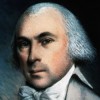
The sound of tireless voices is the price we pay for the right to hear the music of our own opinions. But there is also, it seems to me, a moment at which democracy must prove its capacity to act. Every man has a right to be heard; but no man has the right to strangle democracy with a single set of vocal chords.
Adlai Stevenson II (1900–1965) American politician, diplomat, statesman
Speech (1952-08-28), “Faith in Liberalism,” State Committee of the Liberal Party, New York City
(Source)
The multitude which is not brought to act as a unity is confusion. That unity which has not its origin in the multitude is tyranny.
Blaise Pascal (1623–1662) French scientist and philosopher
Pensées, # 77 (1670)
(Source)Other translations: "The multitude which is not reduced to the unity is confusion; the unity which does not depend on the multitude is tyranny."
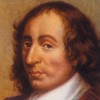
We here highly resolve that these dead shall not have died in vain — that this nation, under God, shall have a new birth of freedom — and that government of the people, by the people, for the people, shall not vanish from this earth.
Abraham Lincoln (1809–1865) American lawyer, politician, US President (1861–65)
Speech (1863-11-19), “Dedication of the National Cemetery at Gettysburg [Gettysburg Address],” Pennsylvania
(Source)
Closing words of the speech.
The basis of our political systems is the right of the people to make and to alter their Constitutions of Government. But the Constitution which at any time exists, ’till changed by an explicit and authentic act of the whole People, is sacredly obligatory upon all. The very idea of the power and the right of the People to establish Government presupposes the duty of every Individual to obey the established Government.
George Washington (1732–1799) American military leader, Founding Father, US President (1789–1797)
Essay (1796-09-17), “Farewell Address,” Claypoole’s American Daily Advertiser, Philadelphia (1796-09-19)
(Source)
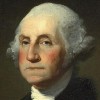
The day I’m afraid to sit down with people I do not know because five years from now someone will say five of those people were Communists and therefore you are a Communist — that will be a bad day.
I want to be able to sit down with anyone who may have a new idea and not be afraid of contamination by association. In a democracy you must be able to meet with people and argue your point of view — people whom you have not screened beforehand. That must be part of the freedom of people in the United States.Eleanor Roosevelt (1884–1962) First Lady of the US (1933–1945), politician, diplomat, activist
Speech (1950-04-02), Americans for Democratic Action
(Source)
On the rise of McCarthyism in the US.

We do not move forward by curtailing people’s liberty because we are afraid of what they may do or say. We move forward by assuring to all people protection in the basic liberties under a democratic form of government, and then making sure that our government serves the real needs of the people.
Eleanor Roosevelt (1884–1962) First Lady of the US (1933–1945), politician, diplomat, activist
Essay (1940-02-10), “Fear is the Enemy,” The Nation, Vol. 150, No. 6
(Source)
We must know what we think and speak out, even at the risk of unpopularity. In the final analysis, a democratic government represents the sum total of the courage and the integrity of its individuals. It cannot be better than they are.
Eleanor Roosevelt (1884–1962) First Lady of the US (1933–1945), politician, diplomat, activist
Tomorrow Is Now (1963)
To give the victory to the right, not bloody bullets, but peaceful ballots only, are necessary.
If we are to keep our democracy, there must be one commandment: Thou shalt not ration justice.
Learned Hand (1872–1961) American jurist
Speech, Legal Aid Society of New York (1951-02-16)
(Source)
On ensuring that accused persons did not lack for counsel needed for a fair trial.
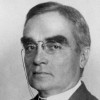
But I go on this great republican principle, that the people will have virtue and intelligence to select men of virtue and wisdom. Is there no virtue among us? If there be not, we are in a wicked situation. No theoretical checks, no form of government, can render us secure. To suppose that any for of government will secure liberty or happiness without any virtue in the people, is a chimerical idea. If there be sufficient virtue and intelligence in the community, it will be exercised in the selection of these men; so that we do not depend on their virtue, or put confidence in our rulers, but in the people who are to choose them.
James Madison (1751–1836) American statesman, political theorist, US President (1809–17)
Speech at the Virginia Convention (20 Jun 1788)
(Source)
If I were to attempt to put my political philosophy tonight into a single phrase, it would be this: Trust the people. Trust their good sense, their decency, their fortitude, their faith. Trust them with the facts. Trust them with the great decisions. And fix as our guiding star the passion to create a society where people can fulfill their own best selves — where no American is held down by race or color, by worldly condition or social status, from gaining what his character earns him as an American citizen, as a human being and as a child of God.
Adlai Stevenson II (1900–1965) American politician, diplomat, statesman
Speech (1956-09-13), “Democratic and Republican Administrations,” Pennsylvania Farm Show, Harrisburg
(Source)
Nobody will ever deprive the American people of the right to vote except the American people themselves — and the only way they could do this is by not voting.
Franklin Delano Roosevelt (1882–1945) American lawyer, politician, statesman, US President (1933–1945)
Speech (1944-10-05), Radio Broadcast
(Source)
When people put their ballots in the boxes, they are, by that act, inoculated against the feeling that the government is not theirs. They then accept, in some measure, that its errors are their errors, its aberrations their aberrations, that any revolt will be against them. It’s a remarkably shrewd and rather conservative arrangement when one thinks of it.
John Kenneth Galbraith (1908–2006) Canadian-American economist, diplomat, author
The Age of Uncertainty, ch. 12 (1977)
(Source)
Public confidence in the integrity of the Government is indispensable to faith in democracy; and when we lose faith in the system, we have lost faith in everything we fight and stand for.
Adlai Stevenson II (1900–1965) American politician, diplomat, statesman
Speech (1952-09-11), “On Political Morality,” Town Hall Luncheon, Biltmore Hotel, Los Angeles
(Source)
Yes, Gentlemen; if I am asked why we are free with servitude all around us, why our Habeas Corpus Act has not been suspended, why our press is still subject to no censor, why we still have the liberty of association, why our representative institutions still abide in all their strength, I answer, It is because in the year of revolutions we stood firmly by our government in its peril; and, if I am asked why we stood by our government in its peril, when men all around us were engaged in pulling governments down, I answer, It was because we knew that though our government was not a perfect government, it was a good government, that its faults admitted of peaceable and legal remedies, that it had never inflexibly opposed just demands, that we had obtained concessions of inestimable value, not by beating the drum, not by ringing the tocsin, not by tearing up the pavement, not by running to the gunsmiths’ shops to search for arms, but by the mere force of reason and public opinion.
Thomas Babington Macaulay (1800–1859) English writer and politician
Speech on re-election to Parliament, Edinburgh (2 Nov 1852)
(Source)
On the various revolutions and counter-revolutions in Europe in 1848.
By the frame of the Government under which we live this same people have wisely given their public servants but little power for mischief, and have with equal wisdom provided for the return of that little to their own hands at very short intervals. While the people retain their virtue and vigilance no Administration by any extreme of wickedness or folly can very seriously injure the Government in the short space of four years.
Abraham Lincoln (1809–1865) American lawyer, politician, US President (1861–65)
Speech (1861-03-04), Inaugural Address, Washington, D. C.
(Source)
Democracy substitutes election by the incompetent many for appointment by the corrupt few.
George Bernard Shaw (1856–1950) Irish playwright and critic
Man and Superman, “Maxims for Revolutionists,” “Democracy” (1903)
(Source)
Democracy means, not “I am as good as you are,” but, “You are as good as I am.”
Reinhold Niebuhr (1892–1971) American theologian and clergyman
The Children of Light and the Children of Darkness, foreward (1944)
This quote was difficult to track down. It's quoted everywhere -- but often attributed to Theodore Parker (as I previously did) or James Russell Lowell. I couldn't find, however, any specific citation from either gentleman.
Rev. John Murray Atwood, in his essay "Universalism and Educational Ideas" in 1770-1920 - From Good Luck to Gloucester, ed. Rev. Frederick A Bisbee (1920), writes:But he who not only feels that he himself has unknown, divine possibilities, but so has his fellow, that democracy means, not I am as good as you are, but you are as good as I am, who seeks as the expression of his own true nature the larger liberty and life for others, is the kind of man essential to construct a new world.
The book is a history of Universalism, which may tie into Theodore Parker's Unitarian career. At any rate, the wording does seem to precede Niebuhr, but lacking a solid citation, I'll leave it with him.
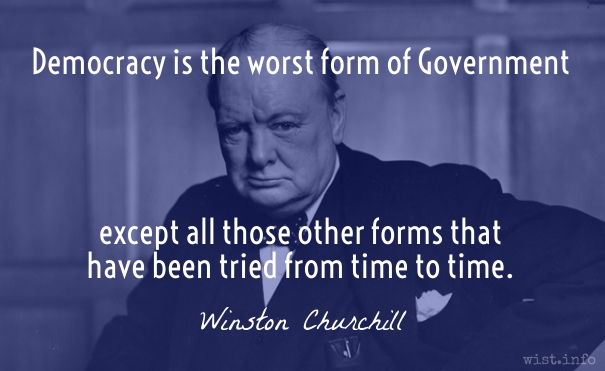
Many forms of Government have been tried, and will be tried in this world of sin and woe. No one pretends that democracy is perfect or all-wise. Indeed, it has been said that democracy is the worst form of Government except all those other forms that have been tried from time to time.
The difference between a Democracy and a Dictatorship is that in a Democracy you vote first and take orders later; in a Dictatorship you don’t have to waste your time voting.
Charles Bukowski (1920–1994) German-American author, poet
Erections, Ejaculations, Exhibitions and Tales of Ordinary Madness (1972)
(Source)
I would give the broad sweep of the First Amendment full support. I have the same confidence in the ability of our people to reject noxious literature as I have in their capacity to sort out the true from the false in theology, economics, or any other field.
William O. Douglas (1898–1980) American jurist, US Supreme Court justice (1939–75)
Roth v. United States, 354 U.S. 476, 514, dissenting opinion (1957)
(Source)
The idea that any kind of free society can be constructed in which people will never be offended or insulted is absurd. So too is the notion that people should have the right to call on the law to defend them against being offended or insulted. A fundamental decision needs to be made: do we want to live in a free society or not? Democracy is not a tea party where people sit around making polite conversation. In democracies people get extremely upset with each other. They argue vehemently against each other’s positions. (But they don’t shoot.)
Salman Rushdie (b. 1947) Indian novelist
“Do we have to fight the battle for the Enlightenment all over again?” The Independent (22 Jan 2005)
(Source)
As I would not be a slave, so I would not be a master. This expresses my idea of democracy. Whatever differs from this, to the extent of the difference, is no democracy.
Abraham Lincoln (1809–1865) American lawyer, politician, US President (1861–65)
Fragment (1858-08-01?), “Definition of Democracy”
(Source)
The title of this writing fragment, in Lincoln's hand, is notional. It is sometimes referred to as "On Slavery and Democracy." The date is also conjectural, and the manuscript is not connected with any known speech or occasion. The scrap of paper this solitary paragraph is on was given to Mary Todd Lincoln by her friend, Myra Bradwell on Mary's release from the asylum. It was unsigned, but a signature clipped from another document was pasted below the text.
A majority held in restraint by constitutional checks and limitations, and always changing easily with deliberate changes of popular opinions and sentiments, is the only true sovereign of a free people. Whoever rejects it does of necessity fly to anarchy or to despotism.
Abraham Lincoln (1809–1865) American lawyer, politician, US President (1861–65)
Speech (1861-03-04), Inaugural Address, Washington, D. C.
(Source)
The liberty of a democracy is not safe if the people tolerate the growth of private power to a point where it becomes stronger than their democratic state itself. That, in its essence, is Fascism — ownership of Government by an individual, by a group, or by any other controlling private power.
Franklin Delano Roosevelt (1882–1945) American lawyer, politician, statesman, US President (1933–1945)
Message (1938-04-29) to Congress, On Curbing Monopolies
(Source)
What is wanted is men, not of policy, but of probity, — who recognize a higher law than the Constitution, or the decision of the majority. The fate of the country does not depend on how you vote at the polls, — the worst man is as strong as the best at that game; it does not depend on what kind of paper you drop into the ballot-box once a year, but on what kind of man you drop from your chamber into the street every morning.
Henry David Thoreau (1817–1862) American philosopher and writer
Speech (1854-07-04), “Slavery in Massachusetts,” Anti-Slavery Celebration, Framingham, Massachusetts
(Source)
After the conviction in Boston of Anthony Burns, under the Fugitive Slave Act of 1850. This led to large protests and an abolitionist riot at the Boston Courthouse, requiring Federal troops and state militia to ensure his transport to a ship sailing to Virginia.
I shall ask no more than that you agree with Dean Inge that even though counting heads is not an ideal way to govern, at least it beats breaking them.
Learned Hand (1872–1961) American jurist
“Democracy: Its Presumptions and Realities,” speech, Federal Bar Association, Washington, DC (1932-03-08)
(Source)
First printed in the Federal Bar Association Journal (Mar 1932).
Under democracy one party always devotes its chief energies to trying to prove that the other party is unfit to rule — and both commonly succeed, and are right.
H. L. Mencken (1880–1956) American writer and journalist [Henry Lewis Mencken]
Minority Report (1956)
ARTHUR: I am your king.
WOMAN: Well, I didn’t vote for you.
ARTHUR: You don’t vote for kings.
WOMAN: Well how’d you become king then?
ARTHUR: (angelic music plays) The Lady of the Lake, her arm clad in the purest shimmering samite, held aloft Excalibur from the bosom of the water, signifying by divine providence that I, Arthur, was to carry Excalibur. (angelic music stops) That is why I am your king.
DENNIS: (interrupting) Listen, strange women lying in ponds distributing swords is no basis for a system of government. Supreme executive power derives from a mandate from the masses, not from some farcical aquatic ceremony.
ARTHUR: Be quiet!
DENNIS: You can’t expect to wield supreme executive power just ’cause some watery tart threw a sword at you!
ARTHUR: Shut up!
DENNIS: I mean, if I went around saying I was an emperor just because some moistened bint had lobbed a scimitar at me, they’d put me away!
ARTHUR: (grabbing him by the collar) Shut up! Will you shut up!
Monty Python (b. 1969) British comedy troupe [Graham Chapman, John Cleese, Terry Gilliam, Eric Idle, Terry Jones, Michael Palin]
Monty Python and the Holy Grail, sc. 3 (1975)
(Source)
(Source (Video); dialog verified)
For it is evident that no democracy can long survive which does not accept as fundamental to its very existence the recognition of the rights of its minorities.
Franklin Delano Roosevelt (1882–1945) American lawyer, politician, statesman, US President (1933–1945)
Letter (1938-06-25) to Walter White, “Greeting to the NAACP,” NAACP Annual Conference, Columbus, Ohio
(Source)
REFERENDUM, n. A law for submission of proposed legislation to a popular vote to learn the nonsensus of public opinion.
Ambrose Bierce (1842–1914?) American writer and journalist
“Referendum,” The Devil’s Dictionary (1911)
(Source)
Originally published in The Devil's Dictionary [A-Z] as Vol. 7 of his Collected Works.

Ours is a practical people, to whom ideals furnish the theory of political action, upon which they want not only firm assurance, but also effective practice. They want programmes, but they want action to flow from them. They want constructive common sense. They want the development of the common will, not the views of a single individual. They are beginning to realize that words without action are the assassins of idealism.
Herbert Hoover (1874–1964) American engineer, bureaucrat, US President (1929–33)
In the New York Tribune (29 Apr 1920)
On the 1920 Presidential campaign.
Democracy is a process by which the people are free to choose the man who will get the blame.
Lawrence J. Peter (1919–1990) American educator, management theorist
(Attributed)
Democracy is the theory that the common people know what they want, and deserve to get it good and hard.
H. L. Mencken (1880–1956) American writer and journalist [Henry Lewis Mencken]
A Little Book in C Major, ch. 2, § 1 (1916)
(Source)
Democracy is the recurrent suspicion that more than half of the people are right more than half of the time.
E. B. White (1899–1985) American author, critic, humorist [Elwyn Brooks White]
“Notes and Comments,” New Yorker (3 Jul 1943)
(Source)
What I do say is that no man is good enough to govern another man without that other’s consent. I say this is the leading principle, the sheet-anchor of American republicanism. […] According to our ancient faith, the just powers of governments are derived from the consent of the governed. Now the relation of master and slave is pro tanto a total violation of this principle. The master not only governs the slave without his consent, but he governs him by a set of rules altogether different from those which he prescribes for himself. Allow all the governed an equal voice in the government, and that, and that only, is self-government.
Abraham Lincoln (1809–1865) American lawyer, politician, US President (1861–65)
Speech (1854-10-16), “In Reply to Senator Douglas,” Peoria, Illinois
(Source)
Speaking on the 1854 Kansas-Nebraska Act, which repealed the Missouri Compromise and allowed as "self-government" for residents of those two territories to decide locally whether to allow slavery there.
In the ellipses, Lincoln quotes the beginning of the Declaration of Independence, through "deriving their just powers from the consent of the governed."
You know in America any boy may become President and I suppose it’s just one of the risks he takes!
Adlai Stevenson II (1900–1965) American politician, diplomat, statesman
Speech (1952-09-26), “Economy in Government,” Indiana State Fair, Indianapolis
(Source)
Sometimes quoted as: "In America, anybody can be president. That's one of the risks you take."
Many politicians are in the habit of laying down as self-evident the proposition that no people ought to be free till they are fit to use their freedom. This maxim is worthy of the fool in the old story who resolved not to go into the water till he had learned to swim! If men are to wait for liberty till they become wise and good in slavery, they may indeed wait forever.
Thomas Babington Macaulay (1800–1859) English writer and politician
“John Milton,” Edinburgh Review (Aug 1825)
(Source)
Democracy is a device that ensures we shall be governed no better than we deserve.
George Bernard Shaw (1856–1950) Irish playwright and critic
(Attributed)
Sometimes cited with the Americanized "insures." Also given as "Democracy is a system ensuring that the people are governed no better than they deserve." Frequently quoted, but never sourced.
A kingdom is not brought nearer to ruin by the tyranny of the sovereign than is a republic by indifference to the common welfare.
[La tyrannie d’un prince ne met pas un État plus près de sa ruine que l’indifférence pour le bien commun n’y met une république.]
Charles-Lewis de Secondat, Baron de Montesquieu (1689–1755) French political philosopher
Considerations on the Causes of the Greatness of the Romans and their Decline [Considérations sur les causes de la grandeur des Romains et de leur décadence], ch. 4 (1734, 1748 ed.) [tr. Baker (1882)]
(Source)
(Source (French)). Other translations:A monarchy is not dragged nearer to the brink of ruin by the tyranny of a prince, than a commonwealth by a lukewarmness and indifference for the general good.
[tr. B--- (1734)]The tyranny of a prince in an oligarchy is not so dangerous to the public welfare as the apathy of a citizen in a democracy.
[E.g. (1926)]The tyranny of a prince does no more to ruin a state than does indifference to the common good to ruin a republic.
[tr. Lowenthal (1965)]