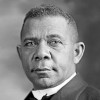
In any country, regardless of what its laws say, wherever people act upon the idea that the disadvantage of one man is the good of another, there slavery exists. Wherever, in any country the whole people feel that the happiness of all is dependent upon the happiness of the weakest, there freedom exists.
Booker T. Washington (1856-1915) American educator, writer
Speech, Republican Club, New York City (12 Feb 1909)
(Source)
Quotations about:
disadvantage
Note not all quotations have been tagged, so Search may find additional quotes on this topic.
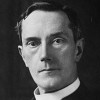
Let none of us delude himself by supposing that honesty is always the best policy. It is not.
William Ralph Inge (1860-1954) English prelate [Dean Inge]
Speculum Animae, Part 2, “Sunday Morning,” address, Cambridge (15 Jan 1911)
(Source)
Inge's argument is not that honesty is not the most virtuous course, but that it is not always the most secularly advantageous course, and that such disadvantage is one of the costs of maintaining Christian virtue.
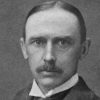
After all, the saddest thing that can happen to a man is to carry no burden. To be bent under too great a load is bad; to be crushed by it is lamentable, but even in that there are possibilities that are glorious. But to carry no load at all — there is nothing in that. No one seems to arrive at any goal really worth reaching in this world who does not come to it heavy laden.
Edward Sandford Martin (1856-1939) American writer and editor
In a New Century, ch. 21 “Deafness” (1903)
Quoted by Theodore Roosevelt, Speech, New York State Agricultural Association, Syracuse (7 Sep 1903).
Considering the temptations under which politicians are placed, of changing their opinions, or rather their professions of opinion, from motives of self interest, the world will not give them credit for motives of honest conviction, unless when the change shall be to their manifest loss and disadvantage.
Henry Taylor (1800-1886) English dramatist, poet, bureaucrat, man of letters
The Statesman: An Ironical Treatise on the Art of Succeeding, ch. 17 (1836)
(Source)
By concentrating on what is good in people, by appealing to their idealism and their sense of justice, and by asking them to put their faith in the future, socialists put themselves at a severe disadvantage.
Ian McEwan (b. 1948) English novelist and screenwriter
City Limits (London, May 27, 1983)

Nothing is more admirable than the fortitude with which millionaires tolerate the disadvantages of their wealth.

No occurrences are so unfortunate that the shrewd cannot turn them to some advantage, nor so fortunate that the imprudent cannot turn them to their own disadvantage.
[Il n’y a point d’accidents si malheureux dont les habiles gens ne tirent quelque avantage, ni de si heureux que les imprudents ne puissent tourner à leur préjudice.]François VI, duc de La Rochefoucauld (1613-1680) French epigrammatist, memoirist, noble
Réflexions ou sentences et maximes morales [Reflections; or Sentences and Moral Maxims], ¶59 (1665-1678) [tr. Tancock (1959)]
(Source)
Present in the original 1665 edition. In manuscript, this was originally drafted as:One could say that there are no lucky or unfortunate accidents, because clever people know how to take advantage of bad ones, and the imprudent very often turn the most advantageous harm to themselves.
[On pourrait dire qu’il n’y a point d’heurcux ni de malheureux accidents, parce que les habiles gens savent profiter des mauvais, et que les imprudents tournent bien souvent à leur préjudice les plus avantageux.]
(Source (French)). Alternate translations:It may be affirm'd that either there are not any happy or unhappy accidents, or that all accidents are both happy and unhappy, inasmuch as the prudent know how to make their advantages of the bad, and the imprudent many times turn the most advantageous emergencies to their own prejudice.
[tr. Davies (1669), ¶128]There is no accident so exquisitely unfortunate, but wise Men will make some advantage of it; nor any so entirely fortunate, but Fools may turn it to their own prejudice.
[tr. Stanhope (1694), ¶60]No accidents are so unlucky, but that the prudent may draw some advantage from them: nor are there any so lucky, but what the imprudent may turn to their prejudice.
[pub. Donaldson (1783), ¶8; [ed. Lepoittevin-Lacroix (1797), ¶58]No accidents are so unlucky, but what the prudent may draw some advantages from; nor are there any so lucky, but what the imprudent may turn to their prejudice.
[ed. Carville (1835), ¶5]There are no circumstances, however unfortunate, that clever people do not extract some advantage from; and none, however fortune, that the imprudent cannot turn to their own prejudice.
[ed. Gowens (1851), ¶60]There are no accidents so unfortunate from which skillful men will not draw some advantage, nor so fortunate that foolish men will not turn them to their hurt.
[tr. Bund/Friswell (1871)]A clever man reaps some benefit from the worst catastrophe, and a fool can turn even good luck to his disadvantage.
[tr. Heard (1917)]No event is so disastrous that the adroit cannot derive some benefit from it, nor so auspicious that fools cannot turn it to their detriment.
[tr. Stevens (1939)]There is no accident so disastrous that a clever man cannot derive some profit from it: nor any so fortunate that a fool cannot turn it to his disadvantage.
[tr. FitzGibbon (1957)]There are no experiences so disastrous that thoughtful men cannot derive some profit from them, nor so happy that the thoughtless cannot use them to their harm.
[tr. Kronenberger (1959)]There are no accidents so unfortunate that clever men may not draw some advantage from them, nor so fortunate that imprudent men may not turn them to their own detriment.
[tr. Whichello (2016)]