

From this day forward, I no longer shall tinker with the machinery of death. For more than 20 years I have endeavored — indeed, I have struggled — along with a majority of this Court, to develop procedural and substantive rules that would lend more than the mere appearance of fairness to the death penalty endeavor. Rather than continue to coddle the Court’s delusion that the desired level of fairness has been achieved and the need for regulation eviscerated, I feel morally and intellectually obligated simply to concede that the death penalty experiment has failed. It is virtually self-evident to me now that no combination of procedural rules or substantive regulations ever can save the death penalty from its inherent constitutional deficiencies. The basic question — does the system accurately and consistently determine which defendants “deserve” to die? — cannot be answered in the affirmative. […] The problem is that the inevitability of factual, legal, and moral error gives us a system that we know must wrongly kill some defendants, a system that fails to deliver the fair, consistent, and reliable sentences of death required by the Constitution.
Harry Blackmun (1908–1999) American lawyer, jurist; US Supreme Court Justice (1970–1994) [Harold Andrew Blackmun]
Callins v. Collins, 510 U.S. 1141 (1994) [dissent from denial of certiori]
(Source)
Quotations by:
Blackmun, Harry
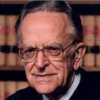
The Free Exercise Clause at the very least was designed to guarantee freedom of conscience by prohibiting any degree of compulsion in matters of belief. It was offended by a burden on one’s religion. The Establishment Clause can be understood as designed in part to ensure that the advancement of religion comes only from the voluntary efforts of its proponents and not from support by the state. Religious groups are to prosper or perish on the intrinsic merit and attraction of their beliefs and practices.
Harry Blackmun (1908–1999) American lawyer, jurist; US Supreme Court Justice (1970–1994) [Harold Andrew Blackmun]
Speech (1987-06-23), National Archives, Washington, DC