MARCUS: For I speak of a man of learning and erudition, for whom to live, is to think.
[Loquor enim de docto homine et erudito, cui vivere est cogitare.]
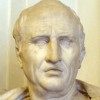
Marcus Tullius Cicero (106–43 BC) Roman orator, statesman, philosopher
Tusculan Disputations [Tusculanae Disputationes], Book 5, ch. 38 (5.38) / sec. 111 (5.111) (45 BC) [tr. Otis (1839)]
(Source)
Noting that even blindness would not rob a wise man of happiness because thought does not require sight.
(Source (Latin)). Other translations:I speak as to the Scholar, and ingenuous Artist, whose Life is Contemplation.
[tr. Wase (1643)]I am speaking of a learned and wise man, with whom to think is to live.
[tr. Main (1824)]I am speaking of a learned and a wise man, with whom to think is to live.
[tr. Yonge (1853)]I am speaking of the educated and learned man, to whom to think is to live.
[tr. Peabody (1886)]I speak of a man of learning and erudition, to whom to live is to think.
[ed. Harbottle (1897); tr. Taylor/Hunt (1916)]I am speaking of the learned and educated man, for whom living is thinking.
[tr. Douglas (1990)]I am speaking of a learned and educated man, for whom living is thinking.
[tr. Davie (2017)]