But suppose one could not point to this great benefit, suppose that the study of literature conferred only enjoyment: even then, I believe, you would agree that this form of mental relaxation broadens and enlightens the mind like no other. For other forms of mental relaxation are in no way suited to every time, age, and place. But the study of literature sharpens youth and delights old age; it enhances prosperity and provides a refuge and comfort in adversity; it gives enjoyment at home without being a hindrance in the wider world; at night, and when travelling, and on country visits, it is an unfailing companion.
[Quod si non hic tantus fructus ostenderetur et si ex his studiis delectatio sola peteretur, tamen, ut opinor, hanc animi adversionem humanissimam ac liberalissimam iudicaretis. Nam ceterae neque temporum sunt neque aetatum omnium neque locorum: haec studia adolescentiam acuunt, senectutem oblectant, secundas res ornant, adversis perfugium ac solacium praebent, delectant domi, non impediunt foris, pernoctant nobiscum, peregrinantur, rusticantur.]
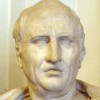
Marcus Tullius Cicero (106-43 BC) Roman orator, statesman, philosopher
Pro Archia Poeta [For Archia the Poet], ch. 7 / sec. 16 (62 BC) [tr. Berry (2000)]
(Source)
(Source (Latin)). Other translations:Though, even if there were no such great advantage to be reaped from it, and if it were only pleasure that is sought from these studies, still I imagine you would consider it a most reasonable and liberal employment of the mind: for other occupations are not suited to every time, nor to every age or place; but these studies are the food of youth, the delight of old age; the ornament of prosperity, the refuge and comfort of adversity; a delight at home, and no hindrance abroad; they are companions by night, and in travel, and in the country.
[tr. Yonge (1856)]But even if we had no promise of such great fruit as we have, if we were led to study merely for the sake of the pleasure afforded us by study itself, you would nevertheless, I think , come to the conclusion that this mental recreation was a most humane and liberal one. For there are other studies which belong neither to all times, nor to all ages, nor to all places; but these studies strengthen youth and divert age, adorn prosperity, and afford a refuge and a solace in adversity; are a pleasure to us at home, and no hindrance abroad; they spend the night and roam about and rusticate with us.
[tr. M'Donogh Mahony (1886)][...] Such studies nourish us in youth, and entertain us in old age; they embellish our prosperity, and provide for us a refuge and a solace in adversity ; they are a delight at home, yet no embarrassment abroad; they are with us throughout sleepless nights, on tedious journeys, in. our country retreats.
[tr. Harbottle (1897)]Even if this so great advantage should not be shown, and if delight only is sought from these studies, however, as I think, you should judge (that) this employment of the mind (is) most humane and liberal. For other (occupations) are (suited) neither (for) all times, Even if this so great advantage should not be shown, and if delight only is sought from these studies, however, as I think, you should judge (that) this employment of the mind (is) most humane and liberal. For other (occupations) are (suited) neither (for) all times, foster youth, delight old age, adorn prosperity, in adversity they offer refuge and comfort, they delight (us) at home, they do not hinder (us) outside [abroad], they pass the night with us, they travel abroad, they go to the country (with us).
[tr. Dewey (1916)]But let us for the moment waive these solid advantages; let us assume that entertainment is the sole end of reading; even so, I think you would hold that no mental employment is so broadening to the sympathies or so enlightening to the understanding. Other pursuits belong not to all times, all ages, all conditions; but this gives stimulus to our youth and diversion to our old age; this adds a charm to success, and offers a haven of consolation to failure. In the home it delights, in the world it hampers not. Through the night-watches, on all our journeying, and in our hours of country ease, it is our unfailing companion.
[tr. Watts (Loeb) (1923)]And yet if so great a profit were not held out to them, and if enjoyment only were sought from such studies, still, I fancy, you would decide that this is the mind's most refined and liberal relaxation. The other classes of enjoyment are not for every time or every age or every situation, but these pursuits are the food of youth and the charm of age; they are the ornament of prosperity, and lend a refuge and comfort to misfortune; at home they are a pleasure, abroad they are no hindrance; they are with us by night, upon our journeys, at our country seats.
[tr. Allcroft/Plaistowe (c. 1925)]But if such great fruit as this did not result, and if pleasure alone were sought from these studies, still in my opinion you should judge this relaxation of mind most refining and most liberalizing. For other relaxations are not suitable for every season, age, and place, but these studies nourish youth and delight old age; they are an ornament in prosperity, and furnish a refuge and a solace in adversity; they are a delight at home and not a hindrance abroad; they pass the night, travel afar, or go to the country with us.
[tr. Guinach (1962)]But if this clear profit [of studying literature] is not clear and if entertainment alone should be sought from these pursuits, I still believe that you would judge them the most humanizing and enlightening exercise of the mind. For other activities do not partake in all times, all ages, and all places -- reading literature sharpens us in youth and comforts us in old age. It brings adornment to our successes and solace to our failures. It delights when we are at home and creates no obstacle for us out in the world. It is our companion through long nights, long journeys, and months in rural retreats.
[tr. @sentantiq (2019)]