When legislative power is united with executive power in a single person or in a single body of the magistracy, there is no liberty, because one can fear that the same monarch or senate that makes tyrannical laws will execute them tyrannically.
Nor is there liberty if the power of judging is not separate from legislative power and from executive power. If it were joined to legislative power, the power over the life and liberty of the citizens would be arbitrary, for the judge would be the legislator. If it were joined to executive power, the judge could have the force of an oppressor.
All would be lost if the same man or the same body of principal men, either of nobles, or of the people, exercised these three powers: that of making the laws, that of executing public resolutions, and that of judging the crimes or the disputes of individuals.[Lorsque, dans la même personne ou dans le même corps de magistrature, la puissance législative est réunie à la puissance exécutrice, il n’y a point de liberté ; parce qu’on peut craindre que le même monarque ou le même sénat ne fasse des loix tyranniques, pour les exécuter tyranniquement.
Il n’y a point encore de liberté, si la puissance de juger n’est pas séparée de la puissance législative, & de l’exécutrice. Si elle étoit jointe à la puissance législative, le pouvoir sur la vie & la liberté des citoyens seroit arbitraire; car le juge seroit législateur. Si elle étoit jointe à la puissance exécutrice, le juge pourroit avoir la force d’un oppresseur.
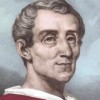
Tout seroit perdu, si le même homme, ou le même corps des principaux, ou des nobles, ou du peuple, exerçoient ces trois pouvoirs; celui de faire des loix, celui d’exécuter les résolutions publiques, & celui de juger les crimes ou les différends des particuliers.]Charles-Lewis de Secondat, Baron de Montesquieu (1689-1755) French political philosopher
Spirit of Laws [The Spirit of the Laws; De l’esprit des lois], Book 11, ch. 6 (1748) [tr. Cohler/Miller/Stone (1989)]
(Source)
(Source (French)). Other translations:When the legislative and executive powers are united in the same person, or in the same body of magistrates, there can be no liberty; because apprehensions may arise, lest the same monarch or senate should enact tyrannical laws, to execute them in a tyrannical manner.
Again, there is no liberty if the judiciary power be not separated from the legislative and executive. Were it joined with the legislative, the life and liberty of the subject would be exposed to arbitrary control; for the judge would be then the legislator. Were it joined to the executive power, the judge might behave with violence and oppression.
There would be an end of every thing, were the same man, or the same body, whether of the nobles or of the people, to exercise those three powers, that of enacting laws, that of executing the public resolutions, and of trying the causes of individuals.
[tr. Nugent (1750)]There would be an end of everything, were the same man, or the same body, whether of the nobles or of the people, to exercise those three powers, that of enacting laws, that of executing the public resolutions, and that of judging the crimes or differences of individuals.
[ed. Guterman (1963)]When in the same person or in the same body of magistracy the legislative authority is combined with the executive authority, there is no freedom, because one can fear lest the same monarch or the same senate make tyrannical laws in order to carry them out tyrannically.
Again there is no freedom if the authority to judge is not separated from the legislative and executive authorities. If it were combined with the legislative authority, power over the life and liberty of the citizens would be arbitrary, for the judge would be the legislator. If it were combined with the executive authority, the judge could have the strength of an oppressor.
All would be lost if the same man or the same body of principals, or of nobles, or of the people, exercised these three powers: that of making laws, that of executing public resolutions, and that of judging crimes or disputes between individuals.
[tr. Stewart (2018)]