

It is clear that the monarch who, through bad counsel or negligence, ceases to see that the laws are executed can easily repair the damage: he has only to get a new counsellor, or correct his own negligence. But when, in a popular government, the laws have ceased to be executed, since this can result only from corruption of the republic, the state is already undone.
[Il est clair encore que le monarque qui, par mauvais conseil ou par négligence, cesse de faire exécuter les loix, peut aisément réparer le mal ; il n’a qu’à changer de conseil, ou se corriger de cette négligence même. Mais lorsque, dans un gouvernement populaire, les loix ont cessé d’être exécutées, comme cela ne peut venir que de la corruption de la république, l’état est déja perdu.]
Charles-Lewis de Secondat, Baron de Montesquieu (1689–1755) French political philosopher
Spirit of Laws [The Spirit of the Laws; De l’esprit des lois], Book 3, ch. 3 (1748) [tr. Stewart (2018)]
(Source)
(Source (French)). Other translations:Clear it is also that a monarch, who through bad advice or indolence ceases to enforce the execution of the laws, may easily repair the evil: he has only to follow other advice; or to shake off this indolence. But when in popular government, there is a suspension of the laws, as this can proceed only from the corruption of the republic, the state is certainly undone.
[tr. Nugent (1750)]It is also clear that the monarch who ceases to see to the execution of the laws, though bad counsel or negligence, may easily repair the damage; he has only to change his counsel or correct his own negligence. But in a popular government when the laws have ceased to be executed, as this can only come from the corruption of the republic, the state is already lost.
[tr. Cohler/Miller/Stone (1989)]
Quotations about:
laws
Note not all quotations have been tagged, so Search may find additional quotes on this topic.
We have said that the laws were the particular and precise institutions of a legislator, and manners and customs the institutions of a nation in general. Hence it follows that when these manners and customs are to be changed, it ought not to be done by laws; this would have too much the air of tyranny: it would be better to change them by introducing other manners and other customs.
[Nous avons dit que les loix étoient des institutions particulieres & précises du législateur, & les mœurs & les manieres des institutions de la nation en général. De-là il suit que, lorsque l’on veut changer les mœurs & les manieres, il ne faut pas les changer par les loix ; cela paroîtroit trop tyrannique: il vaut mieux les changer par d’autres mœurs & d’autres manieres.]
Charles-Lewis de Secondat, Baron de Montesquieu (1689–1755) French political philosopher
Spirit of Laws [The Spirit of the Laws; De l’esprit des lois], Book 19, ch. 14 (1748) [tr. Nugent (1750)]
(Source)
(Source (French)). Other translations:We have said that the laws were the particular and precise institutions of the legislator and the mores and manners, the instructions of the nation in general. From this it follows that when one wants to change the mores and manners, one must not change them by the law, as this would appear to be too tyrannical; it would be better to change them by other mores and other manners.
[tr. Cohler/Miller/Stone (1989)]We have said that laws were particular and precise institutions of the legislator, and the morals and the manners institutions of the nation as a whole. Whence it follows that when you want to change morals and manners, you should not do it by laws, which would appear too tyrannical; it is better to change them with other morals and manners.
[tr. Stewart (2018)]
When legislative power is united with executive power in a single person or in a single body of the magistracy, there is no liberty, because one can fear that the same monarch or senate that makes tyrannical laws will execute them tyrannically.
Nor is there liberty if the power of judging is not separate from legislative power and from executive power. If it were joined to legislative power, the power over the life and liberty of the citizens would be arbitrary, for the judge would be the legislator. If it were joined to executive power, the judge could have the force of an oppressor.
All would be lost if the same man or the same body of principal men, either of nobles, or of the people, exercised these three powers: that of making the laws, that of executing public resolutions, and that of judging the crimes or the disputes of individuals.[Lorsque, dans la même personne ou dans le même corps de magistrature, la puissance législative est réunie à la puissance exécutrice, il n’y a point de liberté ; parce qu’on peut craindre que le même monarque ou le même sénat ne fasse des loix tyranniques, pour les exécuter tyranniquement.
Il n’y a point encore de liberté, si la puissance de juger n’est pas séparée de la puissance législative, & de l’exécutrice. Si elle étoit jointe à la puissance législative, le pouvoir sur la vie & la liberté des citoyens seroit arbitraire; car le juge seroit législateur. Si elle étoit jointe à la puissance exécutrice, le juge pourroit avoir la force d’un oppresseur.
Tout seroit perdu, si le même homme, ou le même corps des principaux, ou des nobles, ou du peuple, exerçoient ces trois pouvoirs; celui de faire des loix, celui d’exécuter les résolutions publiques, & celui de juger les crimes ou les différends des particuliers.]Charles-Lewis de Secondat, Baron de Montesquieu (1689–1755) French political philosopher
Spirit of Laws [The Spirit of the Laws; De l’esprit des lois], Book 11, ch. 6 (1748) [tr. Cohler/Miller/Stone (1989)]
(Source)
(Source (French)). Other translations:When the legislative and executive powers are united in the same person, or in the same body of magistrates, there can be no liberty; because apprehensions may arise, lest the same monarch or senate should enact tyrannical laws, to execute them in a tyrannical manner.
Again, there is no liberty if the judiciary power be not separated from the legislative and executive. Were it joined with the legislative, the life and liberty of the subject would be exposed to arbitrary control; for the judge would be then the legislator. Were it joined to the executive power, the judge might behave with violence and oppression.
There would be an end of every thing, were the same man, or the same body, whether of the nobles or of the people, to exercise those three powers, that of enacting laws, that of executing the public resolutions, and of trying the causes of individuals.
[tr. Nugent (1750)]There would be an end of everything, were the same man, or the same body, whether of the nobles or of the people, to exercise those three powers, that of enacting laws, that of executing the public resolutions, and that of judging the crimes or differences of individuals.
[ed. Guterman (1963)]When in the same person or in the same body of magistracy the legislative authority is combined with the executive authority, there is no freedom, because one can fear lest the same monarch or the same senate make tyrannical laws in order to carry them out tyrannically.
Again there is no freedom if the authority to judge is not separated from the legislative and executive authorities. If it were combined with the legislative authority, power over the life and liberty of the citizens would be arbitrary, for the judge would be the legislator. If it were combined with the executive authority, the judge could have the strength of an oppressor.
All would be lost if the same man or the same body of principals, or of nobles, or of the people, exercised these three powers: that of making laws, that of executing public resolutions, and that of judging crimes or disputes between individuals.
[tr. Stewart (2018)]
The freest government, if it could exist, would not be long acceptable, if the tendency of the laws were to create a rapid accumulation of property in few hands, and to render the great mass of the population dependent and penniless.
Daniel Webster (1782–1852) American statesman, lawyer, orator
Speech (1820-12-22), “First Settlement of New England,” Plymouth, Massachusetts
(Source)
On the bicentennial of the Pilgrims' landing in the New World.
No tyranny is more cruel than the one practiced in the shadow of the laws and under color of justice — when, so to speak, one proceeds to drown the unfortunate on the very plank by which they had saved themselves.
[Il n’y a point de plus cruelle tyrannie que celle que l’on exerce à l’ombre des lois et avec les couleurs de la justice, lorsqu’on va, pour ainsi dire, noyer des malheureux sur la planche même sur laquelle ils s’étaient sauvés.]
Charles-Lewis de Secondat, Baron de Montesquieu (1689–1755) French political philosopher
Considerations on the Causes of the Greatness of the Romans and their Decline [Considérations sur les causes de la grandeur des Romains et de leur décadence], ch. 14 “Tiberius” (1734, 1748 ed.) [tr. Lowenthal (1965)]
(Source)
Often mis-cited to his Spirit of Laws [The Spirit of the Laws; De l’esprit des lois] (1748).
(Source (French)). Other translations:No tyranny can have a severer effect that that which is exercised under the appearance of laws, and with the plausible colours of justice, when the executors of cruel power would, if we may use the expression, drown the unhappy wretches on the very plank that before saved them admidst the troubled waves.
[tr. B--- (1734)]There is no tyranny more cruel than that which is perpetrated under the color of the laws and in the name of justice -- when, so to speak, one is drawn down and drowned by means of the very plank which should have borne him up and saved his life.
[tr. Baker (1882)]There is no tyranny more cruel than that which is exercised within the shade of the law and with the colours of justice.
[E.g.]There is no greater tyranny than that which is perpetrated under the shield of the law and in the name of justice.
[E.g.]There is no crueler tyranny than that which is perpetrated under the shield of the law and in the name of justice.
[E.g.]

Rules that are arbitrary may be nonetheless crucial. Whether we drive on the right or left side of the road is arbitrary, but it is crucial to obey the prevailing rule.
Judith Martin (b. 1938) American author, journalist, etiquette expert [a.k.a. Miss Manners]
“Miss Manners,” syndicated column (2015-02-01)
(Source)


A good-tempered antinomianism rather of Dickens’s type is one of the marks of Western popular culture. One sees it in folkstories and comic songs, in dream-figures like Mickey Mouse and Pop-eye the Sailor (both of them variants of Jack the Giant-killer), in the history of working-class Socialism, in the popular protests (always ineffective but not always a sham) against imperialism, in the impulse that makes a jury award excessive damages when a rich man’s car runs over a poor man; it is the feeling that one is always on the side of the underdog, on the side of the weak against the strong.
George Orwell (1903–1950) English journalist, essayist, writer [pseud. of Eric Arthur Blair]
Essay (1939), “Charles Dickens,” sec. 6, Inside the Whale (1940-03-11)
(Source)
Orwell frequently used the term "antinomianism," representing defiance of social mores and rules.
Dessous roared with laughter. “Telman! I can’t believe I’m having to tell you this, but life isn’t fair!”
“No, the world isn’t fair, the universe isn’t fair. Physics, chemistry and mathematics, they aren’t fair. Or unfair, for that matter. Fairness is an idea, and only conscious creatures have ideas. That’s us. We have ideas about right and wrong. We invent the idea of justice so that we can judge whether something is good or bad. We develop morality. We create rules to live by and call them laws, all to make life more fair.”

Men generally, under such a government as this, think that they ought to wait until they have persuaded the majority to alter [unjust laws]. They think that, if they should resist, the remedy would be worse than the evil. But it is the fault of the government itself that the remedy is worse than the evil. It makes it worse. Why is it not more apt to anticipate and provide for reform? Why does it not cherish its wise minority? Why does it cry and resist before it is hurt? Why does it not encourage its citizens to be on the alert to point out its faults, and do better than it would have them? Why does it always crucify Christ, and excommunicate Copernicus and Luther, and pronounce Washington and Franklin rebels?
Henry David Thoreau (1817–1862) American philosopher and writer
Essay (1849-05), “Resistance to Civil Government [On the Duty of Civil Disobedience],” Æsthetic Papers, No. 1, Article 10
(Source)
Based on an 1848 lecture at the Concord Lyceum.
I have lived in one Reign, when the Prince, instead of invigorating the Laws of our Country, or giving them their proper Course, assumed a Power of dispensing with them: And in another, when the Sovereign was flattered by a Set of Men into a Persuasion, that the Regal Authority was unlimited and uncircumscribed. In either of these Cases, good Laws are at best but a dead Letter; and by shewing the People how happy they ought to be, only serve to aggravate the Sense of their Oppressions.
Joseph Addison (1672–1719) English essayist, poet, statesman
Essay (1715-12-26), The Freeholder, No. 2
(Source)

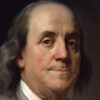
The exact measure of the progress of civilization is the degree in which the intelligence of the common mind has prevailed over wealth and brute force.
George Bancroft (1800–1891) American historian, statesman, education reformer
Speech, Adelphi Society, Liamstown College (Aug 1835)
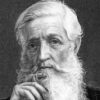
I think all Christians would agree with me if I said that though Christianity seems at first to be all about morality, all about duties and rules and guilt and virtue, yet it leads you on, out of all that, into something beyond.
C. S. Lewis (1898–1963) English writer, literary scholar, lay theologian [Clive Staples Lewis]
Mere Christianity, “Faith” (1952)
(Source)
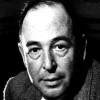
Science admits no exceptions; otherwise there would be no determinism in science, or rather, there would be no science.
Claude Bernard (1813–1878) French physiologist, scientist
Leçons de Pathologie Expérimentale (1872)
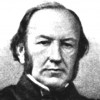
If there be, in any region of the universe, an order of moral agents living in society, whose reason is strong, whose passions and inclinations are moderate, and whose dispositions are turned to virtue, to such an order of happy beings, legislation, administration, and police, with the endlessly various and complicated apparatus of politics, must be in a great measure superfluous.
James Burgh (1714–1775) British politician and writer
Political Disquisitions, Book 1 “Of Government, briefly,” ch. 1 “Government by Laws and Sanctions, why necessary” (1774)
(Source)
One of the greatest delusions in the world is the hope that the evils of the world can be cured by legislation.
Thomas Brackett Reed (1839–1902) American politician, Speaker of the House (1889–91, 1895–99)
(Attributed)
In political institutions, almost everything we call an abuse was once a remedy.
[Presque tout ce que nous appelons un abus fut un remède dans les institutions politiques.]
Joseph Joubert (1754–1824) French moralist, philosopher, essayist, poet
Pensées [Thoughts], ch. 18 “Du Siècle [On the Age],” ¶ 21 (1850 ed.) [tr. Auster (1983), 1813 entry]
(Source)
(Source (French)). Other translation:In political institutions nearly everything that we now call an abuse, was once a remedy.
[tr. Lyttelton (1899), ch. 17, ¶ 8]
The period of Prohibition — called the noble experiment — brought on the greatest breakdown of law and order the United States has known until today. I think there is a lesson here. Do not regulate the private morals of people. Do not tell them what they can take or not take. Because if you do, they will become angry and antisocial and they will get what they want from criminals who are able to work in perfect freedom because they have paid off the police.
Gore Vidal (1925–2012) American novelist, dramatist, critic
“The State of the Union”, Esquire (May 1975)

Unjust laws exist: shall we be content to obey them, or shall we endeavor to amend them, and obey them until we have succeeded, or shall we transgress them at once?
Henry David Thoreau (1817–1862) American philosopher and writer
Essay (1849-05), “Resistance to Civil Government [On the Duty of Civil Disobedience],” Æsthetic Papers, No. 1, Article 10
(Source)
Based on an 1848 lecture at the Concord Lyceum.
And now bills were passed, not only for national objects but for individual cases, and laws were most numerous when the commonwealth was most corrupt.
[Corruptissima re publica plurimae leges.]
Tacitus (c.56-c.120) Roman historian, orator, politician [Publius or Gaius Cornelius Tacitus]
Annals, Book 3, ch. 27 (AD 117)
More common variants:
- "The more numerous the laws, the more corrupt the government."
- "The more corrupt the state, the more laws."
Books that cannot bear examination, certainly ought not to be established as divine inspiration by penal laws.
John Adams (1735–1826) American lawyer, Founder, statesman; US President (1797–1801)
Letter (1825-01-23) to Thomas Jefferson
(Source)
Complaining about laws, even in America, that punish people for "blasphemy" in doubting elements of the Bible.
An infinite God ought to be able to protect himself, without going in partnership with State Legislatures. Certainly he ought not so to act that laws become necessary to keep him from being laughed at.
Robert Green Ingersoll (1833–1899) American lawyer, freethinker, orator
Some Mistakes of Moses, Sec. 3 “The Politicians” (1879)
And how am I to face the odds
Of man’s bedevilment and God’s?
I, a stranger and afraid
In a world I never made.A. E. Housman (1859–1936) English scholar and poet [Alfred Edward Housman]
Last Poems, No. 12, ll. 15-18 (1922)
(Source)
Must the citizen ever for a moment, or in the least degree, resign his conscience to the legislator? Why has every man a conscience, then? I think that we should be men first, and subjects afterward.
Henry David Thoreau (1817–1862) American philosopher and writer
Essay (1849-05), “Resistance to Civil Government [On the Duty of Civil Disobedience],” Æsthetic Papers, No. 1, Article 10
(Source)
Based on an 1848 lecture at the Concord Lyceum.
