Well, those are my objections on moral grounds. From a practical point of view, surely it’s obvious that to punish thieves and murderers in precisely the same way is not only absurd but also highly dangerous for the public. If a thief knows that a conviction for murder will get him into no more trouble than a conviction for theft, he’s naturally impelled to kill the person that he’d otherwise merely have robbed. It’s no worse for him if he’s caught, and it gives him a better chance of not being caught, and of concealing the crime altogether by eliminating the only witness. So in our efforts to terrorize thieves we’re actually encouraging them to murder innocent people.
[Non licere putem. Quam uero sit absurdum, atque etiam perniciosum reipublicae furem, atque homicidam ex aequo puniri, nemo est, opinor, qui nesciat.
Nempe quum latro conspiciat non minus imminere discriminis duntaxat furti damnato, quam si praeterea conuincatur homicidij, hac una cogitatione impellitur in caedem eius, quem alioqui fuerat tantum spoliaturus. quippe praeterquam quod deprehenso nihil sit plus periculi, est etiam in caede securitas maior, & maior caelandi spes sublato facinoris indice.
Itaque dum fures nimis atrociter studemus perterrefacere, in bonorum incitamus perniciem.]Thomas More (1478–1535) English lawyer, social philosopher, statesman, humanist, Christian martyr
Utopia, Book 1, ch. 1 “Discourses of Raphael Hythloday” (1518 ed.) [tr. Turner (1965 ed.)]
(Source)
On the hanging of thieves under English law.
(Source (Latin)). Other translations:I am persuaded that this punishement is unlawful. Furthermore I thinke ther is no body that knoweth not, how unreasonable, yea, how pernitious a thinge it is to the weale publike, that a thefe and a homicide or murderer, should suffer equall and like punishment. For the thefe seynge that man, that is condempned for thefte in no less jeoperdie, nor judged to no lesse punishment, then him that is convicte of manslaughter; throughe this cogitation onelye he is strongly and forciblye provoked, and in a maner constreined to kill him whome els he woulde have but robbed. For the murder beynge ones done, he is in lesse feare, and in more hoope that the deede shall not be bewrayed or knowen, seynge the partye is nowe deade and rydde oute of the waye, which onelye mighte have uttered and disclosed it. But if he chaunce to be taken and discrived, yet he is in no more daunger and jeoperdie, then if he had committed but single fellonye. Therfore whiles we go about with suche crueltie to make theves aferd, we provoke them to kil good men.
[tr. Robynson (1551)]I think the putting of Thieves to death is not lawful; and it is plain and obvious that it is absurd, and of ill Consequence to the Common-Wealth, that a Thief and a Murderer should be equally punished; for if a Robber sees that his Danger is the same, if he is convicted of Theft, as if he were guilty of Murder, this will naturally set him on to kill the Person whom otherwise he would only have robbed; since, if the Punishment is the same, there is more security, and less danger of discovery, when he that can best make it is put out of the way; so that terrifying Thieves too much provokes them to cruelty.
[tr. Burnet (1684)]I think putting thieves to death is not lawful ; and it is plain and obvious that it is absurd, and of ill consequence to the commonwealth, that a thief and a murderer should be equally punished: for if a robber sees that his danger is the same, if he is convicted of theft, as if he were guilty of murder, this will naturally incite him to kill the person whom otherwife he would only have robbed, since if the punishment is the same, there is more security and less danger of discovery, when he that can best make it is put out of the way; so that terrifying thieves too much, provokes them to cruelty.
[tr. Warner (1758)]I think putting thieves to death, not lawful. And it is obviously absurd, and prejudicial to the commonwealth, that theft and murder should be punished alike. For, if a robber find that his danger is the same, if he be convicted of theft as if he had been guilty of murder, he will be incited to kill the person whom otherwise he would only have robbed; since, the punishment being the same, there is less danger of discovery, when he who can best make it is killed. Thus, terrifying thieves too much, provoketh them to cruelty.
[tr. Cayley (1808)]I think putting thieves to death is not lawful; and it is plain and obvious that it is absurd and of ill consequence to the commonwealth that a thief and a murderer should be equally punished; for if a robber sees that his danger is the same if he is convicted of theft as if he were guilty of murder, this will naturally incite him to kill the person whom otherwise he would only have robbed; since, if the punishment is the same, there is more security, and less danger of discovery, when he that can best make it is put out of the way; so that terrifying thieves too much provokes them to cruelty.
[tr. Burnet/Morley (1901)]I am persuaded that this punishment is unlawful. Furthermore, I think there is no body that knoweth not how unreasonable, yea, how pernicious a thing it is to the weal public that a thief and a homicide or murderer should suffer equal and like punishment. For the thief, seeing that man that is condemned for theft in no less jeopardy, nor judged to no less punishment, than him that is convict of manslaughter; through this cogitation only he is strongly and forcibly provoked, and in a manner constrained, to kill him, whom else he would have but robbed. For the murder once done, he is in less care and in more hope, that the deed shall not be betrayed or known, seeing the party is now dead and rid out of the way, which only might have uttered and disclosed it. But if he chance to be taken and discrived, yet he is in no more danger and jeopardy than if he had committed but single felony. Therefore whiles we go about with such cruelty to make thieves afeared, we provoke them to kill good men.
[tr. Robynson/Lupton/Armes (1911)]I think this punishment unlawful. Now how absurd and even dangerous to the commonwealth it is that a thief and a murderer should receive the same punishment, surely everyone knows. For since the robber sees that he is in as great danger if merely condemned for theft as if he were convicted of murder as well, this consideration alone impels him to murder a man, whom otherwise he would only have robbed; for besides the fact that he is in no more danger if caught, there is greater safety in putting the man out of the way, and a greater hope of covering up the offence, if there is no one left to tell the tale. And so while we try to frighten thieves with excessive cruelty, we urge them on to the destruction of honest men.
[tr. Richards (1923)]I think this punishment unlawful. Besides, surely everyone knows how absurd and even dangerous to the commonwealth it is that a thief and a murderer should receive the same punishment. Since the robber sees that he is in as great danger if merely condemned for theft as if he were convicted of murder as well, this single consideration impels him to murder the man whom otherwise he would only have robbed. In addition to the fact that he is in no greater danger if caught, there is greater safety in putting the man out of the way and greater hope of covering up the crime if he leaves no one left to tell the tale. Thus, while we endeavor to terrify thieves with excessive cruelty, we urge them on to the destruction of honest citizens.
[tr. Richards/Surtz (1964)]I think it is wrong to put thieves to death. But everybody knows how absurd and even harmful to the public welfare it is to punish theft and murder alike. If theft carries the same penalty as murder, the thief will be encouraged to kill the victim whom otherwise he would only have robbed. When the punishment is the same, murder is safer, since one conceals both crimes by killing the witness. Thus while we try to terrify thieves with extreme cruelty, we really invite them to kill innocent men.
[tr. Adams (1992 ed.)]I think putting thieves to death is not lawful; and it is plain and obvious that it is absurd and of ill consequence to the commonwealth that a thief and a murderer should be equally punished; for if a robber sees that his danger is the same if he is convicted of theft as if he were guilty of murder, this will naturally incite him to kill the person whom otherwise he would only have robbed; since, if the punishment is the same, there is more security, and less danger of discovery, when he that can best make it is put out of the way; so that terrifying thieves too much provokes them to cruelty.
[tr. Open Utopia (Duncombe) (2012)]
Quotations about:
unintended consequences
Note not all quotations have been tagged, so Search may find additional quotes on this topic.

However, it is my judgment in these things that when you see something that is technically sweet, you go ahead and do it and you argue about what to do about it only after you have had your technical success. That is the way it was with the atomic bomb.
J. Robert Oppenheimer (1904–1967) American theoretical physicist, "Father of the Atomic Bomb" [Julius Robert Oppenheimer]
“In the matter of J. Robert Oppenheimer,” testimony transcript, US Atomic Energy Commission, Personnel Security Board (1954-04-13)
(Source)

When we look forward and try to project what may come out of a development, we are always wrong, because the by-products sometimes become far more important than the primary thing you started out to accomplish. Nevertheless, unintelligent motion is a great deal more important in research than intelligent standing still.
Charles F. Kettering (1876–1958) American inventor, engineer, researcher, businessman
“250 at Luncheon Honor Kettering,” New York Times (1936-11-11)
(Source)
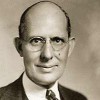
As is always the case, parenting is an exercise in unintended consequences.
Stacy Schiff (b. 1961) American editor, essayist, biographer
“Obama’s Mother Ann Dunham Shaped His Success,” Newsweek (2011-05-01)
(Source)

You make what seems a simple choice: choose a man or a job or a neighborhood — and what you have chosen is not a man or a job or a neighborhood, but a life.

War is one way of making decisions — but what’s decided may not be what anybody originally intended.
Ashleigh Brilliant (b. 1933) Anglo-American epigramist, aphorist, cartoonist
Pot-Shots

The law of unintended consequences governs all technological revolutions.
Joel L. Swerdlow (contemp.) American author, editor, researcher, educator
“Information REvolution,” National Geographic (Oct 1995)

In reactive problem solving we walk into the future facing the past — we move away from, rather than toward, something. This often results in unforeseen consequences that are more distasteful than the deficiencies removed.
Russell L. Ackoff (1919–2009) American organizational theorist, consultant, management scientist
The Art of Problem Solving (1978)

The World is a very complex system. It is easy to have too simple a view of it, and it is easy to do harm and to make things worse under the impulse to do good and make things better.
Kenneth Ewart Boulding (1910–1993) American economist, educator, poet, philosopher
Speech, Friends Association for Higher Education Conference, Malone College (1986)
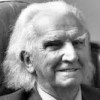
In political institutions, almost everything we call an abuse was once a remedy.
[Presque tout ce que nous appelons un abus fut un remède dans les institutions politiques.]
Joseph Joubert (1754–1824) French moralist, philosopher, essayist, poet
Pensées [Thoughts], ch. 18 “Du Siècle [On the Age],” ¶ 21 (1850 ed.) [tr. Auster (1983), 1813 entry]
(Source)
(Source (French)). Other translation:In political institutions nearly everything that we now call an abuse, was once a remedy.
[tr. Lyttelton (1899), ch. 17, ¶ 8]
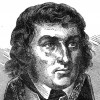
Little by little it dawned upon me that this law [Prohibition] was not making people drink any less, but it was making hypocrites and law breakers of a great number of people. It seemed to me best to go back to the old situation in which, if a man or woman drank to excess, they were injuring themselves and their immediate family and friends and the act was a violation against their own sense of morality and no violation against the law of the land.
Eleanor Roosevelt (1884–1962) American politician, diplomat, activist; First Lady of the US (1933–45)
Column (1939-07-14), “My Day”
(Source)

“You heard these words: ‘Grant us the victory, O Lord our God!’ That is sufficient. The whole of the uttered prayer is compact into those pregnant words. Elaborations were not necessary. When you have prayed for victory you have prayed for many unmentioned results which follow victory — must follow it, cannot help but follow it. Upon the listening spirit of God fell also the unspoken part of the prayer. He commandeth me to put it into words. Listen!
“O Lord our Father, our young patriots, idols of our hearts, go forth to battle — be Thou near them! With them — in spirit — we also go forth from the sweet peace of our beloved firesides to smite the foe. O Lord our God, help us to tear their soldiers to bloody shreds with our shells; help us to cover their smiling fields with the pale forms of their patriot dead; help us to drown the thunder of the guns with the shrieks of their wounded, writhing in pain; help us to lay waste their humble homes with a hurricane of fire; help us to wring the hearts of their unoffending widows with unavailing grief; help us to turn them out roofless with their little children to wander unfriended the wastes of their desolated land in rags and hunger and thirst, sports of the sun flames of summer and the icy winds of winter, broken in spirit, worn with travail, imploring Thee for the refuge of the grave and denied it — for our sakes who adore Thee, Lord, blast their hopes, blight their lives, protract their bitter pilgrimage, make heavy their steps, water their way with their tears, stain the white snow with the blood of their wounded feet! We ask it, in the spirit of love, of Him Who is the Source of Love, and Who is the ever-faithful refuge and friend of all that are sore beset and seek His aid with humble and contrite hearts. Amen.
(After a pause.) “Ye have prayed it; if ye still desire it, speak! The messenger of the Most High waits!”Mark Twain (1835–1910) American writer [pseud. of Samuel Clemens]
Story (1905), “The War Prayer”
(Source)
A mysterious man speaking to a church congregation gathered to pray for the victory of their local men going off to war.
The story was originally written after the Spanish-American War and during the Philippine-American War. It was rejected at the time by Harper's Bazaar on 1905-03-22 as "too radical" and "not quite suited to a woman's magazine." He was further discouraged by his family, friends, and publishers from publishing something so "sacrilegious."
It's frequently claimed that the story was eventually published in Harper's Magazine, Vol 80, No. 798 (1916-11), during World War I. In reality, that issue only contains Part 7 (the last installment) of his The Mysterious Stranger (a different story).
It was not published until collected in Europe and Elsewhere (1923) [ed. Paine].