But it happens further quite naturally that men who believe too firmly in their theories, do not believe enough in the theories of others. So the dominant idea of these despisers of their fellows is to find others’ theories faulty and to try to contradict them. […] They make experiments only to destroy a theory, instead of to seek the truth. At the same time, they make poor observations, because they choose among the results of their experiments only what suits their object, neglecting whatever is unrelated to it, and carefully setting aside everything which might tend toward they idea they wish to combat.
[Mais il arrive encore tout naturellement que ceux qui croient trop à leurs théories ne croient pas assez à celles des autres. Alors l’idée dominante de ces contempteurs d’autrui est de trouver les théories des autres en défaut et de chercher à les contredire. […] Ils ne font des expériences que pour détruire une théorie, au lieu de les faire pour chercher la vérité. Ils font également de mauvaises observations, parce qu’ils ne prennent dans les résultats de leurs expériences que ce qui convient à leur but, en négligeant ce qui ne s’y rapporte pas, et en écartant bien soigneusement tout ce qui pourrait aller dans le sens de l’idée qu’ils veulent combattre.]
Claude Bernard (1813–1878) French physiologist, scientist
An Introduction to the Study of Experimental Medicine [Introduction à l’Étude de la Médecine Expérimentale], ch. 3 (1865) [tr. Greene (1957)]
(Source)
(Source (French)). Other translation:But it still happens quite naturally that those who believe too strongly in their own theories don't believe enough in those of others. The dominant idea of these detractors of others is to find flaws in other people's theories and to try to contradict them. [...] They conduct experiments only to disprove a theory, instead of doing so to seek the truth. They also make flawed observations because they only select from the results of their experiments what suits their purpose, neglecting what is irrelevant, and carefully disregarding anything that might support the idea they want to refute.
[Google Translate]
Quotations about:
experimentation
Note not all quotations have been tagged, so Search may find additional quotes on this topic.
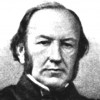
It therefore seems that the only factor which needs to be corrected is to teach a highly educated person that it is not a disgrace to fail and he must analyze every failure to find its cause. We paraphrase this by saying, “You must learn how to fail intelligently.” […] For failing is one of the greatest arts in the world. […] Once you’ve failed, analyze the problem and find out why, because each failure is one more step leading up to the cathedral of success. The only time you don’t want to fail is the last time you try.
Charles F. Kettering (1876–1958) American inventor, engineer, researcher, businessman
Quoted in T. A. Boyd, Professional Amateur: The Biography of Charles Franklin Kettering, Part 3, ch. 20 (1957)
(Source)
Kettering constantly emphasized the need for experimentation and, by definition, learning from experimental failures. He had a number of aphorisms and passages that were repeated by him on various speaking occasions, or quoted / paraphrased from him by others.
For example, there is this similar passage attributed to Kettering from a page blurb, "Don't Be Afraid to Stumble," Supervisory Management magazine, Vol. 2, No. 7 (1957-06):We need to teach the intelligent person that it is not a disgrace to fail and that he must analyze every failure to find its cause. He must learn how to fail intelligently, for failing is one of the greatest arts in the world. Once you've failed, analyze the problem and find out why, because each failure is one more step leading to success. The only time you don't want to fail is the last time you try.
The shorter the piece, the more likely it is to be quoted on its own, e.g.:The only time you don't want to fail is the last time you try.
Which can be found in:
- T. A. Boyd, Research, ch. 22 "Persistance" (1935).
- Society of Automotive Engineers (SAE) Journal, Vol 42, No. 2 (1938-02), covering the Detroit SAE Annual Meeting (1938-01-10 to 14).
We sumtimes hit a thing right the fust blow, but most always a suckcess iz the result ov menny failures.
[We sometimes hit a thing right the first blow, but almost always a success is the result of many failures.]
Josh Billings (1818–1885) American humorist, aphorist [pseud. of Henry Wheeler Shaw]
Everybody’s Friend, Or; Josh Billing’s Encyclopedia and Proverbial Philosophy of Wit and Humor, ch. 132 “Affurisms: Chips” (1874)
(Source)
In the UK collection Wit and Wisdom of Josh Billings (1913) [ed. H. Montague], this reads:We sometimes hit the bulls-eye at the first crack, but SUCCESS is usually the result of many failures.

As for really new ideas of any kind — no matter how ultimately profitable or otherwise successful some of them might prove to be — there is no leeway for such chancy trial, error and experimentation in the high-overhead economy of new construction. Old ideas can sometimes use new buildings. New ideas must use old buildings.
Jane Jacobs (1916–2006) American-Canadian journalist, author, urban theorist, activist
The Death and Life of Great American Cities, Part 2, ch. 10 “The Need for Aged Buildings” (1961)
(Source)

Cities are an immense laboratory of trial and error, failure and success, in city building and city design.
Jane Jacobs (1916–2006) American-Canadian journalist, author, urban theorist, activist
The Death and Life of Great American Cities, Introduction (1961)
(Source)
When we look forward and try to project what may come out of a development, we are always wrong, because the by-products sometimes become far more important than the primary thing you started out to accomplish. Nevertheless, unintelligent motion is a great deal more important in research than intelligent standing still.
Charles F. Kettering (1876–1958) American inventor, engineer, researcher, businessman
“250 at Luncheon Honor Kettering,” New York Times (1936-11-11)
(Source)
It is erroneous to tie down individual genius to ideal models. Each person should do that, not which is best in itself, even supposing this could be known, but that which he can do best, which he will find out if left to himself. Spenser could not have written Paradise Lost, nor Milton the Faerie Queene. Those who aim at faultless regularity will only produce mediocrity, and no one ever approaches perfection except by stealth, and unknown to themselves.
William Hazlitt (1778–1830) English writer
“Thoughts on Taste,” Edinburgh Magazine (1819-07)
(Source)

So whatever you want to do, just do it. Don’t worry about making a damn fool of yourself. Making a damn fool of yourself is absolutely essential. And you will have a great time.
Gloria Steinem (1934–2026) American feminist, journalist, activist
Commencement address, Tufts University (1987-05-17)
(Source)

The interest of the people as a whole [lies] in being able to join organizations, advocate causes, and make political “mistakes” without later being subjected to governmental penalties for having dared to think for themselves.
Hugo Black (1886–1971) American politician and jurist; US Supreme Court Justice (1937–71)
Barenblatt v. United States, 360 U.S. 109, 144 (1959) [dissent]
(Source)
[Loyalty] is a tradition, an ideal, and a principle. It is a willingness to subordinate every private advantage for the larger good. It is an appreciation of the rich and diverse contributions that can come from the most varied sources. It is allegiance to the traditions that have guided our greatest statesmen and inspired our most eloquent poets — the traditions of freedom, equality, democracy, tolerance, the tradition of the higher law, of experimentation, co-operation, and pluralism. It is a realization that America was born of revolt, flourished on dissent, became great through experimentation.
As long as you’re dancing, you can break the rules.
Sometimes breaking the rules is just extending the rules.Sometimes there are no rules.


No facts are to me sacred; none are profane; I simply experiment, an endless seeker, with no Past at my back.
Ralph Waldo Emerson (1803–1882) American essayist, lecturer, poet
Essay (1841), “Circles,” Essays: First Series, No. 10
(Source)

If you have always done it that way, it is probably wrong.
Charles F. Kettering (1876–1958) American inventor, engineer, researcher, businessman
(Attributed)
[T]he more education a man has, the less likely he is to invent new things. Possibly this is because from the moment the boy or girl starts in school he or she is examined three or four times a year and a failure or two and he or she is out. Now because an inventor works differently, he thinks that’s all wrong. He knows he’ll never go far on any problem before he strikes snags. He may flunk 999 times but if on his 1,000th try he succeeds, he wins! The only time you don’t want to fail is the last time you try a thing.
Charles F. Kettering (1876–1958) American inventor, engineer, researcher, businessman
Essay (1952-01), “Don’t Be Afraid to Stumble,” The Rotarian, Vol. 80, No. 1
(Source)
Kettering, who was R&D Director at General Motors for many years, constantly emphasized the need for experimentation and, by definition, learning from experimental failures. He had a number of aphorisms and passages that were repeated by him on various speaking occasions, or quoted / paraphrased from him by others, particularly the last line above.
In T. A. Boyd's biography of Kettering, Professional Amateur, Part 3, ch. 20 (1957), we have:It therefore seems that the only factor which needs to be corrected is to teach a highly educated person that it is not a disgrace to fail and he must analyze every failure to find its cause. We paraphrase this by saying, "You must learn how to fail intelligently." [...] For failing is one of the greatest arts in the world. [...] Once you've failed, analyze the problem and find out why, because each failure is one more step leading up to the cathedral of success. The only time you don't want to fail is the last time you try.
Here is this similar passage attributed to Kettering from a page blurb, "Don't Be Afraid to Stumble," Supervisory Management magazine, Vol. 2, No. 7 (1957-06):We need to teach the intelligent person that it is not a disgrace to fail and that he must analyze every failure to find its cause. He must learn how to fail intelligently, for failing is one of the greatest arts in the world. Once you've failed, analyze the problem and find out why, because each failure is one more step leading to success. The only time you don't want to fail is the last time you try.
The shorter the phrase, the more likely it is to be quoted on its own, e.g.:The only time you don't want to fail is the last time you try.
Which can be found in:Other variants that can be found:
- T. A. Boyd, Research, ch. 22 "Persistance" (1935).
- Society of Automotive Engineers (SAE) Journal, Vol 42, No. 2 (1938-02), covering the Detroit SAE Annual Meeting (1938-01-10 to 14).
- "The only time you mustn't fail is the last time you try."
- "The only time you can't afford to fail is the last time you try."
- "The only time you don't fail is the last time you try something, and it works."
To know what you like is the beginning of wisdom and of old age. Youth is wholly experimental. The essence and charm of that unquiet and delightful epoch is ignorance of self as well as ignorance of life. These two unknowns the young man brings together again and again, now in the airiest touch, now with a bitter hug; now with exquisite pleasure, now with cutting pain; but never with indifference, to which he is a total stranger, and never with that near kinsman of indifference, contentment.
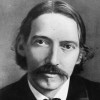
Agnosticism, in fact, is not a creed, but a method, the essence of which lies in the rigorous application of a single principle. That principle is of great antiquity; it is as old as Socrates; as old as the writer who said, “Try all things, hold fast by that which is good”; it is the foundation of the Reformation, which simply illustrated the axiom that every man should be able to give a reason for the faith that is in him, it is the great principle of Descartes; it is the fundamental axiom of modern science. Positively the principle may be expressed: In matters of the intellect, follow your reason as far as it will take you, without regard to any other consideration. And negatively: In matters of the intellect, do not pretend that conclusions are certain which are not demonstrated or demonstrable. That I take to be the agnostic faith, which if a man keep whole and undefiled, he shall not be ashamed to look the universe in the face, whatever the future may have in store for him.
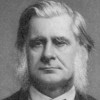
Not that indeed I imitated the sceptics, who only doubt for the sake of doubting, and pretend to be always uncertain; for, on the contrary, my design was only to provide myself with good ground for assurance, and to reject the quicksand and mud in order to find the rock or clay.
[Non que j’imitasse pour cela les sceptiques, qui ne doutent que pour douter, et affectent d’être toujours irrésolus; car, au contraire, tout mon dessein ne tendoit qu’à m’assurer, et à rejeter la terre mouvante et le sable pour trouver le roc ou l’argile.]
René Descartes (1596–1650) French philosopher, mathematician
Discourse on Method [Discours de la méthode], Part 3 (1637) [tr. Haldane & Ross (1911)]
(Source)
(Source (French)). Other translations:Not that I therein imitated the Scepticks, who doubt onely to the end they may doubt, and affect to be always unresolved: For on the contrary, all my designe tended onely to fix my self, and to avoid quick-mires and sands, that I might finde rock and clay.
[tr. Newcombe ed. (1649)]Not that in this I imitated the sceptics who doubt only that they may doubt, and seek nothing beyond uncertainty itself; for, on the contrary, my design was singly to find ground of assurance, and cast aside the loose earth and sand, that I might reach the rock or the clay.
[tr. Veitch (1901)]For all that, I did not imitate the sceptics who doubt only for doubting's sake, and pretend to be always undecided; on the contrary, my whole intention was to arrive at a certainty, and to dig away the drift and the sand until I reached the rock or the clay beneath.
[tr. Huxley (1870)]In doing this I was not copying the sceptics, who doubt only for the sake of doubting and pretend to be always undecided; on the contrary, my whole aim was to reach certainty -- to cast aside the loose earth and sand so as to come upon rock or clay.
[tr. Cottingham, Stoothoff (1985)]

If we knew what it was we were doing, it would not be called research, would it?.
Albert Einstein (1879–1955) German-American physicist
(Attributed)
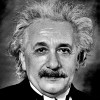
But I do not feel obliged to believe that the same God who has endowed us with senses, reason and intellect has intended us to forego their use and by some other means to give us knowledge which we can attain by them. He would not require us to deny sense and reason in physical matters which are set before our eyes and minds by direct experience or necessary demonstrations.
Galileo Galilei (1564–1642) Italian astronomer, physicist, engineer, polymath
Letter (1651) to Christina of Lorraine, Grand Duchess of Tuscany [tr. Drake (1957)]
(Source)

The country needs and, unless I mistake its temper, the country demands bold, persistent experimentation. It is common sense to take a method and try it: If it fails, admit it frankly and try another. But above all, try something.
Franklin Delano Roosevelt (1882–1945) American lawyer, politician, statesman; US President (1933–45)
Speech (1932-05-22), Commencement, Oglethorpe University, Atlanta, Georgia
(Source)
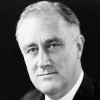
Results! Why, man, I have gotten a lot of results! I know several thousand things that won’t work.
Thomas Edison (1847–1931) American inventor and businessman
(Attributed)
(Source)
When told by an associate, Walter S. Mallory, that it was a shame that several months of work on new battery technology hadn't yielded any results. Recorded in Dyer and Martin, Edison: His Life and Inventions, Vol. 2, ch. 24 (1910) as an anecdote by Mallory.
More discussion about this quotation's origins and variants: I Have Gotten a Lot of Results! I Know Several Thousand Things That Won’t Work – Quote Investigator.

Man prefers to believe what he wants to be true. He rejects what is difficult because he is too impatient to make the investigation; he rejects sensible ideas, because they limit his hopes; he rejects the deeper truths of nature because of superstition; he rejects the light of experience, because he is arrogant and fastidious, believing that the mind should not be seen to be spending its time on mean, unstable things; and he rejects anything unorthodox because of common opinion. In short, emotion marks and stains the understanding in countless ways which are sometimes impossible to perceive.
[Quod enim mavult homo verum esse, id potius credit. Rejicit itaque difficilia, ob inquirendi impatientiam; sobria, quia coarctant spem; altiora naturae, propter superstitionem; lumen experientiae, propter arrogantiam et fastum, ne videatur mens versari in vilibus et fluxis; paradoxa, propter opinionem vulgi; denique innumeris modis, iisque interdum imperceptibilibus, affectus intellectum imbuit et inficit.]
Francis Bacon (1561–1626) English philosopher, scientist, author, statesman
Instauratio Magna [The Great Instauration], Part 2 “Novum Organum [The New Organon],” Book 1, Aphorism # 49 (1620) [tr. Silverthorne (2000)]
(Source)
See Demosthenes.
(Source (Latin)). Other translations:For man always believes more readily that which he prefers. He, therefore, rejects difficulties for want of patience in investigation; sobriety, because it limits his hope; the depths of nature, from superstition; the light of experiment, from arrogance and pride, lest his mind should appear to be occupied with common and varying objects; paradoxes, from a fear of the opinion of the vulgar; in short, his feelings imbue and corrupt his understanding in innumerable and sometimes imperceptible ways.
[tr. Wood (1831)]For what a man had rather were true he more readily believes. Therefore he rejects difficult things from impatience of research; sober things, because they narrow hope; the deeper things of nature, from superstition; the light of experience, from arrogance and pride, lest his mind should seem to be occupied with things mean and transitory; things not commonly believed, out of deference to the opinion of the vulgar. Numberless in short are the ways, and sometimes imperceptible, in which the affections colour and infect the understanding.
[tr. Spedding (1858)]For man more readily believes what he wishes to be true. And so it rejects difficult things, from impatience of inquiry; -- sober things, because they narrow hope; -- the deeper thigns of Nature, from superstition; -- the light of experience, from arrogance and disdain, lest the mind should seem to be occupied with worthless and changing matters; -- paradoxes, from a fear of the opinion of the vulgar: -- in short, the affections enter and corrupt the intellect in innumerable ways, and these sometimes imperceptible.
[tr. Johnson (1859)]For a man is more likely to believe something if he would like it to be true. Therefore he rejectsIn short, there are countless ways in which, sometimes imperceptibly, a person’s likings colour and infect his intellect.
- difficult things because he hasn’t the patience to research them,
- sober and prudent things because they narrow hope,
- the deeper things of nature, from superstition,
- the light that experiments can cast, from arrogance and pride (not wanting people to think his mind was occupied with trivial things),
- surprising truths, out of deference to the opinion of the vulgar.
[tr. Bennett (2017)]