So here hath been dawning
Another blue Day:
Think wilt thou let it
Slip useless away.Thomas Carlyle (1795-1881) Scottish essayist and historian
Poem (1837-08), “Today,” st. 1
(Source)
This poem is usually called "Today" or "To-day," though in its first appearance I can find (The Monthly Repository, Vol. 11 (1837-08)) it is titled "Lilliputian."
The poem was resurfaced in Carlyle's Critical and Miscellaneous Essays (1838-1839) in Vol. 1, Appendix 1 "Fractions (1823-1833)," item No. 7. This (with a date of 1840) is usually given as the citation.
Quotations about:
seize the day
Note not all quotations have been tagged, so Search may find additional quotes on this topic.
Gilgamesh, where are you roaming?
You will never find the eternal life
that you seek. When the gods created mankind,
they also created death, and they held back
eternal life for themselves alone.
Humans are born, they live, and then they die,
this is the order that the gods have decreed.
But until the end comes, enjoy your life,
spend it in happiness, not despair.
Savor your food, make each of your days
a delight, bathe and anoint yourself,
wear bright clothes that are sparkling clean,
let music and dancing fill your house,
love the child who holds you by the hand,
and give your wife pleasure in your embrace.
That is the best way for a man to live.Epic of Gilgamesh (c. 2100–1200 BC) Sumerian myth
Tablet 10, col. 3 [Siduri] [tr. Mitchell (2004)]
(Source)
Said by Siduri, the tavern keeper, to Gilgamesh, who was seeking for immortality after Enkidu's death. In some versions, this is said by the ferryman Urshanabi.
Other translations:Why, O Gish, does thou run about?
The life that thou seekest, thou wilt not find.
when the gods created mankind,
Death they imposed on mankind;
Life they kept in their power.
Thou, O Gish, fill thy belly,
Day and night do you rejoice,
Daily make a rejoicing!
Day and night a renewal of jollification!
Let thy clothes be clean,
Wash thy head and pour water over thee!
Care for the little one who takes hold of thy hand!
Let the wife rejoice in thy bosom!
[tr. Jastrow/Clay (1920)]Gilgamesh, where are you hurrying to? You will never find the life for which you are looking. When the gods created man they allotted to him death, but life they retained in their own keeping. As for you, Gilgamesh, fill your belly with good things; day and night, night and day, dance and be merry, feast and rejoice. Let your clothes be fresh, bathe yourself in water, cherish the little child that holds your hand, and make your wife happy in your embrace; for this too is the lot of man.
[tr. Sandars (1960)]Gilgamesh, where are you wandering? The life that you are seeking all around you will not find. When the gods created mankind they fixed Death for mankind, and held back Life in their own hands. Now you, Gilgamesh, let your belly be full! Be happy day and night, of each day make a party, dance in circles day and night! Let your clothes be sparkling clean, let your head be clean, wash yourself with water! Attend to the little one who holds onto your hand, let a wife delight in your embrace. This is the [true] task of mankind.
[tr. Kovacs (1989)][...] Remember always, mighty king, that gods decreed the fate of all many years ago. They alone are let to be eternal, while we frail humans die as you yourself must someday do. What is best for us to do now to sing and dance. Relish warm food and cool drinks. Cherish children to whom your love gives life. Bathe easily, in sweet, refreshing waters. Play joyfully with your chosen wife. It is the will of the gods for you to smile on simple pleasure in the leisure time of your short days.
[tr. Jackson (1997)][...] But you, Gilgamesh, let your belly be full,
enjoy yourself always by day and by night!
Make merry each day,
dance and play day and night!
Let your clothes be clean,
let your head be washed, may you bathe in water!
Gaze on the child who holds your hand,
let your wife enjoy your repeated embrace!
[tr. George (1999)]What you want, you cannot have. You will not find a life that does not die. When maknind was created by the gods, they kept undying life for themselve; they gave death to man.
So, Gilgamesh, fill your stomach. Enjoy yourself. Take pleasure every day and every night in every way you can. Play. Dance. Refresh yourself with baths. Wash your hair. Put on clean clothes. Take your child's hand in yours and take your wife on your lap. That is life.
[tr. Harris (2001)]Thy constant grief shall never cease; nor mild
Thy life shall ever be if thou persist
Upon this foolish quest; thy deeds resist
The will of heaven's way's the gods bestowed
On us the ways of death with sorrow owed
To every living man; the gods reserved
Eternal life for their delight; -- unnerved
By this? This is the scheme of things, -- accept
Thy lot; enjoy the sun, thy children kept
In later years, and fleeting life today;
Remove thy needless burden; come what may.
[tr. Watson (2023)]

We refuse sympathy and intimacy with people, as if we waited for some better sympathy and intimacy to come. But whence and when? To-morrow will be like to-day. Life wastes itself whilst we are preparing to live. Our friends and fellow-workers die off from us. Scarcely can we say we see new men, new women, approaching us. We are too old to regard fashion, too old to expect patronage of any greater or more powerful. Let us suck the sweetness of those affections and consuetudes that grow near us. These old shoes are easy to the feet.
Ralph Waldo Emerson (1803-1882) American essayist, lecturer, poet
Essay (1841), “Prudence,” Essays: First Series, No. 7
(Source)
Based on a lecture (winter 1837–1838), Boston, the seventh in his course on "Human Culture."
’Mid hopes and fears and passion’s stormy strife
Think, every day that dawns, the last of life:
Thus shall each hour that lengthens nature’s treat,
By coming unexpected, come more sweet.[Inter spem curamque, timores inter et iras,
Omnem crede diem tibi diluxisse supremum:
Grata superveniet quae non sperabitur hora.]Horace (65–8 BC) Roman poet, satirist, soldier, politician [Quintus Horatius Flaccus]
Epistles [Epistularum, Letters], Book 1, ep. 4 “To Albius Tibullus,” l. 12ff (1.4.12-14) (20 BC) [tr. Howes (1845)]
(Source)
(Source (Latin)). Other translations:Twixte hope to have, and care to kepe, twixte feare and wrathe, awaye
Consumes the time: eche daye that cummes thinke it the latter daye,
The hower that cummes unloked for shall cum more welcum ay.
[tr. Drant (1567)]When thou'rt tost up and down' twixt hope and care,
Enflam'd with anger and shrunk up with fear:
As soon as such a day is overpast,
Comfort thy self, that that's to be the last:
When an hour comes that brings thee joy and bliss,
If unexpected, Oh! how grateful is!
[tr. A. B.; ed. Brome (1666)]Whilst mid'st strong hopes and fears thy time doth wast,
Think every rising Sun will be thy last;
And so the grateful unexpected Hour
Of Life prolong'd, when come, will please the more.
[tr. Creech (1684)]By hope inspir'd, deprest with fear,
By passion warm'd, perplext with care,
Believe that every morning's ray
Hath lighted up thy latest day;
Then, if to-morrow's sun be thine,
With double lustre shall it shine.
[tr. Francis (1747)]In the midst of hope and care, in the midst of fears and disquietudes, think every day that shines upon you is the last. [Thus] the hour, which shall not be expected, will come upon you an agreeable addition.
[tr. Smart/Buckley (1853)]Let hopes and sorrows, fears and angers be,
And think each day that dawns the last you'll see;
For so the hour that greets you unforeseen
Will bring with it enjoyment twice as keen.
[tr. Conington (1874)]'Twixt hopes and tremors, fears and frenzies passed,
Regard each day as though it were thy last.
So shall chance seasons of delight arise.
And overtake thee with a sweet surprise.
[tr. Martin (1881)]Unswayed then either by hopes or fears, by apprehensive or angry feelings, regard each day, as it shines upon you, as your last. death will one day come upon you acceptably because unexpectedly.
[tr. Elgood (1893)]Amid hopes and cares, amid fears and passions, believe that every day that has dawned is your last. Welcome will come to you another hour unhoped for.
[tr. Fairclough (Loeb) (1926)]Between your hopes
And cares, between your rages and fears, believe
That each day's down is the last to shine upon you:
The unhoped-for hours will be welcome.
[tr. Palmer Bovie (1959)]Among men’s cares and hopes, their fears and rages,
count as your last each morning that illuminates the sky:
then the next day, unhoped for, will always please you.
[tr. Fuchs (1977)]Live with hope and with fear, with worry and with angry passion,
But expect every hour to be your last:
Days come even more delightful, unexpected.
[tr. Raffel (1983)]Between hope and discouragement, fears, and angers, and such,
Treat every new day as the last you're going to have,
Then welcome the next as unexpectedly granted.
[tr. Ferry (2001)]In a world torn by hope and worry, dread and anger,
imagine every day that dawns is the last you'll see;
the hour you never hoped for will prove a happy surprise.
[tr. Rudd (2005 ed.)]Beset by hopes and anxieties, indignation and fear,
Treat every day that dawns for you as the last.
The unhoped-for hour’s ever welcome when it comes.
[tr. Kline (2015)]
He who puts off the hour to begin living rightly
Is like the yokel who stands at the stream with a sigh:
“I can’t get across. I’ll wait here till it runs dry.”
Meanwhile, it flows, forever flows on and rolls by.[Qui recte vivendi prorogat horam,
rusticus exspectat dum defluat amnis; at ille
labitur et labitur in omne volubilis aevum.]Horace (65–8 BC) Roman poet, satirist, soldier, politician [Quintus Horatius Flaccus]
Epistles [Epistularum, Letters], Book 1, ep. 2 “To Lollius,” l. 41ff (1.2.41-42) (20 BC) [tr. Palmer Bovie (1959)]
(Source)
(Source (Latin)). Other translations:Who so dryves of good déedes, he playes the farmers part,
Who will not overslip the brooke whilste that the water falls,
The water runnes, and kepes his course, and ever kepe it shall.
[tr. Drant (1567)]He who defers this work from day to day,
Does on a river's bank expecting stay,
Till the whole stream which stopt him should be gone,
That runs, and as it runs, forever will run on.
[tr. Cowley (17th C)]He that to rule
And square his life, prolongs, is like the Fool
Who staid to have the River first pass by,
Which rowles and rowles to all Eternity.
[tr. Fanshawe; ed. Brome (1666)]So stayes the Clown till th' hasty Brook be dri'd,
But th' everlasting streams still still do glide.
[tr. "Dr. W."; ed. Brome (1666)]He that deferrs to live is like the Clown,
Who waits, expecting till the River's gone:
But that still rouls its Streams, and will roul on.
[tr. Creech (1684)]And sure the man, who has it in his power
To practise virtue, and protracts the hour,
Waits, like the rustic, till the river dried:
Still glides the river, and will ever glide.
[tr. Francis (1747)]He that defers life's task from day to day,
Is like the simple clown who thought to stay
Till the full stream that stopt him should be gone: --
Alas! the tide still rolls and ever will roll on!
[tr. Howes (1845)]He who postpones the hour of living well, like the hind [in the fable], waits till [all the water in] the river be run off: whereas it flows, and will flow, ever rolling on.
[tr. Smart/Buckley (1853)]He who puts off the time for mending, stands
A clodpoll by the stream with folded hands,
Waiting till all the water be gone past;
But it runs on, and will, while time shall last.
[tr. Conington (1874)]He that would mend his life, yet still delays
To set to work, is like the boor who stays
Till the broad stream that bars his way is gone.
But on still flows the stream, and ever will flow on.
[tr. Martin (1881)]Whoever puts off the course of a right life waits, like the rustic, until the stream shall stop. But it rolls on, and will continue to roll on to every age.
[tr. Elgood (1893)]He who puts off the hour of right living is like the bumpkin waiting for the river to run out: yet on it glides, and on it will glide, rolling its flood forever.
[tr. Fairclough (Loeb) (1926)]Any man delaying when he could be living right
is like the hayseed who waits for the river to stop:
it flows and flows -- in fact, it rushes -- forever.
[tr. Fuchs (1977)]The fool waits
For the river to run by, so he can cross, but it runs forever,
On and on, and always will. Now is the time.
[tr. Raffel (1983)]The man who puts off
The time to start living right is like the hayseed
Who wants to cross the river and so he sits there
Waiting for the river to run out of water,
And the river flows by, and it flows on by, forever.
[tr. Ferry (2001)]The man who postpones the hour of reform
is the yokel who waits for the river to pass; but it continues
and will continue gliding and rolling for ever and ever.
[tr. Rudd (2005 ed.)]He who postpones the time for right-living resembles
The rustic who’s waiting until the river’s passed by:
Yet it glides on, and will roll on, gliding forever.
[tr. Kline (2015)]He who postpones the hour of living rightly is like the rustic who waits for the river to run out before he crosses, yet on it glides, and will glide on forever.
[E.g.]He who postpones the hour of living rightly, is like the rustic who waits till the river shall have passed away; but that still flows, and will continue to flow to perpetuity.
[E.g.]
Remember, all
Who live on earth are mortal, great and small:
Then take, good sir, your pleasure while you may;
With life so short ’twere wrong to lose a day.[Carpe viam, mihi crede, comes, terrestria quando
mortalis animas vivunt sortita neque ulla est
aut magno aut parvo leti fuga: quo, bone, circa,
dum licet, in rebus jucundis vive beatus;
vive memor quam sis aevi brevis.]Horace (65–8 BC) Roman poet, satirist, soldier, politician [Quintus Horatius Flaccus]
Satires [Saturae, Sermones], Book 2, # 6 “Hoc erat in votis,” l. 93ff (2.6.93-97) (30 BC) [tr. Conington (1874)]
(Source)
The (Epicurean) town mouse encouraging the country mouse to come visit the city.
(Source (Latin)). Alternate translations:Our earthelie soule is ruinouse, not possible to flye
From dinte of death, by any meanes, the longeste livde muste dye.
Wherfore good sister, whilste thou maiste, do bayth they selfe in blisse,
Remember aye, how shadowye, and shorte this lyfe time is.
[tr. Drant (1567)]Since all shall die, and when
We go, our Mortal souls resolve to dust,
Live happy whil'st thou may'st, as one that must
Be nothing a while hence.
[tr. R. Fanshawe; ed. Brome (1666)]Since all must dye, and must resign their Breath,
Nor great, nor little is secure from Death;
Then spend thy days in Pleasure, Mirth and Sport.
And live like One, that Minds his Life is short.
[tr. Creech (1684)]Consider, Mice, like Men, must die,
Both small and great, both you and I:
Then spend your life in Joy and Sport,
(This doctrine, Friend, I learnt at Court.)
[tr. Pope (1733–38)]Since animals but draw their breath,
And have no being after death;
Since nor the little, nor the great,
Can shun the rigour of their fate;
At least be merry while you may,
The life of mice is but a day:
Come then, my friend, to pleasure give
The little life you have to live.
[tr. Francis (1747)]And, since in every creature upon earth
Lurk seeds of dissolution from its birth, --
Since soon or late, however great or small,
Inexorable Death awaits us all, --
Be wise, be happy; revel while you may,
And lengthen by enjoyment life's short day.
[tr. Howes (1845)]Since mortal lives are allotted to all terrestrial animals, nor is there any escape from death, either for the great or the small. Wherefore, my good friend, while it is in your power, live happy in joyous circumstances: live mindful of how brief an existence you are.
[tr. Smart/Buckley (1853)]Since creatures earthly all possess by lot but transitory lives, and since and following few lines, there's no escape from death for great or small: -- because of this, I say, dear friend, while you've the chance, live happy in a pleasant state, and well remember how short-lived you are.
[tr. Millington (1870)]Since all that is on earth is mortal, and there is no escape from death for great or small, draw the true conclusion, my dear sir, and live whilst you may in the enjoyment of what is pleasant; live, and remember how short the time is!
[tr. Wickham (1903)]Inasmuch as all creatures that live on earth have mortal souls, and for neither great nor small is there escape from death, therefore, good sir, while you may, live happy amid joys; live mindful ever of how brief your time is!
[tr. Fairclough (Loeb) (1926)]All earthly creatures, after all, have drawn as their lot
A mortal life: there is no escape from death
For large or small. Therefore, while you still can,
Enjoy a happy career, my good man, live well;
Live mindful of how short life really is.
[tr. Palmer Bovie (1959)]For nature gives
us earthly creatures mortal souls, and there's no escaping death
for anyone, large or small. That's why I say, old buddy,
live happily while you can with things that you enjoy;
live mindful of the shortness of your time.
[tr. Fuchs (1977)]For no one
Lives forever, not on this earth, and everyone
Dies, rich and poor alike. So
Be happy, live well, while you can.
Remember, it’s not for long!
[tr. Raffel (1983)]All earth's creatures
have mortal souls. And there is no way
to flee this destiny, neither for the great
nor for the humble; all the more reason,
my dear fellow, to live happily
so long as you can amidst pleasures,
keeping ever in mind how brief
are your days.
[tr. Alexander (1999)]We're all slated for death,
whether we be grand or ordinary;
thus we should avidly pursue life's joys
the whole of our short course on earth.
[tr. Matthews (2002)]All earthly creatures have been given mortal souls;
large or small they have no means of escaping death.
So my dear chap, while there's still time, enjoy the good things
of life, and never forget your days are numbered.
[tr. Rudd (2005 ed.)]Since all terrestrial creatures
Are mortal, and there’s no escape from death for great
Or small, then live happily, good friend, while you may
Surrounded by joyful things: mindful while you live
How brief existence is.
[tr. Kline (2015)]
Old and young, we are all on our last cruise. If there is a fill of tobacco among the crew, for God’s sake pass it round, and let us have a pipe before we go!

Since Life is so very short, live as much as thou canst in so short a Time.
Thomas Fuller (1654-1734) English physician, preacher, aphorist, writer
Introductio ad Prudentiam, Vol. 1, # 1757 (1725)
(Source)
Then to the Lip of this poor earthen Urn
I lean’d, the Secret of my Life to learn:
And Lip to Lip it murmur’d — “While you live,
“Drink! — for, once dead, you never shall return.”
Omar Khayyám (1048-1123) Persian poet, mathematician, philosopher, astronomer [عمر خیام]
Rubáiyát [رباعیات], Bod. # 100 [tr. FitzGerald, 3rd ed. (1872), # 35]
(Source)
The same translation was used by Fitzgerald for the 4th ed. (1879) and 5th ed. (1889).
Where there are numerological references (which multiple sources pull together as variations on this quatrain), they are based on the numbering: One man, two worlds, four elements, five senses, seven planets, eight heavens, nine spheres, ten powers.
Alternate translations:Lip to lip I passionately kissed the bowl,
To learn from it the secret of length of days;
Lip to lip in answer it whispered reply,
"Drink wine, for once gone thou shalt never return!"
[tr. Cowell (1858), # 25]Then to this earthen Bowl did I adjourn
My Lip the secret Well of Life to learn:
And Lip to Lip it murmur'd -- "While you live,
"Drink! -- for once dead you never shall return."
[tr. FitzGerald, 1st ed. (1859), # 34]Then to the Lip of this poor earthen Urn
I lean'd, the secret Well of Life to learn:
And Lip to Lip it murmur'd -- "While you live,
"Drink! -- for, once dead, you never shall return."
[tr. FitzGerald, 2nd ed. (1868), # 34]O offspring of the four and five, art puzzled by the four and five? Drink deep, for I have told thee time on time, that once departed, thou returnest no more.
[tr. McCarthy (1879), # 245]I put my lips to the cup, for I did yearn
The secret of the future life to learn;
And from his lip I heard a whisper drop,
"Drink! for once gone you never will return."
[tr. Whinfield (1882), # 149]I put my lips to the cup, for I did yearn
The means of gaining length of days to learn;
It leaned its lip to mine, and whispered low,
"Drink! for, once gone, you never will return."
[tr. Whinfield (1883), # 152, elsewhere # 274]I put my lips to the cup, for I did yearn
The hidden cause of length of days to learn;
He leaned its lip to mine, and whispered low,
"Drink! for, once gone, you never will return."
[tr. Whinfield (188?), # 274]Slave of four elements and sevenfold heaven,
Who aye bemoan the thrall of these eleven,
Drink! I have told you seventy times and seven,
Once gone, nor hell will send you back, nor heaven.
[tr. Whinfield (1882), #223]Child of four elements and sevenfold heaven,
Who fume and sweat because of these eleven,
Drink! I have told you seventy times and seven,
Once gone, nor hell will send you back, nor heaven.
[tr. Whinfield (1883), # 431]Sprung from the Four, and the Seven! I see that never
The four and the Seven respond to thy brain's endeavour --
Drink wine! for I tell thee, four times o'er and more,
Return there is none! -- Once gone, thou art gone for ever!
[tr. M. K. (1888)]Lip to lip with the jar you know not what is intended
That is to say my lip also was like your lips (employed)
In the end since existence is no longer available
Your lips should be thus employed according to the friendly order.
[tr. Heron-Allen (1897), Calcutta # 227]In great desire I pressed my lips to the lip of the jar,
To inquire from it how long life might be attained;
It joined its lip to mine and whispered: --
"Drink wine, for, to this world, thou returnest not."
[tr. Heron-Allen (1898), # 100]With strong desire my lips the cup's lip sought
From it the cause of weary life to learn.
Its lip pressed my lips close and whisperèd: --
"Drink, in this world no moment can return."
[tr. Cadell (1899), # 110]I prest my lip in yearning to the urn.
Thereby the means of length of life to learn.
And lip to my lip placed it whispered low,
"Drink! For to this world you will ne'er return!"
[tr. Thompson (1906), # 320]To the jar's mouth my eager lip I press'd,
For Life's Elixir making anxious quest;
It join'd its lip to mine, and whisper'd low --
"Drink wine: thou shalt not wake from thy last rest!"
[tr. Talbot (1908), # 100]I laid my lip to the lip of the wine-cup in the utmost
desire to seek from it the means of prolonging life.
It laid its lip to my lip and said mysteriously: "During
a whole life I was like thee; rejoice for a while in my company."
[tr. Christensen (1927), # 65]I placed my lip on the lip of the jug and caught from it
The means of attaining a long life.
The jug then seemed to say to me:
"For a lifetime I have been as you; now, for a while, be my companion."
[tr. Rosen (1928), # 177]My lip to lip of Jar I close in glee,
In hopes that life eternal I would see;
Then quoth the Jar: Like thee I once have been
For ages, hence a minute breathe with me."
[tr. Tirtha (1941), # 5.29]Greedily to the bowl my lips I pressed
and asked how might I sue for green old age.
Pressing its lips to mine it muttered darkly:
"Drink up! Once gone, you shall return no more!"
[tr. Graves & Ali-Shah (1967), # 36]I laid my lip against the pitcher's lip in the extremity of desire, that I might seek from it the means of long life: it laid (its) lip upon my lip and said secretly, "I too was (once) like thee: consort with me for a moment."
[tr. Bowen (1976), # 19, after Heron-Allen]I pressed my lip upon the Winejar's lip,
And questioned how long life I might attain;
Then lip to lip it whispering replied:
"Drink wine -- this world thou shalt not see again."
[tr. Bowen (1976), # 19]In the extremity of desire I put my lip to the pot's
To seek the elixir of life:
It put its lip on mine and murmured,
"Enjoy the wine, you'll not be here again."
[tr. Avery/Heath-Stubbs (1979), # 139]I brought the cup to my lips with greed
Begging for longevity, my temporal need
Cup brought its to mine, its secret did feed
Time never returns, drink, of this take heed.
[tr. Shahriari (1998), literal]The only secret that you need to know
The passage of time is a one way flow
If you understand, joyously you’ll grow
Else you will drown in your own sorrow.
[tr. Shahriari (1998), figurative]

Of lingering and gain-seeking make an end;
Think, while there’s time, how soon Death’s pyre may blaze;
And some brief folly mix with prudent ways:
At the fit hour ’tis sweet to unbend.[Verum pone moras et studium lucri
nigrorumque memor, dum licet, ignium
misce stultitiam consiliis brevem:
dulce est desipere in loco.]Horace (65–8 BC) Roman poet, satirist, soldier, politician [Quintus Horatius Flaccus]
Odes [Carmina], Book 4, # 12, l. 25ff (4.12.25-28) (13 BC) [tr. Marshall (1908)]
(Source)
The last line is often given alone as "It is sweet to let the mind unbend on occasion."
Usually subtitled by translators "To Virgil" or "Invitation to Virgil." There has been great controversy amongst scholars whether the Virgil mentioned in the ode refers to the famous poet who composed the Aeneid, among other works. The two knew each other, but that Virgil died in 19 BC. Some suggest this was an older poem of Horace's, finished and inserted into this later, final volume by him.
(Source (Latin)). Alternate translations:Think Life is short, forget thy fears,
And eager thoughts of Gain,
Short Folly mix with graver Cares,
'Tis decent sometimes to be vain.
[tr. Creech (1684)]Come, quit those covetous thoughts, those knitted brows,
Think on the last black embers, while you may,
And be for once unwise. When time allows,
'Tis sweet the fool to play.
[tr. Conington (1872)]But lay aside delay, and the desire of gain; and, mindful of the gloomy [funeral] flames, intermix, while you may, your grave studies with a little light gayety: it is delightful to give a loose on a proper occasion.
[tr. Smart/Buckley (1853)]To the winds with base lucre and pale melancholy ! --
In the flames of the pyre these, alas! will be vain,
Mix your sage ruminations with glimpses of folly, --
'T is delightful at times to be somewhat insane!
[tr. Martin (1864)]But put aside delays and care of gain,
Warned, while yet time, by the dark death-fires; mix
With thought brief thoughtlessness; to be unwise
In time and place is sweet.
[tr. Bulwer-Lytton (1870)]Then lay aside delays, pursuit of gain, and, mindful fo the funeral pyre, intermix, while it is permitted, a temporary foolishness with thy worldly plans. There is pleasure in indulging in folly on special occasions.
[tr. Elgood (1893)]Quick! ere the lurid death-fire's day,
Drive thou the lust of gain away!
Thy wisdom with unwisdom grace:
'Tis well to rave, in time and place.
[tr. Gladstone (1894)]Come! a truce to delay, and the desire of gain!
And, all mindful, in time, of the dark fun'ral fires.
Mingle with your grave plans some little folly's fling,
Sweet is folly at fitting times.
[tr. Phelps (1897)]Mingle a little folly with your wisdom; a little nonsense now and then is pleasant.
[Source (1908)]But put aside delay and thirst for gain, and, mindful of Death’s dark fires, mingle, while thou mayst, brief folly with thy wisdom. ’Tis sweet at the fitting time to cast serious thoughts aside.
[tr. Bennett (Loeb) (1912), "The Delights of Spring"]Quick, quit your usury. Time is fleet.
Think, while you may, of funeral flames,
And blend brief folly with your aims;
Folly, in folly's hour, is sweet.
[tr. Mills (1924)]Then come at once and pause for breath
In chasing wealth. Remembering death
And death's dark fires, mix, while you may,
Method and madness, work and play.
Folly is sweet, well-timed.
[tr. Michie (1963)]Don’t linger, don’t stop to be sensible,
Let a little folly mix with your wisdom,
Be aware of death’s dark fires:
Frivolity is sweet, in season.
[tr. Raffel (1983)]And, heedful of death's black fire, consent for a while
To mix a little pleasure in with your prudence.
It's right to be foolish when the time is right.
[tr. Ferry (1997)]Be mindful, while you may,
of black-smoked funeral pyres
and blend a bit of folly with your wisdom.
O it is sweet at the proper time
to play the fool!
[tr. Alexander (1999)]But abolish delay, and desire for profit,
and, remembering death’s sombre flames, while you can,
mix a little brief foolishness with your wisdom:
it’s sweet sometimes to play the fool.
[tr. Kline (2015), "Spring"]
Roald Dahl had Willy Wonka use the thematically similar line "A little nonsense now and then / Is relished by the wisest men" in both his screenplay for the movie Willy Wonka and the Chocolate Factory (1971) and in the book Charlie and the Great Glass Elevator. For more information in this variant and its possible origins, see Quote Origin: A Little Nonsense Now and Then is Relished by the Wisest Men – Quote Investigator®.
Put not oph till to-morrow what can be enjoyed to-day.
[Put not off till tomorrow what can be enjoyed today.]
Josh Billings (1818-1885) American humorist, aphorist [pseud. of Henry Wheeler Shaw]
Everybody’s Friend, Or; Josh Billing’s Encyclopedia and Proverbial Philosophy of Wit and Humor, ch. 148 “Affurisms: Ink Brats” (1874)
(Source)

Since Joys are so uncertain; take Gladness when it comes.
Thomas Fuller (1654-1734) English physician, preacher, aphorist, writer
Introductio ad Prudentiam, Vol. 1, # 101 (1725)
(Source)
Come, let us live and love, my dear,
A fig for all the pratings drear
Of sour old sages, worldly wise.
Aye, suns may set again to rise;
But as for us, when once our sun
His little course of light has run,
An endless night we’ll sleep away.
[Vivamus, mea Lesbia, atque amemus
rumoresque senum severiorum
omnes unius aestimemus assis
soles occidere et redire possunt:
nobis cum semel occidit brevis lux,
nox est perpetua una dormienda.]Catullus (c. 84 BC – c. 54 BC) Latin poet [Gaius Valerius Catullus]
Carmina # 5 “To Lesbia,” ll. 1-6 [tr. Stewart (1915)]
(Source)
One of Catulllus' most popular and widely-translated poems.
(Source (Latin)). Alternate translations:Come and let us live, my Deare,
Let us love and never feare
What the sourest Fathers say:
Brightest Sol that dyes to-day
Lives againe as blithe to-morrow;
But if we darke sons of sorrow
Set, ô then, how long a Night
Shuts the Eyes of our short light!
[tr. Crashaw (1648)]Lesbia, live to love and pleasure,
Careless what the grave may say:
When each moment is a treasure
Why should lovers lose a day?
Setting suns shall rise in glory,
But when little life is o'er,
There's an end of all the story --
We shall sleep, and wake no more.
[tr. Langhorne (c. 1765)]Let's live, and love, my darling fair!
And not a single farthing care
For age's babbling spite;
Yon suns that set again shall rise,
but, when our transient meteor dies,
We sleep in endless night.
[tr. Nott (1795)]My Lesbia, let us love and live,
And to the winds, my Lesbia, give
Each cold restraint, each boding fear
Of age and all her saws severe.
Yon sun now posting to the main
Will set -- but 'tis to rise again: --
But we, when once our mortal light
Is set, must sleep in endless night!
[tr. Coleridge (1798)]Love, my Lesbia, while we live,
Value all the cross advice
That the surly greybeards give
At a single farthing's price.
Suns that set again may rise;
We, when once our fleeting light,
Once our day in darkness dies,
Sleep in one eternal night.
[tr. Lamb (1821)]Live we, love we, Lesbia dear,
And the stupid saws austere,
Which your sour old dotards prate,
Let us at a farthing rate!
When the sun sets, ' tis to rise
Brighter in the morning skies;
But, when sets our little light,
We must sleep in endless night.
[tr. T. Martin (1861)]The while we live, to love let's give
Each hour, my winsome dearie!
Hence, churlish rage of icy age!
Of love we 'll ne'er grow weary.
Bright Phoebus dies, again to rise;
Returns life's brief light never;
When once 'tis gone, we slumber on
For ever and for ever.
[tr. Cranstoun (1867)]Living, Lesbia, we should e'en be loving.
Sour severity, tongue of eld maligning,
All be to us a penny's estimation.
Suns set only to rise again to-morrow.
We, when sets in a little hour the brief light,
Sleep one infinite age, a night for ever.
[tr. Ellis (1871)]Love we (my Lesbia!) and live we our day,
While all stern sayings crabbed sages say,
At one doit's value let us price and prize!
The Suns can westward sink again to rise
But we, extinguished once our tiny light,
Perforce shall slumber through one lasting night!
[tr. Burton (1893)]Let us live, my Lesbia, and let us love, and count all the rumors of stern old men at a penny's fee. Suns can set and rise again: we when once our brief light has set must sleep through a perpetual night.
[tr. Smithers (1894)]Come, my Lesbia, no repining;
Let us love while yet we may!
Suns go on forever shining;
But when we have had our day,
Sleep perpetual shall o'ertake us,
And no morrow's dawn awake us.
[tr. Field (1896)]Let us live, my Lesbia, and love, and value at one farthing all the talk of crabbed old men.
Suns may set and rise again. For us, when the short light has once set, remains to be slept the sleep of one unbroken night.
[tr. Warre Cornish (1904)]Let us live, my Lesbia, let us love, for the reprobation of soured age let us not care a sou. Suns can set and rise again; but to our brief light, when once it sets, there comes a never-ending night that must be passed in never-ending sleep.
[tr. Stuttaford (1912)]We live, Lesbia,
And we love, Lesbia,
And what do we care what the world may say?
The sun goes down,
And the sun comes up,
But our little lives pass away
In a day,
Our poor little lives pass away.
[tr. Dement (1915)]Let us revel in life and love, my darling;
All that crabbed antiquities say idly
We will value together at a farthing.
Suns may set , and return again as brightly:
When our light to its dying spark has fluttered,
We must sleep an eternity of slumber.
[tr. Symons-Jeune (1923)]O! let us love and have our day,
All that the bitter greybeards say
Appraising at a single mite.
My Lesbia , suns can set and rise:
For us the brief light dawns and dies
Once only, and the rest is night.
[tr. MacNaghten (1925)]Come let us live and let us love,
And the stern voice of censors prove,
Who bid us from our loving cease,
Exactly worth a penny piece.
For suns can rise and suns can wane
And on the morrow rise again;
But when our one brief day is gone,
For ever we must sleep alone.
[tr. Wright (1926)]Come, Lesbia, let us live and love,
nor give a damn what sour old men say.
The sun that sets may rise again
but when our light has sunk into the earth,
it is gone forever.
[tr. Gregory (1931)]Lesbia, let us live only for loving,
and let us value at a single penny
all the loose flap of senile busybodies!
Suns when they set are capable of rising,
but at the setting of our on brief light
night is one sleep from which we never awaken.
[tr. C. Martin (1979)]Let us live, my Lesbia, let us love,
and all the words of the old, and so moral,
may they be worth less than nothing to us!
Suns may set, and suns may rise again:
but when our brief light has set,
night is one long everlasting sleep.
[tr. Kline (2001)]Let us live, my Lesbia, and let us love,
and let us judge all the rumors of the old men
to be worth just one penny!
The suns are able to fall and rise:
When that brief light has fallen for us,
we must sleep a never ending night.
[tr. Negenborn (1997)]Let's live, Lesbia mine, and love --
and as for scandal, all the gossip, old men's strictures,
value the lot at no more than a farthing!
Suns can rise and set ad infinitum --
for us, though, once our bref life's quenched,
there's only one unending night that's left to sleep through.
[tr. Green (2005)]Come live with me, Lesbia, and be my love,
And ignore the wagging tongues
Of wilted crones and toothless geezers.
Suns rise and set, rise and set again,
But we, when our brief light is blacked,
Must sleep forever, and then forever.
[tr. Hager (2006)]My Lesbia, let’s live and let’s love,
Let all the rumors of harsh old men
count for only a penny.
Suns can set and rise again:
but when our brief light sets
we must sleep a lonely endless night.
[tr. @sentantiq (2015)]Let us live, my Lesbia, and let us love,
and let's value all the rumors
of rather stern old men as one penny!
Suns can set and return;
as for us, once our brief light sets,
there is one perpetual night to be slept.
[tr. Wikibooks (2017)]Let us live, my Lesbia, and let us love,
and let us value all the rumors of
more severe old men at only a penny!
Suns are able to set and return:
when once the short light has set for us
one perpetual night must be slept by us.
[tr. Wikisource (2018)]
Compare also these two pieces, which start modeled after Catullus (as shown):My sweetest Lesbia, let us live and love;
And though the sager sort our deeds reprove,
Let us not weigh them: Heaven's great lamps do dive
Into their west, and straight again revive,
But, soon as once set is our little light,
Then must we sleep one ever-during night.
[Thomas Campion, A Book of Airs (1601)]Come my Celia, let us prove,
While we can, the sports of love;
Time will not be ours forever,
He at length our good will sever.
Spend not then his gifts in vain;
Suns that set may rise again,
But if once we lose this light,
'Tis with us perpetual night.
[Ben Jonson, Volpone, Act 3, sc. 6 (1616)]
Pleasing for a moment is of some consequence; for, if we take care of the moments, the years will take care of themselves, you know.
Maria Edgeworth (1768-1849) Anglo-Irish writer, novelist
Mademoiselle Panache, Part 2 [Helen] (1795)
(Source)

The only way to forget time is to make use of it.
[On ne peut oublier le temps qu’en s’en servant.]
Charles Baudelaire (1821-1867) French poet, essayist, art critic
Journaux Intimes [Intimate Journals], “Mon cœur mis à nu [My Heart Laid Bare],” § 111 (1864–1867; pub. 1887) [tr. Sieburth (2022)]
(Source)
(Source (French)). Alternate translations:One can only forget Time by making use of it.
[tr. Isherwood (1930)]One can only forget about time by making use of it.
[Common, e.g.]

So whatever you want to do, just do it. Don’t worry about making a damn fool of yourself. Making a damn fool of yourself is absolutely essential. And you will have a great time.
Gloria Steinem (b. 1934) American feminist, journalist, activist
Commencement address, Tufts University (1987-05-17)
(Source)

Boy! let my cup with rosy wine o’erflow,
Above the melting of the summer snow:
Let my wet hair with wasteful odour shine,
And loads of roses round my temples twine:
Tombs of the Caesars, your sad honours cry,
“Live, little men, for lo! the gods can die.”[Sextantes, Calliste, duos infunde Falerni,
Tu super aestivas, Alcime, solve nives,
Pinguescat nimio madidus mihi crinis amomo
Lassenturque rosis tempora sutilibus.
Tam vicina iubent nos vivere Mausolea,
Cum doceant, ipsos posse perire deos.]Martial (AD c.39-c.103) Spanish Roman poet, satirist, epigrammatist [Marcus Valerius Martialis]
Epigrams [Epigrammata], Book 5, epigram 64 (5.64) (AD 90) [tr. Hodgson (1809)]
(Source)
Martial could see the Mausoleum of Augustus from his house on the Quirinal.
"Summer snow" was snow preserved (or transported from the mountains) until the summer, used like ice to cool drinks.
(Source (Latin)). Alternate translations:You, boy, two measures of brisk wine let flow,
And you, pour on it summer cooling snow;
Let my moist hairs with rich perfumes abound,
With loads of rosy wreaths my temples crown'd:
"Live now," our neighbouring stately tombs do cry,
"Since kings, you see (your petty gods), can die.
[16th C Manuscript]Two cups, Calistus, of rich wine fill thou,
Thou Alcimus, allay 't with summer snow.
Let my moist haire with richest oyntment sweat;
And sweet rose chaplets on my Temples set.
Come, let us live; the Caesars tombes so nigh
Teach us that even the gods themselves will dye.
[tr. May (1629), 3.65]Twice four Falernians, dear Callistus, pour:
Diffuse, my Alcimus, the snowy show'r.
Bid my locks fatten with enormous oil:
With textur'd roses make my temples toil.
We learn to live from Mausoleums by,
Which teach us that the gods themselves can dy.
[tr. Elphinston (1782), Book 7, ep. 73]Fill high the bowl with sparkling wine;
Cool the bright draught with summer snow.
Amid my locks let odours flow;
Around my temples roses twine.
See yon proud emblem of decay,
Yon lordly pile that braves the sky!
It bids us live our little day,
Teaching that gods themselves may die.
[tr. Merivale (1838)]Fill the double-cyathi cujps with Falernian, pour summer-snow over the wine, let our hair be wet with unstinted perfume, and our temples be loaded with chaplets of roses. The adjacent Mausolea teach us how to live, for they show that even gods can die.
[tr. Amos (1858), 5.65]Fill double cups of Falernian, Callistus; dissolve into it, Alcimus, the summer snow. Let my hair drip richly with abundance of nard, and my temples be encircled with wreaths of roses. The Mausoleums, close at hand, bid us live, for they teach us that even gods can die.
[tr. Bohn's Classical (1859)]Pour in, Callistus, two double-measures of Falernian; do thou, Alciums, dissolve upon them the summer's snow; let my dripping locks be rich with over-bounteous balm, and my temples droop beneath the knitted roses. Your tombs, so nigh, bid us enjoy life, forasmuch as they teach us that the very gods can die.
[tr. Ker (1919)]Slave, a full draught of vintage fine,
And bid thy comrade cool the wine,
Let snow its heat allay;
Twine rosy wreaths to deck my head,
Nard shall its precious fragrance shed
To crown my locks to-day;
For Caesar’s tomb that standeth nigh
Doth warn that even gods can die,
I’ll live while yet I may.
[tr. Pott & Wright (1921), "Carpe Diem"]Callistus, pour two bumpers, pour them neat;
Melt, Alcimus, the snow to quench their heat.
In oozy spikenard steep your perfumed hair
And bow my head with rosy garlands fair.
From yonder Mausoleum breathes the sigh,
"Live while thou mayest, gods themselves must die."
[tr. Francis & Tatum (1924), ep. 259]Pour in an extra cup of dark Falernian.
Strain it through the summer's snow and chill.
Anoint my dripping hair with fragrant perfume,
And crown my head with roses, if you will.
The Mausoleum of divine Augustus
Looming close, so very close nearby,
Orders us to live and love existence
Since even gods themselves decline and die.
[tr. Marcellino (1968)]Callistus, pour in a double double of Falernian. Alcimus, melt summer snow over it. Let my soaked hair be sleek with an excess of unguent and my temples wearied by stitched roses. The Mausoleum so close at hand tells us to live, teaching that the very gods can perish.
[tr. Shackleton Bailey (1993)]Pour me a double measure, of Falernian, Callistus,
and you Alcimus, melt over it summer snows,
let my sleek hair be soaked with excess of perfume,
my brow be wearied beneath the sewn-on rose.
The Mausoleum tells us to live, that one nearby,
it teaches us that the gods themselves can die.
[tr. Kline (2006)]Callistus, pour me a double of Falernian.
Chill it, Alcimus, with summer snows.
Sleek my damp hair with ample oil of cardamom,
and weight my brows with garlands made of rose.
The Mausoleum of Caesar, so close by,
says, "Live it up, for even gods can die."
[tr. McLean (2014)]
The terrible events of life are great eye-openers. They force us to learn that which it is wholesome for us to know, but which habitually we try to ignore — namely, that really we have no claim on a long life; that we are each of us liable to be called off at any moment, and that the main point is not how long we live, but with what meaning we fill the short allotted span — for short it is at best.
Felix Adler (1851-1933) German-American educator
Life and Destiny, Lecture 8 “Suffering and Consolation” (1903)
(Source)
Life begins when a person first realizes how soon it will end.
Marcelene Cox (1900-1998) American writer, columnist, aphorist
“Ask Any Woman” column, Ladies’ Home Journal (1949-05)
(Source)

Cleverness is not wisdom,
nor is thinking thoughts that are not mortal.
Life is short; this being so,
who would pursue great things
and not bear with what is at hand? These
are the ways of madmen and
men of evil counsel, at least
in my judgment.[τὸ σοφὸν δ’ οὐ σοφία,
τό τε μὴ θνατὰ φρονεῖν
βραχὺς αἰών· ἐπὶ τούτωι
δὲ τίς ἂν μεγάλα διώκων
τὰ παρόντ’ οὐχὶ φέροι; μαι
νομένων οἵδε τρόποι καὶ
κακοβούλων παρ’ ἔμοιγε φωτῶν.]Euripides (485?-406? BC) Greek tragic dramatist
Bacchæ [Βάκχαι], l. 395ff (Stasimon 1, Antiphon/Antistrophe 1) [Chorus/Χορός] (405 BC) [tr. Kirk (1970)]
(Source)
The chorus of Bacchantes is playing with the similarly-rooted sophon (cleverness) and sophia (wisdom). (Source (Greek)). Alternate translation:That science which beyond the scope
Of frail humanity aspires.
Haunts not the bosom of the Sage.
Short is life, and they who follow
Ambition's splendid treacherous lure
Taste not the blessings of the present hour:
I deem their conduct frantic and unwise.
[tr. Wodhull (1809)]But cleverness is not wisdom, nor is thinking on things unfit for mortals. Life is short, and on this account the one who pursues great things does not achieve that which is present. In my opinion, these are the ways of mad and ill-advised men.
[tr. Buckley (1850)]Beyond the range of mortal eyes
'Tis not wisdom to be wise.
Life is brief, the present clasp,
Nor after some bright future grasp.
Such were the wisdom, as I ween,
Only of frantic and ill-counseled men.
[tr. Milman (1865)]That wisdom is not wise Which aims beyond man’s power.
Short is our life; to grasp at much is but to lose the present good, --
And this to me seems like the deed of frenzied and of foolish men.
[tr. Rogers (1872), l. 378ff]Ah, not with knowledge is Wisdom bought;
And the spirit that soareth too high for mortals
Shall see few days: whosoever hath caught
At the things too great for a man's attaining,
Even blessings assured shall he lose in the gaining.
Such paths as this, meseemeth, be sought
Of the witless folly that roves distraught.
[tr. Way (1898)]But the world's Wise are not wise,
Claiming more than mortal may.
Life is such a little thing;
Lo, their present is departed,
And the dreams to which they cling
Come not. Mad imagining
Theirs, I ween, and empty-hearted!
[tr. Murray (1902)]Sophistry is not wisdom, and to indulge in thoughts beyond man’s ken is to shorten life; and if a man on such poor terms should aim too high, he may miss the pleasures in his reach. These, to my mind, are the ways of madmen and idiots.
[tr. Coleridge (1907)]And what passes for wisdom is not;
unwise are those who aspire,
who outrange the limits of man.
Briefly, we live. Briefly,
then die. Wherefore, I say,
he who hunts a glory, he who tracks
some boundless, superhuman dream,
may lose his harvest here and now
and garner death. Such men are mad,
their counsels evil.
[tr. Arrowsmith (1960)]To know much is not to be wise.
Pride more than mortal hastens life to its end;
And they who in pride pretend
Beyond man's limit, will lose what lay
Close to their hand and sure.
I count it madness, and know no cure can mend
The evil man and his evil way.
[tr. Vellacott (1973)]Wisdom is not what is wise,
nor to think non-mortal thoughts.
Life is fleeting; can it be, then, that one seeks after what is greater,
not accepting circumstance?
These are the manners of a madman and, to me, of evil counsel'd persons.
[tr. Neuburg (1988)]A knowing mind that ignores its own limits
has a very short span. And the man
who aims too high
never reaps what lies within his grasp.
Such is the folly --
and I know none worse --
of perversely ambitious, fanatical men.
[tr. Cacoyannis (1982)]But shallow wisdom is untrue.
To think beyond this life
Cuts short our life. He who
Pursues the great, forfeits
What lies at hand. Such temperaments
According to my thought, belong
To madmen and the ill-advised.
[tr. Blessington (1993)]So cleverness is not wisdom
nor is it wise to think thoughts unfit for mortals.
Life is short. Given such brevity
who would pursue ambitious ends
And lose what lies at hand?
These, in my opinion at least,
are the ways of madmen and evil counsellors.
[tr. Esposito (1998)]Wisdom? It's not wise
to lift our thoughts too high;
we are human, and our time is short.
A man who aims at greatness
will not live to own what he has now.
That, I believe, is the belief of men
whose judgment is foul.
They are insane.
[tr. Woodruff (1999)]Intellect is not wisdom.
And to think in a manner
not right for mortals means
Life will be short. Who
Would pursue great things
If doing so meant losing what
Is already his?
That is the way, as I see it,
And bad counsel, of madmen.
[tr. Gibbons/Segal (2000), l. 469ff]Cleverness is not wisdom
nor is it wise to think thoughts not mortal.
Our life is short: this being so,
a man who pursues great things
may miss what lies at hand. To live thus
is to be, in my judgment
a madman and a fool.
[tr. Kovacs (2002)]The wise are not wise if they don’t consider a human’s lot.
Life is short.
He who constantly pursues great achievements in this life, won’t have time to enjoy those he already has achieved.
So far as I can tell, these are the doings of madmen and evil minds.
[tr. Theodoridis (2005)]Cleverness is not wisdom;
Thinking heavenly
Thoughts, short life; in that case,
Who, in hunting greater things,
Would not be content with present fortune?
These are ways of men insane, with-
out understanding, so it seems to me.
[tr. Valerie (2005)]But being clever isn't wisdom.
And thinking deeply about things
isn't suitable for mortal men.
Our life is brief -- that's why
the man who chases greatness
fails to grasp what's near at hand.
That's what madmen do,
men who've lost their wits.
That's what I believe.
[tr. Johnston (2008), l. 497ff]Cleverness is not wisdom,
that over-reaching mortals
simply shorten their lives.
Life is brief enough as it is,
so hold it all to hand.
Wild ambition is a kind of madness:
stretch too hard for the summit
and you will fail and fall
and plummet back to land.
[tr. Robertson (2014)]Cleverness is not wisdom,
and neither is reaching beyond thoughts meant for mortals.
Our lives are short.
Spend all your time reaching
and you miss what’s in front of you.
This is the madman’s way.
Or at least the ill-counseled.
But that’s just my opinion.
[tr. Pauly (2019)]Cleverness is not wisdom, and those who'd seem wise as the gods -- their live will be short. Those who seek greatness will not see the snake at their feet. Mad ways set all on the road to disaster.
[tr. Behr/Foster (2019)]It is not wisdom [sophiā] to be overly sophos, and to think things unbefitting mortal men. Life is short, and in it he who pursues great things does not achieve that which is present. In my opinion, these are the ways of mad and ill-counseling men.
[tr. Buckley/Sens/Nagy (2020)]Wisdom is not wit;
Nor is thinking thoughts which belong not to mortals.
Life is brief. And because of this
Whoever seeks out great accomplishments
May not grasp the things at hand.
These are the ways of madmen
And wicked fools, I think.
[tr. @sentantiq (2021)]
KEATING: “Seize the day.” “Gather ye rosebuds while ye may.” Why does the writer use these lines?
CHARLIE: Because he’s in a hurry.
KEATING: No. Ding! Thanks for playing anyway. Because we are food for worms, lads. Because, believe it or not, each and every one of us in this room is one day going to stop breathing, turn cold, and die.
KEATING: Now I would like you to step forward over here and peruse some of the faces from the past. You’ve walked past them many times. I don’t think you’ve really looked at them. They’re not that different from you, are they? Same haircuts. Full of hormones, just like you. Invincible, just like you feel. The world is their oyster. They believe they’re destined for great things, just like many of you. Their eyes are full of hope, just like you.
Did they wait until it was too late to make from their lives even one iota of what they were capable? Because, you see gentlemen, these boys are now fertilizing daffodils. But if you listen real close, you can hear them whisper their legacy to you. Go on, lean in. Listen, you hear it?
Carpe. Carpe diem. Seize the day, boys, make your lives extraordinary.
I am all for the short and merry life.
Edward FitzGerald (1809-1883) English writer, poet, translator
Letter to Frederick Tennyson (31 Dec 1850)
(Source)
Later his epitaph.
It’s a terrible thing, I think, in life to wait until you’re ready. I have this feeling now that actually no one is ever ready to do anything. There is almost no such thing as ready. There is only now. And you may as well do it now.
Hugh Laurie (b. 1959) English actor, writer, musician, singer
Interview with Sophie Harris, Time Out: New York (1 Sep 2012)
(Source)

Pry not, the morrow’s chance to learn:
Set down to gain whatever turn
The wheel may take.
[Quid sit futurum cras, fuge quaerere, et
quem fors dierum cumque dabit, lucro
adpone.]Horace (65–8 BC) Roman poet, satirist, soldier, politician [Quintus Horatius Flaccus]
Odes [Carmina], Book 1, # 9, l. 13ff (1.9.13-15) (23 BC) [tr. Gladstone (1894)]
(Source)
To Thaliarchus.
(Source (Latin)). Alternate translations:Upon to Morrow reckon not,
Then if it comes 'tis clearly got.
[Fanshaw (1666)]All Cares, and Fears are fond and vain,
Fly vexing thoughts of dark to-morrow;
What Chance scores up, count perfect gain,
And banish business, banish sorrow.
[tr. Creech (1684)]To-morrow and her works defy,
Lay hold upon the present hour,
And snatch the pleasures passing by,
To put them out of fortune's power:
[tr. Dryden (c. 1685)]O, ask not what the morn will bring,
But count as gain each day that chance
May give you.
[tr. Conington (1872)]Avoid inquiring what may happen to-morrow; and whatever day fortune shall bestow on you, score it up for gain.
[tr. Smart/Buckley (1853)]Let not to-morrow's change or chance
Perplex thee, but as gain
Count each new day!
[tr. Martin (1864)]Shun to seek what is hid in the womb of the morrow;
Count the lot of each day as clear gain in life’s ledger.
[tr. Bulwer-Lytton (1870)]What brings to-morrow care not to ask, and what
Fortune each day may bring, set it down as gain.
[tr. Phelps (1897)]What is to be to-morrow do not ask: appraise
As gain the course of days Fortune will yield.
[tr. Garnsey (1907)]What next morn's sun may bring, forbear to ask;
But count each day that comes by gift of chance
So much to the good.
[tr. Marshall (1908)]Cease to ask what the morrow will bring forth, and set down as gain each day that Fortune grants!
[tr. Bennett (Loeb) (1912)]Ask not the morrow's good or ill;
Reckon it gain however chance
May shape each day.
[tr. Mills (1924)]Try not to guess what lies in the future, but
As Fortune deals days enter them into your
Life's book as windfalls, credit items,
Gratefully.
[tr. Michie (1963)]Stop wondering after tomorrow: take
Day by day the days you’re granted.
[tr. Raffel (1983)]Cease to ask what tomorrow may bring
and count as gain whatever Fortune grants you today.
[tr. Alexander (1999)]Don’t ask what tomorrow brings, call them your gain
whatever days Fortune gives.
[tr. Kline (2015)]Leave off asking what tomorrow will bring, and
whatever days fortune will give, count them
as profit.
[tr. Wikisource (2021)]
It was a time when a man with a policy would have been fatal to the country. I have never had a policy. I have simply tried to do what seemed best each day, as each day came.
Abraham Lincoln (1809–1865) American lawyer, politician, US President (1861–65)
Remark (1865-02) to John M. Palmer
(Source)
About Lincoln's election in 18960. Attributed in Alexander McClure, ed., "Abe" Lincoln's Yarns and Stories (1901). Palmer was a US Senator and Governor from Illinois, who first met Lincoln in 1839 (while acting as Major-General of the state's Volunteer Army) and recounted this comment from his final visit to Lincoln White House that month.

Experience has taught me that things are likely to get worse, so these will eventually turn out to be the Good Old Days, and think what a fool you’ll feel like later if you don’t enjoy them now.
Molly Ivins (1944-2007) American writer, political columnist [Mary Tyler Ivins]
Bill of Wrongs, Introduction (2007) [with Lou Dubose]
(Source)

BRUTUS: There is a tide in the affairs of men
Which, taken at the flood, leads on to fortune;
Omitted, all the voyage of their life
Is bound in shallows and in miseries.
On such a full sea are we now afloat,
And we must take the current when it serves
Or lose our ventures.William Shakespeare (1564-1616) English dramatist and poet
Julius Caesar, Act 4, sc. 3, l. 249ff (4.3.249-255) (1599)
(Source)

It is better to lose health like a spendthrift than to waste it like a miser. It is better to live and be done with it, then to die daily in the sick-room.
YESTERDAY This Day’s Madness did prepare;
TO-MORROW’S Silence, Triumph, or Despair:
Drink! for you know not whence you came, nor why:
Drink! for you know not why you go, nor where.Omar Khayyám (1048-1123) Persian poet, mathematician, philosopher, astronomer [عمر خیام]
Rubáiyát [رباعیات], Bod. # 26 [tr. FitzGerald, 3rd ed. (1872), # 74]
(Source)
FitzGerald used the same text for subsequent editions.
Alternate translations:Ah, fill the Cup: -- what boots it to repeat
How Time is slipping underneath our Feet:
Unborn To-morrow and dead Yesterday,
Why fret about them if To-day be sweet!
[tr. FitzGerald, 1st ed. (1859), # 37]Yesterday This Day's Madness did prepare;
To-morrow's Silence, Triumph, or Despair:
Drink! for you know not whence you came, nor why:
Drink! for you know not why you go, nor where.
[tr. FitzGerald, 2nd ed. (1868), # 80]Be on your guard, my friend, for you will be sundered from your soul, you will pass behind the curtain of the secrets of heaven. Drink wine, for you know not whence you come. Be merry, for you know not where you go.
[tr. McCarthy (1879), # 180]O soul, so soon to leave this coil below,
And pass the dread mysterious curtain through,
Be of good cheer, and joy you while you may,
You wot not whence you come, nor whither go.
[tr. Whinfield (1882), # 40]Make haste! soon must you quit this life below,
And pass the veil, and Allah's secrets know;
Make haste to take your pleasure while you may,
You wot not whence you come, nor whither go.
[tr. Whinfield (1883), # 48 or 87]Ah Brother, but a little while, and Thou shalt find
Thy Lasting Home the 'Secret Veil' behind; --
Rejoice Thy Heart and banish Grief, for know, --
Thy source, Thy Goal, has never been defined.
[tr. Garner (1887), 7.8]Ah, brother, but a little while and thou shalt find
Eternal rest, the secret veil behind;
Rejoice thy heart and banish grief, for know --
Thy source, thy goal, has never been divined.
[tr. Garner (1898), # 148]'Tis a strange world we came to, You and I,
Whence no man knows, and surely none knows why,
Why we remain -- a harder question still,
And still another -- whither when we die?
[tr. Le Gallienne (1897)]Bethink thee that soulless and bare thou shalt go;
The veil of God's mysteries to tear thou shalt go:
Drink wine, for thou knowest not whence thou hast come;
Live blithe, for thou knowest not where thou shalt go.
[tr. Payne (1898), # 188]Know this --- that from thy soul thou shalt be separated,
thou shalt pass behind the curtain of the secrets of God.
Be happy -- thou knowest not whence thou hast come:
drink wine - thou knowest not whither thou shalt go.
[tr. Heron-Allen (1898), # 26]Thou shalt be parted from thy soul, and then,
Enter God's veil of mystery again;
Be glad! For whence you came you do not know;
Drink! For you wist as little where you go.
[tr. Cadell (1899), # 26]Soon shall you bid farewell to mortal tie;
Soon shall you read life's deepest mystery.
Drink, for you know not when you go, nor where;
Drink, for you know not whence you came, nor why.
[tr. Roe (1906), # 35]Since from your soul you separate, then know
Behind God's secret veil you will go, too;
Drink wine! for you know not whence you have come;
Be jocund! for you know not where you go!
[tr. Thompson (1906), # 136]Know this, that soon thou diest, and thy soul
The Book of God's Great Secret must unroll;
Be happy! knowing not whence thou hast come,
Nor whither thou shalt go. Drink out the Bowl!
[tr. Talbot (1908), # 26]Know that thou shalt depart, deprived of thy soul; thou
shalt go behind the veil of the mystery of annihilation.
Drink wine: thou knowest not whence thou art come.
Be merry! thou knowest not whither thou shalt go.
[tr. Christensen (1927), # 15]Ye go from soul asunder this ye know,
And that ye creep, behind His curtain low;
Hence sing His Name, ye know not whence ye came,
And live sedate, ye know not where to go.
[tr. Tirtha (1941), 9.99]What, without asking, hither hurried whence?
And, without asking, whither hurried hence!
Another and another cup to drown
The Memory of this impertinence.
[tr. Graves & Ali-Shah (1967)]
Why did we wait for any thing? — why not seize the pleasure at once? — How often is happiness destroyed by preparation, foolish preparation!
Jane Austen (1775-1817) English author
Emma, Vol. 2, ch. 12 (ch. 30) [Frank Churchill] (1816)
(Source)

In the moment of our talking, envious time has ebb’d away.
Seize the present; trust tomorrow e’en as little as you may.
[Dum loquimur, fugerit invida
aetas: carpe diem, quam minimum credula postero.]Horace (65–8 BC) Roman poet, satirist, soldier, politician [Quintus Horatius Flaccus]
Odes [Carmina], Book 1, # 11, l. 8ff (1.11.8-9) (23 BC) [tr. Conington (1872)]
Often titled "To Leuconoë." This is the source of the famous phrase, "carpe diem," commonly translated "seize the day." Many scholars give it a more horticultural spin, to harvest the day now, while it is ripe. More discussion here. More quotations along this theme here.
(Source (Latin)). Alternate translations:Whilest we are talking, envious Time doth slide:
This day's thine own, the next may be deny'd.
[tr. Sir T. H.; ed. Brome (1666)]Time, while we speak on't flyes; now banish sorrow,
Live well to day, and never trust to morrow.
[tr. S. W., Esq.; ed. Brome (1666)]E'en whil'st we speak the Envious time
Doth make swift hast away,
Then seize the present, use thy prime,
Nor trust another Day.
[tr. Creech (1684)]While we are conversing, envious age has been flying; seize the present day, not giving the least credit to the succeeding one.
[tr. Smart/Buckley (1853)]Use all life's powers,
The envious hours
Fly as we talk ; then live to-day,
Nor fondly to to-morrow trust more than you must and may.
[tr. Martin (1864)]While we talk, grudging Time will be gone, and a part of ourselves be no more.
Seize to-day -- for the morrow it is in which thy belief should be least.
[tr. Bulwer-Lytton (1870)]Our span is brief. The niggard hour,
in chatting, ebbs away;
Trust nothing for to-morrow's sun:
make harvest of to-day.
[tr. Gladstone (1894)]E'en while we speak, envious life will fly; --
So make use of to-day, trusting the next, little as possible.
[tr. Phelps (1897)]While we are talking envious time steals on:
Catch to-day's joy and give the morrow but a minimum of trust.
[tr. Garnsey (1907)]Ev'n as we speak, grim Time
speeds swift away;
Seize now and here the hour that is. nor trust
some later day!
[tr. Marshall (1908)]Even while we speak, envious Time has sped. Reap the harvest of to-day, putting as little trust as may be in the morrow!
[tr. Bennett (Loeb) (1912)]E'en while we speak time, grudging time, has fled; snatch eagerly
Each day, and trust the morrow's grace as little as may be.
[tr. Mills (1924)]Even while
We talk Time, hateful, runs a mile.
Don't trust tomorrow's bough
For fruit. Pluck this, here, now.
[tr. Michie (1963)]Time goes running, even
As we talk. Take the present, the future's no one's affair.
[tr. Raffel (1983)]Now as I say these words,
Time has already fled
Backwards away --
Leuconoe --
Hold on to the day.
[tr. Ferry (1997)]While we converse, envious time will have vanished: harvest
Today, placing the least credence on what’s to come.
[tr. Willett (1998)]Even as we speak, envious Time is fleeing.
Seize the day: entrusting as little as possible to tomorrow.
[tr. Alexander (1999)]The envious moment is flying now, now, while we’re speaking:
Seize the day, place in the hours that come as little faith as you can.
[tr. Kline (2015)]While we are speaking, envious life
will have fled: seize the day, trusting the future as little as possible.
[tr. Wikisource (2021)]
Our grand business undoubtedly is, not to see what lies dimly at a distance, but to do what lies clearly at hand.
Thomas Carlyle (1795-1881) Scottish essayist and historian
Essay (1829-06), “Signs of the Times,” Edinburgh Review, Vol. 49, No. 98, Art. 7
(Source)
Review of three 1829 books: Anticipation; or, an Hundred Years Hence; The Rise, Progress, and Present State of Public Opinion in Great Britain; Edward Irvine, The Last Days; or, Discourses on These Our Times.
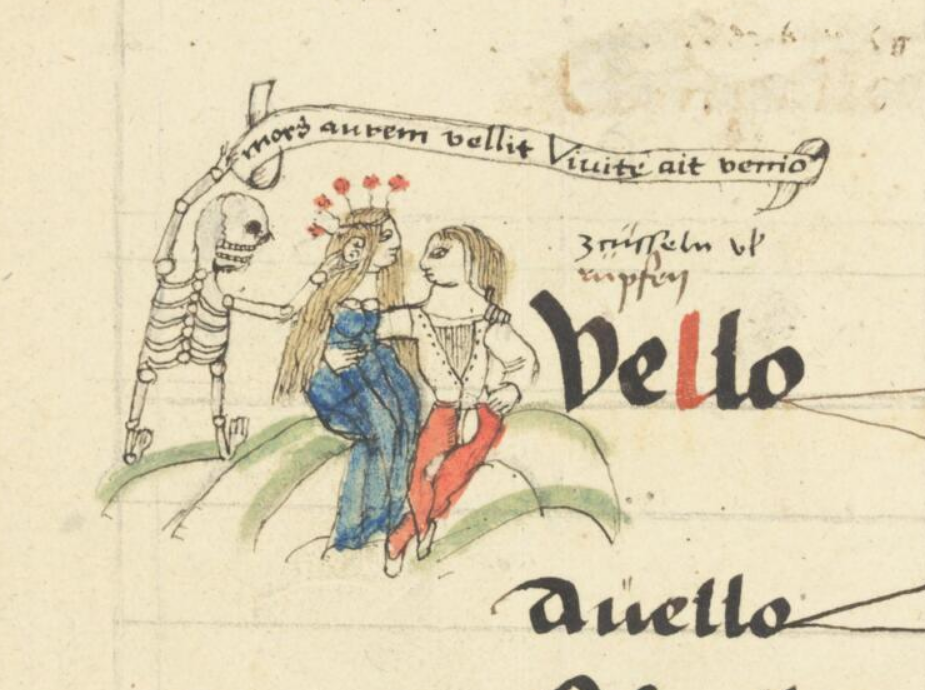
Death twitches my ear. “Live,” he says; “I am coming.”
[Pereat qui crastina curat.
Mors aurem vellens Vivite, ait, venio.]Virgil (70-19 BC) Roman poet [b. Publius Vergilius Maro; also Vergil]
“Copa [The Dancing Girl / The Barmaid / The Female Tavern Keeper],” ll. 37-38, Appendix Vergiliana [Minor Poems]
(Source)
The Appendix Vergiliana were long considered authentic, if younger, poems by Virgil, but scholars today consider them to be by other, unknown authors from around the 1st Century AD, collected in Late Antiquity.
Oliver Wendell Holmes, Jr., quoted the line in a radio address on his ninetieth birthday (1931-03-08), as noted below.
(Source (Latin)). Alternate translations:Away with him who heeds the morrow! Death, plucking the ear, cries: "Live; I come!"
[tr. Fairclough (1908)]Let him perish who
Doth care about to-morrow. Death your ear
Demands and says, "I come, so live to-day."
[tr. Mooney (1916)]Death plucks my ear and says, Live -- I am coming.
[tr. Holmes (1931)]Never mind tomorrow. In my ear
Death whispers: "Live! I'm coming. I am here!"
[tr. Slavitt (2011)]