Patience is bitter, but its fruit is sweet.
[La patience est amère, mais son fruit est doux.]
Jean-Jacques Rousseau (1712–1778) French philosopher and writer
Julie, or the New Heloise [Julie ou la Nouvelle Héloïse], Part 1, Letter 46 (from Julie) (1761) [tr. Stewart / Vaché]
(Source)
Sometimes mis-cited to his Émile (1762). The sentiment is not necessarily original to Rousseau; the line is also credited to Aristotle, an ancient Chinese proverb, an ancient Persian proverb, etc.
The cited translation is from a newer source, but that way of wording it is extant by 1873. Another translation:Patience is exceeding bitter; but its fruits are most delightfully sweet.
[tr. Kenrick (1784)]
Quotations about:
waiting
Note not all quotations have been tagged, so Search may find additional quotes on this topic.
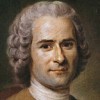
But you can’t make people listen. They have to come ’round in their own time, wondering what happened and why the world blew up under them.
Ray Bradbury (1920–2012) American writer, futurist, fabulist
Fahrenheit 451, Part 3 “Burning Bright” [Granger] (1953)
(Source)
GENERAL FINCH: Waiting for this mysterious scientific advisor of yours to turn up?
BRIGADIER LETHBRIDGE-STEWART: That’s right, sir.
GENERAL FINCH: Hmmmm. [sarcastically] I suppose he’ll just materialize out of thin air.
BRIGADIER LETHBRIDGE-STEWART: Very probably.
Doctor Who (1963–1989) British science fiction television series, original run (BBC)
11×02 “Invasion of the Dinosaurs,” Part 1 (1974-01-12) [w. Malcolm Hulke]
(Source)
(Source (Video); dialog verified)


He who puts off the hour to begin living rightly
Is like the yokel who stands at the stream with a sigh:
“I can’t get across. I’ll wait here till it runs dry.”
Meanwhile, it flows, forever flows on and rolls by.[Qui recte vivendi prorogat horam,
rusticus exspectat dum defluat amnis; at ille
labitur et labitur in omne volubilis aevum.]Horace (65–8 BC) Roman poet, satirist, soldier, politician [Quintus Horatius Flaccus]
Epistles [Epistularum, Letters], Book 1, ep. 2 “To Lollius,” l. 41ff (1.2.41-42) (20 BC) [tr. Palmer Bovie (1959)]
(Source)
(Source (Latin)). Other translations:Who so dryves of good déedes, he playes the farmers part,
Who will not overslip the brooke whilste that the water falls,
The water runnes, and kepes his course, and ever kepe it shall.
[tr. Drant (1567)]He who defers this work from day to day,
Does on a river's bank expecting stay,
Till the whole stream which stopt him should be gone,
That runs, and as it runs, forever will run on.
[tr. Cowley (17th C)]He that to rule
And square his life, prolongs, is like the Fool
Who staid to have the River first pass by,
Which rowles and rowles to all Eternity.
[tr. Fanshawe; ed. Brome (1666)]So stayes the Clown till th' hasty Brook be dri'd,
But th' everlasting streams still still do glide.
[tr. "Dr. W."; ed. Brome (1666)]He that deferrs to live is like the Clown,
Who waits, expecting till the River's gone:
But that still rouls its Streams, and will roul on.
[tr. Creech (1684)]And sure the man, who has it in his power
To practise virtue, and protracts the hour,
Waits, like the rustic, till the river dried:
Still glides the river, and will ever glide.
[tr. Francis (1747)]He that defers life's task from day to day,
Is like the simple clown who thought to stay
Till the full stream that stopt him should be gone: --
Alas! the tide still rolls and ever will roll on!
[tr. Howes (1845)]He who postpones the hour of living well, like the hind [in the fable], waits till [all the water in] the river be run off: whereas it flows, and will flow, ever rolling on.
[tr. Smart/Buckley (1853)]He who puts off the time for mending, stands
A clodpoll by the stream with folded hands,
Waiting till all the water be gone past;
But it runs on, and will, while time shall last.
[tr. Conington (1874)]He that would mend his life, yet still delays
To set to work, is like the boor who stays
Till the broad stream that bars his way is gone.
But on still flows the stream, and ever will flow on.
[tr. Martin (1881)]Whoever puts off the course of a right life waits, like the rustic, until the stream shall stop. But it rolls on, and will continue to roll on to every age.
[tr. Elgood (1893)]He who puts off the hour of right living is like the bumpkin waiting for the river to run out: yet on it glides, and on it will glide, rolling its flood forever.
[tr. Fairclough (Loeb) (1926)]Any man delaying when he could be living right
is like the hayseed who waits for the river to stop:
it flows and flows -- in fact, it rushes -- forever.
[tr. Fuchs (1977)]The fool waits
For the river to run by, so he can cross, but it runs forever,
On and on, and always will. Now is the time.
[tr. Raffel (1983)]The man who puts off
The time to start living right is like the hayseed
Who wants to cross the river and so he sits there
Waiting for the river to run out of water,
And the river flows by, and it flows on by, forever.
[tr. Ferry (2001)]The man who postpones the hour of reform
is the yokel who waits for the river to pass; but it continues
and will continue gliding and rolling for ever and ever.
[tr. Rudd (2005 ed.)]He who postpones the time for right-living resembles
The rustic who’s waiting until the river’s passed by:
Yet it glides on, and will roll on, gliding forever.
[tr. Kline (2015)]He who postpones the hour of living rightly is like the rustic who waits for the river to run out before he crosses, yet on it glides, and will glide on forever.
[E.g.]He who postpones the hour of living rightly, is like the rustic who waits till the river shall have passed away; but that still flows, and will continue to flow to perpetuity.
[E.g.]
Each man thought: one of the others is bound to say something soon, some protest and then I will murmur agreement, not actually say anything. I am not as stupid as that, but definitely murmur very firmly, so that the others will be in no doubt that I thoroughly disapprove, because at a time like this it behooves all decent men to nearly stand up and be almost heard …
But no one said anything. The cowards, each man thought.

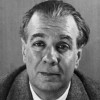
So you plant your own gardens and decorate your own soul, instead of waiting for someone to bring you flowers.
[Así que uno planta su propio jardín y decora su propia alma, en lugar de esperar a que alguien le traiga flores.]
Jorge Luis Borges (1899–1986) Argentine writer
Poem (1940s), “You Learn [Aprendiendo]” (Attributed)
(Source)
(Source (Spanish)).
Also titled as "Comes the Dawn" and "After a While". This line, when given on its own, is often elided as "Plant your own ..." or "So plant your own ..."
These lines appear to be from a poem "Aprendiendo" (or "Uno Aprende" or "Con El Tiempo"), said to be written by Borges in Spanish in the 1940s, and possibly translated to English in the late 60s/early 70s while Borges was lecturing in the US.
The English version first came to light in 1992 with an inquiry to the Ann Landers syndicated advice column about an anonymous poem found at a craft store.
Since the association of that English version to Borges, many have (sometimes vehemently) questioned Borges' authorship (due to stylistic differences from his other work). Others have claimed credit, most prominently Veronica A. Shoftstall (who said she had written the English version at age 19 in 1971, and who has since copyrighted it). The Spanish version has also been attributed to Columbian poet Yamira Hernandez. The English has even been attributed to Shakespeare, because why not?
For more information and discussion see:
It was this fear which led me into the snare of procrastination. But if I make haste now I regain all; if I delay I lose all.
[Hoc verens in hanc tarditatem incidi. Bed adsequar omnia si propero: si cunctor, amitto.]
Marcus Tullius Cicero (106–43 BC) Roman orator, statesman, philosopher
Epistulae ad Atticum [Letters to Atticus], Book 10, Letter 8, sec. 5 (10.8.5) (49 BC) [tr. Jeans (1880), # 71]
(Source)
On the concerning prospect of Caesar and Pompey reconciling while both were irked at Cicero.
(Source (Latin)). Other translations:It was from dread of this that I drifted into this waiting policy. But now I have everything to gain by hastening, everything to lose by delay.
[tr. Shuckburgh (1900), # 391]That fear of mine led me to delay. But I gain all now by haste, and, if I delay, I lose all.
[tr. Winstedt (Loeb) (1913)]This fear led me into such procrastination. But I shall gain all if I make haste; if I delay, I lose all.
[tr. Shackleton Bailey (1968), # 199]
Our waiting is not nothing. It is something — a very big something — because people tend to be shaped by whatever it is they are waiting for.
Barbara Brown Taylor (b. 1951) American minister, academic, author
Sermon (1995), “Waiting in the Dark,” Gospel Medicine
(Source)

PATIENCE, n. A minor form of despair, disguised as a virtue.
Ambrose Bierce (1842–1914?) American writer and journalist
“Patience,” The Devil’s Dictionary (1911)
(Source)
Originally published in the "Cynic's Word Book" column in the New York American (1904-12-26), and the "Cynic's Dictionary" column in the San Francisco Examiner (1905-01-03).

And to await a pleasure, is itself a pleasure.
[Und ein Vergnügen erwarten, ist auch ein Vergnügen.]Gotthold Lessing (1729–1781) German playwright, philosopher, dramaturg, writer
Minna von Barnhelm, Act 4, sc. 6 [Minna] (1763) [tr. Holroyd/Bell (1888)]
(Source)
He that waits upon Fortune, is never sure of a Dinner.
Benjamin Franklin (1706–1790) American statesman, scientist, philosopher, aphorist
Poor Richard (1734 ed.)
(Source)
“Yet doth he live!” exclaims th’ impatient heir,
And sighs for sables which he must not wear.
Anyway, one of the first things you learn in space is not to thrash. If you have nothing constructive to do, the most constructive thing you can do is often nothing at all. In a mindful sense, I mean. Thrashing is the thing that gets people killed. Not sitting still.
Elizabeth Bear (b. 1971) American author [pseud. for Sarah Bear Elizabeth Wishnevsky]
Ancestral Night (2019)
(Source)

So everything that slows us down and forces patience, everything that sets us back into the slow circles of nature, is a help. Gardening is an instrument of grace.
May Sarton (1912–1995) Belgian-American poet, novelist, memoirist [pen name of Eleanore Marie Sarton]
Journal of a Solitude (1973)
(Source)

I was waiting for
something extraordinary to
happenbut as the years wasted on
nothing ever did unless I
caused itCharles Bukowski (1920–1994) German-American author, poet
“two kinds of hell” (c. 1990)
(Source)
While this sounds motivational, in the context of the poem, the "extraordinary" things (bar fights, dalliances) always end up poorly.
First published in Third Lung Review, #8 (1992); collected in an edited version in The People Look Like Flowers at Last (2007).
I am the world’s original gradualist. I just think ninety-odd years is gradual enough.
Thurgood Marshall (1908–1993) American lawyer, US Supreme Court Justice (1967–1991)
Quoted in I. F. Stone’s Weekly (19 May 1958)
(Source)
In response to Eisenhower's speech to the National Newspaper Publishers Association, where the President called for "patience and forbearance" on civil rights reform.
Also that year, during the effort by Autherine Lucy to be admitted to the segregated University of Alabama, Marshall similarly quipped, "Maybe you can't override prejudice overnight, but the Emancipation Proclamation was issued in 1864, ninety-odd years ago. I believe in gradualism, and I also believe that ninety-odd years is pretty gradual."
Every parent is at some time the father of the unreturned prodigal, with nothing to do but keep his house open to hope.
John Ciardi (1916–1986) American poet, writer, critic
“Of Time and Chances: A Parental Reverie,” Saturday Review (1972-03-18)
(Source)
There are two kinds of people in one’s life — people whom one keeps waiting — and the people for whom one waits.
S. N. Behrman (1893–1973) American playwright, screenwriter, biographer, writer [Samuel Nathaniel Behrman]
Biography, Act 1 [Feydak] (1933)
(Source)
It’s a terrible thing, I think, in life to wait until you’re ready. I have this feeling now that actually no one is ever ready to do anything. There is almost no such thing as ready. There is only now. And you may as well do it now.
Hugh Laurie (b. 1959) English actor, writer, musician, singer
Interview with Sophie Harris, Time Out: New York (1 Sep 2012)
(Source)

MARVIN: The first ten million years were the worst. And the second ten million, they were the worst too. The third ten million I didn’t enjoy at all. After that I went into a bit of a decline.
Douglas Adams (1952–2001) English author, humorist, screenwriter
Hitchhiker’s Guide to the Galaxy, Phase 1, “Fit the 5th” (BBC Radio) (1978-04-05)
(Source)
When adapted as a novel, Hitchhiker's Guide No. 2, The Restaurant at the End of the Universe, ch. 18 (1980), this line by Marvin the Paranoid Android remained the same.

Now because 18 months ago the first dawn, three months ago broad daylight, but a very few days ago the full sun of the most highly remarkable spectacle has risen — nothing holds me back. I can give myself up to the sacred frenzy, I can have the insolence to make a full confession to mortal men that I have stolen the golden vessel of the Egyptians to make from them a tabernacle for my God far from the confines of the land of Egypt. If you forgive me I shall rejoice; if you are angry, I shall bear it; I am indeed casting the die and writing the book, either for my contemporaries or for posterity to read, it matters not which: let the book await its reader for a hundred years; God himself has waited six thousand years for his work to be seen.
Johannes Kepler (1571–1630) German astronomer
The Harmonies of the World [Harmonices Mundi], Book 5, Introduction (1618)
Other translations:
- "It may well wait a century for a reader, as God has waited six thousand years for an observer." [in David Brewster, The Martyrs of Science; or, the Lives of Galileo, Tycho Brahe, and Kepler (1841)]
- "It may be well to wait a century for a reader, as God has waited six thousand years for an observer."
- "I feel carried away and possessed by an unutterable rapture over the divine spectacle of heavenly harmony ... I write a book for the present time, or for posterity. It is all the same to me. It may wait a hundred years for its readers, as God has also waited six thousand years for an onlooker." [in S Krantz and B Blank, Calculus: Multivariable (2006)]
- "I am stealing the golden vessels of the Egyptians to build a tabernacle to my God from them, far far away from the boundaries of Egypt. If you forgive me, I shall rejoice.; if you are enraged with me, I shall bear it. See, I cast the die, and I write the book. Whether it is to be read by the people of the present or of the future makes no difference: let it await its reader for a hundred years, if God himself has stood ready for six thousand years for one to study him."

Man’s greatest strength is shown in standing still.
Edward Young (1683–1765) English poet
Poem (1745-03), “Night the 8th: Virtue’s Apology,” l. 922, The Complaint: Or, Night Thoughts, Vol. 2 (1748)
(Source)

My whole life is waiting for the questions to which I have prepared answers.
Tom Stoppard (1937–2025) Czech-English playwright and screenwriter
Lord Malquist and Mr Moon, ch. 2 “A Couple of Deaths and Exits” (1966)

God’s Mill grinds slow, but sure.
George Herbert (1593–1633) Welsh priest, orator, poet.
Jacula Prudentum, or Outlandish Proverbs, Sentences, &c. (compiler), # 747 (1640 ed.)
(Source)
No one knows, however, when that day or hour will come — neither the angels in heaven, nor the Son; only the Father knows. Be on watch, be alert, for you do not know when the time will come. It will be like a man who goes away from home on a trip and leaves his servants in charge, after giving to each one his own work to do and after telling the doorkeeper to keep watch. Watch, then, because you do not know when the master of the house is coming — it might be in the evening or at midnight or before dawn or at sunrise. If he comes suddenly, he must not find you asleep. What I say to you, then, I say to all: Watch!
[Περὶ δὲ τῆς ἡμέρας ἐκείνης ἢ τῆς ὥρας οὐδεὶς οἶδεν, οὐδὲ οἱ ἄγγελοι ἐν οὐρανῷ οὐδὲ ὁ υἱός, εἰ μὴ ὁ πατήρ. βλέπετε, ἀγρυπνεῖτε· οὐκ οἴδατε γὰρ πότε ὁ καιρός ἐστιν. ὡς ἄνθρωπος ἀπόδημος ἀφεὶς τὴν οἰκίαν αὐτοῦ καὶ δοὺς τοῖς δούλοις αὐτοῦ τὴν ἐξουσίαν ἑκάστῳ τὸ ἔργον αὐτοῦ καὶ τῷ θυρωρῷ ἐνετείλατο ἵνα γρηγορῇ. γρηγορεῖτε οὖν· οὐκ οἴδατε γὰρ πότε ὁ κύριος τῆς οἰκίας ἔρχεται, ἢ ὀψὲ ἢ μεσονύκτιον ἢ ἀλεκτοροφωνίας ἢ πρωΐ, μὴ ἐλθὼν ἐξαίφνης εὕρῃ ὑμᾶς καθεύδοντας. ὃ δὲ ὑμῖν λέγω πᾶσιν λέγω, γρηγορεῖτε.]
The Bible (The New Testament) (AD 1st - 2nd C) Christian sacred scripture
Book 2. Gospel of Mark 13:32ff (Mark 13:32–37) (Jesus) [GNT (1966)]
(Source)
This passage is said by some to parallel Matthew 25:13-30 and Luke 19:12-27 (the Parable of the Talents), though it is missing key elements of that story.
The NRSV notes that some manuscripts include "and pray" after the first "keep alert" (as in the KJV translation).
(Source (Greek)). Other translations:But of that day and that hour knoweth no man, no, not the angels which are in heaven, neither the Son, but the Father. Take ye heed, watch and pray: for ye know not when the time is. For the Son of man is as a man taking a far journey, who left his house, and gave authority to his servants, and to every man his work, and commanded the porter to watch. Watch ye therefore: for ye know not when the master of the house cometh, at even, or at midnight, or at the cockcrowing, or in the morning: lest coming suddenly he find you sleeping. And what I say unto you I say unto all, Watch.
[KJV (1611)]But as for that day or hour, nobody knows it, neither the angels of heaven, nor the Son; no one but the Father. Be on the alert. Be on your guard, stay awake, because you never know when the time will come. It is like a man travelling abroad: he has gone from home, and left his servants in charge, each with his own task; and he has told the doorkeeper to stay awake. So stay awake, because you do not know when the master of the house is coming, evening, midnight, cockcrow, dawn; if he comes unexpectedly, he must not find you asleep. And what I say to you I say to all: Stay awake!
[JB (1966)]But as for that day or hour, nobody knows it, neither the angels in heaven, nor the Son; no one but the Father. Be on your guard, stay awake, because you never know when the time will come. It is like a man travelling abroad: he has gone from his home, and left his servants in charge, each with his own work to do; and he has told the doorkeeper to stay awake. So stay awake, because you do not know when the master of the house is coming, evening, midnight, cockcrow or dawn; if he comes unexpectedly, he must not find you asleep. And what I am saying to you I say to all: Stay awake!
[NJB (1985)]But nobody knows when that day or hour will come, not the angels in heaven and not the Son. Only the Father knows. Watch out! Stay alert! You don’t know when the time is coming. It is as if someone took a trip, left the household behind, and put the servants in charge, giving each one a job to do, and told the doorkeeper to stay alert. Therefore, stay alert! You don’t know when the head of the household will come, whether in the evening or at midnight, or when the rooster crows in the early morning or at daybreak. Don’t let him show up when you weren’t expecting and find you sleeping. What I say to you, I say to all: Stay alert!
[CEB (2011)]But about that day or hour no one knows, neither the angels in heaven nor the Son, but only the Father. Beware, keep alert, for you do not know when the time will come. It is like a man going on a journey, when he leaves home and puts his slaves in charge, each with his work, and commands the doorkeeper to be on the watch. Therefore, keep awake, for you do not know when the master of the house will come, in the evening or at midnight or at cockcrow or at dawn, or else he may find you asleep when he comes suddenly. And what I say to you I say to all: Keep awake.
[NRSV (2021 ed.)]

Why did we wait for any thing? — why not seize the pleasure at once? — How often is happiness destroyed by preparation, foolish preparation!
Jane Austen (1775–1817) English author
Emma, Vol. 2, ch. 12 (ch. 30) [Frank Churchill] (1816)
(Source)

A Man who is a Master of Patience is Master of everything else.
George Savile, Marquis of Halifax (1633–1695) English politician and essayist
“Patience,” Political, Moral, and Miscellaneous Thoughts and Reflections (1750)
(Source)