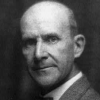
What was the crime? To complain. What was the crime? To suffer. Let misery hide and be silent, otherwise it is lèse-majesté.
[Quel était l’attentat? se plaindre. Quel était le crime? souffrir. Que la misère se cache et se taise, sinon elle est lèse-majesté.]
Victor Hugo (1802–1885) French writer, journalist, human rights activist, politician
The Man Who Laughs [L’Homme qui rit; The Laughing Man; By Order of the King], Part 2, Book 9, ch. 2 (.2.9.2) (1869) [tr. Lavelle (2003)]
(Source)
The attitude of the powerful and the courts when confronted by suffering and injustice.
(Source (French)). Other translations:What was the outrage? Disfigurement. What was the crime? Suffering. Let misery hide itself in silence, otherwise it becomes treason.
[tr. Unknown (1869)]What was the outrage? Complaint. What was the crime? Suffering. Let misery hide itself in silence, otherwise it becomes treason.
[tr. Unknown, Authorized (1871)]What was the outrage? -- Complaint. What was the crime? -- Suffering. Let misery hide itself in silence, otherwise it becomes treason.
[tr. Hapgood (1888)]Which was the outrage? The complaint. Which was the crime? The suffering. Let misery hide and be silent; otherwise it becomes high treason.
[tr. Phillips (1894)]
Quotations about:
complaint
Note not all quotations have been tagged, so Search may find additional quotes on this topic.

Many complain of their Memory, few of their Judgment.
Benjamin Franklin (1706–1790) American statesman, scientist, philosopher, aphorist
Poor Richard (1745 ed.)
(Source)
Not an original sentiment from Franklin. See, for example, Montaigne (1578), La Rochefoucauld (1666).

God bears with imperfect beings, even when they resist his goodness. We ought to imitate this merciful patience and endurance. It is only imperfection that complains of what is imperfect. The more perfect we are the more gentle and quiet we become towards the defects of others.
François Fénelon (1651–1715) French Catholic archbishop, theologian, poet, writer [François de Salignac de la Mothe-Fénelon]
Letter (1710-10-11) to Duchess de Montemart
(Source)
Sometimes misattributed to Joseph Addison.
This is a shortened version, from Selections from the Writings of Fénelon, Letter 37 [tr. Follen (1829)], of a passage given in Fénelon's Letters to Women, Letter 116 [tr. Lear (1921)] as:Sometimes even it is necessary to imitate God's dealings with souls, Who often so softens His rebuke that the person rebuked feels rather as though he were accusing himself than being accused. Anything like impatient reproof from being shocked at great faults becomes a very human correction, not that of grace.Our own imperfection makes us hasty to rebuke the imperfect, and it is a very subtle and ll-permeating self-love which cannot forgive the self-love of others. The stronger it is, the more critical the censor will be: there is nothing so irritating to a proud, self-willed mind, as the self-will of a neighbor; and another man's passions seem intolerably ridiculous and unbearable to one who is given up to his own. But he who is full oft he love of God, on the contrary, is full of forbearance, consideration, and indulgence. He waits and adapts himself, and goes softly, one step at a time: the less self-love he has, the more he tolerates that of others in order to heal it.

And to pursue pleasure as good, and flee from pain as evil — that too is blasphemous. Someone who does that is bound to find himself constantly reproaching nature — complaining that it doesn’t treat the good and bad as they deserve, but often lets the bad enjoy pleasure and the things that produce it, and makes the good suffer pain, and the things that produce pain.
[καὶ μὴν ὁ τὰς ἡδονὰς ὡς ἀγαθὰ διώκων, τοὺς δὲ πόνους ὡς κακὰ φεύγων ἀσεβεῖ: ἀνάγκη γὰρ τὸν τοιοῦτον μέμφεσθαι πολλάκις τῇ κοινῇ φύσει ὡς παῤ ἀξίαν τι ἀπονεμούσῃ τοῖς φαύλοις καὶ τοῖς σπουδαίοις, διὰ τὸ πολλάκις τοὺς μὲν φαύλους ἐν ἡδοναῖς εἶναι καὶ τὰ ποιητικὰ τούτων κτᾶσθαι, τοὺς δὲ σπουδαίους πόνῳ καὶ τοῖς ποιητικοῖς τούτου περιπίπτειν.]
Marcus Aurelius (AD 121–180) Roman emperor (161–180), Stoic philosopher
Meditations [To Himself; Τὰ εἰς ἑαυτόν], Book 9, ch. 1 (9.1) (AD 161-180) [tr. Hays (2003)]
(Source)
(Source (Greek)). Alternate translations:He also that pursues after pleasures, as that which is truly good and flies from pains, as that which is truly evil: is impious. For such a one must of necessity oftentimes accuse that common nature, as distributing many things both unto the evil, and unto the good, not according to the deserts of either: as unto the bad oftentimes pleasures, and the causes of pleasures; so unto the good, pains, and the occasions of pains.
[tr. Casaubon (1634)]Farther: He that reckons Prosperity and Pleasure among Things really Good; Pain and Hardship amongst Things really Evil , can be no Pious Person: For such a Man will be sure to complain of the Administrations of Providence, Charge it with Mismatching Fortune, and Merit, and misapplying Rewards and Punishments: He'll often see Ill People furnish'd with Materials for Pleasure, and Regaled with the Relish of it : And good Men harrass'd and deprest, and meeting with nothing but Misfortune.
[tr. Collier (1701)]He, too, who pursues pleasure as good, and shuns pain as evil, is guilty of impiety: for such a one must needs frequently blame the common nature, as making some unworthy distributions to the bad and the good; because the bad oftimes enjoy pleasures, and possess the means of them; and the good often meet with pain, and what causes pain.
[tr. Hutcheson/Moor (1742)]Moreover, he who pursues pleasure, as if it were really good, or flies from pain, as if it were evil, he also is guilty of impiety. For he that is thus disposed, must necessarily complain often of the dispensations of Providence, as distributing its favours to the wicked and to the virtuous, without regard to their respective deserts; the wicked frequently abounding in pleasures, and in the means of procuring them, and the virtuous, on the contrary, being harassed with pain, and other afflictive circumstances.
[tr. Graves (1792)]And indeed he who pursues pleasure as good, and avoids pain as evil, is guilty of impiety. For of necessity such a man must often find fault with the universal nature, alleging that it assigns things to the bad and the good contrary to their deserts, because frequently the bad are in the enjoyment of pleasure and possess the things which procure pleasure, but the good have pain for their share and the things which cause pain.
[tr. Long (1862)]Further, he that reckons prosperity and pleasure among things really good, pain and hardship amongst things really evil, can be no pious person; for such a man will be sure to complain of the administrations of Providence, and charge it with mismatching fortune and merit. He will often see evil people furnished with materials for pleasure and regaled with the relish of it, and good men harassed and depressed, and meeting with nothing but misfortune.
[tr. Collier/Zimmern (1887)]Again, to seek pleasures as good, or to shun pains as evil, is to sin. For it inevitably leads to complaining against Nature for unfair awards to the virtuous and to the vile, seeing that the vile are oftentimes in pleasure and come by things pleasurable, while the virtuous are overtaken by pain and things painful.
[tr. Rendall (1898)]He, too, who pursues pleasure as good, and shuns pain as evil, is guilty of impiety. Such a one must needs frequently blame the common nature for unseemly awards of fortune to bad and to good men. For the bad often enjoy pleasures and possess the means to attain them, and the good often meet with pain and with what causes pain.
[tr. Hutcheson/Chrystal (1902)]Again he acts impiously who seeks after pleasure as a good thing and eschews pain as an evil. For such a man must inevitably find frequent fault with the Universal Nature as unfair in its apportionments to the worthless and the worthy, since the worthless are often lapped in pleasures and possess the things that make for pleasure, while the worthy meet with pain and the things that make for pain.
[tr. Haines (Loeb) (1916)]Moreover, he who runs after pleasures as goods and away from pains as evils commits sin; for being such a man he must necessarily often blame Universal Nature for distributing to bad and good contrary to their desert, because the bad are often employed in pleasures and acquire what may produce these, while the good are involved in pain and in what may produce this.
[tr. Farquharson (1944)]Again, it is a sin to pursue pleasure as a good and to avoid pain as an evil. It is bound to result in complaints that Nature is unfair in her rewarding of vice and virtue; since it is the bad who are so often in enjoyment of pleasures and the means to obtain them, while pains and events that occasion pains descend upon the heads of the good.
[tr. Staniforth (1964)]Again, one who pursues pleasure as good and tries to avoid pain as an evil is acting irreverently; for it is inevitable that such a person must often find fault with universal nature for assigning something to good people or bad which is contrary to their deserts, because it is so often the case that the bad devote themselves to pleasure and secure the things that give rise to it whilstr the good encounter pain and what gives rise to that.
[tr. Hard (1997 ed.)]Moreover, the pursuit of pleasure as a good and the avoidance of pain as an evil constitutes sin. Someone like that must inevitably and frequently blame universal Nature for unfair distribution as between bad men and good, since bad men are often deep in pleasures and the possessions which make for pleasure, while the good often meet with pain and the circumstances which cause pain.
[tr. Hammond (2006)]Again, one who pursues pleasures as being good and tries to avoid pains as being bad is acting irreverently; for it is inevitable that such a person must often find fault with universal nature for assigning something to good people or bad that is contrary to their deserts, because it is so often the case that the bad devote themselves to pleasure and secure the things that give rise to it while the good encounter pain and what gives rise to that.
[tr. Hard (2011 ed.)]

BARABAS: No, Abigail, things past recovery
Are hardly cur’d with exclamations.Christopher "Kit" Marlowe (1564–1593) English dramatist and poet
The Jew of Malta, Act 3, sc. 1, l. 237ff (c. 1590)
(Source)

What has died does not fall out of the universe; and if it remains here, it is also transformed here and resolved into its constituent parts, which are the elements of the universe and of yourself. And these elements themselves are transformed and utter no complaint.
[Ἔξω τοῦ κόσμου τὸ ἀποθανὸν οὐ πίπτει. εἰ ὧδε μένει καὶ μεταβάλλει ὧδε καὶ διαλύεται εἰς τὰ ἴδια, ἃ στοιχεῖά ἐστι τοῦ κόσμου καὶ σά. καὶ αὐτὰ δὲ μεταβάλλει καὶ οὐ γογγύζει.]
Marcus Aurelius (AD 121–180) Roman emperor (161–180), Stoic philosopher
Meditations [To Himself; Τὰ εἰς ἑαυτόν], Book 8, ch. 18 (8.18) (AD 161-180) [tr. Hard (1997 ed.)]
(Source)
(Source (Greek)). Alternate translations:Whatsoever dieth and falleth, however and wheresoever it die and fall, it cannot fall out of the world. here it have its abode and change, here also shall it have its dissolution into its proper elements. The same are the world's elements, and the elements of which thou dost consist. And they when they are changed, they murmur not; why shouldest thou?
[tr. Casaubon (1634), 8.16]Whatever drops out of Life, is catch't up somewhere, for the World loses nothing. Within this Circumference of Corporeity, all things have their several Formes, and Revolutions ; And here 'tis likewise that they return into Element, and first Principle ; Under which Notion those of the World and your own, are the very same; And all these last Changes are made without the least Repining : And why then should the same Matter that lyes quiet in an Element, Grumble in a Man?
[tr. Collier (1701)]What dies is not gone out of the verge of the universe. If that which is dissolved stays here, and is changed, it returns to those elements, of which the world and you too consist. These too are changed, and don’t murmur at it.
[tr. Hutcheson/Moor (1742)]Nothing that dies, is lost to the universe, or annihilated. But, if it remains here, it undergoes some change, and is resolved into its proper elements. Now the same elements which compose the rest of the world make a part of your person; yet those undergo many changes, and do not murmur or repine.
[tr. Graves (1792)]That which has died falls not out of the universe. If it stays here, it also changes here, and is dissolved into its proper parts, which are elements of the universe and of thyself. And these too change, and they murmur not.
[tr. Long (1862)]Whatever drops out of life is somewhere, for the world loses nothing. If it stays here, it also changes here, and is dissolved into its proper parts, which are elements of the universe and of yourself. And these two change and do not complain.
[tr. Collier/Zimmern (1887)]That which dies does not drop out of the universe. Here it bides, and here too it changes and is dispersed into its elements, the rudiments of the universe and of yourself. And they too change, and murmur not.
[tr. Rendall (1898)]That which dies falls not out of the Universe. If then it stays here, here too it suffers a change, and is resolved into those elements of which the world, and you too, consist. These also are changed, and murmur not.
[tr. Hutcheson/Chrystal (1902)]That which dies is not cast out of the Universe. As it remains here, it also suffers change here and is dissolved into its own constituents, which are the elements of the Universe and thy own. Yes, and they too suffer change and murmur not.
[tr. Haines (Loeb) (1916)]What dies does not fall outside the Universe. If it remains here and changes here, it is also resolved here into the eternal constituents, which are elements of the Universe and of yourself. And the elements themselves change and make no grievance of it.
[tr. Farquharson (1944)]That which dies does not drop out of the world. Here it remains; and here too, therefore, it changes and is resolved into its several particles; that is, into the elements which go to form the universe and yourself. They themselves likewise undergo change, and yet from them comes no complaint.
[tr. Staniforth (1964)]What dies doesn’t vanish. It stays here in the world, transformed, dissolved, as parts of the world, and of you. Which are transformed in turn -- without grumbling.
[tr. Hays (2003)]What dies does not pass out of the universe. If it remains here and is changed, then here too it is resolved into the everlasting constituents, which are the elements of the universe and of you yourself. These too change, and make no complaint of it.
[tr. Hammond (2006)]What has died does not fall out of the universe; and if it remains here, it is also transformed here and resolved into its own constituents, which are the elements of the universe and of yourself. And these elements themselves are transformed and utter no complaint.
[tr. Hard (2011 ed.)]
Thare iz nothing we are more apt to parade before others, than our kares and sorrows, and thare iz nothing the world kares so little about.
[There is nothing we are more apt to parade before others, than our cares and sorrows, and there is nothing the world cares so little about.]
Josh Billings (1818–1885) American humorist, aphorist [pseud. of Henry Wheeler Shaw]
Josh Billings’ Farmer’s Allminax, 1875-12 (1875 ed.)
(Source)

He that goeth about to persuade a multitude, that they are not so well governed as they ought to be, shall never want attentive and favorable hearers.
Richard Hooker (1554–1600) English theologian
Of the Laws of Ecclesiastical Polity, Book 1, ch. 1 (1594)
(Source)

We derive a certain satisfaction from being sinned against. It is not only that a grievance adds content to our lives, but also that it makes less monstrous the flame of malice which like a vigil light flickers in the dimness of our souls.
Eric Hoffer (1902–1983) American writer, philosopher, longshoreman
Passionate State of Mind, Aphorism 120 (1955)
(Source)

ELECTRA: Our folk are hard to please, and love to blame.
[ἨΛΈΚΤΡΑ: δυσάρεστος ἡμῶν καὶ φιλόψογος πόλις.]
Euripides (485?-406? BC) Greek tragic dramatist
Electra [Ἠλέκτρα], l. 904 (c. 420 BC) [tr. Coleridge (1938 ed.)]
(Source)
On her concern that people will criticize her for speaking ill of dead Aegisthus, even though he was complicit in the death of her father, Agamemnon.
(Source (Greek)). Other translations:Our city is morose, and prone to slander.
[tr. Wodhull (1809)]Our citizens are hard to please, and love to blame.
[tr. Coleridge (1891)]Our city is hard to please and fond of slander.
[tr. Buckley (1892)]Our folk be ill to please, and censure-prone.
[tr. Way (1896)]Our city gives
Quick blame; and little love have men for me.
[tr. Murray (1905)]The city has an ill will towards us. Argos will shun us.
[tr. Theodoridis (2006)]Still, the city
is hard to please and loves to criticize.
[tr. Johnston (2009)]Our state is hard to please and loves complaints.
[tr. @sentantiq (2020)]
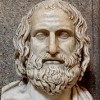
The worst wheel of the cart makes the most noise.
Benjamin Franklin (1706–1790) American statesman, scientist, philosopher, aphorist
Poor Richard (1737 ed.)
(Source)
ADRIANA: He is deformèd, crooked, old, and sere,
Ill-faced, worse-bodied, shapeless everywhere,
Vicious, ungentle, foolish, blunt, unkind,
Stigmatical in making, worse in mind.William Shakespeare (1564–1616) English dramatist and poet
Comedy of Errors, Act 4, sc. 2, l. 21ff (4.2.21-24) (1594)
(Source)

ADRIANA: A wretched soul bruised with adversity
We bid be quiet when we hear it cry,
But were we burdened with like weight of pain,
As much or more we should ourselves complain.William Shakespeare (1564–1616) English dramatist and poet
Comedy of Errors, Act 2, sc. 1, l. 34ff (2.1.34-37) (1594)
(Source)
A complaint that’s not looking for a solution is a disease not looking for a cure.
Dennis Lehane (b. 1965) American novelist, screenwriter
Since We Fell (2017)
(Source)
A frequent saying of the character Brian Delacroix.

There is nothing as easy as denouncing. […] It don’t take much to see that something is wrong, but it does take some eyesight to see what will put it right again.
Will Rogers (1879–1935) American humorist
Column (1935-07-28), “Weekly Article: The Lawyers Talking”
(Source)

People complain about the bad things that happen to em that they don’t deserve but they seldom mention the good. About what they done to deserve them things. I don’t recall that I ever give the good Lord all that much cause to smile on me. But he did.
Cormac McCarthy (1933–2023) American novelist, playwright, screenwriter
No Country for Old Men, ch. 4 (2005)
(Source)

A person who lacks the means, within himself, to live a good and happy life will find any period of his existence wearisome. But rely for life’s blessings on your own resources, and you will not take a gloomy view of any of the inevitable consequences of nature’s laws. Everyone hopes to attain an advanced age; yet when it comes they all complain! So foolishly inconsistent and perverse can people be.
[Quibus enim nihil est in ipsis opis ad bene beateque vivendum, eis omnis aetas gravis est; qui autem omnia bona a se ipsi petunt, eis nihil malum potest videri quod naturae necessitas adferat. Quo in genere est in primis senectus, quam ut adipiscantur omnes optant, eandem accusant adeptam; tanta est stultitiae inconstantia atque perversitas.]
Marcus Tullius Cicero (106–43 BC) Roman orator, statesman, philosopher
De Senectute [Cato Maior; On Old Age], ch. 2 / sec. 4 (2.4) [Cato] (44 BC) [tr. Grant (1960, 1971 ed.)]
(Source)
(Source (Latin)). Other translations:For eche of thies ages which men name Childhode, adolescence, yongth, virilite, manhode & olde age semyn to be hevy & noxous to men the which in them silf have nothyng that may help & socoure them to lyve goodly & blessidly as bee, the which excercisen sciences & vertues & good werkis, but as to suche men which sechyn & fyndyn in themsilf alle the goods & thyngis which belongyn wele & blessidly for to lyve, ther is nothyng that comyth to them in age by the defaute of nature that may seme unto them evyll nor noxous. It is certayne that olde age is suche that it serchith & fyndyth in it self all the goodnesses whch longen to live wel & blyssidly, and yet is olde age such that alle men desyre to come untyll hit, And never the lesse the mutablenes & evyl dysposicion of men it is so grete in oure dayes that they blamyn olde age whan they be come therto by cause that then they may not use delectacions.
[tr. Worcester/Worcester/Scrope (1481)]For they that have no power, pith of wit, help, way nor virtue in themselves to conduct and bring them to a good and blessed life, unto such as these be, all their age is cumbersome and unpleasant. But unto such as lead their lives virtuously, measuring all their actions by the square of reason, and have their minds with all good gifts of grace beautified and garnished, there is nothing thought nor deemed evil that cometh by necessity of nature. Of the which sort old age is principally to be considered, unto which all men wish to arrive, and yet when they have their desire, they accuse it as painful, sickly, unpleasant and tedious, such is the brainless unconstancy, foolish sottage, and perverse overthwartness of wayward people.
[tr. Newton (1569)]For that age is only grievous to those that have no taste of wisdome and learning in themselves to make them live happily: but to them which see all perfection and consolation from their own experience, nothing can seem heavy which the necessity of nature bringeth: of which sort old age is chief, which all desire to obtain, and blame being obtained; such is their unconstancy, foolishnesse and perversity.
[tr. Austin (1648)]For to those who have nothing within themselves capable of making Life happy, and satisfactory, no wonder if every Stage of it should prove irksome, and vexatious: but, to those who derive all their satisfaction from an easy mind, nothing can seem grievous and tormenting, that proceeds from the irreversible Laws of Nature; which certainly is the case of Old Age,, whereunto though 'tis the earnest desire of all men to arrive, yet such is their unaccountable folly, and perverseness, that they are never more uneasy than when they have arrived at it.
[tr. Hemming (1716)]All Ages are grievous to those who have not in themselves the Means of living Holy and Happy; but those who expect all Happiness from their own Virtues, don't look up on the Decay of Nature as a Hardship, whereof Old Age is the chiefest, and which all desire to attain to; but is no sooner tasted than declaim'd against. Such are the Effects of Inconstancy, Folly, and the Want of Wisdom.
[tr. J. D. (1744)]For know this, that those who have no Aid or Support within themselves, to render their Lives easy, will find every State irksome: While such as are convinced, they must owe their Happiness to themselves, and that if they cannot find it in their own Breasts, they will never meet with it from abroad; will never consider any thing as an Evil, that is but a necessary Effect of the established Order of Nature; which Old Age most undoubtedly is. 'Tis certainly strange, that while all Men hope they may live to attain it, any should find Fault with it, when it comes their Share. Yet such is the Levity, Folly, and Perverseness of Mankind, that we see there is nothing more common.
[tr. Logan (1744)]Those indeed who have no internal resource of happiness, will find themselves uneasy in every stage of human life: but to him who is accustomed to derive all his felicity from within himself, no state will appear as a real evil into which he is conducted by the common and regular course of nature. Now this is peculiarly the case with respect to old age : yet such is the inconsistency of human folly, that the very period which at a distance is every man's warmest wish to attain, no sooner arrives than it is equally the object of his lamentations.
[tr. Melmoth (1773)]For to those that have nought of resource in themselves for living well and happily, every stage of life is burthensome; while to those that seek all their goods from themselves, nothing can seem an evil, which the law of Nature may bring them. In which class foremost stands old age, which all desire to attain, but arraign the same when attained; so great is the inconsistency and perverseness of folly.
[Cornish Bros. ed. (1847)]For to those who have no resource in themselves for living well and happily, every age is burdensome; but to those who seek all good things from themselves, nothing can appear evil which the necessity of nature entails; in which class particularly is old age, which all men wish to attain, and yet they complain of it when they have attained it; so great is the inconsistency and waywardness of folly.
[tr. Edmonds (1874)]For those who have in themselves no resources for a good and happy life, every period of life is burdensome; but to those who seek all goods from within, nothing which comes in the course of nature can seem evil. Under this head a place especially belongs to old age, which all desire to attain, yet find fault with it when they have reached it. Such is the inconsistency and perverseness of human folly.
[tr. Peabody (1884)]But those who look for all happiness from within can never think anything bad which nature makes inevitable. In that category before anything else comes old age, to which all wish to attain, and at which all grumble when attained. Such is Folly's inconsistency and unreasonableness!
[tr. Shuckburgh (1895)]Of course
To those who've no resources in themselves
For a good and happy life, why, every age
Is hard to bear: but those who have within
All that is needful for a life well-spent,
Can never find misfortune in the lot
That nature's laws impose. And one such lot
Is that old age must come to each and all,
Old age so fondly hoped for, when it comes,
So Oft found to be irksome. Such, alas!
Is Folly's want of reason and resolve.
[tr. Allison (1916)]For to those who have not the means within themselves of a virtuous and happy life every age is burdensome; and, on the other hand, to those who seek all good from themselves nothing can seem evil that the laws of nature inevitably impose. To this class old age especially belongs, which all men wish to attain and yet reproach when attained; such is the inconsistency and perversity of Folly!
[tr. Falconer (1923)]People, you see, who have no inner resources for living the good and happy life, find every age a burden. But men who seek all good from within themselves are simply unable to view as evil anything that comes about through nature’s law. Now old age, as much as anything else in this world, is such a thing. All men hope and pray to attain it; once they have attained it, they start finding fault with it.
[tr. Copley (1967)]Some people just do not possess the optimism that would allow them to live contentedly under any circumstances: for them every stage of life is a burden. But if only they expected nothing but good for themselves, nothing that the natural passage of time brought them could seem bad. This is especially true of old age. Everybody wants to live for a long time, but when they have attained their goal, they grumble. It makes no sense -- but that’s what life is: perverse and inconsistent.
[tr. Cobbold (2012)]Someone who doesn't have much in the way of inner resources will find all stages of life irksome, but someone whose character is in order will accept what nature brings and not complain about something perfectly natural, calling it evil. There is much nonsense bandied about old age, something which everyone wishes to reach, but which most complain about once they get there. That seems more than slightly inconsistent and perverse, doesn't it?
[tr. Gerberding (2014)]They find every age oppressive, of course,
Who in their inner selves have no resource
To live an easy life in happiness,
But they who in themselves only find
Their own contentment and peace of mind
See no harm in nature’s due process
Whose termination inevitably
May lead to that state of senility
To which they keenly lay claim,
But once attained rather foolishly,
With malice and incongruity,
Promptly find reasons to blame.
[tr. Bozzi (2015)]Those who lack within themselves the means for living a blessed and happy life will find any age painful. But for those who seek good things within themselves, nothing imposed on them by nature will seem troublesome. Growing older is a prime example of this. Everyone hopes to reach old age, but when it comes, most of us complain about it. People can be so foolish and inconsistent.
[tr. Freeman (2016)]Every age is burdensome to those who have no means of living well and happily. But to those who seek all good from themselves, nothing which the necessity of nature offers can appear bad. Old age is a prime example of this sort of thing -- everyone wishes to attain it, but they always complain about it once it is attained. Such is the inconstancy and perversity of stupidity.
[tr. Robinson [@sentantiq] (2017)]
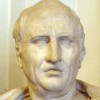
If you are foolish enough to be contented, don’t show it, but grumble with the rest; and if you can do with a little, ask for a great deal. Because if you don’t you won’t get any.
Jerome K. Jerome (1859–1927) English writer, humorist [Jerome Klapka Jerome]
Idle Thoughts of an Idle Fellow, “On Getting On in the World” (1886)
(Source)
First published in Home Chimes (1885-01-24).

Nobody knows the trouble we’ve seen — but we keep trying to tell them.
Mignon McLaughlin (1913–1983) American journalist and author
The Second Neurotic’s Notebook, ch. 4 (1966)
(Source)

All we hear is “What’s the matter with the country?” “What’s the matter with the world?” There ain’t but one thing wrong with every one of us in the world, and that’s selfishness.
At least there are more forms of escapism than those who bandy that word about are always aware of. An artist, for instance, may escape from the problems of his art — which are hard to solve — into a consideration of the problems of society which he sometimes seems to think require of him only that he complain about them. Even the ordinary citizen is not always guiltless of similar techniques and it is, for example, sometimes easier to head an institute for the study of child guidance than it is to turn one brat into a decent human being.

Sometimes it’s better to light a flamethrower than to curse the darkness.

What we need to do is always lean into the future; when the world changes around you and when it changes against you — what used to be a tail wind is now a head wind — you have to lean into that and figure out what to do, because complaining isn’t a strategy.
Jeff Bezos (b. 1964) American business magnate, entrepreneur, investor
Interview, ABC News (25 Sep 2013)
(Source)


The murmuring poor, who will not fast in peace.
George Crabbe (1754–1832) English poet, writer, surgeon, clergyman
“The Newspaper,” l. 158 (1785)
(Source)

You’ve got to rattle your cage door. You’ve got to let them know that you’re in there, and that you want out. Make noise. Cause trouble. You may not win right away, but you’ll sure have a lot more fun.
Florynce "Flo" Kennedy (1916–2000) American lawyer, feminist, civil rights activist
(Attributed)
(Source)
Quoted in Gloria Steinem, "The Verbal Karate of Florynce R. Kennedy, Esq.," Ms. (Mar 1973).

A man must have something to grumble about; and if he can’t complain that his wife harries him to death with her perversity and ill-humour, he must complain that she wears him out with her kindness and gentleness.
Anne Brontë (1820–1849) British novelist, poet [pseud. Acton Bell]
The Tenant of Wildfell Hall, ch. 32 [Ralph to Milicent] (1848)

MARVIN: The first ten million years were the worst. And the second ten million, they were the worst too. The third ten million I didn’t enjoy at all. After that I went into a bit of a decline.
Douglas Adams (1952–2001) English author, humorist, screenwriter
Hitchhiker’s Guide to the Galaxy, Phase 1, “Fit the 5th” (BBC Radio) (1978-04-05)
(Source)
When adapted as a novel, Hitchhiker's Guide No. 2, The Restaurant at the End of the Universe, ch. 18 (1980), this line by Marvin the Paranoid Android remained the same.

The world is disgracefully managed, one hardly knows to whom to complain.


Man is always looking for someone to boast to; woman is always looking for someone to complain to.
H. L. Mencken (1880–1956) American writer and journalist [Henry Lewis Mencken]
The New York Evening Mail (15 Nov 1917)
A year later he wrote: "Man is always looking for someone to boast to; woman is always looking for a shoulder to put her head on." [In Defense of Women (1918)]

“The trouble with this country is,” observed Herndon, “that there’re too many people going about saying: ‘The trouble with this country is –‘”
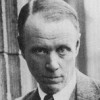
To hear complaints with patience, even when complaints are vain, is one of the duties of friendship.
Samuel Johnson (1709–1784) English writer, lexicographer, critic
The Rambler, #59 (9 Oct 1750)
(Source)

It is not sufficiently considered how much he assumes who dares to claim the privilege of complaining; for as every man has, in his own opinion, a full share of the miseries of life, he is inclined to consider all clamorous uneasiness as a proof of impatience rather than of affliction, and to ask, what merit has this man to show, by which he has acquired a right to repine at the distributions of nature? Or, why does he imagine that exemptions should be granted him from the general condition of man? We find ourselves excited rather to captiousness than pity, and, instead of being in haste to sooth his complaints by sympathy and tenderness, we inquire whether the pain be proportionate to the lamentation; and whether, supposing the affliction real, it is not the effect of vice and folly, rather than calamity?
Samuel Johnson (1709–1784) English writer, lexicographer, critic
The Rambler, #50 (8 Sep 1750)
(Source)
People who suffer as I do from nervous complaints can have no great inclination for talking. Nobody can tell what I suffer! — But it is always so. Those who do not complain are never pitied.

I don’t believe in kickin’,
It aint apt to bring one peace;
But the wheel what squeaks the loudest
is the one what gets the grease.Cal Stewart (1856–1919) American vaudevillian, monologuist [stage character "Uncle Josh" Weathersby]
Uncle Josh Weathersby’s “Punkin’ Centre” Stories, Epigraph (1903)
(Source)
Likely origin of the phrase, "The squeaky wheel gets the grease." "Kicking" was period slang for complaining (only surviving to the present in a phrase like "You've got no kick coming").
The phrase is sometimes attributed to Josh Billings, in a similar poem dated around 1870 called "The Kicker":I hate to be a kicker,
I always long for peace,
But the wheel that does the squeaking,
Is the one that gets the grease.
However, this poem has not actually been verified to exist. The unfounded attribution was included in the 1937 Bartlett's Familiar Quotations (11th Ed.), and has remained popular since.
The (likely) misattribution to the more well-known Billings may be a confusion between the names and folksy talking of both of the fictional characters "Josh Billings" and "Josh Weathersby."
For more discussion, see:Note: this epigraph does not appear in the Project Gutenberg copy of this work.
- Quote Origin: The Squeaky Wheel Gets the Grease – Quote Investigator®.
- Doyle, Mieder, Shapiro (eds.), The Dictionary of Modern Proverbs (2012).

To have a grievance is to have a purpose in life. A grievance can almost serve as a substitute for hope; it not infrequently happens that those who hunger for hope give their allegiance to him who offers them a grievance.
Eric Hoffer (1902–1983) American writer, philosopher, longshoreman
Passionate State of Mind, Aphorism 166 (1955)
(Source)
TROUT: I personally think we
developed language because of our deep inner need
to complain.Jane Wagner (b. 1935) American humorist, writer, director
The Search for Signs of Intelligent Life in the Universe, Part 2 (1985) [perf. Lily Tomlin]
(Source)
Variant: "Man invented language to satisfy his deep need to complain."

We are born crying, live complaining, and die disappointed.
Thomas Fuller (1654–1734) English physician, preacher, aphorist, writer
Gnomologia: Adages and Proverbs (compiler), # 5427 (1732)
(Source)

To complain of the age we live in, to murmur at the present possessors of power, to lament for the past, to conceive extravagant hopes of the future, are the common dispositions of the greatest part of mankind.
Edmund Burke (1729–1797) Anglo-Irish statesman, orator, philosopher
“Thoughts on the Cause of the Present Discontents” (23 Apr 1770)

Everyone complains of his memory, but no one complains of his judgment.
[Tout le monde se plaint de sa mémoire, et personne ne se plaint de son jugement.]
François VI, duc de La Rochefoucauld (1613–1680) French epigrammatist, memoirist, noble
Réflexions ou sentences et maximes morales [Reflections; or Sentences and Moral Maxims], ¶89 (1665-1678)
First appeared in the 2nd (1666) edition. The written manuscript adds "because everyone believes they have a lot of it."
See also Montaigne (1578), Franklin (1745).
(Source (French)). Other translations:Every body complains for want of Memory; but you never find any body complain of the Weakness of his Judgment.
[tr. Stanhope (1694), ¶90]Every one complains of the badness of his memory, but nobody of his judgment.
[pub. Donaldson (1783), ¶263; ed. Lepoittevin-Lacroix (1797), ¶86]Of the want of memory every one complains;, but nobody of the want of judgment.
[ed. Carvill (1835), ¶263]Every one complains of his memory, and no one complains of his judgment.
[ed. Gowens (1851), ¶92]Everyone blames his memory, no one blames his judgment.
[tr. Bund/Friswell (1871), ¶89]Everyone blames his memory, no one his judgment.
[tr. Heard (1917), ¶89]Everyone finds fault with his memory, but none with his judgement.
[tr. Stevens (1939), ¶89]Everyone complains of his memory, none of his judgment.
[tr. FitzGibbon (1957), ¶89]Everyone complains of his memory and no one complains of his judgment.
[tr. Kronenberger (1959), ¶89]Everybody complains of his memory, but nobody of his judgment.
[tr. Tancock (1959), ¶89]Everybody complains of his memory; but when did you ever hear anybody complain about his judgement?
[tr. Whichello (2016), ¶89]


I am always turning, I am perpetually turning, like a demd old horse in a demnition mill. My life is one demd horrid grind!
Charles Dickens (1812–1870) English writer and social critic
The Life And Adventures of Nicholas Nickleby, ch. 64 [Mr Mantalini] (1839)
(Source)

Intelligent discontent is the mainspring of civilization. Progress is born of agitation. It is agitation or stagnation.
Eugene V. Debs (1855–1926) American union leader, activist, socialist, politician
Speech (1908-05-23), “The Issue,” Girard, Kansas
(Source)
Impromptu speech in the town Debs was living in after his third nomination for President on the Socialist Democratic ticket.