Besides, if a man is afraid of pain, he is afraid of something happening which will be part of the appointed order of things, and this is itself a sin; if he is bent on the pursuit of pleasure, he will not stop at acts of injustice, which again is manifestly sinful. No; when Nature herself makes no distinction — and if she did, she would not have brought pains and pleasures into existence side by side — it behooves those who would follow in her footsteps to be like-minded and exhibit the same indifference.
[ἔτι δὲ ὁ φοβούμενος τοὺς πόνους φοβηθήσεταί ποτε καὶ τῶν ἐσομένων τι ἐν τῷ κόσμῳ, τοῦτο δὲ ἤδη ἀσεβές: ὅ τε διώκων τὰς ἡδονὰς οὐκ ἀφέξεται τοῦ ἀδικεῖν, τοῦτο δὲ ἐναργῶς ἀσεβές: χρὴ δὲ πρὸς ἃ ἡ κοινὴ φύσις ἐπίσης ἔχει ῾οὐ γὰρ ἀμφότερα ἃν ἐποίει, εἰ μὴ πρὸς ἀμφότερα ἐπίσης εἶχἐ, πρὸς ταῦτα καὶ τοὺς τῇ φύσει βουλομένους ἕπεσθαι, ὁμογνώμονας ὄντας, ἐπίσης διακεῖσθαι.]
Marcus Aurelius (AD 121–180) Roman emperor (161–180), Stoic philosopher
Meditations [To Himself; Τὰ εἰς ἑαυτόν], Book 9, ch. 1 (9.1) (AD 161-180) [tr. Staniforth (1964)]
(Source)
(Source (Greek)). Alternate translations:Again, he that feareth pains and crosses in this world, feareth some of those things which some time or other must needs happen in the world. And that we have already showed to be impious. And he that pursueth after pleasures, will not spare, to compass his desires, to do that which is unjust, and that is manifestly impious. Now those things which unto nature are equally indifferent (for she had not created both, both pain and pleasure, if both had not been unto her equally indifferent): they that will live according to nature, must in those things (as being of the same mind and disposition that she is) be as equally indifferent.
[tr. Casaubon (1634)]To go on: He that's afraid of Pain, or Affliction; will be afraid of something that will always be in the World; but to be thus uneasie at the Appointments of Providence, is a failure in Reverence, and Respect. On the other hand; He that's violent in the pursuit of Pleasure, won't stick to turn Villain for the Purchase: And is not this plainly , an Ungracious, and an Ungodly Humour? To set the Matter Right, where the Allowance of God is equally clear; as it is with Regard to Prosperity, and Adversity: For had he not approved both these Conditions, He would never have made them: I say where the Good Liking of Heaven is equally clear, Ours ought to be so too: Because we ought to follow the Guidance of Nature, and the Sense of the Deity.
[tr. Collier (1701)]Besides, he who dreads pain, must sometimes dread that which must be a part of the order and beauty of the universe: this, now, is impious: and, then, he who pursues pleasures will not abstain from injury; and that is manifestly impious. But, in those things to which the common nature is indifferent, (for she had not made both, were she not indifferent to either); he who would follow nature, ought, in this too, to agree with her in his sentiments, and be indifferently dispos'd to either.
[tr. Hutcheson/Moor (1742)]Nay, he that is uneasy under affliction, is uneasy at what must necessarily exist in the world. This uneasiness, then, is a degree of impiety: and he who is too eager in his pursuit of pleasures, will not abstain from injustice to procure them. This is manifestly impious.
In short, as nature herself seems to view with indifference prosperity and adversity, (as she certainly does, or she would not produce them) so he who would follow nature as his guide, ought to do the same.
[tr. Graves (1792)]And further, he who is afraid of pain will sometimes also be afraid of some of the things which will happen in the world, and even this is impiety. And he who pursues pleasure will not abstain from injustice, and this is plainly impiety. Now with respect to the things towards which the universal nature is equally affected -- for it would not have made both, unless it was equally affected towards both -- towards these they who wish to follow nature should be of the same mind with it, and equally affected.
[tr. Long (1862)]Now, he that is afraid of pain will be afraid of something that will always be in the world; but this is a failure in reverence and respect. On the other hand, he that is violent in the pursuit of pleasure, will not hesitate to turn villain for the purchase. And is not this plainly an ungodly act? to set the matter right, where the allowance of God is equally clear, as it is with regard to prosperity and adversity (for had He not approved both of these conditions, He would never have made them both), I say, where the good liking of heaven is equally clear, ours ought to be so too, because we ought to follow the guidance of nature and the sense of the Deity.
[tr. Collier/Zimmern (1887)]Moreover, he who fears pain will some time fear that which will form part of the world-order; and therein he sins. And he who seeks after pleasures will not abstain from unjust doing; which is palpably an act of sin. Where Nature makes no difference -- and were she not indifferent, she would not bring both to pass -- those who would fain walk with Nature should conform their wills to like indifference.
[tr. Rendall (1898)]Again, he who dreads pain must sometimes dread a thing which will make part of the world order, and this is impious. And he who pursues pleasure will not abstain from injustice, and this is clear impiety. In those things to which the common nature is indifferent (for she had not made both, were she not indifferent to either), he who would follow Nature ought, in this also, to be of like mind with her, and shew the like indifference.
[tr. Hutcheson/Chrystal (1902)]Moreover he that dreads pain will some day be in dread of something that must be in the world. And there we have impiety at once. And he that hunts after pleasures will not hold his hand from injustice. And this is palpable impiety.
But those, who are of one mind with Nature and would walk in her ways, must hold a neutral attitude towards those things towards which the Universal Nature is neutral—for she would not be the Maker of both were she not neutral towards both.
[tr. Haines (Loeb) (1916)]He who fears pains will sometimes fear what is to come to pass in the Universe, and this is at once sinful, while he who pursues pleasures will not abstain from doing injustice, and this is plainly sinful. But those who wish to follow Nature, being like-minded with her, must be indifferent towards the things to which she is indifferent, for she would not create both were she not indifferent towards both.
[tr. Farquharson (1944)]And furthermore, one who is afraid of pain is sure to be afraid at times of things which come to pass in the universe, and that is already an impiety; and one that pursues pleasure will not abstain from injustice, and that is manifest impiety. But towards those things with regard to which universal nature is neutral (for she would not have created both opposites unless she was neutral with regard to both), it is necessary that those who wish to follow nature and be of one mind with her should also adopt a neutral attitude.
[tr. Hard (1997 ed.)]And moreover, to fear pain is to fear something that’s bound to happen, the world being what it is -- and that again is blasphemy. While if you pursue pleasure, you can hardly avoid wrongdoing -- which is manifestly blasphemous.
Some things nature is indifferent to; if it privileged one over the other it would hardly have created both. And if we want to follow nature, to be of one mind with it, we need to share its indifference.
[tr. Hays (2003)]Further, anyone who fears pain will also at times be afraid of some future event in the world, and that is immediate sin. And a man who pursues pleasure will not hold back from injustice -- an obvious sin. Those who wish to follow Nature and share her mind must themselves be indifferent to those pairs of opposites to which universal Nature is indifferent -- she would not create these opposites if she were not indifferent either way.
[tr. Hammond (2006)]And furthermore, one who is afraid of pain is sure to be afraid at times of things which come about in the universe, and that is already an impiety; and one who pursues pleasure will not abstain from injustice, and that is a manifest impiety. But towards those things with regard to which universal nature is neutral (for she would not have created both opposites unless she was neutral with regard to both), it is necessary that those who wish to follow nature and be of one mind with her should also adopt a neutral attitude.
[tr. Hard (2011 ed.)]
Quotations about:
adversity
Note not all quotations have been tagged, so Search may find additional quotes on this topic.
Adversity makes men; prosperity makes monsters.
[L’adversité fait l’homme, et le bonheur les monstres.]
Proverbs, Sayings, and Adages
French proverb
Variants:Often attributed to Victor Hugo, including from sources going back to the 19th Century (Ballou (1899)). I have not been able to find an actual citation or primary source.
- "Adversity makes men, but prosperity makes monsters."
- "Adversity makes men, and prosperity makes monsters."
- "Prosperity makes monsters, but adversity makes men."
It is also widely noted as an anonymous or proverbial saying (e.g., 1809, 1818).
It may well be a French proverb that was incorrectly attributed to Hugo (who wrote quite a bit on the subjects of adversity and prosperity) in order to have a name to hang off of it.

So live, my boys, as brave men; and if fortune is adverse, front its blows with brave hearts.
[Quocirca vivite fortes
fortiaque adversis opponite pectora rebus.]Horace (65–8 BC) Roman poet, satirist, soldier, politician [Quintus Horatius Flaccus]
Satires [Saturae, Sermones], Book 2, # 2 “Quae virtus et quanta,” l. 135ff (2.2.135-136) (30 BC) [tr. Wickham (1903)]
(Source)
Often misattributed to Cicero.
(Source (Latin)). Alternate translations:Live bravely then,
And in all troubles quit your selves like men.
[tr. A. B.; ed. Brome (1666)]Then live Resolv'd, my Sons, refuse to yield,
And when Fates press make Constancy your shield.
[tr. Creech (1684)]Then be not with your present lot deprest,
And meet the future with undaunted breast
[tr. Francis (1747)]Bear up then, Boys! and stem the adverse tide,
Patience your stay and providence your guide!
[tr. Howes (1845)]Wherefore, live undaunted; and oppose gallant breasts against the strokes of adversity.
[tr. Smart/Buckley (1853)]So, then, live bravely on, and bravely stem adversity's opposing stream.
[tr. Millington (1870)]Then live like men of courage, and oppose
Stout hearts to this and each ill wind that blows.
[tr. Conington (1874)]Live, then, as brave men, and with brave hearts confront the strokes of fate.
[tr. Fairclough (Loeb) (1926)]SO LIVE BRAVE LIVES: STAND UP TO THE BLOWS OF FATE!
[tr. Palmer Bovie (1959)]So then, live, live and endure.
Meet life's difficulties with strong, enduring hearts.
[tr. Fuchs (1977)]Good reason whereby you should be
happy and confront adversity
with an undaunted soul.
[tr. Alexander (1999)]Live as brave men,
then, standing chest to chest with changeful fate.
[tr. Matthews (2002)]So be brave
and bravely throw out your chest to meet the force of fate!
[tr. Rudd (2005 ed.)]So live bravely, as men
With brave hearts do, and confront the vagaries of fate.
[tr. Kline (2015)]
The firmest friendships have been formed in mutual adversity; as iron is most strongly united by the fiercest flame.
Charles Caleb "C. C." Colton (1780–1832) English cleric, writer, aphorist
Lacon: Or, Many Things in Few Words, Vol. 1, § 365 (1820)
(Source)

He that has never known adversity is but half acquainted with others, or with himself. Constant success shows us but one side of the world. For, as it surrounds us with friends, who will tell us only our merits, so it silences those enemies from whom alone we can learn our defects.
Charles Caleb "C. C." Colton (1780–1832) English cleric, writer, aphorist
Lacon: Or, Many Things in Few Words, Vol. 1, § 513 (1820)
(Source)
ADRIANA: A wretched soul bruised with adversity
We bid be quiet when we hear it cry,
But were we burdened with like weight of pain,
As much or more we should ourselves complain.William Shakespeare (1564–1616) English dramatist and poet
Comedy of Errors, Act 2, sc. 1, l. 34ff (2.1.34-37) (1594)
(Source)

Life is truly known only to those who suffer, lose, endure adversity, and stumble from defeat to defeat.
Ryszard Kapuściński (1932–2007) Polish journalist, photographer, poet, author
“A Warsaw Diary,” Granta Magazine, No. 15 (1985 Spring)
(Source)

Sometimes it is good for us to have troubles and hardships, for they often call us back to our own hearts. Once there, we know ourselves to be strangers in this world, and we know that we may not believe in anything that it has to offer.
[Bonum nobis est, quod aliquando habeamus aliquas gravitates et contrarietates, quia sæpe hominem ad cor revocant, quatenus se in exilio esse cognoscat, nec spem suam in aliqua mundi re ponat.]
Thomas à Kempis (c. 1380–1471) German-Dutch priest, author
The Imitation of Christ [De Imitatione Christi], Book 1, ch. 12, v. 1 (1.12.1) (c. 1418-27) [tr. Creasy (1989)]
(Source)
See Psalm 119:71.
(Source (Latin)). Other translations:It is good that we have sometime griefs and adversities, for they drive a man to behold himself, and to see that he is here but as in an exile, and be learned thereby to know that he ought not to put his trust in any worldly thing.
[tr. Whitford/Raynal (1530/1871)]It is good that we sometimes have griefs and adversities, for they drive a man to behold himself and to see that he is but here as in exile, and to learn thereby that he ought not put his trust in any worldly thing.
[tr. Whitford/Gardiner (1530/1955)]It is good for us sometimes to suffer affliction and contradiction, because they oftentimes call a man home unto himselfe. They make a man to know that he liveth here but in banishment, and that he must not trust to any thing in this world.
[tr. Page (1639), x.12.1-2]It is good for me that I have been in Trouble, says David. Nor is it David's Case alone, for many Men have reason to bless that Providence which sends Crosses and Calamities upon them. These bring Man's Thoughts home, put him upon Reflection, and help him to understand himself and his Condition. They shew him, that he is in a State of Exile and Pilgrimage, and forbid him to set up his Hope and Rest, in a strange Country, where he is no better than a Sojourner.
[tr. Stanhope (1696; 1706 ed.)]It is good for man to suffer the adversity of this earthly life; for it brings him back to the sacred retirement of the heart, where only he finds, that he is an exile from his native home, and ought not to place his trust in any worldly enjoyment.
[tr. Payne (1803)]It is good that we have sometimes some troubles and crosses; for they often make a man enter into himself, and consider that he is here in banishment, and ought not to place his trust in any worldly thing.
[ed. Parker (1841)]It is good for us that we sometimes suffer contrarieties and vexations; for they call a man back to the retirement of his heart, where only he finds, that, as he is an exile from his native home, he ought not to place his trust in any worldly enjoyment.
[tr. Dibdin (1851)]It is good for us to have sometimes troubles and adversities, for they make a man enter into himself, that he may know that he is in exile, and may not place his hopes in anything of the world.
[ed. Bagster (1860)]It is good for us that we sometimes have sorrows and adversities, for they often make a man lay to heart that he is only a stranger and sojourner, and may not put his trust in any worldly thing.
[tr. Benham (1874)]It is good that we have sometimes troubles and crosses; for they often make a man enter into himself, and consider that he is here in banishment, and ought not to place his trust in any worldly thing.
[tr. Anon. (1901)]It is good for us to have trials and troubles at times, for they often remind us that we are on probation and ought not to hope in any worldly thing.
[tr. Croft/Bolton (1940)]It is good for us at times to have some burdens and adversities, for they often call a man back to his heart, that he may recognise himself to be in exile, and not fix his hope on anything earthly.
[tr. Daplyn (1952)]It is good for us to encounter troubles and adversities from time to time, for trouble often compels a man to search his own heart. It reminds him that he is an exile here, and that he can put his trust in nothing in this world.
[tr. Sherley-Price (1952)]It's good for you to go through difficult times now and again, and to have your will thwarted; the effect is often to make a man think -- make him realize that he is living in exile, and it is no use relying upon any earthly support.
[tr. Knox-Oakley (1959)]It is a good thing that we have to face difficulties and opposition from time to time, because this brings us back to ourselves; it makes us realize that we are exiles and cannot pin our hopes on anything in this world.
[tr. Knott (1962)]It is good for us now and then to experience difficulties and adversity; for they make man realize again that he is an exile and should not put his hopes on any worldly thing.
[tr. Rooney (1979)]

Just as we develop our physical muscles through overcoming opposition, such as lifting weights, we develop our character muscles by overcoming challenges and adversity.
Stephen R. Covey (1932–2012) American consultant, author
First Things First, ch. 15 (1994) [with Merrill & Merrill]
(Source)

For whoever reflects on the nature of things, the various turns of life, and the weakness of human nature, grieves, indeed, at that reflection; but while so grieving he is, above all other times, behaving as a wise man: for he gains these two things by it; one, that while he is considering the state of human nature he is performing the especial duties of philosophy, and is provided with a triple medicine against adversity: in the first place, because he has long reflected that such things might befall him, and this reflection by itself contributes much towards lessening and weakening all misfortunes; and, secondly, because he is persuaded that we should bear all the accidents which can happen to a man, with the feelings and spirit of a man; and lastly, because he considers that what is blameable is the only evil; but it is not your fault that something has happened to you which it was impossible for man to avoid.
[Neque enim qui rerum naturam, qui vitae varietatem, qui imbecillitatem generis humani cogitat, maeret, cum haec cogitat, sed tum vel maxime sapientiae fungitur munere. Utrumque enim consequitur, ut et considerandis rebus humanis proprio philosophiae fruatur officio et adversis casibus triplici consolatione sanetur: primum quod posse accidere diu cogitavit, quae cogitatio una maxime molestias omnes extenuat et diluit; deinde quod humana humane ferenda intelligit; postremo quod videt malum nullum esse nisi culpam, culpam autem nullam esse, cum id, quod ab homine non potuerit praestari, evenerit.]
Marcus Tullius Cicero (106–43 BC) Roman orator, statesman, philosopher
Tusculan Disputations [Tusculanae Disputationes], Book 3, ch. 16 (3.16) / sec. 34 (45 BC) [tr. Yonge (1853)]
(Source)
(Source (Latin)). Other translations:For he that considers the order of Nature, and the Vicissitudes of Life, and the Frailty of Mankind is not melancholly when he considers these things, but is then most principally imploy'd in the exercise of Wisdom, for he reaps a double advantage; both that in the consideration of man's circumstances, he enjoyeth the proper Office of Philosophy; and in case of Adversity, he is supported by a threefold Consolation. First, that he hath long consider'd that such accidents might come; which consideration alone doth most weaken and allay all Afflictions. Then he cometh to learn, that all Tryals common to men, should be born, as such, patiently. Lastly, that he perceiveth there is no Evil, but where is blame; but there is no blame, when that falls out, the Prevention of which, was not in man to warrant.
[tr. Wase (1643)]For whoever reflects on the nature of things, the various turns of life, the weakness of human nature, grieves indeed at that reflection; but that grief becomes him as a wise man, for he gains these two points by it; when he is considering the state of human nature he is enjoying all the advantage of philosophy, and is provided with a triple medicine against adversity. The first is, that he has long reflected that such things might befall him, which reflection alone contributes much towards lessening all misfortunes: the next is, that he is persuaded, that we should submit to the condition of human nature: the last is, that he discovers what is blameable to be the only evil. But it is not your fault that something lights on you, which it was impossible for man to avoid.
[tr. Main (1824)]For neither does he who contemplates the nature of things, the mutations of life, the fragility of man, grieve when he thinks of these matters, but then most especially exercises the office of wisdom. For, by the study of human affairs, he at once pursues the proper aim of philosophy, and provides himself with a triple consolation for adverse events: -- first, that he has long deemed them possible to arrive; which one consideration has the greatest efficacy for the extenuation and mitigation of all misfortune: and, next, he perceives that human accidents are to be borne like a man: and, finally, because he sees there is no evil but fault, and that there is no fault where that has happened which man could not have prevented.
[tr. Otis (1839)]Indeed, he who thinks of the nature of things, of the varying fortune of life, of the weakness of the human race, does not sorrow when these things are on his mind, but he then most truly performs the office of wisdom; for from such thought there are two consequences, -- the one, that he discharges the peculiar function of philosophy; the other, that in adversity he has the curative aid of a threefold consolation: first, because, as he has long thought what may happen, this sole thought is of the greatest power in attenuating and diluting every trouble; next, because he understands that human fortunes are to be borne in a way befitting human nature; -- lastly, because he sees that there is no evil but guilt, while there is no guilt in the happening of what man could not have prevented.
[tr. Peabody (1886)]For the person who reflects on the nature of things, on the variety of life, and the precarity of human existence is not sad in considering these things but is carrying out the duty of wisdom in the fullest way. For they pursue both in enjoying the particular harvest of philosophy by considering what happens in human life and in suffering adverse outcomes by cleansing with a three-part solace. First, by previously accepting the possibility of misfortune—which is the most way of weakening and managing any annoyance and second, by learning that human events must be endured humanely; and third, by recognizing that there is nothing evil except for blame and there is no blame when the event is something against which no human can endure.
[tr. @sentantiq (2021)]
For he says that evils are neither diminished by time nor lightened by being premeditated; that meditation on evil to come, or, it may be, on that which will never come, is foolish; that every evil is sufficiently annoying when it comes; that to him who has always thought that something adverse may happen to him that very thought is a perpetual evil; that if the expected evil should not happen, he would have incurred voluntary misery in vain; that thus one would be always in distress, either in suffering evil or in thinking of it.
[Nam neque vetustate minui mala nec fieri praemeditata leviora, stultamque etiam esse meditationem futuri mali aut fortasse ne futuri quidem: satis esse odiosum malum omne, cum venisset; qui autem semper cogitavisset accidere posse aliquid adversi, ei fieri illud sempiternum malum; si vero ne futurum quidem sit, frustra suscipi miseriam voluntariam; ita semper angi aut accipiendo aut cogitando malo.]
Marcus Tullius Cicero (106–43 BC) Roman orator, statesman, philosopher
Tusculan Disputations [Tusculanae Disputationes], Book 3, ch. 15 (3.15) / sec. 32 (45 BC) [tr. Peabody (1886)]
(Source)
Discussing the teachings of Epicurus (fr. U444). Source (Latin). Other translations:For that neither are Evils abated by long time, nor yet alleviated by foresight of them; and that the poring on Evils not yet come, and perhaps that never will come, is foolish. For that all Evil is Vexation enough, when it is come; but he that is always thinking that some Adversity may possibly befall him, to him it becometh an everlasting Evil; but if it shall never actually come upon him, a voluntary Disquiet is taken up on false grounds; so the mind is always vex'd, either with enduring, or expecting Evil.
[tr. Wase (1643)]Evils are not the less by reason of their continuance, nor the oighter for having been foreseen; and it is folly to ruminate on evils to come, or that, perhaps, may never come; every evil is disagreeable enough when it doth come: but he who is constantly considering that some evil may befall him, charges himself with a perpetual evil, for should such eve never light on him, he voluntarily takes to himself unnecessary misery, so that he is under constant uneasiness, whether he meets any evil or only thinks of it.
[tr. Main (1824)]For evil ls not diminished by time, nor alleviated by premeditation: that it is folly itself to brood upon evil that is future, or indeed, perhaps, is not to be at all: that evil is hateful enough when it comes: that, to the man, who is always musing upon that which is to come, his meditation itself becomes an eternal evil; and, should it prove that his apprehensions have been groundless, he burdens himself with a voluntary misery; and thus, between the encounter and contemplation of evil, he is always in trouble.
[tr. Otis (1839)]Evils are not the less by reason of their continuance, nor the lighter for having been foreseen; and it is folly to ruminate on evils to come, or such as, perhaps, never may come; every evil is disagreeable enough when it does come; but he who is constantly considering that some evil may befall him, is loading himself with a perpetual evil, and even should such evil never light on him, he voluntarily takes upon himself unnecessary misery, so that he is under constant uneasiness, whether he actually suffers any evil, or only thinks of it.
[tr. Yonge (1853)]Evils are not diminished by the passage of time, nor made easier by pre-rehearsal. In fact it is foolish to rehearse misfortunes which have not yet happened and which may not happen at all. Each of our misfortunes is distasteful enough, he says, when it is already here: those who have constantly been thinking about what disagreeable things are on the way simply make their evils perpetual. And those things may not happen at all, in which case all their voluntary misery goes for nothing. The result is that they are always in anxiety, either from the evils they undergo or from those they anticipate.
[tr. Graver (2002)]
For friendship adds a brighter radiance to prosperity and lessens the burden of adversity by dividing and sharing it.
[Nam et secundas res splendidiores facit amicitia et adversas partiens communicansque leviores.]
Marcus Tullius Cicero (106–43 BC) Roman orator, statesman, philosopher
Laelius De Amicitia [Laelius on Friendship], ch. 6 / sec. 22 (44 BC) [tr. Falconer (1923)]
(Source)
Other translations:
- "Friendship improves happiness and abates misery, by the doubling of our joy and the dividing of our grief." [tr. Addison (1711), Spectator, #68 (18 May 1711)]
- "For prosperity, friendship renders more brilliant, and adversity more supportable, by dividing and communicating it." [tr. Edmonds (1871)]
- "Such friendship at once enhances the lustre of prosperity, and by dividing and sharing adversity lessens its burden." [tr. Peabody (1887)]
- "For friendship both makes favourable things more splendid and disasters lighter, by splitting and sharing them." [Source]
Life has this in common with prizefighting: if you’ve received a belly blow, it’s likely to be followed by a right to the jaw.
Carolyn Gold Heilbrun (1926–2003) American academic, feminist author, novelist [as Amanda Cross]
The James Joyce Murder, ch. 1 (1967) [as Amanda Cross]
(Source)

But if I am to die before my time, I count that a gain. When anyone lives as I do, surrounded by evils, how can he not carry off gain by dying?
[εἰ δὲ τοῦ χρόνου
πρόσθεν θανοῦμαι, κέρδος αὔτ᾽ ἐγὼ λέγω.
ὅστις γὰρ ἐν πολλοῖσιν ὡς ἐγὼ κακοῖς
ζῇ, πῶς ὅδ᾽ Οὐχὶ κατθανὼν κέρδος φέρει]Sophocles (496–406 BC) Greek tragic playwright
Antigone, l. 460 ff [Antigone] (441 BC) [tr. Jebb (1891)]
(Source)
Other translations:But if I am to die before my time, I count that a gain: for when any one lives, as I do, compassed about with evils, can such an one find aught but gain in death?
[tr. Jebb (1917)]And if my time is shortened, this to me
Is gain indeed. For whoso lives, as I live,
Beset with many sorrows, how does he
Not win by dying?
[tr. Donaldson (1848)]If death
Is thereby hastened, I shall count it gain
For death is gain to him whose life, like mine,
Is full of misery.
[tr. Storr (1859)]And now, if I fall
A little sooner, 'tis the thing I wish.
To thou, who live in misery like me,
Believe me, King, 'tis happiness to die.
[tr. Werner (1892)]But if I die young, all the better:
People who live in misery like mine
Are better dead.
[tr. Woodruff (2001)]I knew that my death was imminent, of course I did, and even if it came sooner, I would still think it a good thing because when one lives in such a dreadful misery why should he not think death to be a good thing?
[tr. Theodoridis (2004)]And if I have to die
before my time, well, I count that a gain.
When someone has to live the way I do,
surrounded by so many evil things,
how can she fail to find a benefit
in death?
[tr. Johnston (2005), l. 521ff]If I die
before my time, I say it is a gain.
Who lives in sorrows many as are mine
how shall he not be glad to gain his death?
[tr. Wyckoff]But if
I shall die before my time, I declare it a profit,
for whoever lives beset, as I do, by many things evil,
how does he not gain profit by dying?
[tr. Tyrrell/Bennett]
A sure friend is known in unsure times.
[Amicus certus in re incerta cernitur.]
Ennius (239–169 BC) Roman poet, writer [Quintus Ennius]
Fragment, Scaenica 210 [Vahlen]
As quoted in Cicero, On Friendship [De Amicitia], ch. 17. sec. 64.
Other translations:
- "In unsure fortune a sure friend is seen." [tr. Peabody (1884)]
- "When things get iffy, you find out who your true friends are." [tr. Ehrlich (1995)]
- "A sure friend is tried in doubtful matters." [Source]
- "A friend is never known until one have need." [Source]
- "A friend is never known 'till a man have need." [Source]
- "A true friend is discerned during an uncertain matter." [Source]
- "A certain friend is discerned in an uncertain time." [Source]

If you want to know who your friends are, get yourself a jail sentence.

To cut out every negative root would simultaneously mean choking off positive elements that might arise from it further up the stem of the plant. We should not feel embarrassed by our difficulties, only by our failure to grow anything beautiful from them.
Alain de Botton (b. 1969) Swiss-British author
The Consolations of Philosophy, ch. 6 “Consolation for Difficulties” (2000)
(Source)
Discussing Nietzsche.

He sendeth sun, he sendeth shower,
Alike they’re needful to the flower;
And joys and tears alike are sent
To give the soul fit nourishment.
As comes to me or cloud or sun,
Father! thy will, not mine, be done.Sarah Fuller Adams (1805–1848) English poet (nee Flower)
“He sendeth Sun, he sendeth Shower”
If you live long enough, you’ll make mistakes. But if you learn from them, you’ll be a better person. It’s how you handle adversity, not how it affects you. The main thing is never quit, never quit, never quit.
William Jefferson "Bill" Clinton (b. 1946) American politician, US President (1993–2001)
Speech to students during the 1992 US Presidential campaign

The way to bliss lies not on beds of down,
And he that has no cross deserves no crown.Francis Quarles (1592–1644) English poet
Esther, Sec. 9, Meditation 9 (1621)

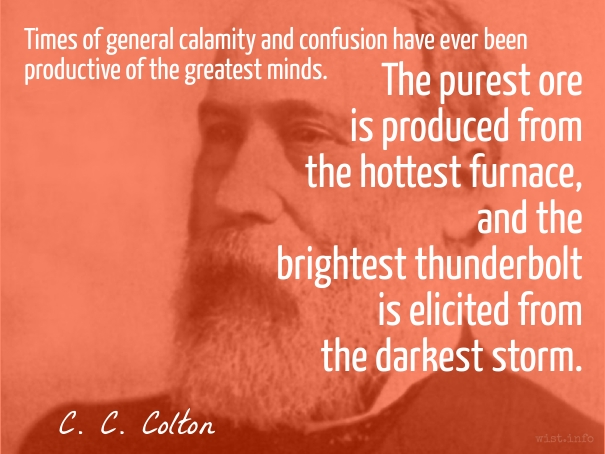
Times of general calamity and confusion have ever been productive of the greatest minds. The purest ore is produced from the hottest furnace, and the brightest thunderbolt is elicited from the darkest storm.
Charles Caleb "C. C." Colton (1780–1832) English cleric, writer, aphorist
Lacon: Or, Many Things in Few Words, Vol. 1, § 28 (1820)
(Source)
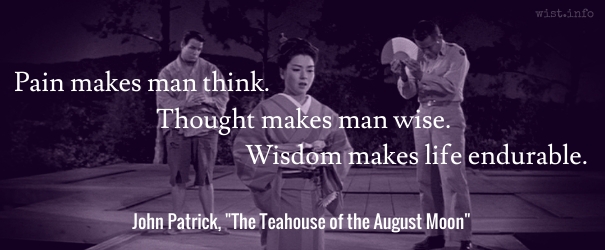
Pain makes man think. Thought makes man wise. Wisdom makes life endurable.
John Patrick (1905–1995) American playwright and screenwriter
The Teahouse of the August Moon, Act 1, sc. 1 (1957)

Pain nourishes my courage. You have to fail in order to practice being brave. You can’t be brave if you’ve only had wonderful things happen to you.
Mary Tyler Moore (1936–2017) American actress, producer, and social advocate
Interview, McCall’s, Vol. 108 (1980)
(Source)


You learn to know a pilot in a storm.
Seneca the Younger (c. 4 BC-AD 65) Roman statesman, philosopher, playwright [Lucius Annaeus Seneca]
Moral Essays, “On Providence” (4.5) [tr. Basore (1928)]
Philosophy easily triumphs over past ills and ills to come, but present ills triumph over philosophy.
[La philosophie triomphe aisément des maux passés et des maux à venir; mais les maux présents triomphent d’elle.]
François VI, duc de La Rochefoucauld (1613–1680) French epigrammatist, memoirist, noble
Réflexions ou sentences et maximes morales [Reflections; or Sentences and Moral Maxims], ¶22 (1665-1678) [tr Tancock (1959)]
(Source)
(Source (French)). French variants:La philosophie triomphe aisément des maux passés et de ceux qu’un ne sont pas prêts d’arriver; mais les maux présents triomphent d'elle.
(1665)]La philosophie ne fait des merveilles que contre les maux passés ou contre ceux qui ne sont pas prêts d’arriver, mais elle n’a pas grande vertu contre les maux présents.
[Manuscript]
Alternate English translations:Philosophy may easily triumph over Evils past, as also over those not yet ready to assault a man; but the present triumph over it.
[tr. Davies (1669), ¶87]Philosophy finds it an easie matter to vanquish past and future Evils, but the present are commonly too hard for it.
[tr. Stanhope (1694), ¶23]Philosophy easily triumphs over past and future ills; but present ills triumph over philosophy.
[pub. Donaldson (1783), "Ills" ¶242]Philosophy easily triumphs over ills both past and future; but present ills triumph over philosophy.
[ed. Carville (1835), "Ills" ¶211]Philosophy easily triumphs over past and future ills: but religion only triumphs over the present ones.
[ed. Carville (1835), "Philosophers" ¶303]Philosophy triumphs easily over past, and over future evils, but present evils triumph over philosophy.
[ed. Gowens (1851), ¶23]Philosophy triumphs easily over past evils and future evils; but present evils triumph over it.
[tr. Bund/Friswell (1871)]Philosophy easily masters past and future ills, but the sorrow of the moment is the master of philosophy.
[tr. Heard (1917)]Philosophy easily conquers both past and future misfortunes, but is conquered by the misfortunes of the moment.
[tr. Stevens (1939)]Philosophy can easily triumph over past misfortunes and over those that lie ahead: but the misfortunes of the present will triumph over our philosophy.
[tr. FitzGibbon (1957)]Philosophy triumphs with ease over misfortunes past and to come, but present misfortunes triumph over it.
[tr. Kronenberger (1959)]Philosophy triumphs easily over past and future evils; but present evils triumph over it.
[tr. Whichello (2016)]

We are in difficulties on all sides, but never cornered; we see no answer to our problems, but never despair; we have been persecuted, but never deserted; knocked down, but never killed.
[ἐν παντὶ θλιβόμενοι ἀλλ’ οὐ στενοχωρούμενοι ἀπορούμενοι ἀλλ’ οὐκ ἐξαπορούμενοι διωκόμενοι ἀλλ’ οὐκ ἐγκαταλειπόμενοι καταβαλλόμενοι ἀλλ’ οὐκ ἀπολλύμενοι.]
The Bible (The New Testament) (AD 1st - 2nd C) Christian sacred scripture
Book 8. 2nd Letter to the Corinthians 4: 8ff (2 Cor 4:8-9) [JB (1966)]
(Source)
(Source (Greek)). Other translations:We are troubled on every side, yet not distressed; we are perplexed, but not in despair; persecuted, but not forsaken; cast down, but not destroyed.
[KJV (1611)]We are often troubled, but not crushed; sometimes in doubt, but never in despair; there are many enemies, but we are never without a friend; and though badly hurt at times, we are not destroyed.
[GNT (1976)]We are subjected to every kind of hardship, but never distressed; we see no way out but we never despair; we are pursued but never cut off; knocked down, but still have some life in us.
[NJB (1985)]We are hard pressed on every side, but not crushed; perplexed, but not in despair; persecuted, but not abandoned; struck down, but not destroyed.
[NIV (2011 ed.)]We are experiencing all kinds of trouble, but we aren’t crushed. We are confused, but we aren’t depressed. We are harassed, but we aren’t abandoned. We are knocked down, but we aren’t knocked out.
[CEB (2011)]We are afflicted in every way, but not crushed; perplexed, but not driven to despair; persecuted, but not forsaken; struck down, but not destroyed.
[NRSV (2021 ed.)]

A happy life consists not in the absence, but in the mastery of hardships.

A man who gets too happy when prosperity comes
trembles when it goes.[Quem res plus nimio delectavere secundae,
mutatae quatient.]Horace (65–8 BC) Roman poet, satirist, soldier, politician [Quintus Horatius Flaccus]
Epistles [Epistularum, Letters], Book 1, ep. 10 “To Aristius Fuscus,” l. 30ff (1.10.30-31) (20 BC) [tr. Fuchs (1977)]
(Source)
(Source (Latin)). Other translations:Who so was to much ravished and to much joy did take
In flow of wealth, him chaunge of flow yea to much shall yshake.
[tr. Drant (1567)]Him, whom a prosp'rous State did too much please;
Chang'd, it will shake.
[tr. Fanshawe; ed. Brome (1666)]Those whom the smiles of Fate too much delight,
Their sudden Frowns more shake and more affright.
[tr. Creech (1684)]They who in Fortune's smiles too much delight,
Shall tremble when the goddess takes her flight.
[tr. Francis (1747)]Who prizes fortune at too high a rate,
Will shrink with horror at an alter'd state.
[tr. Howes (1845)]He who has been overjoyed by prosperity, will be shocked by a change of circumstances.
[tr. Smart/Buckley (1853)]Take too much pleasure in good things, you'll feel
The shock of adverse fortune makes you reel.
[tr. Conington (1874)]Whoe'er hath wildly wantoned in success.
Him will adversity the more depress.
[tr. Martin (1881)]Him whom prosperity too much elates adversity will shake.
[tr. Elgood (1893)]One whom Fortune's smiles have delighted overmuch, will reel under the shock of change.
[tr. Fairclough (Loeb) (1926)]One overmuch elated with success
A change of fortune plunges in distress.
[tr. A. F. Murison (1931)]One whom a favorable turn of events overjoys
A change for the worse undermines.
[tr. Palmer Bovie (1959)]If Fortune’s been kind
-- Too kind! -- loss will seem more than loss, will seem
Catastrophe.
[tr. Raffel (1983)]Change will upset the man who's always been lucky.
[tr. Ferry (2001)]Those who are overjoyed when the breeze of luck is behind them
are wrecked when it changes.
[tr. Rudd (2005 ed.)]Those who’ve been quick to enjoy a following wind,
Are wrecked when it veers.
[tr. Kline (2015)]
Complete success alienates a man from his fellows, but suffering makes kinsmen of us all.
Elbert Hubbard (1856–1915) American writer, businessman, philosopher
An American Bible [ed. Alice Hubbard] (1918)
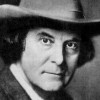
If Afflictions refine some, they consume others.
Thomas Fuller (1654–1734) English physician, preacher, aphorist, writer
Gnomologia: Adages and Proverbs (compiler), # 2666 (1732)
(Source)
One ship drives east and another drives west,
With the self-same winds that blow,
‘Tis the set of the sails
And not the gales
That tell them way to go.
Like the winds of the sea are the winds of fate,
As we journey along through life,
‘Tis the set of the soul,
That determines the goal,
And not the calm or the strife.Ella Wheeler Wilcox (1850–1919) American author, poet, temperance advocate, spiritualist
Poem (1913), “The Winds of Fate,” Poems of Optimism (1915)
(Source)
Sometimes called "'Tis the Set of the Sail."
There is a longer variant of the poem, sometimes called "One Ship Sails East," that includes two stanzas in front, and has slightly different words in the analogous stanzas. I have not found a primary source for this version:But to every mind there openeth,
A way, and way, and away,
A high soul climbs the highway,
And the low soul gropes the low,
And in between on the misty flats,
The rest drift to and fro.
But to every man there openeth,
A high way and a low,
And every mind decideth,
The way his soul shall go.
One ship sails East,
And another West,
By the self-same winds that blow,
'Tis the set of the sails
And not the gales,
That tells the way we go.
Like the winds of the sea
Are the waves of time,
As we journey along through life,
'Tis the set of the soul,
That determines the goal,
And not the calm or the strife.

When we are strong, we are always much greater than the things that happen to us.
Thomas Merton (1915–1968) French-American religious and writer [a.k.a. Fr. M. Louis]
No Man Is an Island, 7.7 (1955)

We have no reason to harbor any mistrust against our world, for it is not against us. If it has terrors, they are our terrors; if it has abysses, these abysses belong to us; if there are dangers, we must try to love them. And if only we arrange our life in accordance with the principle which tells us that we must always trust in the difficult, then what now appears to us as the most alien will become our most intimate and trusted experience. How could we forget those ancient myths that stand at the beginning of all races, the myths about dragons that at the last moment are transformed into princesses? Perhaps all the dragons in our lives are princesses who are only waiting to see us act, just once, with beauty and courage. Perhaps everything that frightens us is, in its deepest essence, something helpless that wants our love.
Rainer Maria Rilke (1875–1963) German poet
Letters to a Young Poet, Letter 8, 12 Aug 1904 (1929)
(Source)

Human life must be some kind of mistake. The truth of this will be sufficiently obvious if we only remember that man is a compound of needs and necessities hard to satisfy; and that even when they are satisfied, all he obtains is a state of painlessness, where nothing remains to him but abandonment to boredom. This is direct proof that existence has no real value in itself; for what is boredom but the feeling of the emptiness of life? If life — the craving for which is the very essence of our being — were possessed of any positive intrinsic value, there would be no such thing as boredom at all: mere existence would satisfy us in itself, and we should want for nothing. But as it is, we take no delight in existence except when we are struggling for something; and then distance and difficulties to be overcome make our goal look as though it would satisfy us — an illusion which vanishes when we reach it; or else when we are occupied with some purely intellectual interest — when in reality we have stepped forth from life to look upon it from the outside, much after the manner of spectators at a play. And even sensual pleasure itself means nothing but a struggle and aspiration, ceasing the moment its aim is attained. Whenever we are not occupied in one of these ways, but cast upon existence itself, its vain and worthless nature is brought home to us; and this is what we mean by boredom. The hankering after what is strange and uncommon — an innate and ineradicable tendency of human nature — shows how glad we are at any interruption of that natural course of affairs which is so very tedious.
[Daß das menschliche Daseyn eine Art Verirrung seyn müsse, geht zur Genüge aus der einfachen Bemerkung hervor, daß der Mensch ein Konkrement von Bedürfnissen ist, deren schwer zu erlangende Befriedigung ihm doch nichts gewährt, als einen schmerzlosen Zustand, in welchem er nur noch der Langenweile Preis gegeben ist, welche dann geradezu beweist, daß das Daseyn an sich selbst keinen Werth hat: denn sie ist eben nur die Empfindung der Leerheit desselben. Wenn nämlich das Leben, in dem Verlangen nach welchem unser Wesen und Daseyn besteht, einen positiven Werth und realen Gehalt in sich selbst hätte; so könnte es gar keine Langeweile geben: sondern das bloße Daseyn, an sich selbst, müßte uns erfüllen und befriedigen. Nun aber werden wir unsers Daseyns nicht anders froh, als entweder im Streben, wo die Ferne und die Hindernisse das Ziel als befriedigend uns vorspiegeln, welche Illusion nach der Erreichung verschwindet; oder aber in einer rein intellektuellen Beschäftigung, in welcher wir jedoch eigentlich aus dem Leben heraustreten, um es von außen zu betrachten, gleich Zuschauern in den Logen. Sogar der Sinnengenuß selbst besteht in einem fortwährenden Streben und hört auf, sobald sein Ziel erreicht ist. So oft wir nun nicht in einem jener beiden Fälle begriffen, sondern auf das Daseyn selbst zurückgewiesen sind, werden wir von der Gehaltlosigkeit und Nichtigkeit desselben überführt, und Das ist die Langeweile. Sogar das uns inwohnende und unvertilgbare, begierige Haschen nach dem Wunderbaren zeigt an, wie gern wir die so langweilige, natürliche Ordnung des Verlaufs der Dinge unterbrochen sähen.]
Arthur Schopenhauer (1788–1860) German philosopher
Parerga and Paralipomena, Vol. 2, ch. 11 “The Vanity of Existence [Der Nichtigkeit des Daseins],” § 146 (1851)
(Source)
(Source (German)). Another translation:That human life must be a kind of mistake is sufficiently clear from the fact that man is a compound of needs, which are difficult to satisfy; moreover, if they are satisfied, all he is granted is a state of painlessness, in which he can only give himself up to boredom. This is a precise proof that existence in itself has no value, since boredom is merely the feeling of the emptiness of life. If, for instance, life, the longing for which constitutes our very being, had in itself any positive and real value, boredom could not exist; mere existence in itself would supply us with everything, and therefore satisfy us. But our existence would not be a joyous thing unless we were striving after something; distance and obstacles to be overcome then represent our aim as something that would satisfy us -- an illusion which vanishes when our aim has been attained; or when we are engaged in something that is of a purely intellectual nature, when, in reality, we have retired from the world, so that we may observe it from the outside, like spectators at a theatre. Even sensual pleasure itself is nothing but a continual striving, which ceases directly its aim is attained. As soon as we are not engaged in one of these two ways, but thrown back on existence itself, we are convinced of the emptiness and worthlessness of it; and this it is we call boredom. That innate and ineradicable craving for what is out of the common proves how glad we are to have the natural and tedious course of things interrupted.
[tr. Dircks]That human existence must be some kind of error, is sufficiently clear from the simple observation that man is a concretion of needs and wants. Their satisfaction is hard to attain and yet affords him nothing but a painless state in which he is still abandoned to boredom. This, then, is a positive proof that, in itself, existence has no value; for boredom is just that feeling of its emptiness. Thus if life, in the craving for which our very essence and existence consist, had a positive value and in itself a real intrinsic worth, there could not possibly be any boredom. On the contrary, mere existence in itself would necessarily fill our hearts and satisfy us. Now we take no delight in our existence except in striving for something when the distance and obstacles make us think that the goal will be satisfactory, an illusion that vanishes when it is reached; or else in a purely intellectual occupation where we really step out of life in order to contemplate it from without, like spectators in the boxes. Even sensual pleasure itself consists in a constant striving and ceases as soon as its goal is attained. Now whenever we are not striving for something or are not intellectually occupied, but are thrown back on existence itself, its worthlessness and vanity are brought home to us; and this is what is meant by boredom. Even our inherent and ineradicable tendency to run after what is strange and extraordinary shows how glad we are to see an interruption in the natural course of things which is so tedious.
[tr. Payne (1974)]

DUKE SENIOR: Sweet are the uses of adversity,
Which, like the toad, ugly and venomous,
Wears yet a precious jewel in his head.William Shakespeare (1564–1616) English dramatist and poet
As You Like It, Act 2, sc. 1, l. 12ff (2.1.12-14) (1599)
(Source)
He knows not his own strength that hath not met adversity.
Ben Jonson (1572–1637) English playwright and poet
Timber: Or, Discoveries, “Explorata” (1640)

Mr. Bettenham said that virtuous men were like some herbs and spices, that give not out their sweet smell till they be broken or crushed.
Francis Bacon (1561–1626) English philosopher, scientist, author, statesman
Apothegms (1625)

For prosperity doth best discover vice, but adversity doth best discover virtue.
Francis Bacon (1561–1626) English philosopher, scientist, author, statesman
“Of Adversity,” Essays, No. 5 (1625)
(Source)
The virtue of Prosperity is temperance; the virtue of Adversity is fortitude.
Francis Bacon (1561–1626) English philosopher, scientist, author, statesman
“Of Adversity,” Essays, No. 5 (1625)
(Source)
He that swells in Prosperity will shrink in Adversity.
Thomas Fuller (1654–1734) English physician, preacher, aphorist, writer
Gnomologia: Adages and Proverbs (compiler), # 2321 (1732)
(Source)
No pain, no palm;
No thorns, no throne;
No gall, no glory;
No cross, no crown.William Penn (1644–1718) English writer, philosopher, politician, statesman
“No Cross, No Crown” (1682)
Originally written while a prisoner in the Tower of London (1668-69). See Quarles (1621), Breton (1577).
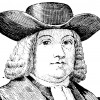
I wish to preach, not the doctrine of ignoble ease, but the doctrine of the strenuous life. The life of toil and effort, of labor and strife; to preach that highest form of success which comes, not to the man who desires mere easy peace, but to the man who does not shrink from danger, from hardship or from bitter toil, and who out of these wins the splendid ultimate triumph.
Theodore Roosevelt (1858–1919) American politician, statesman, conservationist, writer; US President (1901–09)
Speech (1899-04-10), “The Strenuous Life,” Hamilton Club, Chicago
(Source)

No condition so low but may have Hopes; none so high but may have Fears.
Thomas Fuller (1654–1734) English physician, preacher, aphorist, writer
Gnomologia: Adages and Proverbs (compiler), # 3555 (1732)
(Source)
Times of trouble best discover the true worth of a man; they do not weaken him, but show his true nature.
[Quantas autem virtutes quisque fecerit, melius patet occasione adversitatis. Occasiones namque hominem fragilem non faciunt, sed qualis sit, ostendunt.]
Thomas à Kempis (c. 1380–1471) German-Dutch priest, author
The Imitation of Christ [De Imitatione Christi], Book 1, ch. 16, v. 4 (1.16.4) (c. 1418-27) [tr. Sherley-Price (1952)]
(Source)
(Source (Latin)). Other translations:Who is of most virtue appeareth best in time of adversity. Occasions make not a man frail, but they shew openly what he is.
[tr. Whitford/Raynal (1530/1871)]The time of adversity shows who is of most virtue. Occasions do not make a man frail, but they do show openly what he is.
[tr. Whitford/Gardiner (1530/1955)]By occasion of adversity every man knoweth what great vertue is in himselfe, for such occasions make thee not frail, but shew thee what thou art.
[tr. Page (1639), 1.16.14]Besides we shall do well to reflect, that Afflictions and uneasy Accidents are the clearest Indication of a Man's Goodness, and the Degrees of his Improvement. For we mistake extremely in imagining that any thing which happens to us from without, is the real Cause of our doing well or ill; Adversity does not make Virtue or Vice, but exert and draw them into Practice; it does not change the Man from what he was, but only discover what he really is.
[tr. Stanhope (1696; 1706 ed.)]Besides, by outward occasions of suffering from the conduct of others, the nature and degree of every man's inward strength is more plainly discovered; for outward occasions do not make him frail, but only shew him what he is in himself.
[tr. Payne (1803)]Occasions of adversity best discover how great virtue or strength each one hath. For occasions do not make a man frail, but they shew what he is.
[ed. Parker (1841)]Besides, adversity better displays the fortitude and virtues that we possess: for these attacks to not contribute to make us frail, but rather shew us to be what we are.
[tr. Dibdin (1851)]The amount of a man's virtue is best seen in presence of adversity, for its occurrence does not make a man weak, but shows what he is.
[ed. Bagster (1860)]How much strength each man hath is best proved by occasions of adversity: for such occasions do not make a man frail, but show of what temper he is.
[tr. Benham (1874)]Occasions of adversity soonest discover how great virtue or strength each one hath. For occasions do not make a man frail, but they shew what he is.
[tr. Anon. (1901)]For the measure of every man's virtue is best revealed in time of adversity -- adversity that does not weaken a man but rather shows what he is.
[tr. Croft/Bolton (1940)]For the strength that each has will best be seen in the hour of adversity. Because such hours do not make a man weak, but show what kind of man he is.
[tr. Daplyn (1952)]Meanwhile, there is no better test of a man's quality than when he cannot have things his own way. The occasions of sin do not overpower us, they only prove our worth.
[tr. Knox-Oakley (1959)]A man’s true quality is revealed when things are difficult. Events do not make a man weak -- they only show what stuff he is made of.
[tr. Knott (1962)]The strength of one’s virtue is seen more easily when opposition comes. For such opposition does not weaken a man, but shows his mettle.
[tr. Rooney (1979)]For the strength that each person has will best be seen in times of trouble. Such times do not make us weak; they show what we are.
[tr. Creasy (1989)]
Many can bear Adversity but few Contempt.
Thomas Fuller (1654–1734) English physician, preacher, aphorist, writer
Gnomologia: Adages and Proverbs (compiler), # 3340 (1732)
(Source)
By trying we can easily learn to endure adversity. Another man’s, I mean.
Mark Twain (1835–1910) American writer [pseud. of Samuel Clemens]
Following the Equator, ch. 39, epigraph (1897)
Look at a man in the midst of doubt and danger, and you will lean in his hour of adversity what he really is. It is then that true utterances are wrung from the recesses of his breast. The mask is torn off; the reality remains.
Lucretius (c. 100-c. 55 BC) Roman poet [Titus Luretius Carus]
De Rerum Natura [On the Nature of Things], I. 55 [tr. Latham (1951)]
Fellowship in woe doth woe assuage.
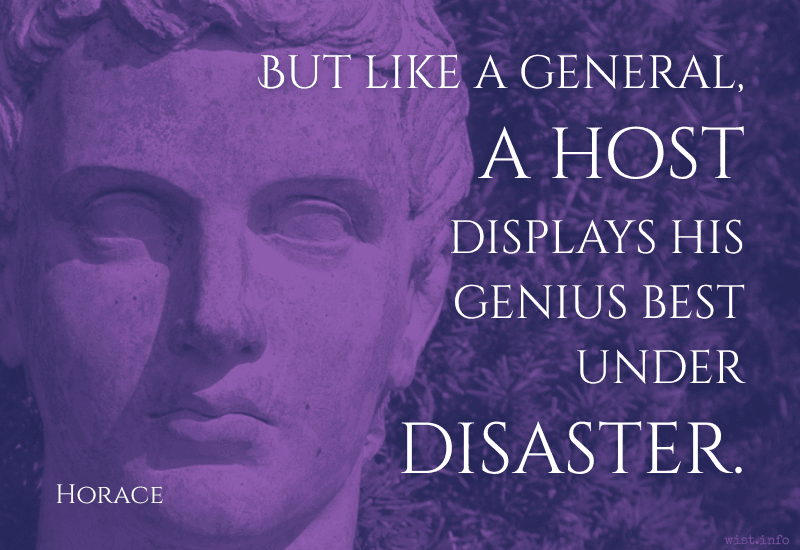
But like a general, a host displays
his genius best under disaster.[Sed convivatoris uti ducis ingenium res
Adversae nudare solent, celare secundae.]
Horace (65–8 BC) Roman poet, satirist, soldier, politician [Quintus Horatius Flaccus]
Satires [Saturae, Sermones], Book 2, # 8 “Ut Nasidieni,” l. 73ff (2.8.73-74) (30 BC) [tr. Matthews (2002)]
(Source)
Balatro speaking somewhat sarcastically to the host, Nasidienus (Rufus), about the misfortunes that are "ruining" his dinner party.
(Source (Latin)). Other translations:But (General-like) Masters of Feasts reveal
That temper by cross hits, the good conceal.
[tr. "I. W. Esq"; ed. Brome (1666)]But as in Captains oft ill chance reveals
The Entertainers Wit, which good conceals.
[tr. Creech (1684)]Good fortune hides, adversity calls forth,
A landlord's genius, and a general's worth.
[tr. Francis (1747)]But then a host's, like a commander's, skill,
Obscured by good success, shines forth in ill.
[tr. Howes (1845)]But adversity is wont to disclose, prosperity to conceal, the abilities of a host as well as of a general.
[tr. Smart/Buckley (1853)]But yet misfortune will bring forth to view the talents of a host as of a general, as will success conceal the same.
[tr. Millington (1870)]Adversity has the effect of eliciting talents, which in prosperous circumstances would have lain dormant.
[E.g. (1872)]But gifts, concealed by sunshine, are displayed
In hosts, as in commanders, by the shade.
[tr. Conington (1874)]But as with a commander, so with a host -- it is rough weather that discovers the genius, fair weather puts it out of sight.
[tr. Wickham (1903)]But one who entertains is like a general: mishaps oft reveal his genius, smooth going hides it.
[tr. Fairclough (Loeb) (1926)]But the host plays a role like the general's:
when things go wrong, his genius comes most into play;
When the going is smooth, you'd never know he had any.
[tr. Palmer Bovie (1959)]But a party-giver's talent, like a general's, comes out
in case of trouble, lies hidden when the going's good.
[tr. Fuchs (1977)]But giving a banquet is like fighting a battle:
A general's real talents show when he's losing, not winning in a walk.
[tr. Raffel (1983)]But such adversities reveal,
while prosperities conceal, the true qualities
of a host which are like those of a general.
[tr. Alexander (1999)]But as with a general so with a host: adverse fortune
has a way of revealing his genius; good fortune obscures it.
[tr. Rudd (2005 ed.)]But as with a general, so a host: adversity
Often reveals his genius, success conceals it.
[tr. Kline (2015)]
Adversity makes men; prosperity makes monsters.
[L’adversité fait l’homme, et le bonheur les monstres.]
Proverbs, Sayings, and Adages
French proverb
Variants:Often attributed to Victor Hugo, including from sources going back to the 19th Century (Ballou (1899)). I have not been able to find an actual citation or primary source.
- "Adversity makes men, but prosperity makes monsters."
- "Adversity makes men, and prosperity makes monsters."
- "Prosperity makes monsters, but adversity makes men."
It is also widely noted as an anonymous or proverbial saying (e.g., 1809, 1818).
It may well be a French proverb that was incorrectly attributed to Hugo (who wrote quite a bit on the subjects of adversity and prosperity) in order to have a name to hang off of it.
The game of life is not so much in holding a good hand as in playing a poor hand well.
(Other Authors and Sources)
H. T. Leslie

Adversity is sometimes hard upon a man; but for one man who can stand prosperity there are a hundred that will stand adversity.
Thomas Carlyle (1795–1881) Scottish essayist and historian
Lecture (1840-05-19), “The Hero as Man of Letters,” Home House, Portman Square, London
(Source)
The lecture notes were collected by Carlyle into On Heroes, Hero-Worship, & the Heroic in History, Lecture 5 (1841).
Friendship, of itself a holy tie,
Is made more sacred by adversity.John Dryden (1631–1700) English poet, dramatist, critic
The Hind and the Panther, Part 3, l. 47 (1687)
(Source)
The actual lines read:For friendship of it self, an holy tye,
Is made more sacred by adversity.