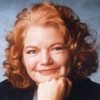
You have more political power than 99 percent of all the people who have ever lived on this planet. You can not only vote, you can register other people to vote, round up your friends, get out and do political education, talk to people, laugh with people, call the radio, write the paper, write your elected representatives, use your email list, put up signs, march, volunteer, and raise hell. All your life, no matter what else you do — butcher, baker, beggarman, thief / doctor, lawyer, Indian chief — you have another job, another responsibility: You are a citizen. It is an obligation that requires attention and effort.
Molly Ivins (1944–2007) American writer, political columnist [Mary Tyler Ivins]
Essay (2004), Introduction, Who Let the Dogs In?
(Source)
Quotations about:
activism
Note not all quotations have been tagged, so Search may find additional quotes on this topic.
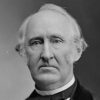
These [social questions] have all been kept alive in the cauldron of our agitation, and earned us properly, deservedly, the title of “infidel” and “traitor.” “Infidel” to a church that could be at peace in the presence of sin! “Traitor” to a state that was a magnificent conspiracy against justice.
Wendell Phillips (1811–1884) American abolitionist, orator, social activist
Speech (1857-01-02), 25th Anniversary of the Massachusetts Anti-Slavery Society, Faneuil Hall, Boston
(Source)
As recorded in The Liberator, Vol. 27, No. 2 (1857-01-09), and the National Anti-Slavery Standard, Vol. 17, No. 35 (1857-01-17).
This is the closest to primary source for a variation of a quote more commonly cited to Phillips:Write on my gravestone: "Infidel, Traitor" -- infidel to every church that compromises with wrong; traitor to every government that oppresses the people.”
The earliest I can find this version of the quote in print is in the late 1920s (1927, 1927, 1929) in various Labor / Socialist publications, standing alone as column filler without citation.
Prior to this, I can find examples of a form closer to the one given above:When I die I wish but two words written on my tombstone -- "Infidel" -- "Traitor." Infidel to a church that can be at peace in the presence of sin; Traitor to a government that is a magnificent conspiracy against justice.
The earliest I find this version is in Oliver Johnson, William Lloyd Garrison and His Time (1879), a quotation from Johnson of a (the same?) speech at Faneuil Hall. It's also mentioned, in whole or in part in:While it is possible that Phillips used variations of the same quotation on different occasions (as many orators and lecturers of that time and this do), the clustering of dates with versions suggests to me failures of memory (e.g., Johnson), or intentional tweakings of the text (in the 1920s) to prefer more contemporary language or political usage.
- The Cube (1897-05), mentioned as a quotation from Phillips.
- The Advocate of Peace, Vol. 60, No. 9 (1898-10), printing a pacifism speech by William Lloyd Garrison (1898-08-25).
- The Labour Annual (1899), as column filler.
Rufus King Noyes (comp.), Views of Religion (1908), is a list of quotations about (and generally critical of) religion, in the format of giving the name, and then the quotation after this. It includes, attributed in this fashion to Phillips:When I die, I wish but two words written on my tombstone -- "Infidel" and "Traitor."
The next quotation -- with its name immediately below the above, is from William Dean Howells. I did find misattributions to this and the longer quote made to Howells, probably from a misreading of this book's format.
As a final note, Phillips' gravestone did not end up including either of those words.
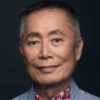
This is supposed to be a participatory democracy and if we’re not in there participating then the people that will manipulate and exploit the system will step in there. So I’ve been a political activist all my life and I think in a large measure it’s because of the internment that we experienced fifty years ago.
George Takei (b. 1937) American actor, author, activist [ジョージ・タケイ, b. Hosato Takei]
Interview by Peter Anthony Holder, CJAD, Montreal (21 Nov 1994)
(Source)
The gifts and the lessons my father left me will last forever: Never take yourself too seriously, never miss a chance to laugh long and hard, speak out about political and social issues you believe in, use the written word as often as you can to make yourself and the world a better place, and love your children with all you’ve got.
Rod Serling (1924–1975) American screenwriter, playwright, television producer, narrator
Paraphrase of Rod Serling in Anne Serling, As I Knew Him: My Dad, Rod Serling, Epilogue (2013)
(Source)
Our democracy is not the buildings, not the monuments. It’s you being willing to work to make things better and being willing to listen to each other and argue with each other and come together and knock on doors and make phone calls and treat people with respect.
Barack Obama (b. 1961) American politician, US President (2009–2017)
Staff Farewell, Joint Base Andrews, Maryland (20 Jan 2017)
(Source)
If we are to be a great democracy, we must all take an active role in our democracy. We must do democracy. That goes far beyond simply casting your vote. We must all actively champion the causes that ensure the common good.
Martin Luther King III (b. 1957) American human rights advocate and civil rights activist
Speech, Democratic National Convention, Denver, Colorado (28 Aug 2008)
(Source)
There comes a time when the operation of the machine becomes so odious, makes you so sick at heart, that you can’t take part, you can’t even passively take part; and you’ve got to put your bodies upon the gears and upon the wheels, upon all the apparatus, and you’ve got to make it stop, And you’ve got to indicate to the people who run it, the people who own it, that unless you’re free the machine will be prevented from working at all.
Mario Savio (1942–1996) American political activist
“Sproul Hall Sit-In Address” (2 Dec 1964)
(Source)
The know-nothings are, unfortunately, seldom the do-nothings.
Mignon McLaughlin (1913–1983) American journalist and author
The Neurotic’s Notebook, ch. 5 (1963)
(Source)

Yes, if you want to say that I was a drum major, say that I was a drum major for justice. Say that I was a drum major for peace. I was a drum major for righteousness. And all of the other shallow things will not matter. I won’t have any money to leave behind. I won’t have the fine and luxurious things of life to leave behind. But I just want to leave a committed life behind.
Martin Luther King, Jr. (1929–1968) American clergyman, civil rights leader, social activist, preacher
Sermon, Ebenezer Baptist Church (4 Feb 1968)
Full text. Adaptation by King of the 1952 homily "Drum-Major Instincts" by J. Wallace Hamilton.Paraphrased on the MLK memorial in Washington, DC, as, "I was a drum major for justice, peace and righteousness"; the inscription was later removed.
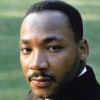
The church must be reminded that it is not the master or the servant of the state, but rather the conscience of the state. It must be the guide and the critic of the state, and never its tool. If the church does not recapture its prophetic zeal, it will become an irrelevant social club without moral or spiritual authority. If the church does not participate actively in the struggle for peace and for economic and racial justice, it will forfeit the loyalty of millions and cause men everywhere to say that it has atrophied its will.
Martin Luther King, Jr. (1929–1968) American clergyman, civil rights leader, social activist, preacher
Strength to Love, ch. 6 “A Knock at Midnight,” sec. 3 (1963)
(Source)
The main accomplishment of almost all organized protests is to annoy people who are not in them.
Dave Barry (b. 1947) American humorist, author, columnist
“25 Things I Have Learned In 50 Years,” #17 (1997)
Intelligent discontent is the mainspring of civilization. Progress is born of agitation. It is agitation or stagnation.
Eugene V. Debs (1855–1926) American union leader, activist, socialist, politician
Speech (1908-05-23), “The Issue,” Girard, Kansas
(Source)
Impromptu speech in the town Debs was living in after his third nomination for President on the Socialist Democratic ticket.
Never doubt that a small group of thoughtful, committed citizens can change the world. Indeed, it is the only thing that ever has.
Margaret Mead (1901–1978) American anthropologist
(Attributed)
Phrase frequently attributed to Mead, but not found in her writings. The first sentence, however, is trademarked.
Mead founded the Institute for Intercultural Studies in 1944 (it dissolved in 2009). Regarding this quote, the IIS noted on its still extant website:We have been unable to locate when and where it was first cited, becoming a motto for many organizations and movements. We believe it probably came into circulation through a newspaper report of something said spontaneously and informally. We know, however, that it was firmly rooted in her professional work and that it reflected a conviction that she expressed often, in different contexts and phrasings.
Additional discussion about this quotation's origins: Never Doubt That a Small Group of Thoughtful, Committed Citizens Can Change the World; Indeed, It’s the Only Thing That Ever Has – Quote Investigator.
CALVIN: I’ve noticed that comic book superheroes usually fight evil maniacs with grandiose plans to destroy the world. Why don’t superheroes go after more subtle, realistic bad guys?
HOBBES: Yeah, the superhero could attend council meetings and write letters to the editor, and stuff.
CALVIN: Hmmm … I think I see the problem.
HOBBES: “Quick! To the Bat-Fax!”