

Better is a little with content than much with contention.
Benjamin Franklin (1706–1790) American statesman, scientist, philosopher, aphorist
Poor Richard (1747 ed.)
(Source)
See Abigail Adams (1790).
Quotations about:
discontent
Note not all quotations have been tagged, so Search may find additional quotes on this topic.

The rich and respectable have always had their ways of making their discontent heard; the poor and unorganized must resort to protests and marches and demonstrations.
Henry Steele Commager (1902–1998) American historian, writer, activist
Essay (1965-12-18), “The Problem of Dissent,” Saturday Review
(Source)
Reprinted in Freedom and Order, Part 6 (1966).
The gods either have power or they have not. If they have not, why pray to them? If they have, then instead of praying to be granted or spared such-and-such a thing, why not rather pray to be delivered from dreading it, or lusting for it, or grieving over it? Clearly, if they can help a man at all, they can help him in this way.
[Ἤτοι οὐδὲν δύνανται οἱ θεοὶ ἢ δύνανται. εἰ μὲν οὖν μὴ δύνανται, τί εὔχῃ; εἰ δὲ δύνανται, διὰ τί οὐχὶ μᾶλλον εὔχῃ. διδόναι αὐτοὺς τὸ μήτε φοβεῖσθαί τι τούτων μήτε ἐπιθυμεῖν τινος τούτων μήτε λυπεῖσθαι ἐπί τινι τούτων, μᾶλλον ἤπερ τὸ μὴ παρεῖναί τι τούτων ἢ τὸ παρεῖναι; πάντως γάρ, εἰ δύνανται συνεργεῖν ἀνθρώποις, καὶ εἰς ταῦτα δύνανται συνεργεῖν.]
Marcus Aurelius (AD 121–180) Roman emperor (161–180), Stoic philosopher
Meditations [To Himself; Τὰ εἰς ἑαυτόν], Book 9, ch. 40 (9.40) (AD 161-180) [tr. Staniforth (1964)]
(Source)
(Source (Greek)). Alternate translations:Either the Gods can do nothing for us at all, or they can still and allay all the distractions and distempers of thy mind. If they can do nothing, why doest thou pray? If they can, why wouldst not thou rather pray, that they will grant unto thee, that thou mayst neither fear, nor lust after any of those worldly things which cause these distractions and distempers of it? Why not rather, that thou mayst not at either their absence or presence, be grieved and discontented: than either that thou mayst obtain them, or that thou mayst avoid them? For certainly it must needs be, that if the Gods can help us in anything, they may in this kind also.
[tr. Casaubon (1634)]Either the Gods have power to assist us, or they have not. If they have not, what does praying to them signifie? If they have, why don't you rather pray that they would Discharge your Desires, than Satisfie them; and rather set you above the Passion of Fear, than keep away the Thing you are afraid of? For if the Gods can help us, no doubt they can help us to be Wiser.
[tr. Collier (1701), 9.42]Either the Gods have no power at all [to aid men in any thing;] or they have power. If, then, they have no power, why do you pray? But if they have power, why don’t you chuse to pray to them to enable you, neither to fear any of these things, [which are not in our own power] nor desire any of them, nor be grieved about any of them; rather than for the having them, or the not having them. For, most certainly, if they can aid men at all, they can also aid them in this.
[tr. Hutcheson/Moor (1742)]Either the Gods have power to assist mankind, or they have not. If they have not, why do you pray to them? If they have that power, why do you not rather pray, "that they would enable you neither to fear nor to desire any thing; nor to be more grieved fro the want, than for the possession of it?" For, certainly, if they have the power to co-operate with the endeavours of men, they can do it in this respect.
[tr. Graves (1792)]Either the gods have no power or they have power. If, then, they have no power, why dost thou pray to them? But if they have power, why dost thou not pray for them to give thee the faculty of not fearing any of the things which thou fearest, or of not desiring any of the things which thou desirest, or not being pained at anything, rather than pray that any of these things should not happen or happen? for certainly if they can co-operate with men, they can co-operate for these purposes.
[tr. Long (1862)]Either the gods have power to assist us, or they have not. If they have not, what does praying to them help you? If they have, why do you not rather pray that they would remove your fears and moderate your desires, and rather keep you from grieving for any of these things, than keep away one thing and grant another? For if the gods can help us, no doubt they can help us to be wiser.
[tr. Collier/Zimmern (1887)]The gods either have power, or they have not. If they have not, why pray at all? If they have, why not pray for deliverance from teh fear, or the desire, or the pain, which the thing causes, rather than for the withholding or the giving of the particular thing? Assuredly, if they can help men at all, this is the way of help.
[tr. Rendall (1898)]Either the Gods have power or they have none. If they have no power, why do you pray? If they have power, why do you not choose to pray to them for power neither to fear, nor to desire, nor to be grieved over any of these external things, rather than for their presence or their absence? Surely, if the Gods can aid man at all, they can aid him in this.
[tr. Hutcheson/Chrystal (1902)]Either the Gods have no power or they have power. If they have no power, why pray to them? But if they have power, why not rather pray that they should give thee freedom from fear of any of these things and from lust for any of these things and from grief at any of these things [rather] than that they should grant this or refuse that. For obviously if they can assist men at all, they can assist them in this.
[tr. Haines (Loeb) (1916)]The gods are either powerless or powerful. If then they are powerless, why do you pray? But if they are powerful, why not rather pray them for the gift to fear none of these things, to desire none of them, to sorrow for none of them, rather than that any one of them should be present or absent? For surely if they can co-operate with man, they can co-operate to these ends.
[tr. Farquharson (1944)]The gods either lack power or they have power. If they are powerless, why do you pray to them? But if they have power, why do you not pray to them to grant you the ability neither to fear any of these things nor to desire them, nor to be distressed by them, rather than praying that some of them should fall to you and others not? For surely, if the gods have any power to help human beings, they can help them in this.
[tr. Hard (1997 ed.)]Either the gods have power or they don't. If they don't, why pray? If they do, then why not pray for something else instead of for things to happen or not to happen? Pray not to feel fear. Or desire. Or grief. If they gods can do anything, they can surely do that for us.
[tr. Hays (2003)]Either the gods have power or they do not. Now, if they have no power, why pray? If they do have power, why not pray for their gift of freedom from all worldly fear, desire, or regret, rather than for the presence or absence of this or that? Certainly, if the gods can cooperate with men, they can cooperate to these ends.
[tr. Hammond (2006)]Either the gods have power or they do not. If they do not, why do you pray? But if they do have power, why aren't you praying that they give you the power not to fear, crave, or be troubled by a thing, rather than pryaing to have that thing or not have it? For if the gods can work with us, then surely they can work with us toward this end.
[tr. Needleman/Piazza (2008)]The gods either lack power or they have power. Now if they are powerless, why do you pray to them? But if they have poer, why do you not pray to them to gran you the ability neither to fear any of these things nor to desire them, nor to be distressed by them, rather than praying that some of them should fall to you and others not? For surely, if the gods have any power to help human beings, they can help them in this.
[tr. Hard (2011 ed.)]
Yet it is certain, likewise, that many of our miseries are merely comparative: we are often made unhappy, not by the presence of any real evil, but by the absence of some fictitious good; of something which is not required by any real want of nature, which has not in itself any power of gratification, and which neither reason nor fancy would have prompted us to wish, did we not see it in the possession of others.
Samuel Johnson (1709–1784) English writer, lexicographer, critic
Essay (1753-11-27), The Adventurer, No. 111
(Source)
He that goeth about to persuade a multitude, that they are not so well governed as they ought to be, shall never want attentive and favorable hearers.
Richard Hooker (1554–1600) English theologian
Of the Laws of Ecclesiastical Polity, Book 1, ch. 1 (1594)
(Source)

Merely to realize the causes of one’s own envious feelings is to take a long step towards curing them. The habit of thinking in terms of comparison is a fatal one.
It always is wretched weather, according to us. The weather is like the Government, always in the wrong. In summer time we say it is stifling; in winter that it is killing; in spring and autumn we find fault with it for being neither one thing nor the other, and wish it would make up its mind. If it is fine, we say the country is being ruined for want of rain; if it does rain, we pray for fine weather. If December passes without snow, we indignantly demand to know what has become of our good old-fashioned winters, and talk as if we had been cheated out of something we had bought and paid for; and when it does snow, our language is a disgrace to a Christian nation. We shall never be content until each man makes his own weather, and keeps it to himself.
If that cannot be arranged, we would rather do without it altogether.Jerome K. Jerome (1859–1927) English writer, humorist [Jerome Klapka Jerome]
Idle Thoughts of an Idle Fellow, “On the Weather” (1886)
(Source)
First published in Home Chimes (1885-07-11).

If he is poor who is full of Desires, nothing can equal the Poverty of the Ambitious and the Covetous.
[S’il est vrai que l’on soit pauvre par toutes les choses que l’on désire, l’ambitieux et l’avare languissent dans une extrême pauvreté.]Jean de La Bruyère (1645–1696) French essayist, moralist
The Characters [Les Caractères], ch. 6 “Of Gifts of Fortune [Des Biens de Fortune],” § 49 (6.49) (1688) [Browne ed. (1752)]
(Source)
(Source (French)). Other translations:If he is only poor who desires much, and is always in want; the Ambitious and the Covetous languish in extreme Poverty.
[Bullord ed. (1696)]If a Man is poor, by all the things which he longs for, the Ambitious and Covetous languish in extreme Poverty.
[Curll ed. (1713)]If a man be poor who wishes to have everything, then an ambitious and a miserly man languish in extreme poverty.
[tr. Van Laun (1885)]If it is true that poverty consists in desiring a great many things, the ambitious man and the miser suffer from extreme poverty.
[tr. Stewart (1970)]


This life is a hospital in which every patient is haunted by the desire to change beds. This one wants to suffer in front of the stove, and that one believes he will recover next to the window.
[Cette vie est un hôpital où chaque malade est possédé du désir de changer de lit. Celui-ci voudrait souffrir en face du poêle, et celui-là croit qu’il guérirait à côté de la fenêtre.]Charles Baudelaire (1821–1867) French poet, essayist, art critic
Le Spleen de Paris (Petits Poèmes en Prose), No. 48 “Any Where Out of the world” (1869) [tr. Kaplan (1989)]
(Source)
The title of the original is in English, a line from Thomas Hood, "The Bridge of Sighs." It is often subtitled with the French translation, "N’importe où hors du monde," which are the final lines.
(Source (French)). Other translations:Life is a hospital, in which every patient is possessed by the desire of changing his bed. One would prefer to suffer near the fire, and another is certain that he would get well if he were by the window.
[tr. Symons (<1919)]This life is a hospital where every patient is possessed with the desire to change beds; one man would like to suffer in front of the stove, and another believes that he would recover his health beside the window.
[tr. Hamburger (1946)]Life is a hospital where every patient is obsessed by the desire of changing beds. One would like to suffer opposite the stove, another is sure he would get well beside the window.
[tr. Varèse (1970)]This life is a hospital where each patient is possessed with the desire of changing his bed. One would like to suffer in front of the stove, and another believes he would get well beside the windows.
[tr. Fowlie (1992)]This life is a hospital, where each patient is possessed by the desire to change beds. That one prefers to suffer nearer the stove and this one believes he would get well next to the window.
[tr. Waldrop (2009)]
Many of us go through life feeling as an actor might feel who does not like his part, and does not believe in the play.
Mignon McLaughlin (1913–1983) American journalist and author
The Neurotic’s Notebook, ch. 5 (1963)
(Source)

Men do change, and change comes like a little wind that ruffles the curtains at dawn, and it comes like the stealthy perfume of wildflowers hidden in the grass. Change may be announced by a small ache, so that you think you’re catching cold. Or you may feel a faint disgust for something you loved yesterday. It may even take the form of a hunger that peanuts won’t satisfy.
All we hear is “What’s the matter with the country?” “What’s the matter with the world?” There ain’t but one thing wrong with every one of us in the world, and that’s selfishness.
Were there none who were discontented with what they have, the world would never reach anything better.
Florence Nightingale (1820–1910) English social reformer, statistician, founder of modern nursing
Cassandra (1860)
(Source)

It is always tempting when you have political discontent in your own country to say it is the fault of some other country and not of your own government.
A. J. P. Taylor (1906–1990) British historian, journalist, broadcaster [Alan John Percivale Taylor]
How Wars Begin (1979)
(Source)
We are, perhaps uniquely among the earth’s creatures, the worrying animal. We worry away our lives, fearing the future, discontent with the present, unable to take in the idea of dying, unable to sit still.
Lewis Thomas (1913–1993) American physician, poet, essayist, researcher
“The Youngest and Brightest Thing Around,” The Medusa and the Snail: More Notes of a Biology Watcher (1979)
(Source)

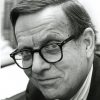
What is said by great employers of labor against agitators is unquestionably true. Agitators are a set of interfering, meddling people, who come down to some perfectly contented class of the community and sow the seeds of discontent amongst them. That is the reason why agitators are so absolutely necessary. Without them, in our incomplete state, there would be no advance towards civilization.
Oscar Wilde (1854–1900) Irish poet, wit, dramatist
“The Soul of Man Under Socialism” (1891)
(Source)

Looky here, America
What you done done —
Let things drift
Until the riots come.
Langston Hughes (1902–1967) American poet, social activist, novelist, playwright
“Beaumont to Detroit: 1943”
(Source)

To know what you like is the beginning of wisdom and of old age. Youth is wholly experimental. The essence and charm of that unquiet and delightful epoch is ignorance of self as well as ignorance of life. These two unknowns the young man brings together again and again, now in the airiest touch, now with a bitter hug; now with exquisite pleasure, now with cutting pain; but never with indifference, to which he is a total stranger, and never with that near kinsman of indifference, contentment.
To be content with little is difficult; to be content with much, impossible.
[Sich mit Wenigem begnügen ist schwer, sich mit Vielem begnügen noch schwerer.]
Marie von Ebner-Eschenbach (1830–1916) Austrian writer
Aphorisms [Aphorismen], No. 89 (1880) [tr. Wister (1883)]
(Source)
(Source (German)). Other translation:To be satisfied with little is hard, to be satisfied with a lot is impossible.
[tr. Scrase/Mieder (1994)]

A hungry man [is] an angry man.
James Howell (c. 1594–1666) Welsh historian, writer, aphorist
Paroimiographia [Παροιμιογραφία]: Proverbs, or, Old Sayed Sawes & Adages, “English Proverbs” (1659) [compiler]
(Source)

In this respect, the freedom of the press is certainly for the state machine what the safety-valve is for the steam-engine. For by means of it, every dissatisfaction is at once ventilated in words and such grievance is soon exhausted if in it there is not very much substance. If, however, there is, then such ventilation is a good thing and enables the matter to be known in time and to be put right. This is very much better than forcing down the grievance so that it simmers, ferments, expands, and finally ends in an explosion.
[In dieser Hinsicht ist allerdings für die Staatsmaschine die Preßfreiheit Das, was für die Dampfmaschine die Sicherheitsvalve: denn mittelst derselben macht jede Unzufriedenheit sich alsbald durch Worte Luft, ja wird sich, wenn sie nicht sehr viel Stoff. hat, an ihnen erschöpfen. Hat sie jedoch diesen, so ist es gut, daß man ihn bei Zeiten erkenne, um abzuhelfen sehr viel besser, als wenn die Unzufriedenheit eingezwängt bleibt, brütet, gährt, kocht und anwächst, bis sie endlich zur Explosion gelangt.]
Arthur Schopenhauer (1788–1860) German philosopher
Parerga and Paralipomena, Vol. 2, ch. 9 “On Jurisprudence and Politics [Zur Rechtslehre und Politik],” § 127 (1851) [tr. Payne (1974)]
(Source)
(Source (German)). Other translation:Freedom of the press is to the machinery of the state what the safety-valve is to the steam engine: every discontent is by means of it immediately relieved in words -- indeed, unless this discontent is very considerable, it exhausts itself in this way. If, however, it is very considerable, it is as well to know of it in time, so as to redress it.
[tr. Hollingdale (1970)]

The reasonable man adapts himself to the world: the unreasonable one persists in trying to adapt the world to himself. Therefore all progress depends on the unreasonable man.
George Bernard Shaw (1856–1950) Irish playwright and critic
Man and Superman, “Maxims for Revolutionists,” “Reason” (1903)
(Source)

Intelligent discontent is the mainspring of civilization. Progress is born of agitation. It is agitation or stagnation.
Eugene V. Debs (1855–1926) American union leader, activist, socialist, politician
Speech (1908-05-23), “The Issue,” Girard, Kansas
(Source)
Impromptu speech in the town Debs was living in after his third nomination for President on the Socialist Democratic ticket.
The conviction of the rich that the poor are happier is no more foolish than the conviction of the poor that the rich are.
Mark Twain (1835–1910) American writer [pseud. of Samuel Clemens]
(Misattributed)
I cannot find any reference to this phrase prior to 1921, and no association with Twain until the mid-1970s.
The quotation apparently first appears in various newspaper "filler" columns (e.g., 1921-12-07); in no cases is there an attribution to Twain or to anyone else, except some references of it having been originally seen in the Boston Post (e.g., 1921-12-17, 1921-12-16, 1921-12-07).
One place where a name is associated with the quote is where it appears in the "Facts and Fancies" syndicated column of quips by Robert Quillen (1921-12-07). Quillen (1887-1948) was an American journalist and humorist, whose work was syndicated in hundreds of newspapers. He was know for, among other things, his one-liners. It's unclear whether he adopted material from others, or originated everything in "Facts and Fancies." If the latter, and if the column also appeared in the Boston Post, that would indicate Quillen actually is the source of this quotation.
One place for some doubt is that the one Quillen column shows a date of December 7, but so do some other papers which ran the quote. It is possible, as the actual publication dates of syndicated material can vary between papers or be delayed, that Quillen's column in the paper above ran after its original appearance (in the Boston Globe?), which other papers then stole from as filler material without crediting Quillen.
Twain, who died in 1910, does not seem associated with the quote until the mid-1970s, and it does not show up in more authoritative collections of Twain material. The association to Twain seems to come from Laurence J Peter, Peter's Quotations (1977). Peter included the phrase as a parenthetical comment to a Mark Twain quotation. The proximity may have led to Twain being associated with it (as here, which duplicates the entry from Peter, but with the attribution following the combined two quotes).
In sum, the quotation first appeared in December 1921, a decade after Twain's death, and was possibly created by Robert Quillen. It's association to Mark Twain came from its use by Lawrence Peter as an editorial comment to a different Twain quotation.
And can history produce an instance of a rebellion so honourably conducted? I say nothing of it’s motives. They were founded in ignorance, not wickedness. God forbid we should ever be 20. years without such a rebellion. The people can not be all, and always, well informed. The part which is wrong will be discontented in proportion to the importance of the facts they misconceive. If they remain quiet under such misconceptions it is a lethargy, the forerunner of death to the public liberty. We have had 13. states independant 11. years. There has been one rebellion. That comes to one rebellion in a century and a half for each state. What country before ever existed a century and half without a rebellion? And what country can preserve it’s liberties if their rulers are not warned from time to time that their people preserve the spirit of resistance?
Thomas Jefferson (1743–1826) American political philosopher, polymath, statesman, US President (1801–09)
Letter (1787-11-13) to William Stephens Smith
(Source)
Speaking of Shay's Rebellion.

Content makes poor men rich; Discontent makes rich Men poor.
Benjamin Franklin (1706–1790) American statesman, scientist, philosopher, aphorist
Poor Richard Improved (1749 ed.)
(Source)