The fact is, my sweet, every mother spends her time, so soon as her children are out of her sight, in imagining dangers for them. Perhaps it is Armand seizing the razors to play with, or his coat taking fire, or a snake biting him, or he might tumble in running and start and absess on his head, or he might drown himself in a pond. A mother’s life, you see, is one long succession of dramas, now soft and tender, now terrible. Not an hour but has its joys and fears.
[En effet, mon ange, durant le jour, toutes les mères inventent des dangers. Dès que les enfants ne sont plus sous leurs yeux, c’est des rasoirs volés avec lesquels Armand a voulu jouer, le feu qui prend à sa jaquette, un orvet qui peut le mordre, une chute en courant qui peut faire un dépôt à la tête, ou les bassins où il peut se noyer. Comme tu le vois, la maternité comporte une suite de poésies douces ou terribles. Pas une heure qui n’ait ses joies et ses craintes.]
Honoré de Balzac (1799–1850) French novelist, playwright
Letters of Two Brides [Mémoires de deux jeunes mariées], Part 1, letter 45 (1840) [tr. Scott (1897)]
(Source)
(Source (French)). Other translation:To tell the truth, my dearest, during the daytime all mothers invent dangers as soon as the children are out of sight. There are razors for Armand to play with, fire to catch his jacket, a slow-worm to bite him, a fall to bump his head, and ponds to tumble into. So you see that maternity is a series of poems, sweet or terrible as the case may be. There's not an hour which does not have its joys and fears.
[tr. Wormeley (1842), Memoirs of Two Young Married Women]
Quotations about:
fretfulness
Note not all quotations have been tagged, so Search may find additional quotes on this topic.
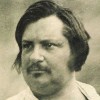
A great many worries can be diminished by realizing the unimportance of the matter which is causing the anxiety.
Bertrand Russell (1872–1970) English mathematician and philosopher
Conquest of Happiness, Part 1, ch. 5 “Fatigue” (1930)
(Source)

It is amazing how much both happiness and efficiency can be increased by the cultivation of an orderly mind, which thinks about a matter adequately at the right time rather than inadequately at all times.
Bertrand Russell (1872–1970) English mathematician and philosopher
Conquest of Happiness, Part 1, ch. 5 “Fatigue” (1930)
(Source)
Possess your soul without fussing; your guardian angel does not lose half the sleep over you you think he does.
Austin O'Malley (1858–1932) American ophthalmologist, professor of literature, aphorist
Keystones of Thought (1914)
(Source)
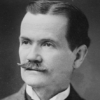
Each day, futurity our bosom fills
With constant terror, for to think of woes
That are to come, is worse than to endure them.Euripides (485?-406? BC) Greek tragic dramatist
Andromeda [Ἀνδρομέδα], fragment (412 BC) [tr. Wodhall (1809)]
(Source)
Barnes frag. 40, Musgrave frag. 18.
The neurotic circles ceaselessly above a fogged-in airport.
Mignon McLaughlin (1913–1983) American journalist and author
The Neurotic’s Notebook, ch. 4 (1963)
(Source)

If pleasures are greatest in anticipation, just remember that this is also true of trouble.
Elbert Hubbard (1856–1915) American writer, businessman, philosopher
The Philosophy of Elbert Hubbard (1916)
(Source)

We are, perhaps uniquely among the earth’s creatures, the worrying animal. We worry away our lives, fearing the future, discontent with the present, unable to take in the idea of dying, unable to sit still.
Lewis Thomas (1913–1993) American physician, poet, essayist, researcher
“The Youngest and Brightest Thing Around,” The Medusa and the Snail: More Notes of a Biology Watcher (1979)
(Source)


We boast our emancipation from many superstitions; but if we have broken any idols, it is through a transfer of idolatry. What have I gained, that I no longer immolate a bull to Jove or to Neptune, or a mouse to Hecate; that I do not tremble before the Eumenides, or the Catholic Purgatory, or the Calvinistic Judgment-day, — if I quake at opinion, the public opinion as we call it; or at the threat of assault, or contumely, or bad neighbors, or poverty, or mutilation, or at the rumor of revolution, or of murder? If I quake, what matters it what I quake at?
Ralph Waldo Emerson (1803–1882) American essayist, lecturer, poet
“Character,” Essays: Second Series (1844)
(Source)
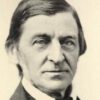
Don’t take tomorrow to bed with you.
Norman Vincent Peale (1898–1993) American preacher, writer
Inspiring Messages for Daily Living (1981 ed.)
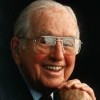
Troubles forereckoned are doubly suffered.
Christian Nestell Bovee (1820–1904) American epigrammatist, writer, publisher
(Attributed)
(Source)
Quoted in Orison Swett Marden, The Secret of Achievement (1898).
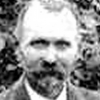
Worry is interest paid on trouble before it falls due.
William Ralph Inge (1860–1954) English prelate [Dean Inge]
Sermon (1932-02-09), St. Paul’s Cathedral, London
(Source)
As reported in The Shields Daily News, "Far and Near: Dean Inge on Worry," Northumberland, England (1932-02-10). In context:Christ condemned worry as a sin -- perhaps He was the first to do so. And what good advice this was! "I have had many troubles," said someone, looking back on his life. "Most of them never happened." Worry is interest paid on trouble before it falls due.
Though Inge employed the phrase, it was in wide use already, having been crafted in 1905 by H. A. Thompson. See more here: Quote Origin: Worry Is Like Paying Interest On a Debt You Don’t Owe – Quote Investigator®.
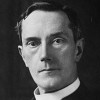
Worry — Interest paid on trouble before it falls due.
Harry "H. A." Thompson (1867–1936) American magazine editor, publisher
Article (1905-11-25), “Sense and Nonsense: Some Definitions,” Saturday Evening Post, Vol. 178
(Source)
Often given as "Worry is the interest paid on trouble before it falls due."
Collected in Thompson's The Cynic's Dictionary (1906). (This should not to be confused with the column by the same name (and similar theme) by Ambrose Bierce, who had to change the column name and the name of his collected book to The Cynic's Word Book, and, later, The Devil's Dictionary.)
Variants (mix and match the parts):This (or its variants), are often misattributed to Mark Twain; there is no record of it in his writings, and the earliest attribution found, is from 1936, a quarter century after Twain's death.
- Worry is interest paid on trouble before it falls due.
- Worry is interest paid in advance on a debt you may never owe.
- Worrying is like paying a debt you don’t owe.
- Worrying about something is like paying interest on a debt you don’t even know if you owe.
The phrase was used, but well after it was in circulation, by William Ralphe Inge.
For more discussion and history see Quote Origin: Worry Is Like Paying Interest On a Debt You Don’t Owe – Quote Investigator®.