Friends, soulwise, these are trying times. Now is the time for all good citizens to come to the aid of our country, and it won’t help if you all cower in places like Madison and the Upper West Side, having hot fantods over the approach of fascism. To the barricades, team. And for Lord’s sake, don’t leave your sense of humor behind.
Molly Ivins (1944–2007) American writer, political columnist [Mary Tyler Ivins]
Essay (2005-03), “Use It or Lose It,” The Progressive, Vol. 69, No. 3
The first two sentences are actually from Strunck's style guide and a typing drill / filler text.
Quote included in The Progressive memorial of Ivins (2007-02).
Quotations about:
citizenry
Note not all quotations have been tagged, so Search may find additional quotes on this topic.

There are greater forces and means for attacking than for defending the State. The reason is, that reckless and abandoned men need only a nod to set them moving, and their own natural disposition incites them against the State; while honest folk somehow or other show less activity, neglect the beginnings of movements, and are aroused to action at the last moment only by simple necessity; so that sometimes, owing to their hesitation and indolence, while they wish still to enjoy peace even with the loss of dignity, through their own fault they lose both.
[Maioribus praesidiis et copiis oppugnatur res publica quam defenditur, propterea quod audaces homines et perditi nutu impelluntur et ipsi etiam sponte sua contra rem publicam incitantur, boni nescio quo modo tardiores sunt et principiis rerum neglectis ad extremum ipsa denique necessitate excitantur, ita ut non numquam cunctatione ac tarditate, dum otium volunt etiam sine dignitate retinere, ipsi utrumque amittant.]
Marcus Tullius Cicero (106–43 BC) Roman orator, statesman, philosopher
Pro Sestio [For Publius Sestius], ch. 47 / sec. 100 (56-02 BC) [tr. Gardner (Loeb) (1958)]
(Source)
(Source (Latin)). Other translations:The constitution is attacked with greater forces and troops than wherewith it is defended; because audacious and reckless characters are set on by a nod, and are even of their own accord incited against the constitution; whilst the good are for some reason or other slacker, and from having neglected the beginnings of things, are at last aroused to action by mere necessity; so that sometimes, while they are willing to retain their tranquility even without freedom, through their own fault they lose both from their hesitation and tardiness.
[tr. Hickie (1888)]The republic is attacked by greater forces and more numerous bodies than those by which it is defended; because audacious and abandoned men are impelled on by a nod, and are even of their own accord excited by nature to be enemies to the republic. And somehow or other good men are slower in action, and overlooking the first beginnings of things, are at last aroused by necessity itself; so that sometimes through their very delays and tardiness of movement, while they wish to retain their ease even without dignity, they, of their own accord, lose both.
[tr. Yonge (1891)]
Of governments, that of the mob is the most sanguinary, that of soldiers the most expensive, and that of civilians the most vexatious.
Charles Caleb "C. C." Colton (1780–1832) English cleric, writer, aphorist
Lacon: Or, Many Things in Few Words, Vol. 1, § 411 (1820)
(Source)
Political freedom in a citizen is the tranquility of mind that comes from the opinion each one has of his security; and for him to have this freedom, the government must be such that one citizen cannot fear another citizen.
[La liberté politique, dans un citoyen, est cette tranquillité d’esprit qui provient de l’opinion que chacun a de sa sûreté: &, pour qu’on ait cette liberté, il faut que le gouvernement soit tel, qu’un citoyen ne puisse pas craindre un autre citoyen.]
Charles-Lewis de Secondat, Baron de Montesquieu (1689–1755) French political philosopher
Spirit of Laws [The Spirit of the Laws; De l’esprit des lois], Book 11, ch. 6 (1748) [tr. Stewart (2018)]
(Source)
(Source (French)). Other translations:The political liberty of the subject is a tranquility of mind, arising from the opinion each person has of his safety. In order to have this liberty, it is requisite the government be so constituted as one man need not be afraid of another.
[tr. Nugent (1750)]Political liberty in a citizen is that tranquility of spirit which comes from the opinion each one has of his security, and in order for him to have this liberty the government must be such that one citizen cannot fear another citizen.
[tr. Cohler/Miller/Stone (1989)]
French: x4
In a self-governing country the people are called citizens. Under a despotism or autocracy the people are called subjects. This is because in a free country the people are themselves sovereign, while in a despotic country the people are under a sovereign. In the United States the people are all citizens, including its President. The rest of them are fellow citizens of the President. In Germany the people are all subjects of the Kaiser. They are not his fellow citizens, they are his subjects.
This is the essential difference between the United States and Germany, but the difference would vanish if we now submitted to the foolish or traitorous persons who endeavor to make it a crime to tell the truth about the Administration when the Administration is guilty of incompetence or other shortcomings. Such an endeavor is itself a crime against the nation. Those who take such an attitude are guilty of moral treason of a kind both abject and dangerous.Theodore Roosevelt (1858–1919) American politician, statesman, conservationist, writer; US President (1901–09)
Essay (1918-04-06), “Citizens or Subjects?” Kansas City Star
(Source)
Regarding a bill which had just passed the Senate Judiciary Committee which would fine and imprison any one who used "contemptuous or slurring language about the President."
This passage was added to later editions of his essay, "Lincoln and Free Speech,", as printed in The Works of Theodore Roosevelt, vol. 21, The Great Adventure, ch. 7 (1925). It does not appear in the original version of the essay or book.
So maybe it’s not the politicians who suck; maybe it’s something else. Like the public. That would be a nice realistic campaign slogan for somebody: “The public sucks. Elect me.” Put the blame where it belongs: on the people.
Because if everything is really the fault of politicians, where are all the bright, honest, intelligent Americans who are ready to step in and replace them? Where are these people hiding? The truth is, we don’t have people like that. Everyone’s at the mall, scratching his balls and buying sneakers with lights in them. And complaining about the politicians.George Carlin (1937–2008) American comedian
Book (2001), Napalm & Silly Putty, “Don’t Blame the Leaders”
(Source)
(Source (Audio)). The audiobook version is trivially different (emphasis added):So maybe it's not the politicians who suck; maybe it's something else. Like the public. That would be a nice realistic campaign slogan for somebody, wouldn't it? "The public sucks. Elect me." Put the blame where it belongs: on the people.
Because if everything is really the fault of politicians, then where are all the bright, honest, intelligent Americans who are ready to step in and replace them? Where are these people hiding? The truth is, we don't have people like that. Everyone's at the mall, scratching his balls and buying sneakers with lights in them. And complaining about the politicians.

In the midst of all my bitching, you might’ve noticed that I never complain about politicians. I leave that to others. And there’s no shortage of volunteers; everyone complains about politicians. Everyone says they suck.
But where do people think these politicians come from? They don’t fall out of the sky; they don’t pass through a membrane from a separate reality. They come from American homes, American families, American schools, American churches, and American businesses. And they’re elected by American voters. This is what our system produces, folks. This is the best we can do. Let’s face it, we have very little to work with. Garbage in, garbage out.
Ignorant citizens elect ignorant leaders, it’s as simple as that. And term limits don’t help. All you do is get a brand new bunch of ignorant leaders.George Carlin (1937–2008) American comedian
Book (2001), Napalm & Silly Putty, “Don’t Blame the Leaders”
(Source)
(Source (audio)). The audiobook version is trivially different (emphasis added):In the midst of all my bitching, you might've noticed that I never complain about politicians. I leave that to other people. There's no shortage of volunteers; everyone complains about politicians. Everyone says they suck.
But where do people think these politicians come from? They don't fall out of the sky; they don't pass through a membrane from a separate reality. They come from American homes, American families, American schools, American churches, and American businesses. And they're elected by American voters. This is what our system produces, folks. This is the best we can do. Let's face it, we have very little to work with in this country. Garbage in, garbage out.
Ignorant citizens elect ignorant leaders, it's as simple as that. And term limits don't help. All you do is get a brand new bunch of ignorant leaders.
But this is an unalterable Truth, that the People can never be enslaved but by their own Tameness, Pusillanimity, Sloth or Corruption. They may be deceived, and their Symplicity, Ignorance, and Docility render them frequently liable to deception. And of this, the aspiring, designing, ambitious few are very sensible. He is the Statesman qualifyed by Nature to scatter Ruin and Destruction in his Path who by deceiving a Nation can render Despotism desirable in their Eyes and make himself popular in Undoing.
John Adams (1735–1826) American lawyer, Founder, statesman; US President (1797–1801)
Diary (1772, Spring), “Notes for a Oration at Braintree”
(Source)
Sometimes Kings have courted the People in Opposition to the Nobles. At other Times the Nobles have united with the People in Opposition to Kings. But Kings and Nobles have much oftener combined together, to crush, to humble and to Fleece the People.
John Adams (1735–1826) American lawyer, Founder, statesman; US President (1797–1801)
Diary (1772, Spring), “Notes for a Oration at Braintree”
(Source)
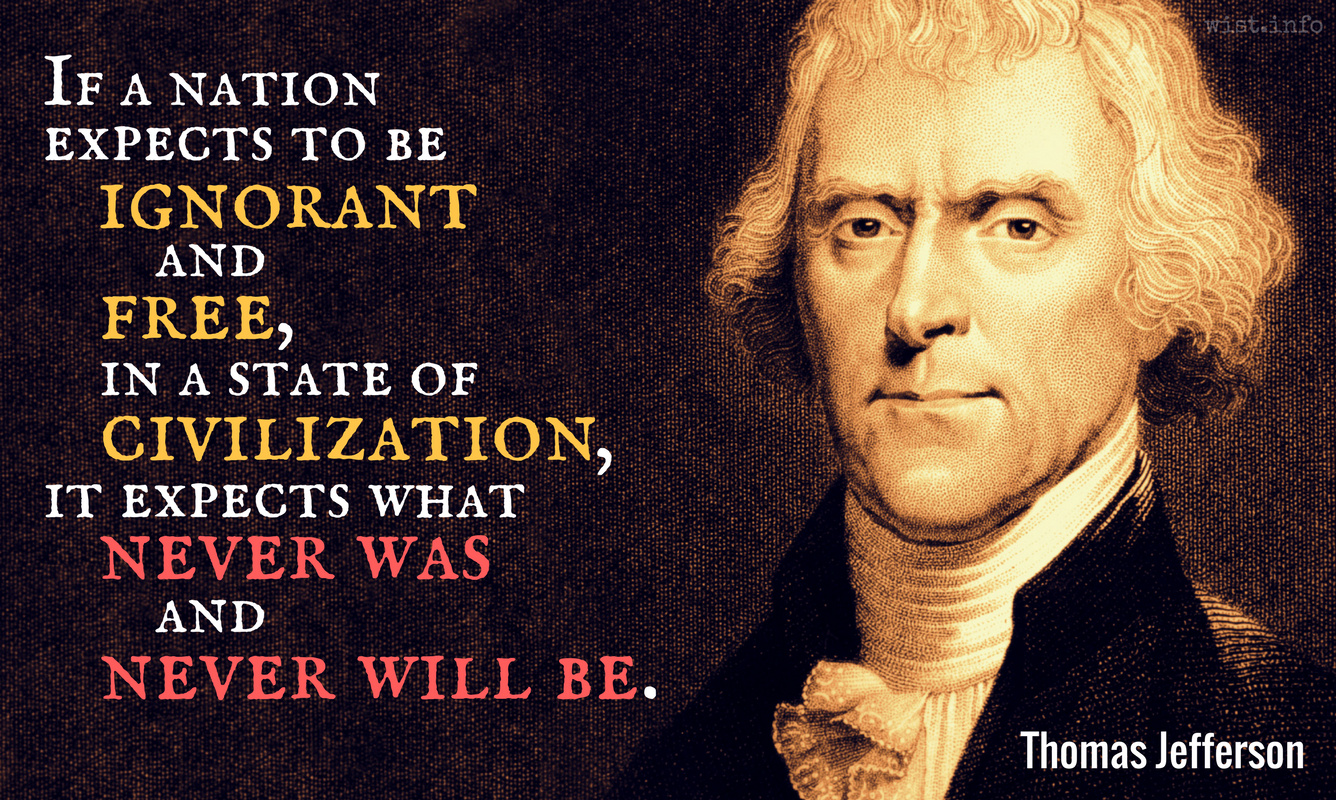
If a nation expects to be ignorant and free, in a state of civilization, it expects what never was and never will be. The functionaries of every government have propensities to command at will the liberty and property of their constituents. There is no safe deposit for these but with the people themselves; nor can they be safe with them without information. Where the press is free, and every man able to read, all is safe.
Thomas Jefferson (1743–1826) American political philosopher, polymath, statesman, US President (1801–09)
Letter (1816-01-06) to Charles Yancey
(Source)
The original, non-orthographic version of this reads:if a nation expects to be ignorant & free, in a state of civilisation, it expects what never was & never will be. the functionaries of every government have propensities to command at will the liberty & property of their constituents. there is no safe deposit for these but with the people themselves; nor can they be safe with them without information. where the press is free and every man able to read, all is safe.
There is a spurious variant on part of this quotation that reads:If a nation expects to be ignorant and free, in a state of civilization, it expects what never was and never will be. If we are to guard against ignorance and remain free, it is the responsibility of every American to be informed.
While the first sentence (as above) is legitimate, the second is not. It appears to be a paraphrase of Jefferson used by Ronald Reagan in 1981.
The trouble is that democracy works only when a good majority of citizens are willing to give thought and time and effort to their government.
Fletcher Knebel (1911–1993) American author
Seven Days in May, “Tuesday Afternoon” [Lyman] (1962) [with Charles W. Bailey II]
(Source)
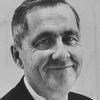
Rulers are no more than attorneys, agents and trustees for the people; and if the cause, the interest and trust is insidiously betray’d, or wantonly trifled away, the people have a right to revoke the authority, that they themselves have deputed, and to constitute abler and better agents, attorneys and trustees.
John Adams (1735–1826) American lawyer, Founder, statesman; US President (1797–1801)
Essay (1765-09-30), “A Dissertation on the Canon and the Feudal Law,” No. 3, Boston Gazette
(Source)
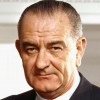
The essence of our American tradition of State and local governments is the belief expressed by Thomas Jefferson that Government is best which is closest to the people. Yet that belief is betrayed by those State and local officials who engage in denying the right of citizens to vote. Their actions serve only to assure that their State governments and local governments shall be remote from the people, least representative of the people’s will and least responsive to the people’s wishes.
Lyndon B. Johnson (1908–1973) American politician, educator, US President (1963–69)
Letter (1965-03-15), “Special Message to the Congress on the Right to Vote”
(Source)
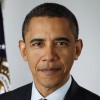
Our democracy is not the buildings, not the monuments. It’s you being willing to work to make things better and being willing to listen to each other and argue with each other and come together and knock on doors and make phone calls and treat people with respect.
Barack Obama (b. 1961) American politician, US President (2009–2017)
Staff Farewell, Joint Base Andrews, Maryland (20 Jan 2017)
(Source)
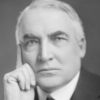
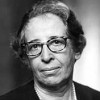
In the great fulfillment we must have a citizenship less concerned about what the government can do for it and more anxious about what it can do for the nation.
As citizens, we must prevent wrongdoing because the world in which we all live, wrong-doer, wrong sufferer and spectator, is at stake.
Hannah Arendt (1906–1975) German-American philosopher, political theorist
The Life of the Mind, Part 1, sec. 3, ch. 18 (1977)
(Source)
The people — the people — are the rightful masters of both Congresses, and courts — not to overthrow the Constitution, but to overthrow the men who pervert it.
Abraham Lincoln (1809–1865) American lawyer, politician, US President (1861–65)
Speech (1859-09-16), Columbus, Ohio
(Source)
On preventing the spread of slavery to new states and territories, and preventing the resumption of the African slave trade.
The speech, sponsored by the Ohio Republican Central Committee, was also given the next day in Dayton and Cincinnati, Ohio. It may have been also given at Cooper Union, New York City (1860-02-27).
Variant:The people of these United States are the rightful masters of both Congresses and courts, not to overthrow the Constitution, but to overthrow the men who pervert the Constitution.
Discussion and further information around this quotation:
- Abraham Lincoln papers: Series 1. General Correspondence. 1833-1916: Abraham Lincoln, [September 16-17, 1859] (Notes for Speech in Kansas and Ohio) | Library of Congress
- "The people of these United States are the rightful masters of both congresses and courts, not to over-throw the Constitution, but to over-throw the men who pervert that Constitution" / E.B. & E.C. Kellogg, 245 Main Street, Hartford, Conn. | Library of Congress
- Did Lincoln Say 'We the People Are the Rightful Masters of Both Congress and the Courts'? | Snopes.com

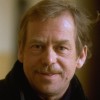
Let us not be mistaken: the best government in the world, the best parliament and the best president, cannot achieve much on their own. And it would be wrong to expect a general remedy from them alone. Freedom and democracy include participation and therefore responsibility from us all.
Václav Havel (1936–2011) Czech playwright, essayist, dissident, politician
“New Year’s Address to the Nation” (1 Jan 1990)
[The people] have a right, an indisputable, unalienable, indefeasible, divine right to that most dreaded and envied kind of knowledge, I mean, of the characters and conduct of their rulers.
John Adams (1735–1826) American lawyer, Founder, statesman; US President (1797–1801)
Essay (1765-09-30), “A Dissertation on the Canon and the Feudal Law,” No. 3, Boston Gazette
(Source)
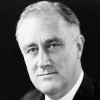
Let us not be afraid to help each other — let us never forget that government is ourselves and not an alien power over us. The ultimate rulers of our democracy are not a President and Senators and Congressmen and Government officials but the voters of this country.
Franklin Delano Roosevelt (1882–1945) American lawyer, politician, statesman; US President (1933–45)
Speech (1938-07-08), Northwest Territory Sesquicentennial, Muskingum Park, Marietta, Ohio
(Source)
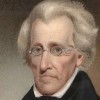
The great can protect themselves, but the poor and humble require the arm and shield of the law.
Andrew Jackson (1767–1845) American politician, general, US President (1829–1837)
Letter to John Quincy Adams (26 Aug 1821)
A bill of rights is what the people are entitled to against every government on earth, general or particular, and what no just government should refuse, or rest on inference.
Thomas Jefferson (1743–1826) American political philosopher, polymath, statesman, US President (1801–09)
Letter (1787-12-20) to James Madison
(Source)
Let them take arms. The remedy is to set them right as to facts, pardon and pacify them. What signify a few lives lost in a century or two? The tree of liberty must be refreshed from time to time with the blood of patriots and tyrants. It is it’s natural manure.
Thomas Jefferson (1743–1826) American political philosopher, polymath, statesman, US President (1801–09)
Letter (1787-11-13) to William Stephens Smith
(Source)
For in a republic, who is “the Country”? Is it the Government which is for the moment in the saddle? Why, the Government is merely a servant — merely a temporary servant; it cannot be its prerogative to determine what is right and what is wrong, and decide who is a patriot and who isn’t. Its function is to obey orders, not originate them. Who, then, is “the country?” Is it the newspaper? Is it the pulpit? Is it the school-superintendent? Why, these are mere parts of the country, not the whole of it; they have not command, they have only their little share in the command. They are but one in the thousand; it is in the thousand that command is lodged; they must determine what is right and what is wrong; they must decide who is a patriot and who isn’t.
Mark Twain (1835–1910) American writer [pseud. of Samuel Clemens]
Papers of the Adams Family, Part 6 “Two Fragments from a Suppressed Book Called ‘Glances at History’ or ‘Outlines of History'” (1939)
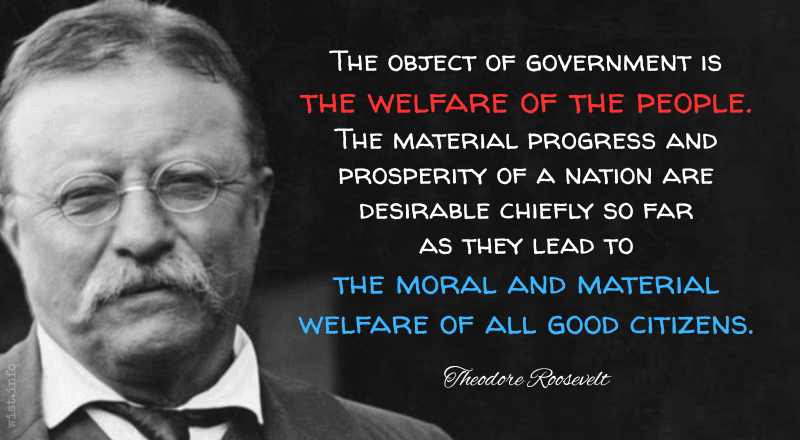
The object of government is the welfare of the people. The material progress and prosperity of a nation are desirable chiefly so far as they lead to the moral and material welfare of all good citizens.
Theodore Roosevelt (1858–1919) American politician, statesman, conservationist, writer; US President (1901–09)
Speech (1910-08-31), “The New Nationalism,” John Brown Memorial Park dedication, Osawatomie, Kansas
(Source)
In a virtuous community men of sense and principle will always be placed at the head of affairs. In a declining state of public morals men will be so blinded to their true interests as to put the incapable and unworthy at the helm. It is therefore vain to complain of the follies or crimes of a government. We must lay the hands on our own hearts and say, Here is the sin that makes the public sin.
Ralph Waldo Emerson (1803–1882) American essayist, lecturer, poet
“The Individual and the State,” sermon, Second Church of Boston (1830-04-08)
As the Happiness of the People is the sole End of Government, So the Consent of the People is the only Foundation of it, in Reason, Morality, and the natural Fitness of things: and therefore every Act of Government, every Exercise of Sovereignty, against, or without, the Consent of the People, is Injustice, Usurpation, and Tyranny.
John Adams (1735–1826) American lawyer, Founder, statesman; US President (1797–1801)
“A Proclamation by the General Court of Massachusetts” (1776-01-19)
(Source)
The document was begun by the House on 1775-12-18 to outline reasons why judicial officers appointed by the Council ought to be accepted by counties (more background here). The proclamation was approved by the House on 1776-01-23, and printed in the Boston Gazette on 1776-02-12.
In Adams' manuscript of the document it reads, "As the Happiness of the People alone."
I am not one of those who think that the people are never in the wrong. They have been so, frequently and outrageously, both in other countries and in this. But I do say, that in all disputes between them and their rulers, the presumption is at least upon a par in favour of the people.
Edmund Burke (1729–1797) Anglo-Irish statesman, orator, philosopher
“Thoughts on the Cause of the Present Discontents” (23 Apr 1770)
Widespread intellectual and moral docility may be convenient for leaders in the short term, but it is suicidal for nations in the long term. One of the criteria for national leadership should therefore be a talent for understanding, encouraging, and making constructive use of vigorous criticism.
Carl Sagan (1934–1996) American scientist and writer
Billions and Billions ch. 14 “The Common Enemy” (1997)

By the frame of the Government under which we live this same people have wisely given their public servants but little power for mischief, and have with equal wisdom provided for the return of that little to their own hands at very short intervals. While the people retain their virtue and vigilance no Administration by any extreme of wickedness or folly can very seriously injure the Government in the short space of four years.
Abraham Lincoln (1809–1865) American lawyer, politician, US President (1861–65)
Speech (1861-03-04), Inaugural Address, Washington, D. C.
(Source)
We must scrupulously guard the civil rights and civil liberties of all citizens, whatever their background. We must remember that any oppression, any injustice, any hatred, is a wedge designed to attack our civilization.
Franklin Delano Roosevelt (1882–1945) American lawyer, politician, statesman; US President (1933–45)
Letter (1940-01-09) to William Allan Neilson
(Source)
Neilson was the co-chair of the Sponsor Committee, Fourth Annual Conference of the American Committee for Protection of Foreign-Born. It was read to the conference on 1940-03-01, and entered into the Congressional Record (along with other letters received) on 1940-03-11.
Just over two years later, 1942-02-19, FDR signed Executive Order 9066, authorizing the evacuation of all persons (which largely meant Japanese-Americans) deemed a national security threat from the West Coast to internment centers further inland. The EO was in effect until rescinded by Roosevelt in 1944-12 after the Supreme Court ruling in Ex parte Endo.
But the future lies with those wise political leaders who realize that the great public is interested more in Government than in politics.
Franklin Delano Roosevelt (1882–1945) American lawyer, politician, statesman; US President (1933–45)
Speech (1940-01-08), Jackson Day Dinner, Mayflower Hotel, Washington, D. C.
(Source)
Quoted by Ronald Reagan, State of the Union (1983-01-25), though he appeared to misattribute the phrase to Roosevelt's second State of the Union message.
What is wanted is men, not of policy, but of probity, — who recognize a higher law than the Constitution, or the decision of the majority. The fate of the country does not depend on how you vote at the polls, — the worst man is as strong as the best at that game; it does not depend on what kind of paper you drop into the ballot-box once a year, but on what kind of man you drop from your chamber into the street every morning.
Henry David Thoreau (1817–1862) American philosopher and writer
Speech (1854-07-04), “Slavery in Massachusetts,” Anti-Slavery Celebration, Framingham, Massachusetts
(Source)
After the conviction in Boston of Anthony Burns, under the Fugitive Slave Act of 1850. This led to large protests and an abolitionist riot at the Boston Courthouse, requiring Federal troops and state militia to ensure his transport to a ship sailing to Virginia.
All politics is based on the indifference of the majority.
James "Scotty" Reston (1909–1995) Scottish-American journalist and editor
“New York: Rockefeller Comes Out of His Trance,” New York Times (12 Jun 1968)
(Source)
This is cited in multiple places to this 1968 op-ed, to which I don't have access. Reston also used the phrase in this 1972 op-ed.