Most tyrants are, by nature, short-sighted. Though they aspire to an eternal panoply of statues and symphonies in their honor, they rarely focus on constructive present actions that will lead to a future where their name is even known, let alone praised. As time goes on, they either fall into the delusion of omnipotence, or else become obsessed with holding onto embattled power until the bitter end. Neither mental state leads to laying a healthy foundation for posterity.
Graham Ericsson (b. 1961) American technologist, writer, aphorist
Journal (2026-04-22)
Quotations about:
tyrant
Note not all quotations have been tagged, so Search may find additional quotes on this topic.

Extreme obedience assumes ignorance in the one who obeys; it assumes ignorance even in the one who commands; he does not have to deliberate, to doubt, or to reason; he has only to want.
[L’extrême obéissance suppose de l’ignorance dans celui qui obéit; elle en suppose même dans celui qui commande: il n’a point à délibérer, à douter, ni à raisonner; il n’a qu’à vouloir.]
Charles-Lewis de Secondat, Baron de Montesquieu (1689–1755) French political philosopher
Spirit of Laws [The Spirit of the Laws; De l’esprit des lois], Book 4, ch. 3 (4.3) (1748) [tr. Cohler/Miller/Stone (1989)]
(Source)
(Source (French)). Other translations:Excessive obedience supposes ignorance in the person that obeys: the same it supposes in him that commands; for he has no occasion to deliberate, to doubt, to reason; he has only to will.
[tr. Nugent (1750)]Extreme obedience assumes ignorance in him who obeys; it assumes ignorance even in him who commands: he has no need to deliberate, to doubt, or to reason, he has only to will.
[tr. Stewart (2018)
Men are still men. The despot’s wickedness
Comes of ill teaching, and of power’s excess, —
Comes of the purple he from childhood wears,
Slaves would be tyrants if the chance were theirs.[L’homme est homme toujours; les crimes du despote
Sont faits par sa puissance, ombre où son âme flotte,
Par la pourpre qu’il traîne et dont on le revêt,
Et l’esclave serait tyran s’il le pouvait.]Victor Hugo (1802–1885) French writer, journalist, human rights activist, politician
Poem (1876), “The Vanished City [La Ville Disparue],” Legend of the Ages: New Series [La Légende des siècles: La Nouvelle Série], No. 4 (1877) [tr. Carrington (1885)]
(Source)
NURSE: Terrible is the temperament of royalty,
Who are rarely controlled, always imperious;
It is hard for them to give up their wrath.
To get used to living like everybody else
Is better.[ΤΡΟΦΌΣ: δεινὰ τυράννων λήματα καί πως
ὀλίγ᾽ ἀρχόμενοι, πολλὰ κρατοῦντες
χαλεπῶς ὀργὰς μεταβάλλουσιν.
τὸ γὰρ εἰθίσθαι ζῆν ἐπ᾽ ἴσοισιν
κρεῖσσον.]Euripides (485?-406? BC) Greek tragic dramatist
Medea [Μήδεια], l. 119ff (431 BC) [tr. Podlecki (1989)]
(Source)
(Source (Greek)). Other translations:For the souls
Of Kings are prone to cruelty, so seldom
Subdued, and over others wont to rule,
That it is difficult for such to change
Their angry purpose. Happier I esteem
The lot of those who still are wont to live
Among their equals.
[tr. Wodhull (1782)]Kings have a fiery quality of soul,
Accustom'd to command, if once they feel
control, though small, their anger blazes out
Not easily extinguish'd: hence I deem
An equal mediocrity of life
More to be wish'd.
[tr. Potter (1814)]Dread are the humours of princes: as wont
To be ruled in few things and in many to lord,
It is hard to them to turn from their wrath.
But to lead one's life in the level ways
Is best.
[tr. Webster (1868)]Strange are the tempers of princes, and maybe because they seldom have to obey, and mostly lord it over others, change they their moods with difficulty. 'Tis better then to have been trained to live on equal terms.
[tr. Coleridge (1891)]Dreadful are the dispositions of tyrants, and somehow in few things controlled, in most absolute, they with difficulty lay aside their passion. The being accustomed then to live in mediocrity of life is the better.
[tr. Buckley (1892)]Ah princes -- how fearful their moods are! --
Long ruling, unschooled to obey, --
Unforgiving, unsleeping their feuds are.
Better life's level way.
[tr. Way (Loeb) (1894)]Rude are the wills of princes: yea,
Prevailing alway, seldom crossed,
On fitful winds their moods are tossed:
'Tis best men tread the equal way.
[tr. Murray (1906)]Great people’s tempers are terrible, always
Having their own way, seldom checked,
Dangerous they shift from mood to mood.
How much better to have been accustomed
To live on equal terms with one’s neighbors.
[tr. Warner (1944)]Oh, it's a bad thing
To be born of high race, and brought up wilful and powerful in a great house, unruled
And ruling many: for then if misfortune comes it is unendurable, it drives you mad. I say that poor people
Are happier: the little commoners and humble people, the poor in spirit.
[tr. Jeffers (1946)]The mind of a queen
Is a thing to fear. A queen is used
To giving commands, not obeying them;
And her rage once roused is hard to appease.
To have learnt to live on the common level
Is better.
[tr. Vellacott (1963)]The minds of royalty are dangerous: since they often command and seldom obey, they are subject to violent changes of mood. For it is better to be accustomed to live on terms of equality.
[tr. Kovacs (1994)]They have frightening natures, those of royal blood; because, I imagine, they’re seldom overruled and generally have their way, they do not easily forget a grudge. Better to have formed the habit of living on equal terms with your neighbours.
[tr. Davie (1996)]How afraid I am of these royal rages! It’s so hard for such rages to subside.
Kings and queens have always been spoiled by power. They’re not used to taking orders. No, they’d much rather give them!
Kings and Queens only do what they want and forget about everyone else!
Oh, how much better it is to live a balanced life: to be an equal among equals.
[tr. Theodoridis (2004)]Tyrants’ tempers are insufferable:
they are seldom under control, their power is far-reaching.
It is hard for them to swallow their rages.
To get used to living on terms of equality
is better.
[tr. Luschnig (2007)]The pride of rulers is something to fear --
they often order men, but seldom listen,
and when their tempers change it’s hard to bear.
It’s better to get used to living life
as an equal common person.
[tr. Johnston (2008)]The temperaments of royalty are fearsome;
because they're almost unrestrained
and are so powerful, it is rare
for them to overcome their rage.
To be accustomed to live in equality
is best.
[tr. Ewans (2022)]Terrible / wonderful [deina] are the tempers of turannoi; maybe because they seldom have to obey, and mostly lord it over others, they change their moods with difficulty. It is better then to have been trained to live in equality.
[tr. Coleridge / Ceragioli / Nagy / Hour25]
Familiarize yourselves with the chains of bondage, and you are preparing your own limbs to wear them. Accustomed to trample on the rights of those around you, you have lost the genius of your own independence, and become the fit subjects of the first cunning tyrant who rises.
Abraham Lincoln (1809–1865) American lawyer, politician, US President (1861–65)
Speech (1858-09-11), Edwardsville, Illinois
(Source)
As reported in the Alton Weekly Courier (1858-09-16).

Is it unreasonable, then, to expect that some man possessed of the loftiest genius, coupled with ambition sufficient to push it to its utmost stretch, will at some time spring up among us? And when such an one does, it will require the people to be united with each other, attached to the government and laws, and generally intelligent, to successfully frustrate his designs.
Distinction will be his paramount object, and although he would as willingly, perhaps more so, acquire it by doing good as harm, yet, that opportunity being past, and nothing left to be done in the way of building up, he would set boldly to the task of pulling down.Abraham Lincoln (1809–1865) American lawyer, politician, US President (1861–65)
Speech (1838-01-27), “The Perpetuation of Our Political Institutions,” Young Men’s Lyceum, Springfield, Illinois
(Source)
Just as a savage will sacrifice his whole subsistence to his hunger, the despot sacrifices his authority to his love of power; his reign devours the reign of his successors.
[Comme le sauvage sacrifie sa subsistance à sa faim, le despote sacrifie sa puissance à son pouvoir; son règne dévore le règne de ses successeurs.]
Joseph Joubert (1754–1824) French moralist, philosopher, essayist, poet
Pensées [Thoughts], ch. 14 “Des Gouvernements [On Governments],” ¶ 16 (1850 ed.) [tr. Lyttelton (1899), ch. 13, ¶ 7]
(Source)
(Source (French)). No other translations of the thought found amongst those consulted.
The man of firm and righteous will,
No rabble, clamorous for the wrong,
No tyrant’s brow, whose frown may kill,
Can shake the strength that makes him strong.[Iustum et tenacem propositi virum
non civium ardor prava iubentium,
non voltus instantis tyranni
mente quatit solida]Horace (65–8 BC) Roman poet, satirist, soldier, politician [Quintus Horatius Flaccus]
Odes [Carmina], Book 3, # 3, l. 1ff (3.3.1-4) (23 BC) [tr. Conington (1872)]
(Source)
(Source (Latin)). Other translations:An honest and resolved man,
Neither a peoples tumults can,
Neither a Tyrants indignation,
Un-center from his fast foundation.
[tr. Fanshaw; ed. Brome (1666)]Not the rage of the people pressing to hurtful measures, not the aspect of a threatening tyrant can shake from his settled purpose the man who is just and determined in his resolution.
[tr. Smart/Buckley (1853)]He that is just, and firm of will
Doth not before the fury quake
Of mobs that instigate to ill,
Nor hath the tyrant's menace skill
His fixed resolve to shake.
[tr. Martin (1864)]Not the rage of the million commanding things evil,
Not the doom frowning near in the brows of the tyrant,
Shakes the upright and resolute man
In his solid completeness of soul.
[tr. Bulwer-Lytton (1870)]Neither the fury of the populace, commanding him to do what is wrong, nor the face of the despot which confronts him, [...] shakes from his solid resolve a just and determined man.
[tr. Elgood (1893)]The just man, in his purpose strong,
No madding crowd can bend to wrong.
The forceful tyrant's brow and word,
[...] His firm-set spirit cannot move.
[tr. Gladstone (1894)]Him who is just, and stands to his purpose true.
Not the unruly ardour of citizens
Shall shake from his firm resolution,
Nor visage of the oppressing tyrant.
[tr. Phelps (1897)]The upright man holding his purpose fast,
No heat of citizens enjoining wrongful acts,
No overbearing despot's countenance,
Shakes from his firm-set mind.
[tr. Garnsey (1907)]The man that's just and resolute of mood
No craze of people's perverse vote can shake,
Nor frown of threat'ning monarch make
To quit a purposed good.
[tr. Marshall (1908)]The man tenacious of his purpose in a righteous cause is not shaken from his firm resolve by the frenzy of his fellow citizens bidding what is wrong, not by the face of threatening tyrant.
[tr. Bennett (Loeb) (1912)]Who loves the Right, whose will is resolute,
His purpose naught can shake — nor rage of brute
Mob bidding him work evil; nor the eye
Of threatening despot
[tr. Mills (1924)]A mob of citizens clamouring for injustice,
An autocrat's grimace of rage [...] cannot stagger
The just and steady-purposed man.
[tr. Michie (1963)]The man who knows what's right and is tenacious
In the knowledge of what he knows cannot be shaken.
Not by people righteously impassioned
In a wrong cause, and not by menacings
Of tyrants' frowns.
[tr. Ferry (1997)]The just man, tenacious in his resolve,
will not be shaken from his settled purpose
by the frenzy of his fellow citizens
imposing that evil be done,
or by the frown of a threatening tyrant.
[tr. Alexander (1999)]The passion of the public, demanding what
is wrong, never shakes the man of just and firm
intention, from his settled purpose,
nor the tyrant’s threatening face.
[tr. Kline (2015)]Neither the passion of citizens demanding crooked things,
Not the face of a threatening tyrant
Shakes the man who is righteous and set in purpose
From his strong mind.
[tr. Wikisource (2021)]
Nearly all of history is only a string of horrors. If tyrants dismiss it while they are alive, it seems that their successors allow people to transmit to posterity the crimes of their predecessors, in order to offer diversion away from the horror that they inspire themselves.
[Presque toute l’Histoire n’est qu’une suite d’horreurs. Si les tyrans la détestent, tandis qu’ils vivent, il semble que leurs successeurs souffrent qu’on transmette à la postérité les crimes de leurs devanciers, pour faire diversion à l’horreur qu’ils inspirent eux-mêmes.]
Nicolas Chamfort (1741–1794) French writer, epigrammist (b. Nicolas-Sébastien Roch)
Products of Perfected Civilization [Produits de la Civilisation Perfectionée], Part 1 “Maxims and Thoughts [Maximes et Pensées],” ch. 8, ¶ 474 (1795) [tr. Siniscalchi (1994)]
(Source)
(Source (French)). Other translations:Nearly all History is a procession of horrors; but, although tyrants hate History in their own lifetime, a general transmission of such crimes is not unpleasing to their descendants, for it distracts attention from their own.
[tr. Mathers (1926)]Almost the whole of history is nothing but a series of horrors. If tyrants detest it while they are alive, their successors seem willing to allow the crimes of their predecessors to be transmitted to posterity, to divert attention from the horror that they themselves inspire.
[tr. Merwin (1969)]Almost the whole of history is nothing more than a series of horrors. If tyrants detest it while they are alive, it seems that their that their successors suffer that the crimes of their predecessors should be laid at the door of posterity, in order to divert attention from the horrors to which they themselves give rise.
[tr. Pearson (1973)]Almost all of history is a story of horror. If tyrants condemn it during their lifetime, their successors seem to allow the crimes of their predecessors to be passed on to posterity, thereby diverting attention from the horror they themselves inspire.
[tr. Parmée (2003)]
PERICLES: I knew him tyrannous, and tyrants’ fears
Decrease not but grow faster than the years.William Shakespeare (1564–1616) English dramatist and poet
Pericles, Act 1, sc. 2, l. 91ff (1.2.91-92) (1607) [with George Wilkins]
(Source)
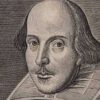
PERICLES:But thou know’st this:
’Tis time to fear when tyrants seems to kiss.William Shakespeare (1564–1616) English dramatist and poet
Pericles, Act 1, sc. 2, l. 84ff (1.1.84-86) (1607) [with George Wilkins]
(Source)
Then the tyrant dies, and his rule is over; the martyr dies, and his rule begins.
Søren Kierkegaard (1813–1855) Danish philosopher, theologian
Select Entries from Journals and Papers on On My Work as an Author and The Point of View for My Work as an Author, Paper IX B 63:13 373 [tr. Hong/Hong]

Choose your leaders
with wisdom and forethought.
To be led by a coward
is to be controlled
by all that the coward fears.
To be led by a fool
is to be led
by the opportunists
who control the fool.
To be led by a thief
is to offer up
your most precious treasures
to be stolen.
To be led by a liar
is to ask
to be lied to.
To be led by a tyrant
is to sell yourself
and those you love
into slavery.Octavia Butler (1947–2006) American writer
Parable of the Talents, ch. 11, epigraph (1998)
(Source)
The epigraph is cited to the in-fiction Earthseed: The Books of the Living.

Despotic authority attaches great importance to being considered strong, and much less to being admired for its wisdom. Besides, what does wisdom mean to a despot? It means skill in the use of power. The wise despot knows when and how to strike. This continual display of power is necessary because, at root, any dictatorship appeals to the lowest instincts of the governed: fear, aggressiveness toward one’s neighbors, bootlicking. Terror most effectively excites such instincts, and fear of strength is the wellspring of terror.
Ryszard Kapuściński (1932–2007) Polish journalist, photographer, poet, author
Shah of Shahs (1982)
(Source)
The mistake is to assume that rulers who came to power through institutions cannot change or destroy those very institutions — even when that is exactly what they have announced that they will do.
Timothy Snyder (b. 1969) American historian, author
On Tyranny: Twenty Lessons from the Twentieth Century (2017)
(Source)
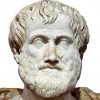
Their guards also are such as are used in a kingly government, not a despotic one; for the guards of their kings are his citizens, but a tyrant’s are foreigners. The one commands, in the manner the law directs, those who willingly obey; the other, arbitrarily, those who consent not. The one, therefore, is guarded by the citizens, the other against them.
[οἱ γὰρ πολῖται φυλάττουσιν ὅπλοις τοὺς βασιλεῖς, τοὺς δὲ τυράννους ξενικόν: οἱ μὲν γὰρ κατὰ νόμον καὶ ἑκόντων οἱ δ᾽ ἀκόντων ἄρχουσιν, ὥσθ᾽ οἱ μὲν παρὰ τῶν πολιτῶν οἱ δ᾽ ἐπὶ τοὺς πολίτας ἔχουσι τὴν φυλακήν.]
Aristotle (384–322 BC) Greek philosopher
Politics [Πολιτικά], Book 3, ch. 14 / 1285a25 [tr. Ellis (1776)]
(Source)
Original Greek. Other translations:
- "The guard of the king is, for the same cause, one that belongs to a monarch and not to a tyrant, for the citizens protect their kings with their arms; but it is aliens who guard despots. For the former rule legally over willing subjects, the latter over unwilling; so that the former are guarded by their subjects, the latter against them." [tr. Bolland (1877)]
- "Wherefore also their guards are such as a king and not such as a tyrant would employ, that is to say, they are composed of citizens, whereas the guards of tyrants are mercenaries. For kings rule according to the law over voluntary subjects, but tyrants over involuntary; and the one are guarded by their fellow-citizens, the others are guarded against them." [tr. Jowett (1921)]
- "Also their bodyguard is of a royal and not a tyrannical type for the same reason; for kings are guarded by the citizens in arms, whereas tyrants have foreign guards, for kings rule in accordance with law and over willing subjects, but tyrants rule over unwilling subjects, owing to which kings take their guards from among the citizens but tyrants have them to guard against the citizens." [tr. Rackham (1944)]
- "For the same reason, their bodyguard is of a kingly rather than a tyrannical sort. For the citizens guard kings with their own arms, while a foreign element guards the tyrant, since the former rule willing persons in accordance wit the law, while the latter rule unwilling persons. So the ones have a bodyguard provided by the citizens, the other one that is directed against them." [tr. Lord (1984)]
- "And their bodyguards are kingly and not tyrannical due to the same cause. For citizens guard kings with their weapons, whereas a foreign contingent guards tyrants. For kings rule in accord with the law and rule voluntary subjects, whereas the latter rule involuntary ones, so that the former have bodyguards drawn from the citizens, whereas the latter have bodyguards to protect them against the citizens." [tr. Reeve (2007)]
- "Citizens guard their kings with arms; foreigners protect tyrants. This is because kings rule according to the law and with willing citizens while tyrants rule the unwilling. As a result, kings have guards from their subjects and tyrants keep guards against them." [tr. @sentantiq]
The only man for whom Hitler had “unqualified respect” was “Stalin the genius,” and while in the case of Stalin and the Russian regime we do not have (and presumably never will have) the rich documentary material that is available for Germany, we nevertheless know since Khrushchev’s speech before the Twentieth Party Congress that Stalin trusted only one man and that was Hitler.
Hannah Arendt (1906–1975) German-American philosopher, political theorist
Origins of Totalitarianism, Part 3, ch. 10 “A Classless Society,” sec. 1 (1951)
(Source)
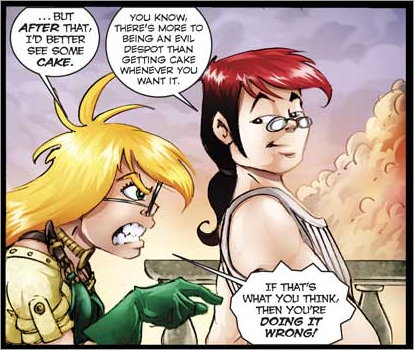
AGATHA: … But after that, I’d better see some cake.
TARVEK: You know, there’s more to being an evil despot than getting cake whenever you want it.
AGATHA: If that’s what you think, then you’re doing it wrong!
Phil Foglio (b. 1956) American writer, cartoonist
Girl Genius, Vol. 13, p. 38, “The Heterodyne Requires Cake” (10 Apr 2013)
(Source)
In Agatha H. and the Siege of Mechanicsburg (2020) [with Kaja Foglio], this is rendered:“But after that, I’d better see some cake.”
Tarvek glanced at her. “You know, there’s more to being an evil despot than getting cake whenever you want it.”
Agatha thought about this and was filled with a sudden conviction, one that would stand the test of time through everything else that happened to her through the years. “If that’s what you think, then you’re doing it wrong.”
The tyrant grinds down his slaves and they don’t turn against him, they crush those beneath them.
Emily Brontë (1818–1848) British novelist, poet [pseud. Ellis Bell]
Wuthering Heights, ch. 11 [Heathcliff] (1847)
(Source)
This hand, to tyrants ever sworn the foe,
For Freedom only deals the deadly blow;
Then sheathes in calm repose the vengeful blade,
For gentle peace in Freedom’s hallowed shade.John Quincy Adams (1767–1848) US President (1825–29)
Written in an Album (1842)
It’s said that “power corrupts,” but actually it’s more true that power attracts the corruptible. The sane are usually attracted by other things than power. When they do act, they think of it as service, which has limits. The tyrant, though, seeks mastery, for which he is insatiable, implacable.
David Brin (b. 1950) American scientist and author
The Postman, ch. 14 (1985)
Often paraphrased: "It is said that power corrupts, but actually it's more true that power attracts the corruptible. The sane are usually attracted by other things than power." See Frank Herbert.

A well run tyranny is almost as scarce as an efficient democracy.
Robert A. Heinlein (1907–1988) American writer
Friday [Dr. Baldwin] (1982)
The hero saves us. Praise the hero! Now, who will save us from the hero?
Cato the Elder (234–149 BC) Roman politician and orator [Marcus Portius Cato]
Speech in the Roman Senate
I believe any man who takes the liberty of another into his keeping is bound to become a tyrant, and that any man who yields up his liberty, in however slight the measure, is bound to become a slave.
H. L. Mencken (1880–1956) American writer and journalist [Henry Lewis Mencken]
“Why Liberty?” Chicago Tribune (30 Jan 1927)
If I had to choose, I should detest the tyranny of one man less than that of many. A despot always has his good moments; an assembly of despots never.
Voltaire (1694–1778) French writer [pseud. of Francois-Marie Arouet]
Philosophical Dictionary, “Tyranny” (1764) [tr. Gay (1962)]
(Source)
Let them take arms. The remedy is to set them right as to facts, pardon and pacify them. What signify a few lives lost in a century or two? The tree of liberty must be refreshed from time to time with the blood of patriots and tyrants. It is it’s natural manure.
Thomas Jefferson (1743–1826) American political philosopher, polymath, statesman, US President (1801–09)
Letter (1787-11-13) to William Stephens Smith
(Source)
Let them hate me, so long as they fear me.
[Óderint, dum métuant.]
Accius (170-c. 86 BC) Roman tragic poet, literary scholar [Lucius Accius, Lucius Attius]
Atreus (fragment 168) [tr. Kline (2010)]
(Source)
A fragment from Accius' work, known only by its quotation by others. The phrase was often used by classical writers as a hallmark of a tyrannical ruler. This includes:(Source (Latin)). Other translations (from the above works):
- Cicero, Pro Sestio, 48/102 (where he regrets that Accius had "used words for evil-minded men to lay hold of").
- Cicero, Philippics 1.14
- Cicero, De Officiis, 1.28/97.
- Seneca the Younger, De Ira, 1.20.4 (referring to the line as "dread and abominable").
- Seneca the Younger, De Clementia, 1.12.
- Suetonius, Life of Caligula, 30.1 (noting that the emperor liked to quote it).
- Suetonius, Life of Tiberius, 59 (quoting Caligula, and contrasting to Tiberius use of the similar Oderint dum probent ("Let them hate me so long as they approve [of my deeds]").
Ev'n let them hate me, whilst they dread me too.
[tr. Cockman (1699)]Let them hate me, provided they fear me.
[tr. McCartney (1798)]Let them hate me, so they fear me.
[tr. Edmonds (1865)]I scorn their hatred, if they do but fear me.
[tr. Thomson (1883)]No matter how they hate me while they fear me.
[tr. Peabody (1883)]Let them hate, provided they fear me!
[tr. Hickie (1888)]Let them hate me, as long as they fear.
[tr. Yonge (1891)]Let them hate, so long as they fear.
[tr. Gardiner (1899)]Let them hate me, provided they fear me.
[tr. Stewart (1900)]Why, let them hate me, if they fear me too!
[tr. Stewart (1900)]What care I though all men should hate my name,
So long as fear accompanies their hate?
[tr. Yonge (1903)]Let them hate provided that they fear.
[ed. Harbottle (1906); tr. Cooper (1995)]Let them hate me, so they but fear me.
[tr. Rolfe (Loeb) (1913)]Let them hate, if only they fear.
[tr. Miller (1913), Basore (1928)]Let them hate, so but they fear.
[tr. Gardner (Loeb) (1958)]Let them hate me, as long as they fear me.
[tr. @aleator (2010)]They can hate as long as they are in fear.
[tr. Edinger (1974)]Let them hate, so long as they fear.
[tr. Kaster]Let them hate me, so long as they fear me.
[Source]

It is the old practice of despots to use a part of the people to keep the rest in order.
Thomas Jefferson (1743–1826) American political philosopher, polymath, statesman, US President (1801–09)
Letter (1798-06-04) to John Taylor
(Source)
For somehow this is tyranny’s disease, to trust no friends.
Aeschylus (525–456 BC) Greek dramatist (Æschylus)
Prometheus Bound, l. 224
Other translation: "In every tyrant's heart there springs in the end this poison, that he cannot trust a friend."
We must not conclude merely upon a man’s haranguing upon liberty, and using the charming sound, that he is fit to be trusted with the liberties of his country. It is not unfrequent to hear men declaim loudly upon liberty, who, if we may judge by the whole tenor of their actions, mean nothing else by it but their own liberty, — to oppress without control or the restraint of laws all who are poorer or weaker than themselves.
DESTINY, n. A tyrant’s authority for crime, and a fool’s excuse for failure.
Ambrose Bierce (1842–1914?) American writer and journalist
“Destiny,” The Cynic’s Word Book (1906)
(Source)
He that fears you present, will hate you absent.
Thomas Fuller (1654–1734) English physician, preacher, aphorist, writer
Gnomologia: Adages and Proverbs (compiler), # 2101 (1732)
(Source)
Any excuse will serve a tyrant.
Aesop (620?-560? BC) Legendary Greek storyteller
Fables [Aesopica], “The Wolf and the Lamb” (6th C BC) [tr. Jacobs (1894)]
(Source)
Other translations:
- "'Tis an Easie Matter to find a Staff to Beat a Dog." [tr. L'Estrange (1692)]
- "A tyrant never wants a plea." [tr. James (1848)]
- "The tyrant will always find a pretext for his tyranny." [tr. Townsend (1887)]
If you don’t understand that you work for your mislabeled “subordinates,” then you know nothing of leadership. You know only tyranny.
Dee W. Hock (1929–2022) American businessman
“Unit of One Anniversary Handbook,” Fast Company (1997-02-28)
(Source)