

A despot doesn’t fear eloquent writers preaching freedom — he fears a drunken poet who may crack a joke that will take hold. His gravest concern is lest gaiety, or truth in sheep’s clothing, somewhere gain a foothold, lest joy in some unguarded moment be unconfined.
E. B. White (1899–1985) American author, critic, humorist [Elwyn Brooks White]
Essay (1939-01), “One Man’s Meat,” Harper’s Magazine, Vol. 178
(Source)
When collected in his book, One Man's Meat (1942), the essay was renamed "Salt Water Farm." Sometimes the excerpted third section of the essay is referred to as "The Duty of Writers."
Quotations about:
despot
Note not all quotations have been tagged, so Search may find additional quotes on this topic.
Extreme obedience assumes ignorance in the one who obeys; it assumes ignorance even in the one who commands; he does not have to deliberate, to doubt, or to reason; he has only to want.
[L’extrême obéissance suppose de l’ignorance dans celui qui obéit; elle en suppose même dans celui qui commande: il n’a point à délibérer, à douter, ni à raisonner; il n’a qu’à vouloir.]
Charles-Lewis de Secondat, Baron de Montesquieu (1689–1755) French political philosopher
Spirit of Laws [The Spirit of the Laws; De l’esprit des lois], Book 4, ch. 3 (4.3) (1748) [tr. Cohler/Miller/Stone (1989)]
(Source)
(Source (French)). Other translations:Excessive obedience supposes ignorance in the person that obeys: the same it supposes in him that commands; for he has no occasion to deliberate, to doubt, to reason; he has only to will.
[tr. Nugent (1750)]Extreme obedience assumes ignorance in him who obeys; it assumes ignorance even in him who commands: he has no need to deliberate, to doubt, or to reason, he has only to will.
[tr. Stewart (2018)
Men are still men. The despot’s wickedness
Comes of ill teaching, and of power’s excess, —
Comes of the purple he from childhood wears,
Slaves would be tyrants if the chance were theirs.[L’homme est homme toujours; les crimes du despote
Sont faits par sa puissance, ombre où son âme flotte,
Par la pourpre qu’il traîne et dont on le revêt,
Et l’esclave serait tyran s’il le pouvait.]Victor Hugo (1802–1885) French writer, journalist, human rights activist, politician
Poem (1876), “The Vanished City [La Ville Disparue],” Legend of the Ages: New Series [La Légende des siècles: La Nouvelle Série], No. 4 (1877) [tr. Carrington (1885)]
(Source)
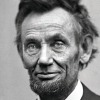
Is it unreasonable, then, to expect that some man possessed of the loftiest genius, coupled with ambition sufficient to push it to its utmost stretch, will at some time spring up among us? And when such an one does, it will require the people to be united with each other, attached to the government and laws, and generally intelligent, to successfully frustrate his designs.
Distinction will be his paramount object, and although he would as willingly, perhaps more so, acquire it by doing good as harm, yet, that opportunity being past, and nothing left to be done in the way of building up, he would set boldly to the task of pulling down.Abraham Lincoln (1809–1865) American lawyer, politician, US President (1861–65)
Speech (1838-01-27), “The Perpetuation of Our Political Institutions,” Young Men’s Lyceum, Springfield, Illinois
(Source)
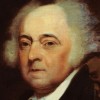
But this is an unalterable Truth, that the People can never be enslaved but by their own Tameness, Pusillanimity, Sloth or Corruption. They may be deceived, and their Symplicity, Ignorance, and Docility render them frequently liable to deception. And of this, the aspiring, designing, ambitious few are very sensible. He is the Statesman qualifyed by Nature to scatter Ruin and Destruction in his Path who by deceiving a Nation can render Despotism desirable in their Eyes and make himself popular in Undoing.
John Adams (1735–1826) American lawyer, Founder, statesman; US President (1797–1801)
Diary (1772, Spring), “Notes for a Oration at Braintree”
(Source)
Just as a savage will sacrifice his whole subsistence to his hunger, the despot sacrifices his authority to his love of power; his reign devours the reign of his successors.
[Comme le sauvage sacrifie sa subsistance à sa faim, le despote sacrifie sa puissance à son pouvoir; son règne dévore le règne de ses successeurs.]
Joseph Joubert (1754–1824) French moralist, philosopher, essayist, poet
Pensées [Thoughts], ch. 14 “Des Gouvernements [On Governments],” ¶ 16 (1850 ed.) [tr. Lyttelton (1899), ch. 13, ¶ 7]
(Source)
(Source (French)). No other translations of the thought found amongst those consulted.
PERICLES:But thou know’st this:
’Tis time to fear when tyrants seems to kiss.William Shakespeare (1564–1616) English dramatist and poet
Pericles, Act 1, sc. 2, l. 84ff (1.1.84-86) (1607) [with George Wilkins]
(Source)

Choose your leaders
with wisdom and forethought.
To be led by a coward
is to be controlled
by all that the coward fears.
To be led by a fool
is to be led
by the opportunists
who control the fool.
To be led by a thief
is to offer up
your most precious treasures
to be stolen.
To be led by a liar
is to ask
to be lied to.
To be led by a tyrant
is to sell yourself
and those you love
into slavery.Octavia Butler (1947–2006) American writer
Parable of the Talents, ch. 11, epigraph (1998)
(Source)
The epigraph is cited to the in-fiction Earthseed: The Books of the Living.

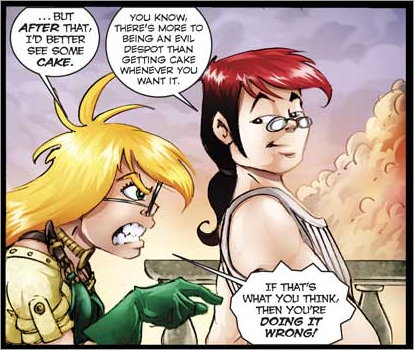
AGATHA: … But after that, I’d better see some cake.
TARVEK: You know, there’s more to being an evil despot than getting cake whenever you want it.
AGATHA: If that’s what you think, then you’re doing it wrong!
Phil Foglio (b. 1956) American writer, cartoonist
Girl Genius, Vol. 13, p. 38, “The Heterodyne Requires Cake” (10 Apr 2013)
(Source)
In Agatha H. and the Siege of Mechanicsburg (2020) [with Kaja Foglio], this is rendered:“But after that, I’d better see some cake.”
Tarvek glanced at her. “You know, there’s more to being an evil despot than getting cake whenever you want it.”
Agatha thought about this and was filled with a sudden conviction, one that would stand the test of time through everything else that happened to her through the years. “If that’s what you think, then you’re doing it wrong.”
Any fool could devise a more consistent system than exists, but even a despot can rarely institute one.
Alfred Louis "A. L." Kroeber (1876–1960) American cultural anthropologist
The Nature of Culture, ch. 14 (1952)
If I had to choose, I should detest the tyranny of one man less than that of many. A despot always has his good moments; an assembly of despots never.
Voltaire (1694–1778) French writer [pseud. of Francois-Marie Arouet]
Philosophical Dictionary, “Tyranny” (1764) [tr. Gay (1962)]
(Source)
Prudence, indeed, will dictate that Governments long established should not be changed for light and transient causes; and accordingly all experience hath shewn, that mankind are more disposed to suffer, while evils are sufferable, than to right themselves by abolishing the forms to which they are accustomed. But when a long train of abuses and usurpations, pursuing invariably the same Object evinces a design to reduce them under absolute Despotism, it is their right, it is their duty, to throw off such Government, and to provide new Guards for their future security.
Thomas Jefferson (1743–1826) American political philosopher, polymath, statesman, US President (1801–09)
Document (1776-07-02), “Declaration of Independence”
(Source)
As modified and approved by the Continental Congress. Jefferson's "original rough draft" is very similar:Prudence indeed will dictate that governments long established should not be changed for light & transient causes: and accordingly all experience hath shewn that mankind are more disposed to suffer while evils are sufferable, than to right themselves by abolishing the forms to which they are accustomed. but when a long train of abuses & usurpations, begun at a distinguished period, & pursuing invariably the same object, evinces a design to subject them to arbitrary power, it is their right, it is their duty, to throw off such government & to provide new guards for their future security.
In that draft, the word "subject" was changed to "reduce." The phrase "to arbitrary power" was changed by Jefferson in following drafts to "under absolute power," and then edited by Benjamin Franklin to "under absolute Despotism," which was the final form it took.
Let them hate me, so long as they fear me.
[Óderint, dum métuant.]
Accius (170-c. 86 BC) Roman tragic poet, literary scholar [Lucius Accius, Lucius Attius]
Atreus (fragment 168) [tr. Kline (2010)]
(Source)
A fragment from Accius' work, known only by its quotation by others. The phrase was often used by classical writers as a hallmark of a tyrannical ruler. This includes:(Source (Latin)). Other translations (from the above works):
- Cicero, Pro Sestio, 48/102 (where he regrets that Accius had "used words for evil-minded men to lay hold of").
- Cicero, Philippics 1.14
- Cicero, De Officiis, 1.28/97.
- Seneca the Younger, De Ira, 1.20.4 (referring to the line as "dread and abominable").
- Seneca the Younger, De Clementia, 1.12.
- Suetonius, Life of Caligula, 30.1 (noting that the emperor liked to quote it).
- Suetonius, Life of Tiberius, 59 (quoting Caligula, and contrasting to Tiberius use of the similar Oderint dum probent ("Let them hate me so long as they approve [of my deeds]").
Ev'n let them hate me, whilst they dread me too.
[tr. Cockman (1699)]Let them hate me, provided they fear me.
[tr. McCartney (1798)]Let them hate me, so they fear me.
[tr. Edmonds (1865)]I scorn their hatred, if they do but fear me.
[tr. Thomson (1883)]No matter how they hate me while they fear me.
[tr. Peabody (1883)]Let them hate, provided they fear me!
[tr. Hickie (1888)]Let them hate me, as long as they fear.
[tr. Yonge (1891)]Let them hate, so long as they fear.
[tr. Gardiner (1899)]Let them hate me, provided they fear me.
[tr. Stewart (1900)]Why, let them hate me, if they fear me too!
[tr. Stewart (1900)]What care I though all men should hate my name,
So long as fear accompanies their hate?
[tr. Yonge (1903)]Let them hate provided that they fear.
[ed. Harbottle (1906); tr. Cooper (1995)]Let them hate me, so they but fear me.
[tr. Rolfe (Loeb) (1913)]Let them hate, if only they fear.
[tr. Miller (1913), Basore (1928)]Let them hate, so but they fear.
[tr. Gardner (Loeb) (1958)]Let them hate me, as long as they fear me.
[tr. @aleator (2010)]They can hate as long as they are in fear.
[tr. Edinger (1974)]Let them hate, so long as they fear.
[tr. Kaster]Let them hate me, so long as they fear me.
[Source]

It is the old practice of despots to use a part of the people to keep the rest in order.
Thomas Jefferson (1743–1826) American political philosopher, polymath, statesman, US President (1801–09)
Letter (1798-06-04) to John Taylor
(Source)