

Gods are not very introspective. It has never been a survival trait. The ability to cajole, threaten and terrify has always worked well enough. When you can flatten entire cities at a whim, a tendency towards quiet reflection and seeing-things-from-the-other-fellow’s-point-of-view is seldom necessary.
Quotations about:
absolute power
Note not all quotations have been tagged, so Search may find additional quotes on this topic.

Unlimited power is the ideal thing when it is in safe hands. The despotism of heaven is the one absolutely perfect government, and earthly despotism would be the absolute perfect earthly government if the conditions were the same; namely the despot the perfectest individual of the human race, and his lease of life perpetual; but as a perishable, perfect man must die and leave his despotism in the hands of an imperfect successor, an earthly despotism is not merely a bad form of government, it is the worst form that is possible.
Mark Twain (1835–1910) American writer [pseud. of Samuel Clemens]
Novel (1889), A Connecticut Yankee in King Arthur’s Court, Part 3 “The Tale of the Lost Land,” ch. 10 “Beginnings of Civilization”
(Source)
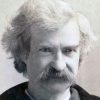
A strange thing, when one considers it: to wit, the world applies to Czar and System the same moral axioms that have vogue and acceptance in civilized countries! Because, in civilized countries, it is wrong to remove oppressors otherwise than by process of law, it is held that the same rule applies in Russia, where there is no such thing as law — except for our Family. Laws are merely restraints — they have no other function. In civilized countries they restrain all persons, and restrain them all alike, which is fair and righteous; but in Russia such laws as exist make an exception — our Family. We do as we please; we have done as we pleased for centuries. Our common trade has been crime, our common pastime murder, our common beverage blood — the blood of the nation. Upon our heads lie millions of murders. Yet the pious moralist says it is a crime to assassinate us. We and our uncles are a family of cobras set over a hundred and forty million rabbits, whom we torture and murder and feed upon all our days; yet the moralist urges that to kill us is a crime, not a duty.
Mark Twain (1835–1910) American writer [pseud. of Samuel Clemens]
Story (1905-02-02), “The Czar’s Soliloquy,” North American Review, Vol. 180, No. 580 (1905-03)
(Source)
Meant to be the musings of Czar Alexander III, whom Twain detested, about the morality of assassinating people such as himself.
It has eternally been observed that any man who has power is led to abuse it; he continues until he finds limits.
[C’est une expérience éternelle, que tout homme qui a du pouvoir est porté à en abuser; il va jusqu’à ce qu’il trouve des limites.]
Charles-Lewis de Secondat, Baron de Montesquieu (1689–1755) French political philosopher
Spirit of Laws [The Spirit of the Laws; De l’esprit des lois], Book 11, ch. 4 (11.4) (1748) [tr. Cohler/Miller/Stone (1989)]
(Source)
See Acton (1887).
(Source (French)). Other translations:Constant experience shows us, that every man invested with power is apt to abuse it; he pushes on till he comes to the utmost limit.
[tr. Nugent (1750)]Timeless experience tells us that any man who holds power is inclined to abuse it : he continues until he encounters limits.
[tr. Stewart (2018)]
NURSE: Terrible is the temperament of royalty,
Who are rarely controlled, always imperious;
It is hard for them to give up their wrath.
To get used to living like everybody else
Is better.[ΤΡΟΦΌΣ: δεινὰ τυράννων λήματα καί πως
ὀλίγ᾽ ἀρχόμενοι, πολλὰ κρατοῦντες
χαλεπῶς ὀργὰς μεταβάλλουσιν.
τὸ γὰρ εἰθίσθαι ζῆν ἐπ᾽ ἴσοισιν
κρεῖσσον.]Euripides (485?-406? BC) Greek tragic dramatist
Medea [Μήδεια], l. 119ff (431 BC) [tr. Podlecki (1989)]
(Source)
(Source (Greek)). Other translations:For the souls
Of Kings are prone to cruelty, so seldom
Subdued, and over others wont to rule,
That it is difficult for such to change
Their angry purpose. Happier I esteem
The lot of those who still are wont to live
Among their equals.
[tr. Wodhull (1782)]Kings have a fiery quality of soul,
Accustom'd to command, if once they feel
control, though small, their anger blazes out
Not easily extinguish'd: hence I deem
An equal mediocrity of life
More to be wish'd.
[tr. Potter (1814)]Dread are the humours of princes: as wont
To be ruled in few things and in many to lord,
It is hard to them to turn from their wrath.
But to lead one's life in the level ways
Is best.
[tr. Webster (1868)]Strange are the tempers of princes, and maybe because they seldom have to obey, and mostly lord it over others, change they their moods with difficulty. 'Tis better then to have been trained to live on equal terms.
[tr. Coleridge (1891)]Dreadful are the dispositions of tyrants, and somehow in few things controlled, in most absolute, they with difficulty lay aside their passion. The being accustomed then to live in mediocrity of life is the better.
[tr. Buckley (1892)]Ah princes -- how fearful their moods are! --
Long ruling, unschooled to obey, --
Unforgiving, unsleeping their feuds are.
Better life's level way.
[tr. Way (Loeb) (1894)]Rude are the wills of princes: yea,
Prevailing alway, seldom crossed,
On fitful winds their moods are tossed:
'Tis best men tread the equal way.
[tr. Murray (1906)]Great people’s tempers are terrible, always
Having their own way, seldom checked,
Dangerous they shift from mood to mood.
How much better to have been accustomed
To live on equal terms with one’s neighbors.
[tr. Warner (1944)]Oh, it's a bad thing
To be born of high race, and brought up wilful and powerful in a great house, unruled
And ruling many: for then if misfortune comes it is unendurable, it drives you mad. I say that poor people
Are happier: the little commoners and humble people, the poor in spirit.
[tr. Jeffers (1946)]The mind of a queen
Is a thing to fear. A queen is used
To giving commands, not obeying them;
And her rage once roused is hard to appease.
To have learnt to live on the common level
Is better.
[tr. Vellacott (1963)]The minds of royalty are dangerous: since they often command and seldom obey, they are subject to violent changes of mood. For it is better to be accustomed to live on terms of equality.
[tr. Kovacs (1994)]They have frightening natures, those of royal blood; because, I imagine, they’re seldom overruled and generally have their way, they do not easily forget a grudge. Better to have formed the habit of living on equal terms with your neighbours.
[tr. Davie (1996)]How afraid I am of these royal rages! It’s so hard for such rages to subside.
Kings and queens have always been spoiled by power. They’re not used to taking orders. No, they’d much rather give them!
Kings and Queens only do what they want and forget about everyone else!
Oh, how much better it is to live a balanced life: to be an equal among equals.
[tr. Theodoridis (2004)]Tyrants’ tempers are insufferable:
they are seldom under control, their power is far-reaching.
It is hard for them to swallow their rages.
To get used to living on terms of equality
is better.
[tr. Luschnig (2007)]The pride of rulers is something to fear --
they often order men, but seldom listen,
and when their tempers change it’s hard to bear.
It’s better to get used to living life
as an equal common person.
[tr. Johnston (2008)]The temperaments of royalty are fearsome;
because they're almost unrestrained
and are so powerful, it is rare
for them to overcome their rage.
To be accustomed to live in equality
is best.
[tr. Ewans (2022)]Terrible / wonderful [deina] are the tempers of turannoi; maybe because they seldom have to obey, and mostly lord it over others, they change their moods with difficulty. It is better then to have been trained to live in equality.
[tr. Coleridge / Ceragioli / Nagy / Hour25]
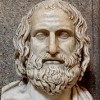
We hold that our loyalty is due solely to the American Republic, and to all our public servants exactly in proportion as they efficiently and faithfully serve the Republic. Our opponents, in flat contradiction of Lincoln’s position, hold that our loyalty is due to the President, not the country; to one man, the servant of the people, instead of to the people themselves. In practice they adopt the fetishism of all believers in absolutism; for every man who parrots the cry of “stand by the President,” without adding the proviso “so far as he serves the Republic” takes an attitude as essentially unmanly as that of any Stuart Royalist who championed the doctrine that the King could do no wrong. No self-respecting and intelligent freeman can take such an attitude.
Theodore Roosevelt (1858–1919) American politician, statesman, conservationist, writer; US President (1901–09)
Essay (1918-05), “Lincoln and Free Speech,” Metropolitan Magazine, Vol. 47, No. 6
(Source)
On censorious actions by the Wilson Administration taken against critics of its handling of war efforts.
Reprinted in Appendix C of his The Great Adventure (1918), and as ch. 7 of that book in Vol. 21 of The Works of Theodore Roosevelt (1925), The Great Adventure.
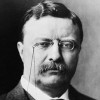
Absolute power is partial to simplicity. It wants simple problems, simple solutions, simple definitions. It sees in complication a product of weakness — the torturous path compromise must follow.
Eric Hoffer (1902–1983) American writer, philosopher, longshoreman
Passionate State of Mind, Aphorism 88 (1955)
(Source)
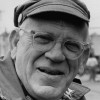
Power will intoxicate the best hearts, as wine the strongest heads. No man is wise enough, nor good enough, to be trusted with unlimited power; for, whatever qualifications he may have evinced to entitle him to the possession of so dangerous a privilege, yet when possessed, others can no longer answer for him, because he can no longer answer for himself.
Charles Caleb "C. C." Colton (1780–1832) English cleric, writer, aphorist
Lacon: Or, Many Things in Few Words, Vol. 1, § 522 (1820)
(Source)
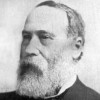
France was long a “Despotism tempered by Epigrams.”
Thomas Carlyle (1795–1881) Scottish essayist and historian
The French Revolution: A History, Part 1, Book 2, ch. 4 (1.2.4) (1837)
(Source)
Though given in quotation marks, Carlyle is apparently "quoting" himself.
This quotation is commonly given on its own, though, since Carlyle's thesis at this point in his history is that the royal government had largely become irrelevant in the nation, he continues:... and now, it would seem, the Epigrams have got the upper hand.
[Source]
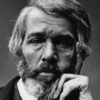
Slavery is not good in itself: it is neither useful to the master nor to the slave, because the slave can do nothing from virtuous motives; nor to the master, because he contracts amongst his slaves all sorts of bad habits — he becomes haughty, passionate, obdurate, vindictive, voluptuous, and cruel.
[Il n’est pas bon par sa nature; il n’est utile ni au maître ni à l’esclave: à celui-ci, parce qu’il ne peut rien faire par vertu; à celui-là, parce qu’il contracte avec ses esclaves toutes sortes de mauvaises habitudes, qu’il s’accoutume insensiblement à manquer à toutes les vertus morales, qu’il devient fier, prompt, dur, colère, voluptueux, cruel.]
Charles-Lewis de Secondat, Baron de Montesquieu (1689–1755) French political philosopher
Spirit of Laws [The Spirit of the Laws; De l’esprit des lois], Book 15, ch. 1 (1748)
Common translation used by English and American abolitionists (e.g., 1812).(Source (French)). Other translations:The state of slavery is in its own nature bad. It is neither useful to the master nor to the slave; not to the slave, because he can do nothing through a motive of virtue; not to the master, because by having an unlimited authority over his slaves, he insensibly accustoms himself to the want of all moral virtues, and from thence grows fierce, hasty, severe, choleric, voluptuous, and cruel.
[tr. Nugent (1758 ed.)][Slavery] is not good by its nature; it is useful neither to the master nor to the slave: not to the slave, because he can do nothing from virtue; not to the master, because he contracts all sorts of bad habits from his slaves, because he imperceptibly grows accustomed to failing in all the moral virtues, because he grows proud, curt, harsh, angry, voluptuous, and cruel.
[tr. Cohler/Miller/Stone (1989)][Slavery] is not good by its nature; it is useful neither to the master nor to the slave: to the slave, because he can do nothing out of virtue; to the master, because he contracts all sorts of bad habits with his slaves, because he accustoms himself little by little to failing in all the moral virtues, and because he becomes proud, impetuous, mean, contentious, sensuous, and cruel.
[tr. Stewart (2018)]
I felt it myself. The glitter of nuclear weapons. It is irresistible if you come to them as a scientist. To feel it’s there in your hands, to release this energy that fuels the stars, to let it do your bidding. To perform these miracles, to lift a million tons of rock into the sky. It is something that gives people an illusion of illimitable power, and it is, in some ways, responsible for all our troubles — this, what you might call technical arrogance, that overcomes people when they see what they can do with their minds.
Freeman Dyson (1923–2020) English-American theoretical physicist, mathematician, futurist
In Jon Else, dir., The Day After Trinity: J. Robert Oppenheimer and the Atomic Bomb, Part 2 (1981)
(Source)

“But if you’ll pardon my speaking out, I think my master was right. I wish you’d take his Ring. You’d put things to rights. You’d stop them digging up the Gaffer and turning him adrift. You’d make some folk pay for their dirty work.”
“I would,” she said. “That is how it would begin. But it would not stop with that, alas!”J.R.R. Tolkien (1892–1973) English writer, fabulist, philologist, academic [John Ronald Reuel Tolkien]
The Lord of the Rings, Vol. 1: The Fellowship of the Ring, Book 2, ch. 7 “The Mirror of Galadriel” [Sam and Galadriel] (1954)
(Source)
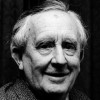
Our Passions, Ambition, Avarice, Love, Resentment &c possess so much metaphysical Subtilty and so much overpowering Eloquence, that they insinuate themselves into the Understanding and the Conscience and convert both to their Party. And I may be deceived as much as any of them, when I Say, that Power must never be trusted without a Check.
John Adams (1735–1826) American lawyer, Founder, statesman; US President (1797–1801)
Letter (1816-02-02) to Thomas Jefferson
(Source)
Every successful revolution puts on in time the robes of the tyrant it has deposed.
Barbara W. Tuchman (1912–1989) American historian and author
Stilwell and the American Experience in China, 1911-1945, ch. 8 (1972)
(Source)
I long to hear that you have declared an independancy — and by the way in the new Code of Laws which I suppose it will be necessary for you to make I desire you would Remember the Ladies, and be more generous and favourable to them than your ancestors. Do not put such unlimited power into the hands of the Husbands. Remember all Men would be tyrants if they could. If perticuliar care and attention is not paid to the Laidies we are determined to foment a Rebelion, and will not hold ourselves bound by any Laws in which we have no voice, or Representation.
Abigail Adams (1744–1818) American correspondent, First Lady (1797–1801)
Letter (1776-03-31) to John Adams
(Source)
She continues here.
John Adams' response to her was more than a bit flippant, though he elsewhere had more serious thoughts about the role of women in civil authority.
Prudence, indeed, will dictate that Governments long established should not be changed for light and transient causes; and accordingly all experience hath shewn, that mankind are more disposed to suffer, while evils are sufferable, than to right themselves by abolishing the forms to which they are accustomed. But when a long train of abuses and usurpations, pursuing invariably the same Object evinces a design to reduce them under absolute Despotism, it is their right, it is their duty, to throw off such Government, and to provide new Guards for their future security.
Thomas Jefferson (1743–1826) American political philosopher, polymath, statesman, US President (1801–09)
Document (1776-07-02), “Declaration of Independence”
(Source)
As modified and approved by the Continental Congress. Jefferson's "original rough draft" is very similar:Prudence indeed will dictate that governments long established should not be changed for light & transient causes: and accordingly all experience hath shewn that mankind are more disposed to suffer while evils are sufferable, than to right themselves by abolishing the forms to which they are accustomed. but when a long train of abuses & usurpations, begun at a distinguished period, & pursuing invariably the same object, evinces a design to subject them to arbitrary power, it is their right, it is their duty, to throw off such government & to provide new guards for their future security.
In that draft, the word "subject" was changed to "reduce." The phrase "to arbitrary power" was changed by Jefferson in following drafts to "under absolute power," and then edited by Benjamin Franklin to "under absolute Despotism," which was the final form it took.
Unlimited power is apt to corrupt the minds of those who possess it.
William Pitt the Elder (1708–1778) British statesman, orator [Lord Chatham, 1st Earl of Chatham]
Speech, House of Lords (9 Jan 1770)
Regarding the case of John Wilkes. More famously stated by Lord Acton in 1887.
“You will give me the Ring freely! In place of the Dark Lord you will set up a Queen. And I shall not be dark, but beautiful and terrible as the Morning and the Night! Fair as the Sea and the Sun and the Snow upon the Mountain! Dreadful as the Storm and the Lightning! Stronger than the foundations of the earth. All shall love me and despair!”
She lifted up her hand and from the ring that she wore there issued a great light that illumined her alone and left all else dark. She stood before Frodo seeming now tall beyond measurement, and beautiful beyond enduring, terrible and worshipful. Then she let her hand fall, and the light faded, and suddenly she laughed again, and lo! she was shrunken: a slender elf-woman, clad in simple white, whose gentle voice was soft and sad.
“I pass the test,” she said. “I will diminish, and go into the West, and remain Galadriel.”J.R.R. Tolkien (1892–1973) English writer, fabulist, philologist, academic [John Ronald Reuel Tolkien]
The Lord of the Rings, Vol. 1: The Fellowship of the Ring, Book 2, ch. 7 “The Mirror of Galadriel” [Galadriel] (1954)
(Source)
The number of those men who know how to use wholly irresponsible power humanely and generously is small.
Harriet Beecher Stowe (1811–1896) American author
Uncle Tom’s Cabin, ch. 29 “The Unprotected” (1852)
(Source)
There is Danger from all Men. The only Maxim of a free Government, ought to be to trust no Man living, with Power to endanger the public Liberty.
John Adams (1735–1826) American lawyer, Founder, statesman; US President (1797–1801)
Diary (1772, Spring), “Notes for a Oration Braintree”
(Source)
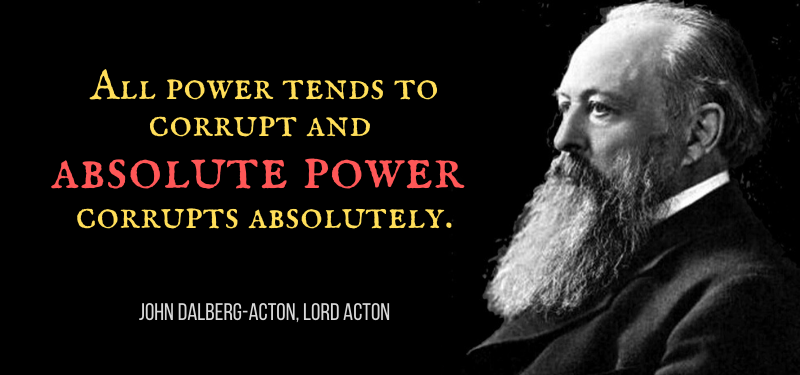
I cannot accept your canon that we are to judge Pope and King unlike other men, with a favourable presumption that they did no wrong. If there is any presumption it is the other way against holders of power, increasing as the power increases. Historic responsibility has to make up for the want of legal responsibility. All power tends to corrupt and absolute power corrupts absolutely. Great men are almost always bad men, even when they exercise influence and not authority: still more when you superadd the tendency or the certainty of corruption by authority. There is no worse heresy than that the office sanctifies the holder of it.
John Dalberg, Lord Acton (1834–1902) British historian, politician, writer
Letter (1887-04-05) to Mandell Creighton
(Source)
Often paraphrased, "Power corrupts, and absolute power corrupts absolutely."
There is an alternate, probably spurious version of this quote, for which I have been unable to find an actual citation (except where it is mis-cited to this letter to Bp. Creighton): "And remember, where you have a concentration of power in a few hands, all too frequently men with the mentality of gangsters get control. History has proven that. All power corrupts; absolute power corrupts absolutely." As the word "gangster" has only been traced back to 1886, and that in the US, its use by Acton (esp. in a modern sense) seems unlikely.
The fundamental Article of my political Creed is, that Despotism, or unlimited Sovereignty, or absolute Power is the Same in a Majority of a popular Assembly, an Aristocratical Counsel, an Oligarchical Junto and a Single Emperor. Equally arbitrary cruel bloody and in every respect, diabolical.
John Adams (1735–1826) American lawyer, Founder, statesman; US President (1797–1801)
Letter (1815-11-13) to Thomas Jefferson
(Source)