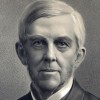
Most tyrants are, by nature, short-sighted. Though they aspire to an eternal panoply of statues and symphonies in their honor, they rarely focus on constructive present actions that will lead to a future where their name is even known, let alone praised. As time goes on, they either fall into the delusion of omnipotence, or else become obsessed with holding onto embattled power until the bitter end. Neither mental state leads to laying a healthy foundation for posterity.
Graham Ericsson (b. 1961) American technologist, writer, aphorist
Journal (2026-04-22)
Quotations about:
self-delusion
Note not all quotations have been tagged, so Search may find additional quotes on this topic.

We readily acknowledge in others an advantage in courage, in bodily strength, in experience, in agility, in beauty; but an advantage in judgment we yield to no one. And the arguments that come from simple natural reasoning in others, we think we would have found if we had merely glanced in that direction.
[Nous reconnoissons aysément és autres, l’advantage du courage, de la force corporelle, de l’experience, de la disposition, de la beauté: mais l’advantage du jugement; nous ne le cedons à personne: Et les raisons qui partent du simple discours naturel en autruy, il nous semble qu’il n’a tenu qu’à regarder de ce costé-là, que nous ne les ayons trouvees.]
Michel de Montaigne (1533–1592) French essayist
Essays, Book 2, ch. 17 (2.17), “Of Presumption [De la Presomption]” (1578) [tr. Frame (1943)]
(Source)
This essay was in the 1st (1580) edition, as was this passage (Screech identifies parts of the passage as being part of the final (1595) edition).
See La Rochefoucauld (1666), Franklin (1745).
(Source (French)). Other translations:We easily know in others, the advantage of courage, of bodily strength, of experience, of disposition and of beautie, but we never yeelde the advantage of judgement to any body: And the reasons, which part from the simple naturall discourse in others, we thinke, that had we but looked that way, we had surely found them.
[tr. Florio (1603)]We readily enough confess an advantage of courage, strength, experience, geod-nature, and beauty in others; but an advantage in judgment we yield to none, and the reasons that simply proceed from the natural sense of others, we think, if we had but turned our thoughts that way, we should ourselves have found them out.
[tr. Cotton (1686)]We easily enough confess in others an advantage of courage, strength, experience, activity, and beauty, but an advantage in judgment we yield to none; and the reasons that proceed simply from the natural conclusions of others, we think, if we had but turned our thoughts that way, we should ourselves have found out as well as they.
[tr. Cotton/Hazlitt (1877)]We easily recognise in others superiority of courage, of bodily strength, of experience, of activity, of beauty, of rank; but superiority of judgement we concede to no one; and the reasonings that proceed from simple natural intelligence in another, it seems to us that, had we but looked in that direction, we should have found them.
[tr. Ives (1925)]We readily recognize in others a superiority in courage, physical strength, experience, agility, or beauty. But a superior judgement we concede to nobody. And we think that we could ourselves have discovered the reasons which occur naturally to others, if only we had looked in the same direction.
[tr. Cohen (1958)]In others we readily acknowledge superior courage, physical strength, experience, agility and beauty: but superior judgement we concede to none. And such arguments in another as derive from pure inborn wit we think that we would have discovered too if only we had looked at things from the same angle.
[tr. Screech (1987)]

CALVIN: Isn’t it sad how some people’s grip on their lives is so precarious that they’ll embrace any preposterous delusion, rather than face an occasional bleak truth?
Bill Watterson (b. 1958) American cartoonist
Calvin and Hobbes (1987-11-24)
(Source)
Ironically, the "preposterous delusion" is his father's assertion that the weather is getting colder, not (as Calvin surmises) because the Sun is going out, but because the Earth's orbit is heading toward aphelion, its furthest from the Sun. More ironically, that explanation is actually incorrect. Winter and summer are driven by Earth's axial tilt, and perihelion (Earth being closest to the Sun in its orbit) occurs in early January, which is winter in the Northern Hemisphere.


There is another kind of “glory”: conceiving too high an opinion of our worth. This is an undeserved feeling by which we value ourselves, and that makes us think ourselves different than we are, just as the passion of love lends beauties and graces to the object it embraces and makes those smitten by it — with their judgment blurred and altered — find what they love different, and more perfect, than it is.
[Il y a une autre sorte de gloire, qui est une trop bonne opinion, que nous concevons de nostre valeur. C’est un’affection inconsideree, dequoy nous nous cherissons, qui nous represente à nous mesmes, autres que nous ne sommes. Comme la passion amoureuse preste des beautez, & des graces, au subject qu’elle embrasse ; & fait que ceux qui en sont espris, trouvent d’un jugement trouble & alteré, ce qu’ils aiment, autre & plus parfait qu’il n’est.]
Michel de Montaigne (1533–1592) French essayist
Essays, Book 2, ch. 17 (2.17), “Of Presumption [De la Presomption]” (1578) [tr. Atkinson/Sices (2012)]
(Source)
This essay and passage were in the 1st (1580) edition.
(Source (French)). Other translations:There is another kinde of glorie, which is an over-good opinion we conceive of our worth. It is an inconsiderate affection, wherewith wee cherish our selves, which presents-us unto our selves other then wee are. As an amorous passion addeth beauties, and lendeth graces to the subject it embraceth, and maketh such as are therewith possessed, with a troubled conceite, and distracted Judgement, to deeme what they love, and finde what they affect, to bee other, and seeme more perfect, then in trueth it is. [tr. Florio (1603)]There is another sort of glory, which is the having too good an opinion of our own merit. It is an inconsiderate affection, with which we flatter ourselves, and that represents us to ourselves other than what we truly are: like the passion of love, that lends beauties and graces to the object of it; and makes those who are caught with it, by a depraved and corrupt judgment, consider the thing they love other and more perfect than it is.
[tr. Cotton (1686)]There is another sort of glory, which is the having too good an opinion of our own worth. ’Tis an inconsiderate affection with which we flatter ourselves, and that represents us to ourselves other than we truly are: like the passion of love, that lends beauties and graces to the object, and makes those who are caught by it, with a depraved and corrupt judgment, consider the thing which they love other and more perfect than it is.
[tr. Cotton/Hazlitt (1877)]There is another sort of glory, which is a too high opinion that we conceive of our worth. It is an ill-advised affection with which we flatter ourselves, which represents us to ourselves other than we are; as amourous passion lends beauties and charms to that which it embraces, and causes those who are possessed by it, their judgement being disturbed and diverted, to deem what they love different from what it is, and more perfect.
[tr. Ives (1925)]There is another sort of glory, which is to have too good an opinion of our own worth. It is an unthinking affection with which we flatter ourselves, that represents us to ourselves other than we truly are: like the passion of love, that lends beauties and charms to the object it embraces, and makes those who are possessed by it, with a troubled and corrupt judgment, consider the thing they love other and more perfect than it is.
[tr. Zeitlin (1934)]There is another kind of vainglory, which is an over-good opinion we form of our own worth. It is an unreasoning affection, by which we cherish ourselves, which represents us to ourselves as other than we are; as the passion of love lends beauties and graces to the object it embraces, and makes its victims, with muddled and unsettled judgment, think that what they love is other and more perfect than it is.
[tr. Frame (1943)]There is another kind of glory, which is to have too good an opinion of our own worth. It is an unthinking affection with which we flatter ourselves, and which presents us to ourselves as other than we are; just as the passion of love lends beauties and charms to the object it embraces in such a way that the love's judgement is troubled and distracted, and he finds the lady he loves other and more perfect than she is.
[tr. Cohen (1958)]There is another kind of "glory": the over-high opinion we conceive of our own worth. It is an imprudent affection by which we hold our own self dear, presenting ourself to ourself other than we are, just as passionate love lends grace and beauty to the person it embraces and leads to those who are enraptured by it being disturbed and confused in their judgement, so finding their Beloved other than she is, and more perfect.
[tr. Screech (1987)]
Much of man’s thinking is propaganda of his appetites.
Eric Hoffer (1902–1983) American writer, philosopher, longshoreman
Passionate State of Mind, Aphorism 261 (1955)
(Source)
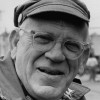
Even the acquisition of knowledge is often much facilitated by the advantages of society: he that never compares his notions with those of others, readily acquiesces in his first thoughts, and very seldom discovers the objections which may be raised against his opinions; he, therefore, often thinks himself in possession of truth, when he is only fondling an errour long since exploded. He that has neither companions nor rivals in his studies, will always applaud his own progress, and think highly of his performances, because he knows not that others have equalled or excelled him. And I am afraid it may be added, that the student who withdraws himself from the world, will soon feel that ardour extinguished which praise or emulation had enkindled, and take the advantage of secrecy to sleep, rather than to labour.
Samuel Johnson (1709–1784) English writer, lexicographer, critic
Essay (1754-01-19), The Adventurer, No. 126
(Source)

Most people are not even aware of their need to conform. They live under the illusion that they follow their own ideas and inclinations, that they are individualists, that they have arrived at their opinions as the result of their own thinking — and that it just happens that their ideas are the same as those of the majority. The consensus of all serves as a proof for the correctness of “their” ideas.
Erich Fromm (1900–1980) American psychoanalyst and social philosopher
The Art of Loving, ch. 2 (1956)
(Source)

A Flatterer never seems absurd:
The Flatter’d always take his Word.Benjamin Franklin (1706–1790) American statesman, scientist, philosopher, aphorist
Poor Richard (1740 ed.)
(Source)

There are a handful of people whom money won’t spoil, and we all count ourselves among them.
Mignon McLaughlin (1913–1983) American journalist and author
The Second Neurotic’s Notebook, ch. 9 (1966)
(Source)

The others you know without my telling you. They are such fools that they seem to expect that, though the Republic is lost, their fish-ponds will be safe.
[Ceteros iam nosti; qui ita sunt stulti, ut amissa re publica piscinas suas fore salvas sperare videantur.]
Marcus Tullius Cicero (106–43 BC) Roman orator, statesman, philosopher
Epistulae ad Atticum [Letters to Atticus], Book 1, Letter 18, sec. 6 (1.18.6) (60 BC) [tr. Shuckburgh (1900)]
(Source)
(Source (Latin)). Alternate translation:The others you know well enough -- fools who seem to hope that their fish-ponds may be saved, though the country go to rack and ruin.
[tr. Winstedt (1912)]As for the rest of the Optimates, you know them. They are so stupid as to suppose that their own fishponds can be unharmed even though the constitution go to pot.
[tr. McKinlay (1926), # 13]The others you know. They seem fools enough to expect to keep their fish-ponds after losing constitutional freedom.
[tr. Shackleton Bailey (1968)]
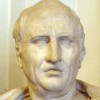
There is no cruelty so inexorable and unrelenting, as that which proceeds from a bigoted and presumptuous supposition of doing service to God. Under the influence of such hallucination, all common modes of reasoning are perverted, and all general principles are destroyed.
Charles Caleb "C. C." Colton (1780–1832) English cleric, writer, aphorist
Lacon: Or, Many Things in Few Words, Vol. 1, § 222 (1820)
(Source)
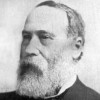
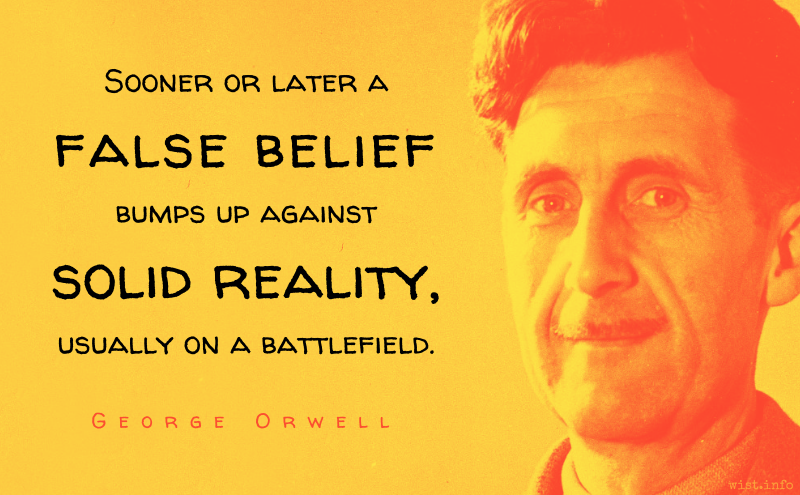
The point is that we are all capable of believing things which we know to be untrue, and then, when we are finally proved wrong, impudently twisting the facts so as to show that we were right. Intellectually, it is possible to carry on this process for an indefinite time: the only check on it is that sooner or later a false belief bumps up against solid reality, usually on a battlefield.
George Orwell (1903–1950) English journalist, essayist, writer [pseud. of Eric Arthur Blair]
Essay (1946-03-22), “In Front of Your Nose,” “As I Please” column, Tribune Newspaper
(Source)

His mistaken belief in his own superiority cut him off from reality as completely as if he were living in a colored glass jar.

Illusion is the dust the devil throws in the eyes of the foolish.
Minna Antrim (1861–1950) American epigrammatist, writer
Naked Truth and Veiled Allusions (1901)

Natur iz a kind mother. She couldn’t well afford to make us perfekt, and so she made us blind to our failings.
[Nature is a kind mother. She couldn’t well afford to make us perfect, and so she made us blind to our failings.]
Josh Billings (1818–1885) American humorist, aphorist [pseud. of Henry Wheeler Shaw]
Everybody’s Friend, Or; Josh Billing’s Encyclopedia and Proverbial Philosophy of Wit and Humor, “Lobstir Sallad” (1874)
(Source)

In the post–civil rights era, we have been taught that racists are mean people who intentionally dislike others because of their race; a racist is consciously prejudiced and intends to be hurtful. Because this definition requires conscious intent, it exempts virtually all white people and functions beautifully to obscure and protect racism as a system in which we are all implicated.
Robin DiAngelo (b. 1956) American academic, lecturer, author
White Fragility, Introduction (2018)
(Source)

Our Passions, Ambition, Avarice, Love, Resentment &c possess so much metaphysical Subtilty and so much overpowering Eloquence, that they insinuate themselves into the Understanding and the Conscience and convert both to their Party. And I may be deceived as much as any of them, when I Say, that Power must never be trusted without a Check.
John Adams (1735–1826) American lawyer, Founder, statesman; US President (1797–1801)
Letter (1816-02-02) to Thomas Jefferson
(Source)

Nations are never virtuous, though they might sometimes think they are.
Ian McEwan (b. 1948) English novelist and screenwriter
Solar (2010)

Marriage is a step so grave and decisive that it attracts light-headed, variable men by its very awfulness. They have been so tried among the inconstant squalls and currents, so often sailed for islands in the air or lain becalmed with burning heart, that they will risk all for solid ground below their feet. Desperate pilots, they run their sea-sick, weary bark upon the dashing rocks. It seems as if marriage were the royal road through life, and realised, on the instant, what we have all dreamed on summer Sundays when the bells ring, or at night when we cannot sleep for the desire of living. They think it will sober and change them. Like those who join a brotherhood, they fancy it needs but an act to be out of the coil and clamour for ever. But this is a wile of the devil’s. To the end, spring winds will sow disquietude, passing faces leave a regret behind them, and the whole world keep calling and calling in their ears. For marriage is like life in this — that it is a field of battle, and not a bed of roses.
Robert Louis Stevenson (1850–1894) Scottish essayist, novelist, poet
Essay (1876-08), “Virginibus Puerisque, Part 1,” Cornhill Magazine, Vol. 34
(Source)
Collected in Virginibus Puerisque and Other Papers, ch. 1, part 1 (1881).
Life as a "bed of roses" is an old phrase, originating in 13th Century French literature, and popularized in English in Christopher Marlowe's poem (pub. 1599)), "The Passionate Shepherd to His Love."
Every man naturally persuades himself that he can keep his resolutions, nor is he convinced of his imbecility but by length of time and frequency of experiment. This opinion of our own constancy is so prevalent, that we always despise him who suffers his general and settled purpose to be overpowered by an occasional desire.
Samuel Johnson (1709–1784) English writer, lexicographer, critic
Prayers and Meditations, 1770-06-01 (1785)
(Source)
Power multiplies flatterers, and flatterers multiply our delusions by hiding us from ourselves.
Charles Caleb "C. C." Colton (1780–1832) English cleric, writer, aphorist
Lacon: Or, Many Things in Few Words, Vol. 2, § 25 (1822)
(Source)
We lie loudest when we lie to ourselves.
Eric Hoffer (1902–1983) American writer, philosopher, longshoreman
Passionate State of Mind, Aphorism 70 (1955)
(Source)
The experience of being disastrously wrong is salutary; no economist should be denied it, and not many are. The best, most elegant and most applauded designs can fail, and greatly to your surprise if, in persuading others of their excellence, you have persuaded yourself.
John Kenneth Galbraith (1908–2006) Canadian-American economist, diplomat, author
A Life in Our Times, ch. 11 “The Dynamics of Error” (1981)
(Source)
Science is a way of trying not to fool yourself. The first principle is that you must not fool yourself, and you are the easiest person to fool.
Richard Feynman (1918–1988) American physicist
“What Is and What Should Be the Role of Scientific Culture in Modern Society,” lecture at the Galileo Symposium, Italy (1964)
IVANOVA: You’re having delusions of grandeur again.
MARCUS: Well, if you’re going to have delusions, you may as well go for the really satisfying ones.J. Michael (Joe) Straczynski (b. 1954) American screenwriter, producer, author [a/k/a "JMS"]
Babylon 5, 4×03 “The Summoning” (18 Nov 1996)

People everywhere enjoy believing things that they know are not true. It spares them the ordeal of thinking for themselves and taking the responsibility for what they know.
Brooks Atkinson (1894–1984) American drama critic and journalist
Once Around the Sun, “February 2” (1951)
(Source)
Who has deceiv’d thee so oft as thy self?
Benjamin Franklin (1706–1790) American statesman, scientist, philosopher, aphorist
Poor Richard (1738 ed.)
(Source)