

And we in America should see that no man is ever given, no matter how gradually or how noble and excellent the man, the power to put this country into a war which is now being prepared and brought closer each day with all the premeditation of a long planned murder. For when you give power to an executive you do not know who will be filling that position when the time of crisis comes.
Ernest Hemingway (1899–1961) American writer
Essay (1935-09), “Notes on the Next War,” Esquire, Vol. 4, No. 3
(Source)
Quotations about:
checks and balances
Note not all quotations have been tagged, so Search may find additional quotes on this topic.

The provision of the Constitution giving the war-making power to Congress, was dictated, as I understand it, by the following reasons. Kings had always been involving and impoverishing their people in wars, pretending generally, if not always, that the good of the people was the object. This, our Convention understood to be the most oppressive of all Kingly oppressions; and they resolved to so frame the Constitution that no one man should hold the power of bringing this oppression upon us. But your view destroys the whole matter, and places our President where kings have always stood.
Abraham Lincoln (1809–1865) American lawyer, politician, US President (1861–65)
Letter (1848-02-15) to William H. Herndon
(Source)
Lincoln understood Herndon to be proposing that the President, on their own initiative and judgment, was entitled to preemptively invade another country to repel an anticipated invasion. Herndon felt this principle justified Polk's sending of troops into disputed territory, which led to the Mexican-American War (1846-1848), though Polk didn't justify his actions in that way.

When legislative power is united with executive power in a single person or in a single body of the magistracy, there is no liberty, because one can fear that the same monarch or senate that makes tyrannical laws will execute them tyrannically.
Nor is there liberty if the power of judging is not separate from legislative power and from executive power. If it were joined to legislative power, the power over the life and liberty of the citizens would be arbitrary, for the judge would be the legislator. If it were joined to executive power, the judge could have the force of an oppressor.
All would be lost if the same man or the same body of principal men, either of nobles, or of the people, exercised these three powers: that of making the laws, that of executing public resolutions, and that of judging the crimes or the disputes of individuals.[Lorsque, dans la même personne ou dans le même corps de magistrature, la puissance législative est réunie à la puissance exécutrice, il n’y a point de liberté ; parce qu’on peut craindre que le même monarque ou le même sénat ne fasse des loix tyranniques, pour les exécuter tyranniquement.
Il n’y a point encore de liberté, si la puissance de juger n’est pas séparée de la puissance législative, & de l’exécutrice. Si elle étoit jointe à la puissance législative, le pouvoir sur la vie & la liberté des citoyens seroit arbitraire; car le juge seroit législateur. Si elle étoit jointe à la puissance exécutrice, le juge pourroit avoir la force d’un oppresseur.
Tout seroit perdu, si le même homme, ou le même corps des principaux, ou des nobles, ou du peuple, exerçoient ces trois pouvoirs; celui de faire des loix, celui d’exécuter les résolutions publiques, & celui de juger les crimes ou les différends des particuliers.]Charles-Lewis de Secondat, Baron de Montesquieu (1689–1755) French political philosopher
Spirit of Laws [The Spirit of the Laws; De l’esprit des lois], Book 11, ch. 6 (1748) [tr. Cohler/Miller/Stone (1989)]
(Source)
(Source (French)). Other translations:When the legislative and executive powers are united in the same person, or in the same body of magistrates, there can be no liberty; because apprehensions may arise, lest the same monarch or senate should enact tyrannical laws, to execute them in a tyrannical manner.
Again, there is no liberty if the judiciary power be not separated from the legislative and executive. Were it joined with the legislative, the life and liberty of the subject would be exposed to arbitrary control; for the judge would be then the legislator. Were it joined to the executive power, the judge might behave with violence and oppression.
There would be an end of every thing, were the same man, or the same body, whether of the nobles or of the people, to exercise those three powers, that of enacting laws, that of executing the public resolutions, and of trying the causes of individuals.
[tr. Nugent (1750)]There would be an end of everything, were the same man, or the same body, whether of the nobles or of the people, to exercise those three powers, that of enacting laws, that of executing the public resolutions, and that of judging the crimes or differences of individuals.
[ed. Guterman (1963)]When in the same person or in the same body of magistracy the legislative authority is combined with the executive authority, there is no freedom, because one can fear lest the same monarch or the same senate make tyrannical laws in order to carry them out tyrannically.
Again there is no freedom if the authority to judge is not separated from the legislative and executive authorities. If it were combined with the legislative authority, power over the life and liberty of the citizens would be arbitrary, for the judge would be the legislator. If it were combined with the executive authority, the judge could have the strength of an oppressor.
All would be lost if the same man or the same body of principals, or of nobles, or of the people, exercised these three powers: that of making laws, that of executing public resolutions, and that of judging crimes or disputes between individuals.
[tr. Stewart (2018)]
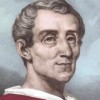
In a word, a free government — that is, a government constantly subject to agitation — cannot last if it is not capable of being corrected by its own laws.
[En un mot, un gouvernement libre, c’est-à-dire toujours agité, ne saurait se maintenir s’il n’est, par ses propres lois, capable de correction.]
Charles-Lewis de Secondat, Baron de Montesquieu (1689–1755) French political philosopher
Considerations on the Causes of the Greatness of the Romans and their Decline [Considérations sur les causes de la grandeur des Romains et de leur décadence], ch. 8 (1734, 1748 ed.) [tr. Lowenthal (1965)]
(Source)
(Source (French)). Other translations:In a word, a free government, that is to say, one for ever in motion, cannot support itself, unless its own laws are capable of correcting the disorders of it.
[tr. B--- (1734)]In a word, a free government -- that is to say, one which is constantly agitated -- can never maintain itself if it is not, by its own laws, capable of correction.
[tr. Baker (1882)]
The dignity and stability of government in all its branches, the morals of the people and every blessing of society, depends so much upon an upright and skillful administration of justice, that the judicial power ought to be distinct from both the legislative and executive, and independent upon both, that so it may be a check upon both, as both should be checks upon that.
John Adams (1735–1826) American lawyer, Founder, statesman; US President (1797–1801)
Letter (1776-04) to George Wythe, “Thoughts on Government”
(Source)
This is taken from the printed edition of the influential essay, believed to be from the version Adams sent to George Wythe of Virginia.
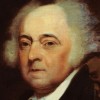
The [American] Founding Fathers never believed that tyranny could arise out of the executive office, because they did not see this office in any different light but as the execution of what the legislation has decreed in various forms. I leave it at that. We know today that the greatest danger of tyranny is, of course, the executive.
Hannah Arendt (1906–1975) German-American philosopher, political theorist
Interview (1973-10) with Roger Errera, Office de Radiodiffusion-Télévision Française (ORTF)
Arendt was referring specifically to the Watergate Scandal and Nixon's abuse of power.
Parts of this interview were turned into an episode of the French TV series "Un certain regard," directed by Jean-Claude Lubtchansky, first broadcast 1974-07-06. (Source (Video))
The interview was edited and retranslated in 2013 [tr. Andrew Brown], and collected in Arendt, Thinking without a Bannister: Essays in Understanding, 1953-1975 (2018) [ed. Jerome Kohn]. The text there reads:The Founding Fathers never believed that tyranny could arise out of the executive office, because they saw this office as the executor of what the legislature decreed. We know today that the greatest danger of tyranny is from the executive.
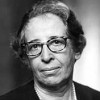
Many of our moral and political policies are designed to preempt what we know to be the worst features of human nature. The checks and balances in a democracy, for instance, were invented in explicit recognition of the fact that human leaders will always be tempted to arrogate power to themselves. Likewise, our sensitivity to racism comes from an awareness that groups of humans, left to their own devices, are apt to discriminate and oppress other groups, often in ugly ways. History also tells us that a desire to enforce dogma and suppress heretics is a recurring human weakness, one that has led to recurring waves of gruesome oppression and violence. A recognition that there is a bit of Torquemada in everyone should make us wary of any attempt to enforce a consensus or demonize those who challenge it.
Steven Pinker (b. 1954) Canadian-American cognitive psychologist, linguist, author
Introduction to John Brockman (ed.), What is Your Dangerous Idea? (2007)
(Source)

No honest, clear-headed man, however great a lover of popular government, can deny that the unbridled expression of the majority of a community converted hastily into law or action would sometimes make a government tyrannical and cruel. Constitutions are checks upon the hasty action of the majority. They are the self-imposed restraints of a whole people upon a majority of them to secure sober action and a respect for the rights of the minority.
William Howard Taft (1857–1930) US President (1909–13) and Chief Justice (1921–1930)
Veto Statement for the Arizona Enabling Act (15 Aug 1911)
(Source)
Taft vetoed the admission of Arizona to the US with a state constitution that allowed popular recall of judges.
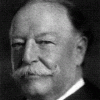
The people — the people — are the rightful masters of both Congresses, and courts — not to overthrow the Constitution, but to overthrow the men who pervert it.
Abraham Lincoln (1809–1865) American lawyer, politician, US President (1861–65)
Speech (1859-09-16), Columbus, Ohio
(Source)
On preventing the spread of slavery to new states and territories, and preventing the resumption of the African slave trade.
The speech, sponsored by the Ohio Republican Central Committee, was also given the next day in Dayton and Cincinnati, Ohio. It may have been also given at Cooper Union, New York City (1860-02-27).
Variant:The people of these United States are the rightful masters of both Congresses and courts, not to overthrow the Constitution, but to overthrow the men who pervert the Constitution.
Discussion and further information around this quotation:
- Abraham Lincoln papers: Series 1. General Correspondence. 1833-1916: Abraham Lincoln, [September 16-17, 1859] (Notes for Speech in Kansas and Ohio) | Library of Congress
- "The people of these United States are the rightful masters of both congresses and courts, not to over-throw the Constitution, but to over-throw the men who pervert that Constitution" / E.B. & E.C. Kellogg, 245 Main Street, Hartford, Conn. | Library of Congress
- Did Lincoln Say 'We the People Are the Rightful Masters of Both Congress and the Courts'? | Snopes.com
A right should not be absolute for the same reason that a power should not be absolute.
R. H. Tawney (1880–1962) English writer, economist, historian, social critic [Richard Henry Tawney]
The Acquisitive Century, ch. 4 “The Nemesis of Industrialism” (1920)
(Source)
See Lord Acton.
Our Passions, Ambition, Avarice, Love, Resentment &c possess so much metaphysical Subtilty and so much overpowering Eloquence, that they insinuate themselves into the Understanding and the Conscience and convert both to their Party. And I may be deceived as much as any of them, when I Say, that Power must never be trusted without a Check.
John Adams (1735–1826) American lawyer, Founder, statesman; US President (1797–1801)
Letter (1816-02-02) to Thomas Jefferson
(Source)
The intoxication of power rapidly sobers off in the knowledge of its restrictions and under the prompt reminder of an ever-present and not always considerate press, as well as the kindly suggestions that not infrequently come from Congress.
William Howard Taft (1857–1930) US President (1909–13) and Chief Justice (1921–1930)
Speech, Lotus Club (16 Nov 1912)
It is impossible to think that constitutional government can be suspended in a time of danger, in deference to the greater “efficiency” of centralized power, and then easily or quickly restored. Efficiency may be a political virtue, but only if strictly limited. Our Constitution, by its separation of powers and its system of checks and balances, acts as a restraint upon efficiency by denying exclusive power to any branch of government. The logic of governmental efficiency, unchecked, runs straight on, not only to dictatorship, but also to torture, assassination, and other abominations.
Wendell Berry (b. 1934) American farmer, educator, poet, conservationist
Essay (2003-02-09), “A Citizen’s Response,” sec. 3, Citizenship Papers (2003)
(Source)
This passage did not appear in the original (abridged) full-page ad in the New York Times (2003-02-06) or the Orion Magazine (2003-03/04) publication of the essay.
Obsta principiis, nip the shoots of arbitrary power in the bud, is the only maxim which can ever preserve the liberties of any people. When the people give way, their deceivers, betrayers, and destroyers press upon them so fast, that there is no resisting afterwards.
John Adams (1735–1826) American lawyer, Founder, statesman; US President (1797–1801)
Essay (1775-02-06), “Novanglus,” No. 3, Boston Gazette
(Source)
The Latin means to resist the first approaches or encroachments of a problem.
This series of essays was written by Adams under the pseudonym of "Novanglus" (Latin for "New England") responding to essays from his past friend Daniel Leonard as "Massachusettensis" on colonial leadership and what the proper relationship was between the American colonies and Britain.
There is Danger from all Men. The only Maxim of a free Government, ought to be to trust no Man living, with Power to endanger the public Liberty.
John Adams (1735–1826) American lawyer, Founder, statesman; US President (1797–1801)
Diary (1772, Spring), “Notes for a Oration Braintree”
(Source)
It is important, likewise, that the habits of thinking in a free country should inspire caution in those intrusted with its administration to confine themselves within their respective constitutional spheres, avoiding in the exercise of the powers of one department to encroach upon another. The spirit of encroachment tends to consolidate the powers of all the departments in one, and thus to create, whatever the form of government, a real despotism. A just estimate of that love of power and proneness to abuse it which predominates in the human heart is sufficient to satisfy us of the truth of this position.
George Washington (1732–1799) American military leader, Founding Father, US President (1789–1797)
Essay (1796-09-18), “Farewell Address,” Claypoole’s American Daily Advertiser, Philadelphia
(Source)
The original draft of "The Address of Gen. Washington to the People of America on His Declining the Presidency of the United States" was by James Madison in June 1792. At the end of his second term, Washington, with the help of Alexander Hamilton, revised it for release and publication.
In framing a government which is to be administered by men over men the great difficulty lies in this: You must first enable the government to control the governed, and in the next place, oblige it to control itself.
A majority held in restraint by constitutional checks and limitations, and always changing easily with deliberate changes of popular opinions and sentiments, is the only true sovereign of a free people. Whoever rejects it does of necessity fly to anarchy or to despotism.
Abraham Lincoln (1809–1865) American lawyer, politician, US President (1861–65)
Speech (1861-03-04), Inaugural Address, Washington, D. C.
(Source)