Samuel told the people who were asking him for a king everything that the Lord had said to him. “This is how your king will treat you,” Samuel explained.
“He will make soldiers of your sons; some of them will serve in his war chariots, others in his cavalry, and others will run before his chariots. He will make some of them officers in charge of a thousand men, and others in charge of fifty men. Your sons will have to plow his fields, harvest his crops, and make his weapons and the equipment for his chariots.
“Your daughters will have to make perfumes for him and work as his cooks and his bakers.
“He will take your best fields, vineyards, and olive groves, and give them to his officials. He will take a tenth of your grain and of your grapes for his court officers and other officials. He will take your servants and your best cattle and donkeys, and make them work for him. He will take a tenth of your flocks. And you yourselves will become his slaves.
“When that time comes, you will complain bitterly because of your king, whom you yourselves chose, but the Lord will not listen to your complaints.”
The people paid no attention to Samuel, but said, “No! We want a king.”וַיֹּ֣אמֶר שְׁמוּאֵ֔ל אֵ֖ת כׇּל־דִּבְרֵ֣י יְהֹוָ֑ה אֶל־הָעָ֕ם הַשֹּׁאֲלִ֥ים מֵאִתּ֖וֹ מֶֽלֶךְ׃ {ס}
וַיֹּ֕אמֶר זֶ֗ה יִֽהְיֶה֙ מִשְׁפַּ֣ט הַמֶּ֔לֶךְ אֲשֶׁ֥ר יִמְלֹ֖ךְ עֲלֵיכֶ֑ם אֶת־בְּנֵיכֶ֣ם יִקָּ֗ח וְשָׂ֥ם לוֹ֙ בְּמֶרְכַּבְתּ֣וֹ וּבְפָרָשָׁ֔יו וְרָצ֖וּ לִפְנֵ֥י מֶרְכַּבְתּֽוֹ׃
וְלָשׂ֣וּם ל֔וֹ שָׂרֵ֥י אֲלָפִ֖ים וְשָׂרֵ֣י חֲמִשִּׁ֑ים וְלַחֲרֹ֤שׁ חֲרִישׁוֹ֙ וְלִקְצֹ֣ר קְצִיר֔וֹ וְלַעֲשׂ֥וֹת כְּלֵֽי־מִלְחַמְתּ֖וֹ וּכְלֵ֥י רִכְבּֽוֹ׃
וְאֶת־בְּנוֹתֵיכֶ֖ם יִקָּ֑ח לְרַקָּח֥וֹת וּלְטַבָּח֖וֹת וּלְאֹפֽוֹת׃
וְאֶת־שְׂ֠דֽוֹתֵיכֶ֠ם וְאֶת־כַּרְמֵיכֶ֧ם וְזֵיתֵיכֶ֛ם הַטּוֹבִ֖ים יִקָּ֑ח וְנָתַ֖ן לַעֲבָדָֽיו׃
וְזַרְעֵיכֶ֥ם וְכַרְמֵיכֶ֖ם יַעְשֹׂ֑ר וְנָתַ֥ן לְסָרִיסָ֖יו וְלַעֲבָדָֽיו׃
וְֽאֶת־עַבְדֵיכֶם֩ וְֽאֶת־שִׁפְח֨וֹתֵיכֶ֜ם וְאֶת־בַּחוּרֵיכֶ֧ם הַטּוֹבִ֛ים וְאֶת־חֲמוֹרֵיכֶ֖ם יִקָּ֑ח וְעָשָׂ֖ה לִמְלַאכְתּֽוֹ׃
צֹאנְכֶ֖ם יַעְשֹׂ֑ר וְאַתֶּ֖ם תִּֽהְיוּ־ל֥וֹ לַעֲבָדִֽים׃
וּזְעַקְתֶּם֙ בַּיּ֣וֹם הַה֔וּא מִלִּפְנֵ֣י מַלְכְּכֶ֔ם אֲשֶׁ֥ר בְּחַרְתֶּ֖ם לָכֶ֑ם וְלֹא־יַעֲנֶ֧ה יְהֹוָ֛ה אֶתְכֶ֖ם בַּיּ֥וֹם הַהֽוּא׃
וַיְמָאֲנ֣וּ הָעָ֔ם לִשְׁמֹ֖עַ בְּק֣וֹל שְׁמוּאֵ֑ל וַיֹּאמְר֣וּ לֹּ֔א כִּ֥י אִם־מֶ֖לֶךְ יִֽהְיֶ֥ה עָלֵֽינוּ׃The Bible (The Old Testament) (14th - 2nd C BC) Judeo-Christian sacred scripture [Tanakh, Hebrew Bible], incl. the Apocrypha (Deuterocanonicals)
Book 9: 1 Samuel 8:10ff (1 Sam. 8:10-19) [tr. GNT (1992 ed.)]
(Source)
(Source (Hebrew)). Other translations:And Samuel told all the words of the Lord unto the people that asked of him a king. And he said, This will be the manner of the king that shall reign over you:
He will take your sons, and appoint them for himself, for his chariots, and to be his horsemen; and some shall run before his chariots. And he will appoint him captains over thousands, and captains over fifties; and will set them to ear his ground, and to reap his harvest, and to make his instruments of war, and instruments of his chariots.
And he will take your daughters to be confectionaries, and to be cooks, and to be bakers.
And he will take your fields, and your vineyards, and your oliveyards, even the best of them, and give them to his servants. And he will take the tenth of your seed, and of your vineyards, and give to his officers, and to his servants. And he will take your menservants, and your maidservants, and your goodliest young men, and your asses, and put them to his work. He will take the tenth of your sheep: and ye shall be his servants.
And ye shall cry out in that day because of your king which ye shall have chosen you; and the Lord will not hear you in that day.
Nevertheless the people refused to obey the voice of Samuel; and they said, Nay; but we will have a king over us.
[KJV (1611)]All that Yahweh had said Samuel repeated to the people who were asking him for a king. He said, "These will be the rights of the king who is to reign over you.
"He will take your sons and assign them to his chariotry and cavalry, and they will run in front of his chariot. He will use them as leaders of a thousand and leaders of fifty; he will make them plough his ploughland and harvest his harvest and make his weapons of war and the gear for his chariots.
"He will also take your daughters as perfumers, cooks and bakers.
"He will take the best of your fields, of your vineyards and olive groves and give them to his officials. He will tithe your crops and vineyards to provide for his eunuchs and his officials. He will take the best of your manservants and maidservants, of your cattle and your donkeys, and make them work for him. He will tithe your flocks, and you yourselves will become his slaves.
"When that day comes, you will cry out on account of the king you have chosen for yourselves, but on that day God will not answer you."
The people refused to listen to the words of Samuel. They said, 'No! We want a king."
[JB (1966)]Everything that Yahweh had said, Samuel then repeated to the people who were asking him for a king. He said, "This is what the king who is to reign over you will do.
"He will take your sons and direct them to his chariotry and cavalry, and they will run in front of his chariot. He will use them as leaders of a thousand and leaders of fifty; he will make them plough his fields and gather in his harvest and make his weapons of war and the gear for his chariots.
"He will take your daughters as perfumers, cooks and bakers.
"He will take the best of your fields, your vineyards and your olive groves and give them to his officials. He will tithe your crops and vineyards to provide for his courtiers and his officials. He will take the best of your servants, men and women, of your oxen and your donkeys, and make them work for him. He will tithe your flocks, and you yourselves will become his slaves.
"When that day comes, you will cry aloud because of the king you have chosen for yourselves, but on that day Yahweh will not hear you."
The people, however, refused to listen to Samuel. They said, "No! We are determined to have a king."
[NJB (1985)]Then Samuel explained everything the Lord had said to the people who were asking for a king. “This is how the king will rule over you,” Samuel said:
“He will take your sons, and will use them for his chariots and his cavalry and as runners for his chariot. He will use them as his commanders of troops of one thousand and troops of fifty, or to do his plowing and his harvesting, or to make his weapons or parts for his chariots.
"He will take your daughters to be perfumers, cooks, or bakers.
"He will take your best fields, vineyards, and olive groves and give them to his servants. He will give one-tenth of your grain and your vineyards to his officials and servants. He will take your male and female servants, along with the best of your cattle and donkeys, and make them do his work. He will take one-tenth of your flocks, and then you yourselves will become his slaves!
"When that day comes, you will cry out because of the king you chose for yourselves, but on that day the Lord won’t answer you.”
But the people refused to listen to Samuel and said, “No! There must be a king over us."
[CEB (2011)]So Samuel reported all the words of the Lord to the people who were asking him for a king. He said, “These will be the ways of the king who will reign over you:
"He will take your sons and appoint them to his chariots and to be his horsemen, and to run before his chariots, and he will appoint for himself commanders of thousands and commanders of fifties and some to plow his ground and to reap his harvest and to make his implements of war and the equipment of his chariots.
"He will take your daughters to be perfumers and cooks and bakers.
"He will take the best of your fields and vineyards and olive orchards and give them to his courtiers. He will take one-tenth of your grain and of your vineyards and give it to his officers and his courtiers. He will take your male and female slaves and the best of your cattle and donkeys and put them to his work. He will take one-tenth of your flocks, and you shall be his slaves.
"And on that day you will cry out because of your king, whom you have chosen for yourselves, but the Lord will not answer you on that day.”
But the people refused to listen to the voice of Samuel; they said, “No! We are determined to have a king over us."
[NRSV (2021 ed.)]Samuel reported all God’s words to the people, who were asking him for a king. He said, “This will be the practice of the king who will rule over you:
"He will take your sons and appoint them as his charioteers and riders, and they will serve as outrunners for his chariots. He will appoint them as his chiefs of thousands and of fifties; or they will have to plow his fields, reap his harvest, and make his weapons and the equipment for his chariots.
"He will take your daughters as perfumers, cooks, and bakers.
"He will seize your choice fields, vineyards, and olive groves, and give them to his courtiers. He will take a tenth part of your grain and vintage and give it to his eunuchs and courtiers. He will take your male and female slaves, your choice young men, and your donkeys, and put them to work for him. He will take a tenth part of your flocks, and you shall become his slaves.
"The day will come when you cry out because of the king whom you yourselves have chosen; and God will not answer you on that day.”
But the people would not listen to Samuel’s warning. “No,” they said. “We must have a king over us."
[RJPS (2023 ed.)]
Quotations about:
monarch
Note not all quotations have been tagged, so Search may find additional quotes on this topic.

The provision of the Constitution giving the war-making power to Congress, was dictated, as I understand it, by the following reasons. Kings had always been involving and impoverishing their people in wars, pretending generally, if not always, that the good of the people was the object. This, our Convention understood to be the most oppressive of all Kingly oppressions; and they resolved to so frame the Constitution that no one man should hold the power of bringing this oppression upon us. But your view destroys the whole matter, and places our President where kings have always stood.
Abraham Lincoln (1809–1865) American lawyer, politician, US President (1861–65)
Letter (1848-02-15) to William H. Herndon
(Source)
Lincoln understood Herndon to be proposing that the President, on their own initiative and judgment, was entitled to preemptively invade another country to repel an anticipated invasion. Herndon felt this principle justified Polk's sending of troops into disputed territory, which led to the Mexican-American War (1846-1848), though Polk didn't justify his actions in that way.

Take heed not to be transformed into a Caesar, not to be dipped in the purple dye; for it does happen.
[Ὅρα μὴ ἀποκαισαρωθῇς, μὴ βαφῇς: γίνεται γάρ.]
Marcus Aurelius (AD 121–180) Roman emperor (161–180), Stoic philosopher
Meditations [To Himself; Τὰ εἰς ἑαυτόν], Book 6, ch. 30 (6.30.1) (AD 161-180) [tr. Farquharson (1944)]
(Source)
Advising himself on the dangers of becoming emperor. Marcus coined a new Greek verb here (ἀποκαισαρόομαι), "to become like Caesar" (more broadly, "to assume the monarchy").
(Source (Greek)). Other translations:Take heed, lest of a philosopher thou become a mere Caesar in time, and receive a new tincture from the court. For it may happen if thou dost not take heed.
[tr. Casaubon (1634), 6.27]Have a care you han't too much of an Emperour in you, and that you don't fall into the liberties and Pride of your Predecessors. These Humours are easily learn'd, therefore guard against the Infection.
[tr. Collier (1701)]Take care you don’t degenerate into the manners of the Cesars, or be tinctured by them.
[tr. Hutcheson/Moor (1742)]Beware, when you take the title of Cæsar, that you do not insensibly assume too much of the Emperor; nor be infected with the haughty manners of some of your predecessors; for there is a possibility of such an event.
[tr. Graves (1792), 6.27]Take care that thou art not made into a Caesar, that thou art not dyed with this dye; for such things happen.
[tr. Long (1862)]Have care that you have not too much of a Cæsar in you, and that you are not dyed with that dye. This is easily learned, therefore guard against the infection.
[tr. Collier/Zimmern (1887)]See that you be not be-Cæsared, steeped in that dye, as too often happens.
[tr. Rendall (1898)]See to it that you fall not into Caesarism: avoid that stain, for it may come to you.
[tr. Hutcheson/Chrystal (1902)]See thou be not Caesarified, nor take that dye, for there is the possibility.
[tr. Haines (Loeb) (1916)]Be careful not to affect the monarch too much, or to be too deeply dyed with the purple; for this can well happen.
[tr. Staniforth (1964)]Take care that you are not turned into a Caesar, that you are not stained with the purple; for such things do come about.
[tr. Hard (1997 ed.; 2011 ed.)]To escape imperialization -- that indelible stain. It happens.
[tr. Hays (2003)]Take care not to be Caesarified, or dyed in purple: it happens.
[tr. Hammond (2006)]Take care you are not turned into a Caesar, or stained with the purple; these things do happen.
[tr. Gill (2013)]Beware of being Caesarified, be not stained by desire for power.
[ed. Taplin (2016)]
Wise and free Nations have made it their Rule, never to vote their Donations of Money to their Kings to enable them to carry on the Affairs of Government, until they had Opportunities to examine the State of the Nation, and to remonstrate against Grievances and demand and obtain the Redress of them.
John Adams (1735–1826) American lawyer, Founding Father, statesman, US President (1797–1801)
Diary (1772, Spring), “Notes for a Oration at Braintree”
(Source)
“Happy as a king,” iz a libel on happiness, and on the king to.
[“Happy as a king,” is a libel on happiness, and on the king, too.]
Josh Billings (1818–1885) American humorist, aphorist [pseud. of Henry Wheeler Shaw]
Everybody’s Friend, Or; Josh Billing’s Encyclopedia and Proverbial Philosophy of Wit and Humor, ch. 156 “Affurisms: Embers on the Harth” (1874)
(Source)

Tell me what kind of man governs a People, you tell me, with much exactness, what the net sum-total of social worth in that People has for some time been.
Thomas Carlyle (1795–1881) Scottish essayist and historian
Essay (1850-04-01), “Downing Street,” Latter-Day Pamphlets, No. 3
(Source)

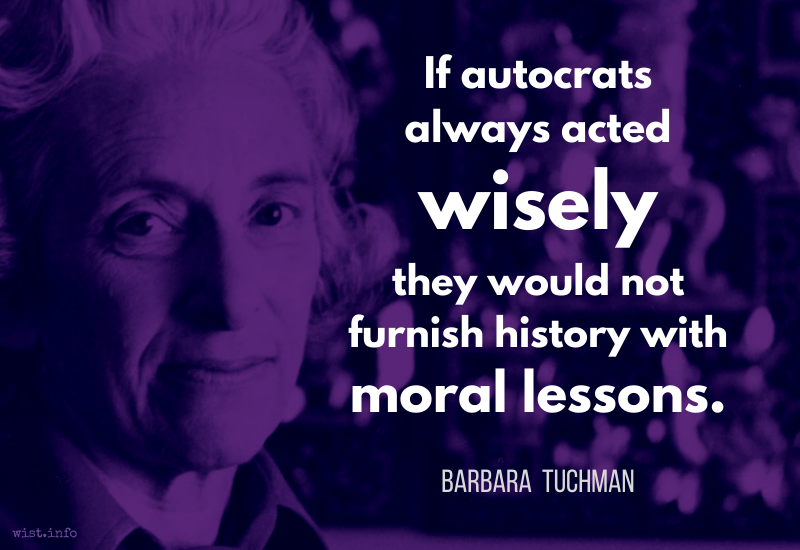
This was unwise, but if autocrats always acted wisely they would not furnish history with moral lessons.
Barbara W. Tuchman (1912–1989) American historian and author
A Distant Mirror, ch. 21 “The Fiction Cracks” (1978)
(Source)
On young King Richard II's giving substantial offices and lands to his friend and mentor, the Earl of Oxford, in so doing making an enemy of the Duke of Gloucester.

Power is always gradually stealing away from the many to the few because the few are more vigilant and consistent; it still contracts to a smaller number, till in time it centres in a single person.
Thus all the forms of governments instituted among mankind, perpetually tend towards monarchy; and power, however diffused through the whole community is, by negligence or corruption, commotion or distress, reposed at last in the chief magistrate.Samuel Johnson (1709–1784) English writer, lexicographer, critic
Essay (1753-04-10), The Adventurer, No. 45
(Source)
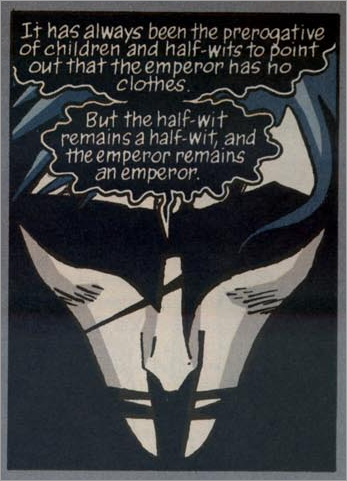
DREAM: It has always been the prerogative of children and half-wits to point out that the emperor has no clothes. But the half-wit remains a half-wit, and the emperor remains an emperor.
Neil Gaiman (b. 1960) British author, screenwriter, fabulist
Sandman, Book 9. The Kindly Ones, # 60 “The Kindly Ones: 4” (1994-06)
(Source)

ARTHUR: I am your king.
WOMAN: Well, I didn’t vote for you.
ARTHUR: You don’t vote for kings.
WOMAN: Well how’d you become king then?
ARTHUR: (angelic music plays) The Lady of the Lake, her arm clad in the purest shimmering samite, held aloft Excalibur from the bosom of the water, signifying by divine providence that I, Arthur, was to carry Excalibur. (angelic music stops) That is why I am your king.
DENNIS: (interrupting) Listen, strange women lying in ponds distributing swords is no basis for a system of government. Supreme executive power derives from a mandate from the masses, not from some farcical aquatic ceremony.
ARTHUR: Be quiet!
DENNIS: You can’t expect to wield supreme executive power just ’cause some watery tart threw a sword at you!
ARTHUR: Shut up!
DENNIS: I mean, if I went around saying I was an emperor just because some moistened bint had lobbed a scimitar at me, they’d put me away!
ARTHUR: (grabbing him by the collar) Shut up! Will you shut up!
Monty Python (b. 1969) British comedy troupe [Graham Chapman, John Cleese, Terry Gilliam, Eric Idle, Terry Jones, Michael Palin]
Monty Python and the Holy Grail, sc. 3 (1975)
(Source)
(Source (Video); dialog verified)