The Founding Fathers cannot have intended a President and his small group of appointed advisors to perform like a monarch surrounded by his court. As if the people’s representatives and the people themselves were a general nuisance, and the job is to keep the whole tiresome bunch quiet: manipulate them.
Martha Gellhorn (1908–1998) American novelist, journalist war correspontent
Letter (1971) to Daniel Ellsberg
(Source)
An open letter Gellhorn wrote to Daniel Ellsberg. In 1971, Ellsberg, a military analyst, leaked the "Pentagon Papers" to the media, a top-secret Defense Department study of US goverment decision-making in the Vietnam War. He was charged under the Espionage Act of 1917, but due to government misconduct and illegal evidence-gathering, all charges were dismissed in 1973.
More importantly, the US government, under Richard Nixon, tried to impose a preemptive injunction to stop the Papers' publication by US media. The Supreme Court ruled in New York Times Co. v. United States that such prior restraint of publication was unconstitutional.
Quotations about:
founders
Note not all quotations have been tagged, so Search may find additional quotes on this topic.
The provision of the Constitution giving the war-making power to Congress, was dictated, as I understand it, by the following reasons. Kings had always been involving and impoverishing their people in wars, pretending generally, if not always, that the good of the people was the object. This, our Convention understood to be the most oppressive of all Kingly oppressions; and they resolved to so frame the Constitution that no one man should hold the power of bringing this oppression upon us. But your view destroys the whole matter, and places our President where kings have always stood.
Abraham Lincoln (1809–1865) American lawyer, politician, US President (1861–65)
Letter (1848-02-15) to William H. Herndon
(Source)
Lincoln understood Herndon to be proposing that the President, on their own initiative and judgment, was entitled to preemptively invade another country to repel an anticipated invasion. Herndon felt this principle justified Polk's sending of troops into disputed territory, which led to the Mexican-American War (1846-1848), though Polk didn't justify his actions in that way.
What’s really astounding about these brickheads who claim to be in touch with the original intent of the founders is (1) none of them seem to have read what the founders wrote, from Thomas Jefferson’s essays to Jamie Madison’s notes, and (2) you know damn well if they had been alive at the time of the American Revolution, they all would have been Tories.
Molly Ivins (1944–2007) American writer, political columnist [Mary Tyler Ivins]
Essay (1987-09-11), “We the People,” Texas Observer
(Source)
Collected in Molly Ivins Can't Say That, Can She? (1991).
The [American] Founding Fathers never believed that tyranny could arise out of the executive office, because they did not see this office in any different light but as the execution of what the legislation has decreed in various forms. I leave it at that. We know today that the greatest danger of tyranny is, of course, the executive.
Hannah Arendt (1906–1975) German-American philosopher, political theorist
Interview (1973-10) with Roger Errera, Office de Radiodiffusion-Télévision Française (ORTF)
Arendt was referring specifically to the Watergate Scandal and Nixon's abuse of power.
Parts of this interview were turned into an episode of the French TV series "Un certain regard," directed by Jean-Claude Lubtchansky, first broadcast 1974-07-06. (Source (Video))
The interview was edited and retranslated in 2013 [tr. Andrew Brown], and collected in Arendt, Thinking without a Bannister: Essays in Understanding, 1953-1975 (2018) [ed. Jerome Kohn]. The text there reads:The Founding Fathers never believed that tyranny could arise out of the executive office, because they saw this office as the executor of what the legislature decreed. We know today that the greatest danger of tyranny is from the executive.
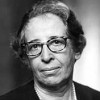
Our Founders saw themselves in the light of posterity. We can do no less. Anyone who has ever watched a child’s eyes wander into sleep knows what posterity is. Posterity is the world to come; the world for whom we hold our ideals, from whom we have borrowed our planet, and to whom we bear sacred responsibility.
William Jefferson "Bill" Clinton (b. 1946) American politician, US President (1993–2001)
Speech (1993-01-20), Inaugural Address, Washington, D.C.
(Source)
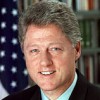
We should not be surprised that the Founding Fathers didn’t foresee everything, when we see that the current Fathers hardly ever foresee anything.
Henry Steele Commager (1902–1998) American historian, writer, activist
Interview (1970-02) by John A. Garraty, “American Nationalism,” Interpreting American History: Conversations with Historians, Part 1, ch. 4 (1970)
(Source)
Excerpted in "Conversations with Historians," American Heritage magazine (1970-02).
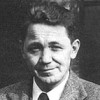
All citizens do have a measure of control, at least in democracies where their votes are counted, of how they belong to their nations. Perhaps they will have more confidence in unconventional choices if they see that each nation’s founders were disobedient and unpredictable, men and women of imagination and ambition. The steel of every national monument was once molten.
Timothy Snyder (b. 1969) American historian, author
The Red Prince, “Orange: European Revolutions” (2008)
(Source)
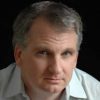
If Carmel’s founders should return, they could not afford to live there, but it wouldn’t go that far. They would be instantly picked up as suspicious characters and deported over the city line.
John Steinbeck (1902–1968) American writer
Travels With Charley (1962)
Some men look at Constitutions with sanctimonious reverence, & deem them, like the ark of the covenant, too sacred to be touched. they ascribe to the men of the preceding age a wisdom more than human, and suppose what they did to be beyond amendment. I knew that age well: I belonged to it, and labored with it. it deserved well of it’s country. it was very like the present, but without the experience of the present: and 40. years of experience in government is worth a century of book-reading: and this they would say themselves, were they to rise from the dead.
Thomas Jefferson (1743–1826) American political philosopher, polymath, statesman, US President (1801–09)
Letter (1816-07-12) to “Henry Tompkinson” (Samuel Kercheval)
(Source)
We should stop going around babbling about how we’re the greatest democracy on earth, when we’re not even a democracy. We are a sort of militarised republic. The founding fathers hated two things, one was monarchy and the other was democracy, they gave us a constitution that saw to it we will have neither. I don’t know how wise they were.
Gore Vidal (1925–2012) American novelist, dramatist, critic
“Gore Vidal and the Mind of the Terrorist”, interview by Ramona Koval, Australian Broadcasting Corporation (Nov 2001)
(Source)
In my opinion, there’s not a thing wrong with the ideals and mechanisms outlined and the liberties set forth in the Constitution of the United States. The only problem was, the founders left a lot of people out of the Constitution. They left out poor people and black people and female people. It is possible to read the history of this country as one long struggle to extend the liberties established in our Constitution to everyone in America. And it still goes on today.
Molly Ivins (1944–2007) American writer, political columnist [Mary Tyler Ivins]
Essay (1987-09-11), “We the People,” Texas Observer
(Source)
Collected in Molly Ivins Can't Say That, Can She? (1991).
Those who won our independence by revolution were not cowards. They did not fear political change. They did not exalt order at the cost of liberty. To courageous, self-reliant men, with confidence in the power of free and fearless reasoning applied through the processes of popular government, no danger flowing from speech can be deemed clear and present, unless the incidence of the evil apprehended is so imminent that it may befall before there is opportunity for full discussion. If there be time to expose through discussion the falsehood and fallacies, to avert the evil by the processes of education, the remedy to be applied is more speech, not enforced silence.
Louis Brandeis (1856–1941) American lawyer, jurist, activist; US Supreme Court Justice (1916–39)
Whitney v California, 274 US 357, 377 (1927) (concurring)
(Source)