

The reputashun that a man gits from hiz ansesstors often wants az mutch altering to fit him, az their old clothes would.
[The reputation that a man gets from his ancestors often wants as much altering to fit him, as their old clothes would.]
Josh Billings (1818–1885) American humorist, aphorist [pseud. of Henry Wheeler Shaw]
Josh Billings’ Farmer’s Allminax, 1877-10 “Blossoms” (1877 ed.)
(Source)
Quotations about:
ancestors
Note not all quotations have been tagged, so Search may find additional quotes on this topic.

The prevailing humour of crying up authors that have writ in the days of our forefathers, and of passing slightly over the merit of our contemporaries, is a grievance that men of a free and unprejudiced thought have complained of through all ages in their writings.
Richard Steele (1672–1729) Anglo-Irish writer, journalist, playwright, politician
Essay (1713-04-09), The Guardian, No. 25
(Source)
To our graves we walk
In the thick footprints of departed men.
Horace and Aristotle already told us about the virtues of their forefathers and the vices of their times, and authors down through the centuries have spoken in like manner. If they had told the truth, men would nowadays be bears.
[Horace et Aristote nous ont déjà parlé des vertus de leurs pères, et des vices de leur temps, et les auteurs de siècle en siècle nous en ont parlé de même. S’ils avaient dit vrai, les hommes seraient à présent des ours.]Charles-Lewis de Secondat, Baron de Montesquieu (1689–1755) French political philosopher
Pensées Diverses [Assorted Thoughts], # 396 (1720-1755) [tr. Clark (2012)]
(Source)
(Source (French)). Another translation:Horace and Aristotle told us of the virtues of their fathers, and the vices of their own time, and authors down through the centuries have told us the same. If they were right, men would now be bears.
[E.g.]
History is the only consolation left to the peoples, for it teaches them that their ancestors were as unhappy as themselves, or more unhappy.
[En effet, il ne reste guère, pour consoler les peuples, que de leur apprendre que leurs ancêtres ont été aussi malheureux, ou plus malheureux.]Nicolas Chamfort (1741–1794) French writer, epigrammist (b. Nicolas-Sébastien Roch)
Products of Perfected Civilization [Produits de la Civilisation Perfectionée], Part 1 “Maxims and Thoughts [Maximes et Pensées],” ch. 8, ¶ 474 (1795) [tr. Mathers (1926)]
(Source)
(Source (French)). Other translations:In fact there is no longer any way of consoling the people except by teaching them that their forebears were as wretched as they are, or more so.
[tr. Merwin (1969)]Indeed, if one is to console the peoples of the world there is little else one can do but teach them that their ancestors were just as wretched, or more so.
[tr. Pearson (1973)]In effect, there is nearly no way to console peoples except to tell them that their ancestors were as unfortunate or more unfortunate than they are.
[tr. Siniscalchi (1994), ¶ 473]

He is no wise man that will quit a certainty for an uncertainty.
Samuel Johnson (1709–1784) English writer, lexicographer, critic
Essay (1759-05-19), The Idler, No. 57
(Source)
Quoting his friend, Sophron (Wisdom, Prudence), who prefers old, tested ways to new ones.
Few match their fathers. Any tongue can tell
The more are worse: yea, almost none their sires excel.[παῦροι γάρ τοι παῖδες ὁμοῖοι πατρὶ πέλονται,
οἱ πλέονες κακίους, παῦροι δέ τε πατρὸς ἀρείους.]Homer (fl. 7th-8th C. BC) Greek author
The Odyssey [Ὀδύσσεια], Book 2, l. 276ff (2.276) [Athena to Telemachus] (c. 700 BC) [tr. Worsley (1861), st. 37]
(Source)
(Source (Greek)). Other translations:For few, that rightly bred on both sides stand,
Are like their parents, many that are worse,
And most few better. Those then that the nurse
Or mother call true-born yet are not so,
Like worthy sires much less are like to grow.
[tr. Chapman (1616)]Few sons exceed or reach their father’s might,
But commonly inferior they are.
[tr. Hobbes (1675), l. 257ff]Few sons attain the praise
Of their great sires, and most their sires disgrace.
[tr. Pope (1725)]Few sons their fathers equal; most appear
Degenerate; but we find, though rare, sometimes
A son superior even to his Sire.
[tr. Cowper (1792)]Few be the children equal to their father:
The most be worse: and few be better men.
[tr. Bigge-Wither (1869)]For few children, truly, are like their father; lo, the more part are worse, yet a few are better than the sire.
[tr. Butcher/Lang (1879)]Though not oft is the son meseemeth e'en such an one as his sire.
Worser they be for the more part, and a few may be better forsooth.
[tr. Morris (1887)]Few sons are like their fathers; most are worse, few better than the father.
[tr. Palmer (1891)]Sons are seldom as good men as their fathers; they are generally worse, not better.
[tr. Butler (1898)]Few sons indeed are like their fathers; most are worse, few better than their fathers.
[tr. Murray (1919)]Few are the sons who attain their fathers' stature: and very few surpass them. Most fall short in merit.
[tr. Lawrence (1932)]Few sons, indeed, are like their fathers. Generally they are worse; but just a few are better.
[tr. Rieu (1946)]The son is rare who measures with his father,
and one in a thousand is a better man.
[tr. Fitzgerald (1961)]For few are the children who turn out to be equals of their fathers,
and the greater number are worse; few are better than their father is.
[tr. Lattimore (1965)]Few sons are the equals of their fathers;
most fall short, all too few surpass them.
[tr. Fagles (1996)]You know, few sons turn out to be like their fathers;
Most turn out worse, a few better.
[tr. Lombardo (2000), ll. 300-301]It is a truth that few sons are the equal of their fathers; most are inferior to their father, and few surpass them.
[tr. Verity (2016), l. 276]And it is rare for sons to be like fathers;
only a few are better, most are worse.
[tr. Wilson (2017)]Few are the sons who prove the equal of their fathers:
most are worth less, hardly any provem themselves better.
[tr. Green (2018)]It’s true few men
are like their fathers. Most of them are worse.
Only very few of them are better.
[tr. Johnston (2019), l. 373ff]
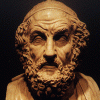
Ye knowe ek that, in forme of speche is chaunge
Withinne a thowsand yere, and words tho
That hadden prys, now wonder nyce and straunge
Us thynketh hem, and yet thai spake hm so,
And spedde as wele in love, as men now do ….[You know that the form of speech will change within a thousand years, and words that were once apt, we now regard as quaint and strange; and yet they spoke them thus, and succeeded as well in love as men do now.]
Geoffrey Chaucer (c. 1343–1400) English poet, philosopher, astronomer, diplomat
Troilus and Criseyde, Book 2, st. 4, ll. 22-26 (1385)
(Source)
Note that the spelling varied between different editions of this same text.
Other translations:
"Remember in the forms of speech comes change
Within a thousand years, and words that then
Were well esteemed, seem foolish now and strange;
And yet they spake them so, time and again,
And thrived in love as well as any men." [tr. Krapp (2006)]

Mules are always boasting that their ancestors are horses.
Proverbs, Sayings, and Adages
German Proverb

We open our mouths and out flow words whose ancestries we do not even know. We are walking lexicons. In a single sentence of idle chatter we preserve Latin, Anglo-Saxon, Norse: we carry a museum inside our heads, each day we commemorate peoples of whom we have never heard. More than that, we speak volumes — our language is the language of everything we have not read. Shakespeare and the Authorised Version surface in supermarkets, on buses, chatter on radio and television. I find this miraculous. I never cease to wonder at it. That words are more durable than anything, that they blow with the wind, hibernate and reawaken, shelter parasitic on the most unlikely hosts, survive and survive and survive.

If your descent is from heroic sires,
Show in your life a remnant of their fires.[Si vous êtes sorti de ces héros fameux,
Montrez-nous cette ardeur qu’on vit briller en eux.]Nicolas Boileau-Despréaux (1636–1711) French poet and critic
Satires, Satire 5, l. 43 (1716)
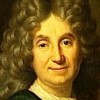
If Carmel’s founders should return, they could not afford to live there, but it wouldn’t go that far. They would be instantly picked up as suspicious characters and deported over the city line.
John Steinbeck (1902–1968) American writer
Travels With Charley (1962)
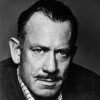
It is revolting to have no better reason for a rule of law than that so it was laid down in the time of Henry IV.
Oliver Wendell Holmes, Jr. (1841–1935) American jurist, Supreme Court Justice
Speech (1897-01-18), “The Path of the Law,” Supreme Judicial Court of Massachusetts
(Source)
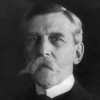
We are like dwarfs on the shoulders of giants, so that we can see more than them and things at a greater distance.
Bernard of Chartres (d. after 1124) French philosopher, scholar, administrator. [a.k.a. Bernardus Carnotensis]
(Attributed)
Attributed in John of Salisbury, The Metalogicon, 3.4 (1159).Paraphrase of this original: "Bernard of Chartres used to say that we [the Moderns] are like dwarves perched on the shoulders of giants [the Ancients], and thus we are able to see more and farther than the latter. And this is not at all because of the acuteness of our sight or the stature of our body, but because we are carried aloft and elevated by the magnitude of the giants."See here for more discussion. See also Isaac Newton.
So, as you go into battle, remember your ancestors and remember your descendants.
[Et majores vestros et posteros cogitate]
Tacitus (c.56-c.120) Roman historian, orator, politician [Publius or Gaius Cornelius Tacitus]
Agricola, ch. 32 [tr. Acheson, ch. 4, para. 22 (1938)]
(Source)
Alt. trans: "Think of your ancestors and your posterity" or "Think of your forefathers and posterity."
The fact is, very few men are right in everything. Great virtues may draw attention from defects, but they cannot sanctify them. A pebble surrounded by diamonds remains a common stone, and a diamond surrounded by pebbles is still a gem. No one should attempt to refute an argument by pronouncing the name of some man, unless he is willing to adopt all the ideas and beliefs of that man. It is better to give reasons and facts than names. An argument should not depend for its force upon the name of its author. Facts need no pedigree, logic has no heraldry, and the living should not awed by the mistakes of the dead.
Robert Green Ingersoll (1833–1899) American lawyer, freethinker, orator
Lecture (1881-05-01) “The Great Infidels,” Booth’s Theater, New York
(Source)
They say the religion of your fathers is good enough. Why should a father object to your inventing a better plow than he had?
Robert Green Ingersoll (1833–1899) American lawyer, freethinker, orator
Speech on Religious Intolerance, Pittsburgh Opera House (14 Oct 1879)