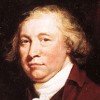
Men are all equal in a republican government, and they are equal in a despotic government: in the first, because they are everything, in the second, because they are nothing.
[Les hommes sont tous égaux dans le gouvernement républicain; ils sont égaux dans le gouvernement despotique: dans le premier, c’est parce qu’ils sont tout; dans le second, c’est parce qu’ils ne sont rien.]
Charles-Lewis de Secondat, Baron de Montesquieu (1689–1755) French political philosopher
Spirit of Laws [The Spirit of the Laws; De l’esprit des lois], Book 6, ch. 2 (6.2) (1748) [tr. Stewart (2018)]
(Source)
(Source (French)). Other translations:In republican governments men are all equal; equal they are also in despotic governments: in the former because they are everything, in the latter because they are nothing.
[tr. Nugent (1750)]Men are all equal in republican government; they are equal in despotic government; in the former, it is because they are everything; in the latter, it is because they are nothing.
[tr. Cohler/Miller/Stone (1989)]
Quotations about:
republic
Note not all quotations have been tagged, so Search may find additional quotes on this topic.
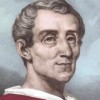
For it is clear that in a monarchy, where the person who executes the laws holds himself above them, less virtue is required than in a popular government, where the person who executes the laws is aware that he himself is subject to them and that he will feel their weight.
[Car il est clair que, dans une monarchie, où celui qui fait exécuter les loix se juge au-dessus des loix, on a besoin de moins de vertu que dans un gouvernement populaire, où celui qui fait exécuter les loix, sent qu’il y est soumis lui-même, & qu’il en portera le poids.]
Charles-Lewis de Secondat, Baron de Montesquieu (1689–1755) French political philosopher
Spirit of Laws [The Spirit of the Laws; De l’esprit des lois], Book 3, ch. 3 (3.3) (1748) [tr. Stewart (2018)]
(Source)
(Source (French)). Other translations:For it is clear that in a monarchy, where he who commands the execution of the laws generally thinks himself above them, there is less need of virtue than in a popular government, where the person entrusted with the execution of the laws is sensible of his being subject to their direction.
[tr. Nugent (1750)]For it is clear that less virtue is needed in a monarchy, where the one who sees to the execution of the laws judges himself above the laws, than in a popular government, where the one who sees the execution of the laws feels that he is subject to them himself and that he will bear their weight.
[tr. Cohler/Miller/Stone (1989)]
When virtue is banished, ambition invades the hearts of those who are disposed to receive it, and avarice possesses the whole community.
[Lorsque cette vertu cesse, l’ambition entre dans les cœurs qui peuvent la recevoir, & l’avarice entre dans tous.]
Charles-Lewis de Secondat, Baron de Montesquieu (1689–1755) French political philosopher
Spirit of Laws [The Spirit of the Laws; De l’esprit des lois], Book 3, ch. 3 (3.3) (1748) [tr. Nugent (1750)]
(Source)
Speaking of republics. See notes here on Montesquieu's meaning of "virtue": political virtue of love of country and of equality.
(Source (French)). Other translations:When that virtue ceases, ambition enters those hearts that can admit it, and avarice enters them all.
[tr. Cohler/Miller/Stone (1989)]When that virtue ceases, ambition enters the hearts that can receive it, and avarice enters them all.
[tr. Stewart (2018)]
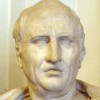
There are greater forces and means for attacking than for defending the State. The reason is, that reckless and abandoned men need only a nod to set them moving, and their own natural disposition incites them against the State; while honest folk somehow or other show less activity, neglect the beginnings of movements, and are aroused to action at the last moment only by simple necessity; so that sometimes, owing to their hesitation and indolence, while they wish still to enjoy peace even with the loss of dignity, through their own fault they lose both.
[Maioribus praesidiis et copiis oppugnatur res publica quam defenditur, propterea quod audaces homines et perditi nutu impelluntur et ipsi etiam sponte sua contra rem publicam incitantur, boni nescio quo modo tardiores sunt et principiis rerum neglectis ad extremum ipsa denique necessitate excitantur, ita ut non numquam cunctatione ac tarditate, dum otium volunt etiam sine dignitate retinere, ipsi utrumque amittant.]
Marcus Tullius Cicero (106–43 BC) Roman orator, statesman, philosopher
Pro Sestio [For Publius Sestius], ch. 47 / sec. 100 (56-02 BC) [tr. Gardner (Loeb) (1958)]
(Source)
(Source (Latin)). Other translations:The constitution is attacked with greater forces and troops than wherewith it is defended; because audacious and reckless characters are set on by a nod, and are even of their own accord incited against the constitution; whilst the good are for some reason or other slacker, and from having neglected the beginnings of things, are at last aroused to action by mere necessity; so that sometimes, while they are willing to retain their tranquility even without freedom, through their own fault they lose both from their hesitation and tardiness.
[tr. Hickie (1888)]The republic is attacked by greater forces and more numerous bodies than those by which it is defended; because audacious and abandoned men are impelled on by a nod, and are even of their own accord excited by nature to be enemies to the republic. And somehow or other good men are slower in action, and overlooking the first beginnings of things, are at last aroused by necessity itself; so that sometimes through their very delays and tardiness of movement, while they wish to retain their ease even without dignity, they, of their own accord, lose both.
[tr. Yonge (1891)]
Of governments, that of the mob is the most sanguinary, that of soldiers the most expensive, and that of civilians the most vexatious.
Charles Caleb "C. C." Colton (1780–1832) English cleric, writer, aphorist
Lacon: Or, Many Things in Few Words, Vol. 1, § 411 (1820)
(Source)
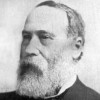
There need not be much integrity for a monarchical or despotic government to maintain or sustain itself. The force of the laws in the one, and the prince’s ever-raised arm in the other, can rule or contain the whole. But in a popular state there must be an additional spring, which is virtue.
[Il ne faut pas beaucoup de probité, pour qu’un gouvernement monarchique, ou un gouvernement despotique, se maintiennent ou se soutiennent. La force des loix dans l’un, le bras du prince toujours levé dans l’autre, reglent ou contiennent tout. Mais, dans un état populaire, il faut un ressort de plus, qui est la VERTU.]
Charles-Lewis de Secondat, Baron de Montesquieu (1689–1755) French political philosopher
Spirit of Laws [The Spirit of the Laws; De l’esprit des lois], Book 3, ch. 3 (3.3) (1748) [tr. Cohler/Miller/Stone (1989)]
(Source)
In his Preface, Montesquieu clarifies:For the understanding of the first four books of this work, it must be noted that what I call virtue in the republic is love of the homeland, in other words love of equality. It is not a moral virtue, nor a Christian virtue, it is political virtue; and this virtue is what drives republican government, as honor is what drives monarchy. I have therefore called political virtue love of the homeland and of equality.
(Source (French)). Other translations:There is no great share of probity necessary to support a monarchical or despotic government: the force of laws, in one, and the prince’s arm, in the other, are sufficient to direct and maintain the whole. But, in a popular state, one spring more is necessary, namely, virtue.
[tr. Nugent (1750)]It does not take much probity for a monarchical or despotic government to maintain or sustain itself. The force of the laws in the first, and the ever-threatening arm of the prince in the second, determine or contain everything. But a popular state needs to be driven by something more, which is VIRTUE.
[tr. Stewart (2018)]
We must keep ever in mind that a republic such as ours can exist only by virtue of the orderly liberty which comes through the equal domination of the law over all men alike, and through its administration in such resolute and fearless fashion as shall teach all that no man is above it and no man below it.
Theodore Roosevelt (1858–1919) American politician, statesman, conservationist, writer; US President (1901–09)
Speech (1903-09-07), “The Square Deal,” Labor Day, New York State Agricultural Association, New York State Fair, Syracuse
(Source)
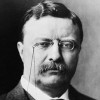
Every Man must seriously set himself to root out his Passions, Prejudices and Attachments, and to get the better of his private Interest. The only reputable Principle and Doctrine must be that all Things must give Way to the public.
John Adams (1735–1826) American lawyer, Founder, statesman; US President (1797–1801)
Letter (1776-04-16) to Mercy Otis Warren
(Source)
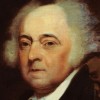
The truth unquestionably is, that the only path to a subversion of the republican system of the Country is, by flattering the prejudices of the people, and exciting their jealousies and apprehensions, to throw affairs into confusion, and bring on civil commotion. Tired at length of anarchy, or want of government, they may take shelter in the arms of monarchy for repose and security.
Alexander Hamilton (1757–1804) American statesman, author
Letter (1792-08-18) to George Washington, Enclosure: “Objections and Answers Respecting the Administration,” Objection 14
(Source)
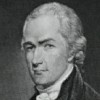
In a republic, to be successful we must learn to combine intensity of conviction with a broad tolerance of difference of conviction. Wide differences of opinion in matters of religious, political, and social belief must exist if conscience and intellect alike are not to be stunted, if there is to be room for healthy growth. Bitter internecine hatreds, based on such differences, are signs not of earnestness of belief but of that fanaticism which, whether religious or anti-religious, democratic or anti-democratic, is itself but a manifestation of the gloomy bigotry which has been the chief factor in the downfall of so many, many nations.
Theodore Roosevelt (1858–1919) American politician, statesman, conservationist, writer; US President (1901–09)
Speech (1910-04-23), “Citizenship in a Republic [The Man in the Arena],” Sorbonne, Paris
(Source)
Of one man in especial, beyond any one else, the citizens of a republic should beware, and that is of the man who appeals to them to support him on the ground that he is hostile to other citizens of the republic, that he will secure for those who elect him, in one shape or another, profit at the expense of other citizens of the republic. It makes no difference whether he appeals to class hatred or class interest, to religious or anti-religious prejudice. The man who makes such an appeal should always be presumed to make it for the sake of furthering his own interest.
Theodore Roosevelt (1858–1919) American politician, statesman, conservationist, writer; US President (1901–09)
Speech (1910-04-23), “Citizenship in a Republic [The Man in the Arena],” Sorbonne, Paris
(Source)
Whether Parliament is either a representative body or an efficient one is questionable, but I value it because it criticizes and talks, and because its chatter gets widely reported. So two cheers for Democracy: one because it admits variety and two because it permits criticism. Two cheers are quite enough: there is no occasion to give three.
E. M. Forster (1879–1970) English novelist, essayist, critic, librettist [Edward Morgan Forster]
“What I Believe,” The Nation (16 Jul 1938)
(Source)
Monarchy is like a sleek craft, it sails along well until some bumbling captain runs it into the rocks. Democracy, on the other hand, is like a raft. It never goes down but, dammit, your feet are always wet.
Fisher Ames (1758–1808) American politician, orator
(Attributed)
This is the earliest reference I can find to this metaphor. Variants:
- "A monarchy is a merchantman which sails well, but will sometimes strike on a rock and go to the bottom; a republic is a raft which will never sink, but then your feet are always in the water." This variant is often attributed to a speech in the House of Representatives in 1795, but is not found in records of Ames' speeches.
- "A monarchy is like a man-of-war -- bad shots between wind and water hurt it exceedingly; there is danger of capsizing. But democracy is a raft. You cannot easily overturn it. It is a wet place, but it is a pretty safe one." -- Joseph Cook (1860-1947) Anglo-Australian politician
- "Dictatorship is like a big proud ship -- steaming away across the ocean with a great hulk and powerful engines driving it. It’s going fast and strong and looks like nothing could stop it. What happens? Your fine ship strikes something -- under the surface. Maybe it’s a mine or a reef, maybe it’s a torpedo or an iceberg. And your wonderful ship sinks. Now take democracy. It’s like riding on a raft, a rickety raft that was put together in a hurry. We get tossed about on the waves, it’s bad going and our feet are always wet. But that raft doesn’t sink … It’s the raft that will get to the shore at last." --- Roaldus Richmond (fl. 1940) American writer. In, ed., "A Yankee Businessman in New Hampshire," American Life Histories: Manuscripts from the Federal Writers Project, 1936-1940.
- "Democracy is like a raft: It won't sink, but you will always have your feet wet." -- Russell B. Long (1918-2003) American politician
- "But you have to understand, American democracy is not like the system you have. We're not an ocean liner that sails across the ocean from point A to point B at 30 knots. That's not American democracy. American democracy is kind of like a life raft that bobs around the ocean all the time. Your feet are always wet. Winds are always blowing. You're cold. You're wet. You're uncomfortable -- but you never sink." -- Colin Powell (b. 1937) American politician, diplomat, soldier
Public Virtue cannot exist in a Nation without private, and public Virtue is the only Foundation of Republics. There must be a possitive Passion for the public good, the public Interest, Honour, Power, and Glory, established in the Minds of the People, or there can be no Republican Government, nor any real Liberty. And this public Passion must be Superiour to all private Passions. Men must be ready, they must pride themselves, and be happy to sacrifice their private Pleasures, Passions, and Interests, nay their private Friendships and dearest Connections, when they Stand in Competition with the Rights of society.
John Adams (1735–1826) American lawyer, Founder, statesman; US President (1797–1801)
Letter (1776-04-16) to Mercy Otis Warren
(Source)
Adams went on to express doubt whether an American nation could live up to such ideals.
To me, the democratic system represents man’s best and brightest hope of self-fulfillment, of a life rich in promise and free from fear; the one hope, perhaps, for the complete development of the whole man. But I know, and learn more clearly every day, that we cannot keep our system strong and free by neglect, by taking it for granted, by giving it our second-best attention. We must be prepared, like the suitor in The Merchant of Venice — and, I might point out, the successful suitor — to give and hazard all we have.
Eleanor Roosevelt (1884–1962) American politician, diplomat, activist; First Lady of the US (1933–45)
Essay (1961-04), “What Has Happened to the American Dream?” Atlantic Monthly
(Source)

Convinced that the republican is the only form of government which is not eternally at open or secret war with the rights of mankind, my prayers & efforts shall be cordially distributed to the support of that we have so happily established.
Thomas Jefferson (1743–1826) American political philosopher, polymath, statesman, US President (1801–09)
Letter (1790-03-11) to William Hunter
(Source)
For in a republic, who is “the Country”? Is it the Government which is for the moment in the saddle? Why, the Government is merely a servant — merely a temporary servant; it cannot be its prerogative to determine what is right and what is wrong, and decide who is a patriot and who isn’t. Its function is to obey orders, not originate them. Who, then, is “the country?” Is it the newspaper? Is it the pulpit? Is it the school-superintendent? Why, these are mere parts of the country, not the whole of it; they have not command, they have only their little share in the command. They are but one in the thousand; it is in the thousand that command is lodged; they must determine what is right and what is wrong; they must decide who is a patriot and who isn’t.
Mark Twain (1835–1910) American writer [pseud. of Samuel Clemens]
Papers of the Adams Family, Part 6 “Two Fragments from a Suppressed Book Called ‘Glances at History’ or ‘Outlines of History'” (1939)
We should stop going around babbling about how we’re the greatest democracy on earth, when we’re not even a democracy. We are a sort of militarised republic. The founding fathers hated two things, one was monarchy and the other was democracy, they gave us a constitution that saw to it we will have neither. I don’t know how wise they were.
Gore Vidal (1925–2012) American novelist, dramatist, critic
“Gore Vidal and the Mind of the Terrorist”, interview by Ramona Koval, Australian Broadcasting Corporation (Nov 2001)
(Source)

Must a government, of necessity, be too strong for the liberties of its own people, or too weak to maintain its own existence?
Abraham Lincoln (1809–1865) American lawyer, politician, US President (1861–65)
Message (1861-07-04) to Congress, Special Message, Washington, D. C.
(Source)
Lincoln's Special Message to Congress was to discuss the Civil War that had broken out, its origins, and how it represented this fundamental question about representative government.
Lincoln repeated this phrasing at the beginning of his speech (1864-11-10) responding to serenaders celebrating his re-election.Franklin Roosevelt quoted Lincoln during a pre-WW2 Jackson Day radio address (1941-03-29).

Virtue and Simplicity of Manners, are indispensably necessary in a Republic, among all orders and Degrees of Men. But there is So much Rascallity, so much Venality and Corruption, so much Avarice and Ambition, such a Rage for Profit and Commerce among all Ranks and Degrees of Men even in America, that I sometimes doubt whether there is public Virtue enough to support a Republic.
John Adams (1735–1826) American lawyer, Founder, statesman; US President (1797–1801)
Letter (1776-01-08) to Mercy Otis Warren
(Source)
In the final result, it mattered not one whit whether the movement was in favor of one class or of another. The outcome was equally fatal, whether the country fell into the hands of a wealthy oligarchy which exploited the poor or whether it fell under the domination of a turbulent mob which plundered the rich. In both cases there resulted violent alternations between tyranny and disorder, and a final complete loss of liberty to all citizens — destruction in the end overtaking the class which had for the moment been victorious as well as that which had momentarily been defeated. The death-knell of the Republic had rung as soon as the active power became lodged in the hands of those who sought, not to do justice to all citizens, rich and poor alike, but to stand for one special class and for its interests as opposed to the interests of others.
Theodore Roosevelt (1858–1919) American politician, statesman, conservationist, writer; US President (1901–09)
Speech (1903-09-07), “The Square Deal,” Labor Day, New York State Agricultural Association, New York State Fair, Syracuse
(Source)
On the fate of historic republics.
They define a republic to be a government of laws, and not of men.
John Adams (1735–1826) American lawyer, Founder, statesman; US President (1797–1801)
Essay (1775-03-06), “Novanglus,” No. 7, Boston Gazette
(Source)
This series of essays was written by Adams under the pseudonym of "Novanglus" (Latin for "New England") responding to essays from his past friend Daniel Leonard as "Massachusettensis" on colonial leadership and what the proper relationship was between the American colonies and Britain.
Adams credited the concept of the line above to Aristotle, Livy, and specifically to James Harrington (1611-77), who (also crediting Aristotle and Livy) wrote in The Commonwealth of Oceana (1656) of "government [...] is the empire of laws and not of men," "a commonwealth is an empire of laws and not of men," and "a commonwealth is a government of laws and not of men."
Adams later used the term ("government of laws and not of men") in the Massachusetts Constitution, Bill of Rights, Article 30 (1780), enforcing a separation of powers between the executive, judicial, and legislative branches.
But I go on this great republican principle, that the people will have virtue and intelligence to select men of virtue and wisdom. Is there no virtue among us? If there be not, we are in a wicked situation. No theoretical checks, no form of government, can render us secure. To suppose that any for of government will secure liberty or happiness without any virtue in the people, is a chimerical idea. If there be sufficient virtue and intelligence in the community, it will be exercised in the selection of these men; so that we do not depend on their virtue, or put confidence in our rulers, but in the people who are to choose them.
James Madison (1751–1836) American statesman, political theorist, US President (1809–17)
Speech at the Virginia Convention (20 Jun 1788)
(Source)
A kingdom is not brought nearer to ruin by the tyranny of the sovereign than is a republic by indifference to the common welfare.
[La tyrannie d’un prince ne met pas un État plus près de sa ruine que l’indifférence pour le bien commun n’y met une république.]
Charles-Lewis de Secondat, Baron de Montesquieu (1689–1755) French political philosopher
Considerations on the Causes of the Greatness of the Romans and their Decline [Considérations sur les causes de la grandeur des Romains et de leur décadence], ch. 4 (1734, 1748 ed.) [tr. Baker (1882)]
(Source)
(Source (French)). Other translations:A monarchy is not dragged nearer to the brink of ruin by the tyranny of a prince, than a commonwealth by a lukewarmness and indifference for the general good.
[tr. B--- (1734)]The tyranny of a prince in an oligarchy is not so dangerous to the public welfare as the apathy of a citizen in a democracy.
[E.g. (1926)]The tyranny of a prince does no more to ruin a state than does indifference to the common good to ruin a republic.
[tr. Lowenthal (1965)]
Certainly, Gentlemen, it ought to be the happiness and glory of a representative to live in the strictest union, the closest correspondence, and the most unreserved communication with his constituents. Their wishes ought to have great weight with him; their opinions high respect; their business unremitted attention. It is his duty to sacrifice his repose, his pleasure, his satisfactions, to theirs, — and above all, ever, and in all cases, to prefer their interest to his own.
But his unbiased opinion, his mature judgment, his enlightened conscience, he ought not to sacrifice to you, to any man, or to any set of men living. These he does not derive from your pleasure, — no, nor from the law and the Constitution. They are a trust from Providence, for the abuse of which he is deeply answerable. Your representative owes you, not his industry only, but his judgment; and he betrays, instead of serving you, if he sacrifices it to your opinion.
Edmund Burke (1729–1797) Anglo-Irish statesman, orator, philosopher
Speech to the electors of Bristol (3 Nov 1774)