

The teaching which I received was genuinely democratic in one way. It was not so democratic in another. I grew into manhood thoroughly imbued with the feeling that a man must be respected for what he made of himself. But I had also, consciously or unconsciously, been taught that socially and industrially pretty much the whole duty of the man lay in thus making the best of himself; that he should be honest in his dealings with others and charitable in the old-fashioned way to the unfortunate; but that it was no part of his business to join with others in trying to make things better for the many by curbing the abnormal and excessive development of individualism in a few.
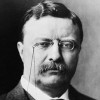
Theodore Roosevelt (1858–1919) American politician, statesman, conservationist, writer; US President (1901–09)
Autobiography, ch. 1 “Boyhood and Youth” (1913)
(Source)
Quotations about:
self-centeredness
Note not all quotations have been tagged, so Search may find additional quotes on this topic.
The concept of loyalty as conformity is a false one. It is narrow and restrictive, denies freedom of thought and of conscience, and is irremediably stained by private and selfish considerations.

Interest, upon which we commonly lay the Blame of all our ill Actions, oftentimes deserves the commendation due to our Good ones.
[L’intérêt, que l’on accuse de tous nos crimes, mérite souvent d’être loué de nos bonnes actions.]
François VI, duc de La Rochefoucauld (1613–1680) French epigrammatist, memoirist, noble
Réflexions ou sentences et maximes morales [Reflections; or Sentences and Moral Maxims], ¶305 (1665-1678) [tr. Stanhope (1694)]
(Source)
This first appeared in the 3rd (1671) edition. See also ¶187, ¶253.
(Source (French)). Other translations:Interest, which is accused of all our crimes, often deserves to be praised for our good actions.
[ed. Gowens (1851), ¶315]Interest, which is accused of all our misdeeds, often should be praised for our good deeds.
[tr. Bund/Friswell (1871), ¶305]Self-interest, to which are ascribed all our crimes, should frequently be given the credit for our good deeds.
[tr. FitzGibbon (1957), ¶305]Selfishness, which we blame for all our crimes, often deserves to be praised for our good deeds.
[tr. Kronenberger (1959), ¶305]Self-interest, blamed for all our misdeeds, often deserves credit for our good actions.
[tr. Tancock (1959), ¶305]Self-interest, which commonly takes the blame for all our crimes, often deserves praise for producing our good actions.
[tr. Whichello (2016) ¶305]

Mizery luvs company but iz allwuss jealous, — there never waz a man yet but what thought hiz lame back was a good deal lamer than hiz nabors.
[Misery loves company but is always jealous — there never was a man yet but what thought his lame back was a good deal more lame than his neighbor’s.]
Josh Billings (1818–1885) American humorist, aphorist [pseud. of Henry Wheeler Shaw]
Josh Billings’ Farmer’s Allminax, 1877-07 “Dregs” (1877 ed.)
(Source)

An unconscious, easy, selfish person shocks less, and is more easily loved, than one who is laboriously and egotistically unselfish. There is at least no fuss about the first; but the other parades his sacrifices, and so sells his favours too dear.
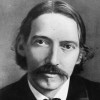
Robert Louis Stevenson (1850–1894) Scottish essayist, novelist, poet
Essay (1880-01/02?), “Reflections and Remarks on Human Life,” § 5 “Selfishness and Egoism”
(Source)
A collection of aphorisms and musings, first published in the Edinburgh Edition of his Works, vol. 28 (1898).
CONCEIT, n. Self-respect in one whom we dislike.
Ambrose Bierce (1842–1914?) American writer and journalist
“Conceit,” “Devil’s Dictionary” column, San Francisco Wasp (1881-08-12)
(Source)
Not collected in later books.

When virtue is banished, ambition invades the hearts of those who are disposed to receive it, and avarice possesses the whole community.
[Lorsque cette vertu cesse, l’ambition entre dans les cœurs qui peuvent la recevoir, & l’avarice entre dans tous.]
Charles-Lewis de Secondat, Baron de Montesquieu (1689–1755) French political philosopher
Spirit of Laws [The Spirit of the Laws; De l’esprit des lois], Book 3, ch. 3 (3.3) (1748) [tr. Nugent (1750)]
(Source)
Speaking of republics. See notes here on Montesquieu's meaning of "virtue": political virtue of love of country and of equality.
(Source (French)). Other translations:When that virtue ceases, ambition enters those hearts that can admit it, and avarice enters them all.
[tr. Cohler/Miller/Stone (1989)]When that virtue ceases, ambition enters the hearts that can receive it, and avarice enters them all.
[tr. Stewart (2018)]

In fact the whole antithesis between self and the rest of the world, which is implied in the doctrine of self-denial, disappears as soon as we have any genuine interest in persons or things outside ourselves. Through such interests a man comes to feel himself part of the stream of life, not a hard separate entity like a billiard-ball, which can have no relation with other such entities except that of collision.
Bertrand Russell (1872–1970) English mathematician and philosopher
Conquest of Happiness, Part 2, ch. 17 “The Happy Man” (1930)
(Source)

Virtues are lost in self-interest as rivers are lost in the sea.
[Les vertus se perdent dans l’intérêt, comme les fleuves se perdent dans la mer.]
François VI, duc de La Rochefoucauld (1613–1680) French epigrammatist, memoirist, noble
Réflexions ou sentences et maximes morales [Reflections; or Sentences and Moral Maxims], ¶171 (1665-1678) [tr. Whichello (2016)]
(Source)
Present in the 1st (1665) edition, which began the maxim with "Toutes les vertus se perdent [All virtues are lost] ...." See also ¶253.
(Source (French)). Other translations:All the Virtues men so much pretend to, are swallow'd up in Interest, as Rivers lose their names when they fall into the Sea.
[tr. Davies (1669), ¶3]Vertues are lost in Interest, as Rivers are swallowed up in the Sea.
[tr. Stanhope (1694), ¶172]The virtues are lost in interest, as rivers are in the sea.
[pub. Donaldson (1783), ¶448; ed. Lepoittevin-Lacroix (1797), ¶165]The virtues are lost in interest, as rivers are lost in the sea.
[ed. Gowens (1851), ¶174]As rivers are lost in the sea so are virtues in self.
[tr. Bund/Friswell (1871), ¶171]Virtues lose themselves in selfish motives like rivers in the sea.
[tr. Heard (1917), ¶171]Our virtues lose themselves in selfishness as rivers are lost in the sea.
[tr. Stevens (1939), ¶171]Our virtues are drowned in self-interest, as the rivers flow into the sea.
[tr. FitzGibbon (1957), ¶171]Virtues are swallowed up by self-interest as rivers are lost in the sea.
[tr. Kronenberger (1959), ¶171]The virtues lose themselves in self-interest like rivers in the sea.
[tr. Tancock (1959), ¶171]
Of course no one is so sensitive as you, but try to remember they think they are.
Mignon McLaughlin (1913–1983) American journalist and author
The Second Neurotic’s Notebook, ch. 4 (1966)
(Source)

Contrary to rumor, bridesmaids are not obliged to entertain in honor of the bride, nor to wear clothes that they cannot afford and that make them look stupid.
And no, the bride does not have a “right” to demand either one because it is “her day.” Any sensible person who hears someone speaking in an imperious tone of “her day” would be wise to consider that it therefore isn’t going to be anyone else’s day, and to leave her to enjoy it alone.Judith Martin (b. 1938) American author, journalist, etiquette expert [a.k.a. Miss Manners]
“Miss Manners,” syndicated column (1993-03-07)
(Source)

If all our happiness is bound up entirely in our personal circumstances it is difficult not to demand of life more than it has to give.
Bertrand Russell (1872–1970) English mathematician and philosopher
Conquest of Happiness, Part 2, ch. 10 “Is Happiness Still Possible?” (1930)
(Source)
Thare iz nothing we are more apt to parade before others, than our kares and sorrows, and thare iz nothing the world kares so little about.
[There is nothing we are more apt to parade before others, than our cares and sorrows, and there is nothing the world cares so little about.]
Josh Billings (1818–1885) American humorist, aphorist [pseud. of Henry Wheeler Shaw]
Josh Billings’ Farmer’s Allminax, 1875-12 (1875 ed.)
(Source)
Nothing is so hard to understand as that there are human beings in this world besides one’s self and one’s own set.
William Dean Howells (1837–1920) American author, literary critic, and playwright
Their Wedding Journey, ch. 2 “Midsummer-Day’s Dream” [Basil] (1872)
(Source)
We expect everybody else to feel towards us that tender love and that profound respect which we feel towards ourselves.
Bertrand Russell (1872–1970) English mathematician and philosopher
Conquest of Happiness, Part 1, ch. 8 “Persecution Mania” (1930)
(Source)
Our doings are not so important as we naturally suppose; our successes and failures do not after all matter very much. Even great sorrows can be survived; troubles which seem as if they must put an end to happiness for life, fade with the lapse of time until it becomes almost impossible to remember their poignancy. But over and above these self-centered considerations is the fact that one’s ego is no very large part of the world. The man who can center his thoughts and hopes upon something transcending self can find a certain peace in the ordinary troubles of life which is impossible to the pure egoist.
Bertrand Russell (1872–1970) English mathematician and philosopher
Conquest of Happiness, Part 1, ch. 5 “Fatigue” (1930)
(Source)
(He and his shadow dance together. He is showing off now. He crows like a cock. He would fly in order to impress WENDY further if he knew that there is anything unusual in that.)
PETER: Wendy, look, look; oh the cleverness of me!
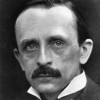
J. M. Barrie (1860–1937) Scottish novelist and dramatist [James Matthew Barrie]
Peter Pan, Act 1 (1904, pub. 1928)
(Source)
In Barrie's 1911 novelization, Peter and Wendy, ch. 3 "Come Away, Come Away!" this is rendered:Alas, he had already forgotten that he owed his bliss to Wendy. He thought he had attached the shadow himself. “How clever I am!” he crowed rapturously, “oh, the cleverness of me!”
Cadfael was not of the opinion that a man’s main business in this world was to save his own soul. There are other ailing souls, as there are ailing bodies, in need of a hoist towards health.
Ellis Peters (1913–1995) English writer, translator [pseud. of Edith Mary Pargeter, who also wrote under the names John Redfern, Jolyon Carr, Peter Benedict]
Cadfael Chronicles No. 16, The Confession of Brother Haluin, ch. 3 (1988)
(Source)

There are more who want to be loved than who want to love.
[Y a plus de gens qui veulent être aimés que de gens qui veulent aimer eux-mêmes.]Nicolas Chamfort (1741–1794) French writer, epigrammist (b. Nicolas-Sébastien Roch)
Products of Perfected Civilization [Produits de la Civilisation Perfectionée], Part 1 “Maxims and Thoughts [Maximes et Pensées],” ch. 6, ¶ 360 (1795) [tr. Merwin (1969)]
(Source)
(Source (French)). Other translations:There are more people who wish to be loved than there are who are willing to love.
[Source (<1884)]Men are more eager to be loved than anxious to love.
[tr. Mathers (1926)]There are more people who want to be loved than there are people who want to love.
[tr. Dusinberre (1992)]There are more people who want to be loved than people who want to love.
[tr. Siniscalchi (1994)]

Ours is not the only story, just the most interesting one.
Mignon McLaughlin (1913–1983) American journalist and author
The Second Neurotic’s Notebook, ch. 4 (1966)
(Source)
Selfishness must always be forgiven, you know, because there is no hope of a cure.

All of us are infected today with an extraordinary egoism. And that is not freedom; freedom means learning to demand only of oneself, not of life and others, and knowing how to give: sacrifice in the name of love.
Andrei Tarkovsky (1932–1986) Russian film director, screenwriter, film theorist [Андрей Арсеньевич Тарковский]
Sculpting in Time (1986) [tr. Hunter-Blair]
(Source)

Unrestricted individualism spells ruin to the individual himself. But so does the elimination of individualism, whether by law or custom.
Theodore Roosevelt (1858–1919) American politician, statesman, conservationist, writer; US President (1901–09)
Autobiography, ch. 5 “Applied Idealism” (1913)
(Source)
There will always be a part, and always a very large part of every community, that have no care but for themselves, and whose care for themselves reaches little further than impatience of immediate pain, and eagerness for the nearest good.
Samuel Johnson (1709–1784) English writer, lexicographer, critic
Essay (1775), “Taxation No Tyranny”
(Source)

The least pain in our little finger gives more concern and uneasiness than the destruction of millions of our fellow beings.
William Hazlitt (1778–1830) English writer
Essay (1829-10), “American Literature — Dr. Channing,” Edinburgh Review, Vol. 50, No. 99, Art. 7
(Source)

What stuck in the minds of these men who had become murderers was simply the notion of being involved in something historic, grandiose, unique (“a great task that occurs once in two thousand years”), which must therefore be difficult to bear. This was important, because the murderers were not sadists or killers by nature; on the contrary, a systematic effort was made to weed out all those who derived physical pleasure from what they did. The troops of the Einsatzgruppen had been drafted from the Armed S.S., a military unit with hardly more crimes in its record than any ordinary unit of the German Army, and their commanders had been chosen by Heydrich from the S.S. élite with academic degrees. Hence the problem was how to overcome not so much their conscience as the animal pity by which all normal men are affected in the presence of physical suffering. The trick used by Himmler — who apparently was rather strongly afflicted by these instinctive reactions himself — was very simple and probably very effective; it consisted in turning these instincts around, as it were, in directing them toward the self. So that instead of saying: What horrible things I did to people!, the murderers would be able to say: What horrible things I had to watch in the pursuance of my duties, how heavily the task weighed upon my shoulders!
Hannah Arendt (1906–1975) German-American philosopher, political theorist
Eichmann in Jerusalem: A Report on the Banality of Evil, ch. 6 (1963)
(Source)

We do not go to cowards for tender dealing; there is nothing so cruel as panic; the man who has least fear for his own carcase, has most time to consider others.
I have been a selfish being all my life, in practice, though not in principle.
SELFISH, adj. Devoid of consideration for the selfishness of others.
Ambrose Bierce (1842–1914?) American writer and journalist
“Selfish,” The Devil’s Dictionary (1911)
(Source)
Originally published in The Devil's Dictionary [A-Z] as Vol. 7 of his Collected Works.