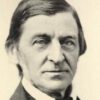
Our doings are not so important as we naturally suppose; our successes and failures do not after all matter very much. Even great sorrows can be survived; troubles which seem as if they must put an end to happiness for life, fade with the lapse of time until it becomes almost impossible to remember their poignancy. But over and above these self-centered considerations is the fact that one’s ego is no very large part of the world. The man who can center his thoughts and hopes upon something transcending self can find a certain peace in the ordinary troubles of life which is impossible to the pure egoist.
Bertrand Russell (1872–1970) English mathematician and philosopher
Conquest of Happiness, Part 1, ch. 5 “Fatigue” (1930)
(Source)
Quotations about:
insignificance
Note not all quotations have been tagged, so Search may find additional quotes on this topic.
They exist without permission. They are hated, hunted and persecuted. They live in quiet desperation amongst the filth. And yet they are capable of bringing entire civilisations to their knees. If you are dirty, insignificant and unloved then rats are the ultimate role model.
Banksy (b. 1974?) England-based pseudonymous street artist, political activist, film director
Wall and Piece, “Rats” (2005)
(Source)

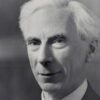
This mortal life is a little thing, lived in a little corner of the earth; and little, too, is the longest fame to come — dependent as it is on a succession of fast-perishing little men who have no knowledge even of their own selves, much less of one long dead and gone.
[μικρὸν μὲν οὖν ὃ ζῇ ἕκαστος: μικρὸν δὲ τὸ τῆς γῆς γωνίδιον ὅπου ζῇ: μικρὸν δὲ καὶ ἡ μηκίστη ὑστεροφημία καὶ αὕτη δὲ κατὰ διαδοχὴν ἀνθρωπαρίων τάχιστα τεθνηξομένων καὶ οὐκ εἰδότων οὐδὲ ἑαυτοὺς οὐδέ γε τὸν πρόπαλαι τεθνηκότα.]
Marcus Aurelius (AD 121–180) Roman emperor (161–180), Stoic philosopher
Meditations [To Himself; Τὰ εἰς ἑαυτόν], Book 3, ch. 10 (3.10) (AD 161-180) [tr. Staniforth (1964)]
(Source)
(Source (Greek)). Alternate translations:The time therefore that any man doth live, is but a little, and the place where he liveth, is but a very little corner of the earth, and the greatest fame that can remain of a man after his death, even that is but little, and that too, such as it is whilst it is, is by the succession of silly mortal men preserved, who likewise shall shortly die, and even whiles they live know not what in very deed they themselves are: and much less can know one, who long before is dead and gone.
[tr. Casaubon (1634)]Life moves in a very narrow Compass; yes, and Men live in a poor Corner of the World too : And the most lasting Fame will stretch but to a sorry Extent. The Passage on't is uneven and craggy, and therefore it can't run far. The frequent Breaks of Succession drop it in the Conveyance : For alas ! poor transitory Mortals, know little either of themselves, or of those who were long before them.
[tr. Collier (1701)]It is a very little time which each man lives, and in a small corner of the earth; and the longest surviving fame is but short, and this conveyed through a succession of poor mortals, each presently a-dying; men who neither knew themselves, nor the persons long since dead.
[tr. Hutcheson/Moor (1742)]The life of every one, therefore, is evidently a mere point in time. This world indeed in which we live is but a mere corner of the universe, and the most extensive posthumous fame a very trifling affair; and is to pass through a succession of insignificant mortals, who know little of themselves, and much less therefore of those who have long submitted to their destiny.
[tr. Graves (1792)]Short then is the time which every man lives; and small the nook of the earth where he lives; and short too the longest posthumous fame, and even this only continued by a succession of poor human beings, who will very soon die, and who know not even themselves, much less him who died long ago.
[tr. Long (1862)]Life moves in a very narrow compass; yes, and men live in a small corner of the world too. And the most lasting fame will stretch but to a sorry extent; for, alas! poor transitory mortals who hand it down know little even of themselves, much less of those who died long before their time.
[tr. Collier/Zimmern (1887)]Man's life has but a tiny span, tiny as the corner of earth on which he lives, short as fame's longest tenure, handed along the line of short-lived mortals, who do not even know themselves, far less the dead of long ago.
[tr. Rendall (1898)]Short is the time which each of us has to live, and small the corner of the earth he has to live in. Short is the longest posthumous fame, and this preserved through a succession of poor mortals, soon themselves to die; men who knew not themselves, far less those who died long ago.
[tr. Hutcheson/Chrystal (1902)]Little indeed, then, is a man's life, and little the nook of earth whereon he lives, and little even the longest after-fame, and that too handed on through a succession of manikins, each one of them very soon to be dead, with no knowledge even of themselves, let alone of a man who has died long since.
[tr. Haines (Loeb) (1916)]Little the life each lives, little the corner of the earth he lives in, little even the longest fame hereafter, and even that dependent on a succession of poor mortals, who will very soon be dead, and have not learnt to know themselves, much less the man who was dead long years ago.
[tr. Farquharson (1944)]Human life is thus a little thing, and little too even the fame that endures for the longest, and even that is passed on from one poor mortal to another, all of whom will die in no great while, and who have no knowledge even of themselves, let alone of one who has died many long years before.
[tr. Hard (1997 ed.)]The span we live is small -- small as the corner of the earth in which we live it. Small as even the greatest renown, passed from mouth to mouth by short-lived stick figures, ignorant alike of themselves and those long dead.
[tr. Hays (2003)]Sure, life is a small thing, and small the cranny of the earth in which we live it: small too even the longest fame thereafter, which is itself subject to a succession of little men who will quickly die, and have no knowledge even of themselves, let alone of those long dead.
[tr. Hammond (2006)]Small indeed is the life which each person lives, and tiny is the corner of the earth where he lives. Small too is even the longest after-glory, which is handed off, as in a relay race, to others who will soon be dead, not having know even themselves, let alone someone who died long ago.
[tr. Needleman/Piazza (2008)]The space of each person’s existence is thus a little thing, and little too is the corner of the earth on which it is lived, and little too even the fame that endures for the longest; and even that is passed on from one poor mortal for another, all of whom will die in no great while, and who have no knowledge even of themselves, let alone of one who has died many long years before.
[tr. Hard (2011 ed.)]For each of us, small is our life and small is the corner of earth where it is lived; small too is even the longest fame after death, and this depends on a succession of little human beings who will quickly die and who do not know themselves, let along the one who has died first.
[tr. Gill (2013)]
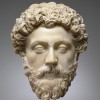
An awareness of our smallness may help to redeem us from the arrogance which is the besetting sin of the scientists.
Freeman Dyson (1923–2020) English-American theoretical physicist, mathematician, futurist
Infinite in All Directions, Part 1, ch. 1 “In Praise of Diversity” (1988)
(Source)
Based on a lecture on "Science and Religion," National Conference of Catholic Bishops, Detroit (Sep 1986).
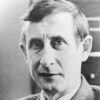
So you pretend to fear you may be hit
By pointed epigrams, the shafts of wit?
To seem a worthy foeman you aspire,
How vain alike the fear and the desire!
Against fiercest bulls the lion’s wrath may rise,
He scorns to war with puny butterflies.[Versus et breve vividumque carmen
in te ne faciam times, Ligurra,
et dignus cupis hoc metu videri.
sed frustra metuis cupisque frustra.
in tauros Libyci fremunt leones,
non sunt papilionibus molesti.]Martial (AD c.39-c.103) Spanish Roman poet, satirist, epigrammatist [Marcus Valerius Martialis]
Epigrams [Epigrammata], Book 12, epigram 61 (12.61.1-6) (AD 101) [tr. Pott & Wright (1921)]
(Source)
"To Ligurra". (Source (Latin)). Other translations:You dread my verse, and sting of wit,
Which put you in a shaking fit:
Would seem of rank to entertain
Such fears: your fears and hopes are vain.
'Tis at the bull that lions fly,
While rats run unregarded by.
[tr. Hay (1755)]Lest a little living song
Make thy fame, Ligurra, long;
Thou would'st have thy terror seen:
Vain thy wish as fear, I ween.
At the bulls the lions rise,
Never rush on butterflies.
[tr. Elphinston (1782), Book 3, ep. 31]You are afraid, Ligurra, lest I should compose verses on you, some short and pungent epigram, and you wish to be thought a proper object of such rear. But vain is your fear. and vain your desire! Libyan lions rush upon bulls; they do not hurt butterflies.
[tr. Bohn's Classical (1859)]You fear, Ligurra -- above all, you long --
That I should smite you with a singing song,
This dreadful honour you both fear and hope:
Both quite in vain: you fall below my scope.
The Libyan lion tears the roaring bull,
He does not harm the midge along the pool.
[tr. Stevenson (1884)]You are afraid, Ligurra, I should write verses on you, and some short and lively poem, and you long to be thought a man that justifies such fear. But vain is your fear, and your longing is vain. Against bulls Libyan lions rage, they are not hostile to butterflies.
[tr. Ker (1919)]You say you're scared I'm going to aim
A lampoon at you, something brief
And lurid, and half proudly claim
You're a marked man. Wishful belief!
Misapprehended apprehension!
African lions pay attention
To bulls, they don't hunt butterflies.
[tr. Michie (1972)]Ligurra's fearful I'll contrive
Some pungent piece, some sprightly ditty,
And longs to be considered worth it.
Longings baseless! Baseless fears!
The Libyan lion paws the Libyan bull
But does not bat the butterfly.
[tr. Whigham (1987)]You are afraid, Ligurra, of my writing verses against you, a brief, lively poem, and you long to seem worthy of such an apprehension. But idle is your fear and idle your desire. Libyan lions roar at bulls, they do not trouble butterflies.
[tr. Shackleton Bailey (1993)]Ah Ligurra, you’re quite afraid that I might write
About you. Some nasty, pithy, diamond-shard of spite
As is my wont. In fact, you quite like the idea.
Well, don’t get your hopes up I’ll gratify that fear.
I may be beastly but I claw with discretion,
No stepping on insects, flattered to be flattened.
[tr. Ynys-Mon (2007)]You fear I'll write a brief and lively poem
attacking you, Ligurra, and you yearn
to seem one who would merit such a fear.
Your wish is vain and so is your concern.
Lions of Libya roar at bulls; they leave
butterflies unmolested.
[tr. McLean (2014)]Ligurra, you fear that I might compose
Verses against you, a brief, intense poem --
Oh how you long to seem worthy of this fear.
But you fear in vain, in vain you long.
The Libyan lions growl at bulls;
They do not pester butterflies.
[tr. @sentantiq (2018)]
See also Ben Jonson (1572-1637):Sir Inigo doth fear it, as I hear,
And labors to seem worthy of that fear,
That I should write upon him some sharpe verse,
Able to eat into his bones, and pierce
Their marrow. Wretch! I quit thee of thy pain,
Thou'rt too ambitious, and dost fear in vain:
The Lybian lion hunts no butterflies,
He makes the camel and dull ass his prize.
It is a profound mistake to imagine that Christianity ever intended to dissipate the bewilderment and even the terror, the sense of our own nothingness, which come upon us when we think about the nature of things. It comes to intensify them. Without such sensations there is no religion. Many a man, brought up in the glib profession of some shallow form of Christianity, who comes through reading Astronomy to realise for the first time how majestically indifferent most reality is to man, and who perhaps abandons his religion on that account, may at that moment be having his first genuinely religious experience.
C. S. Lewis (1898–1963) English writer, literary scholar, lay theologian [Clive Staples Lewis]
Miracles (1947)
There is nothing more dreadful to an author than neglect, compared with which reproach, hatred, and opposition are names of happiness; yet this worse, this meanest fate, every one who dares to write has reason to fear.
Samuel Johnson (1709–1784) English writer, lexicographer, critic
Source (1750-03-24), The Rambler, No. 2
(Source)

Here is the secret: A man is a very small thing whilst he works by and for himself but an immense and omnipotent worker as soon as he puts himself right with the law of nature. … It is as when you come to a conflagration with your fire engine — no matter how good the machine, you will make but a feeble spray, whilst you draw from your own tub. But once you get your hose … dipped in the river, or in the harbor, and you can ump as long as the sea holds out.
Ralph Waldo Emerson (1803–1882) American essayist, lecturer, poet
Journal (1855)
"Notebook WO Liberty"