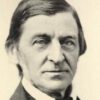
A great man shows his greatness by the way he treats little men.
Thomas Carlyle (1795–1881) Scottish essayist and historian
(Spurious)
(Source)
Attributed with this wording to Carlyle by Dale Carnegie in How to Win Friends And Influence People, ch. 1 (1936). Though Carlyle wrote numerous times on character and greatness, this phrase (or variants of it) cannot be found in Carlyle's known works.
The earliest attribution of something like this to Carlyle comes from a sermon by John Timothy Stone at the Northfield Young Women's Conference (1908-07-07): "You can discover a great man, or see a great man, by the way he treats little men."
It subsequently shows up, variously, mostly in religious contexts, e.g.:John Timothy Stone (as above) published Christianity in Action (1930), six years before Carnegie's book. In ch. 62 "Friends as You Go," he used the same phrasing Carnegie did six years later, again attributing it to Carlyle. It's been suggested Carnegie drew the quotation from Stone's book.
- "A great man shows his greatness by manner in which he treats little men." [Unattributed (1913)]
- "The measure of a great man is the way in which he treats little men." [George E. Mayer (1916-05-25)]
See also Eldridge (1948), which discusses numerous parallels to this sentiment.
Quotations about:
little people
Note not all quotations have been tagged, so Search may find additional quotes on this topic.
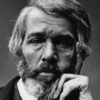
They exist without permission. They are hated, hunted and persecuted. They live in quiet desperation amongst the filth. And yet they are capable of bringing entire civilisations to their knees. If you are dirty, insignificant and unloved then rats are the ultimate role model.
Banksy (b. 1974?) England-based pseudonymous street artist, political activist, film director
Wall and Piece, “Rats” (2005)
(Source)

That’s why it’s called Establishment journalism. You concentrate on the people at the top, the people with power; you watch, you study how they make their moves, you get fascinated by it, and pretty soon you can’t see anything else — just the top, just the power. And the others, the people, the readers, matter so little that you don’t even bother to let them know what’s going on. You start to think like the people you cover. It can happen on any beat — business, police, politics, education. The stuff you want is from the top — you want to quote the chief, the superintendent, the chairman of the board. There are no reliable sources who earn less than $10,000 a year.
Molly Ivins (1944–2007) American writer, political columnist [Mary Tyler Ivins]
Essay (1973-01), “Pitfalls of Reporting in the Lone Star State,” Houston Journalism Review
(Source)
Collected in Molly Ivins Can't Say That, Can She? (1991).

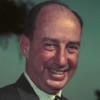
The government must be the trustee for the little man because no one else will be. The powerful can usually help themselves — and frequently do.
Adlai Stevenson II (1900–1965) American politician, diplomat, statesman
Speech (1955-10-29), “The Crisis in Agriculture,” Democratic Rally, Duluth, Minnesota
(Source)

A foolish consistency is the hobgoblin of little minds, adored by little statesmen and philosophers and divines.
Ralph Waldo Emerson (1803–1882) American essayist, lecturer, poet
Essay (1841), “Self-Reliance,” Essays: First Series, No. 2
(Source)
This thought continues here.
This essay was inspired by his reading of Walter Savage Landor in 1833, with passages pulled from his lecture "Individualism," last in his course on "The Philosophy of History" (1836–1837), with other passages from the lectures "School," "Genius," and "Duty" in his course on "Human Life" (1838–1839).