A great man shows his greatness by the way he treats little men.
Thomas Carlyle (1795–1881) Scottish essayist and historian
(Spurious)
(Source)
Attributed with this wording to Carlyle by Dale Carnegie in How to Win Friends And Influence People, ch. 1 (1936). Though Carlyle wrote numerous times on character and greatness, this phrase (or variants of it) cannot be found in Carlyle's known works.
The earliest attribution of something like this to Carlyle comes from a sermon by John Timothy Stone at the Northfield Young Women's Conference (1908-07-07): "You can discover a great man, or see a great man, by the way he treats little men."
It subsequently shows up, variously, mostly in religious contexts, e.g.:John Timothy Stone (as above) published Christianity in Action (1930), six years before Carnegie's book. In ch. 62 "Friends as You Go," he used the same phrasing Carnegie did six years later, again attributing it to Carlyle. It's been suggested Carnegie drew the quotation from Stone's book.
- "A great man shows his greatness by manner in which he treats little men." [Unattributed (1913)]
- "The measure of a great man is the way in which he treats little men." [George E. Mayer (1916-05-25)]
See also Eldridge (1948), which discusses numerous parallels to this sentiment.
Quotations about:
little guy
Note not all quotations have been tagged, so Search may find additional quotes on this topic.
A good-tempered antinomianism rather of Dickens’s type is one of the marks of Western popular culture. One sees it in folkstories and comic songs, in dream-figures like Mickey Mouse and Pop-eye the Sailor (both of them variants of Jack the Giant-killer), in the history of working-class Socialism, in the popular protests (always ineffective but not always a sham) against imperialism, in the impulse that makes a jury award excessive damages when a rich man’s car runs over a poor man; it is the feeling that one is always on the side of the underdog, on the side of the weak against the strong.
George Orwell (1903–1950) English journalist, essayist, writer [pseud. of Eric Arthur Blair]
Essay (1939), “Charles Dickens,” sec. 6, Inside the Whale (1940-03-11)
(Source)
Orwell frequently used the term "antinomianism," representing defiance of social mores and rules.
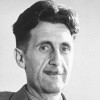
The government must be the trustee for the little man because no one else will be. The powerful can usually help themselves — and frequently do.
Adlai Stevenson II (1900–1965) American politician, diplomat, statesman
Speech (1955-10-29), “The Crisis in Agriculture,” Democratic Rally, Duluth, Minnesota
(Source)