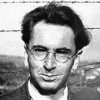
When I speak of the banality of evil, I do so only on the strictly factual level, pointing to a phenomenon which stared one in the face at the trial. Eichmann was not Iago and not Macbeth, and nothing would have been farther from his mind than to determine with Richard III “to prove a villain.” Except for an extraordinary diligence in looking out for his personal advancement, he had no motives at all. And this diligence in itself was in no way criminal; he certainly would never have murdered his superior in order to inherit his post. He merely, to put the matter colloquially, never realized what he was doing.
Hannah Arendt (1906–1975) German-American philosopher, political theorist
Eichmann in Jerusalem: A Report on the Banality of Evil, Postscript (1963)
(Source)
Quotations about:
Holocaust
Note not all quotations have been tagged, so Search may find additional quotes on this topic.
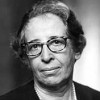
Why were there so few? Was it that perilous to oppose evil? Was it really impossible to help? Was it really impossible to resist organized, systemitized, legalized cruelty and murder by showing concern for the victims, for one victim? Let us remember: What hurts the victim most is not the cruelty of the oppressor, but the silence of the bystander.

In the discussion of these matters, and especially in the general moral denunciation of the Nazi crimes, it is almost always overlooked that the true moral issue did not arise with the behavior of the Nazis but of those who only “coordinated” themselves and did not act out of conviction. It is not too difficult to see and even to understand how someone may decide “to prove a villain” and, given the opportunity, to try out a reversal of the Decalogue, starting with the command: “Thou shalt kill” and ending with a precept: “Thou shalt lie.”
Evil is not a political or scientific category. But, after Auschwitz, who could doubt that it exists, and that it manifested itself in the hate-driven genocide carried out by the Nazi regime?
However, noting this fact does not permit us to circumvent our responsibility by blaming everything on a demonic Hitler. The evil manifested in the Nazi ideology was not without its precursors. There was a tradition behind the rise of this brutal ideology and the accompanying loss of moral inhibition.
Above all, it needs to be said that the Nazi ideology was something that people supported at the time and that they took part in putting into effect.
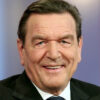
Gerhard "Gerd" Schröder (b. 1944) German politician, Chancellor (1998–2005), lobbyist
Speech, Sixtieth Anniversary of the Liberation of Auschwitz, Berlin (25 Jan 2005)
(Source)
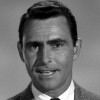
All the Dachaus must remain standing. The Dachaus, the Belsens, the Buchenwalds, the Auschwitzes — all of them. They must remain standing because they are a monument to a moment in time when some men decided to turn the Earth into a graveyard. Into it they shoveled all of their reason, their logic, their knowledge, but worst of all, their conscience. And the moment we forget this, the moment we cease to be haunted by its remembrance, then we become the gravediggers.
Rod Serling (1924–1975) American screenwriter, playwright, television producer, narrator
The Twilight Zone, 3×09 “Deaths-Head Revisited,” Epilogue (10 Nov 1961)
For the moral point of this matter is never reached by calling what happened by the name of “genocide” or by counting the many millions of victims: the extermination of whole peoples had happened before in antiquity, as well as in modern colonization. It is reached only when we realize that this happened within the frame of a legal order and that the cornerstone of this “new law” consisted of the command “Thou shalt kill,” not thy enemy but innocent people who were not even potentially dangerous, and not for any reason of necessity but, on the contrary, even against all military and other utilitarian considerations.
The trouble with Eichmann was precisely that so many were like him, and that the many were neither perverted nor sadistic, that they were, and still are, terribly and terrifyingly normal. From the viewpoint of our legal institutions and of our moral standards of judgment, this normality was much more terrifying than all the atrocities put together, for it implied — as had been said at Nuremberg over and over again by the defendants and their counsels — that this new type of criminal, who is in actual fact hostis generis humani, commits his crimes under circumstances that make it well-nigh impossible for him to know or to feel that he is doing wrong.
Hannah Arendt (1906–1975) German-American philosopher, political theorist
Eichmann in Jerusalem: A Report on the Banality of Evil, Epilogue (1963)
(Source)
Hostis humani generis (Latin for "enemy of humanity") was an admiralty legal term indicating that slavers, pirates, and terrorists were held beyond legal protection and were a legitimate target of any nation.
For the lesson of such stories is simple and within everybody’s grasp. Politically speaking, it is that under conditions of terror, most people will comply but some people will not, just as the lesson of the countries to which the Final Solution was proposed is that “it could happen” in most places but it did not happen everywhere. Humanly speaking, no more is required, and no more can reasonably be asked, for this planet to remain a place fit for human habitation.
Hannah Arendt (1906–1975) German-American philosopher, political theorist
Eichmann in Jerusalem: A Report on the Banality of Evil, ch. 14 (1963)
(Source)
Speaking of resistance to Nazi atrocities.
And just as the law in civilized countries assumes that the voice of conscience tells everybody, “Thou shalt not kill,” even though man’s natural desires and inclinations may at times be murderous, so the law of Hitler’s land demanded that the voice of conscience tell everybody: “Thou shalt kill,” although the organizers of the massacres knew full well that murder is against the normal desires and inclinations of most people. Evil in the Third Reich had lost the quality by which most people recognize it — the quality of temptation.
Hannah Arendt (1906–1975) German-American philosopher, political theorist
Eichmann in Jerusalem: A Report on the Banality of Evil, ch. 8 (1963)
(Source)
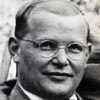
There are three possible ways in which the church can act toward the state: in the first place, as has been said, it can ask the state whether its actions are legitimate and in accordance with its character as state, i.e., it can throw the state back on its responsibilities. Secondly, it can aid the victims of state action. The church has an unconditional obligation to the victims of any ordering society, even if they do not belong to the Christian community. “Do good to all men.” In both these course of action, the church serves the free state in its free way, and at times when laws are changed the church may in no way withdraw itself from these two tasks.
The third possibility is not just to bandage the victims under the wheel, but to put a spoke in the wheel itself. Such action would be direct political action, and is only possible and required when the church sees the state fail in its function of creating law and order, i.e., when it sees the state unrestrainedly bring about too much or too little law and order.
Dietrich Bonhoeffer (1906–1945) German Lutheran pastor, theologian, martyr
“The Church and the Jewish Question” (1933)
(Source)
On the need for Christian clergy to actively oppose the Nazi regime's persecution of Jews.
When I found the first camp like that I think I never was so angry in my life. The bestiality displayed there was not merely piled up bodies of people that had starved to death, but to follow out the road and see where they tried to evacuate them so they could still work, you could see where they sprawled on the road. You could go to their burial pits and see horrors that really I wouldn’t even want to begin to describe. I think people ought to know about such things. It explains something of my attitude toward the German war criminal. I believe he must be punished, and I will hold out for that forever.
Dwight David Eisenhower (1890–1969) American general, US President (1953–61)
Press Conference (18 Jun 1945)
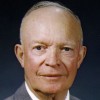
But the most interesting — although horrible — sight that I encountered during the trip was a visit to a German internment camp near Gotha. The things I saw beggar description. While I was touring the camp I encountered three men who had been inmates and by one ruse or another had made their escape. I interviewed them through an interpreter. The visual evidence and the verbal testimony of starvation, cruelty and bestiality were so overpowering as to leave me a bit sick. In one room, where there were piled up twenty or thirty naked men, killed by starvation, George Patton would not even enter. He said he would get sick if he did so. I made the visit deliberately, in order to be in position to give first-hand evidence of these things if ever, in the future, there develops a tendency to charge these allegations merely to “propaganda”.
Dwight David Eisenhower (1890–1969) American general, US President (1953–61)
Letter to George C. Marshall (15 Apr 1945)
Referring to the Ohrdruf concentration camp, part of the Buchenwald network of camps. It was the first camp liberated by US troops.
What stuck in the minds of these men who had become murderers was simply the notion of being involved in something historic, grandiose, unique (“a great task that occurs once in two thousand years”), which must therefore be difficult to bear. This was important, because the murderers were not sadists or killers by nature; on the contrary, a systematic effort was made to weed out all those who derived physical pleasure from what they did. The troops of the Einsatzgruppen had been drafted from the Armed S.S., a military unit with hardly more crimes in its record than any ordinary unit of the German Army, and their commanders had been chosen by Heydrich from the S.S. élite with academic degrees. Hence the problem was how to overcome not so much their conscience as the animal pity by which all normal men are affected in the presence of physical suffering. The trick used by Himmler — who apparently was rather strongly afflicted by these instinctive reactions himself — was very simple and probably very effective; it consisted in turning these instincts around, as it were, in directing them toward the self. So that instead of saying: What horrible things I did to people!, the murderers would be able to say: What horrible things I had to watch in the pursuance of my duties, how heavily the task weighed upon my shoulders!
Hannah Arendt (1906–1975) German-American philosopher, political theorist
Eichmann in Jerusalem: A Report on the Banality of Evil, ch. 6 (1963)
(Source)
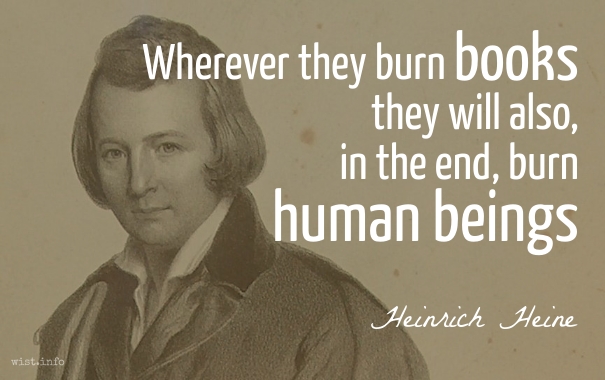
Wherever they burn books they will also, in the end, burn human beings.
[Dort, wo man Bücher verbrennt, verbrennt man auch am Ende Menschen.]
Heinrich Heine (1797–1856) German poet and critic
Almansor: A Tragedy, l. 245 (1823)
Alt trans:
- "Where they burn books, at the end they also burn people."
- "Where they burn books, they will also burn people."
- "It is there, where they burn books, that eventually they burn people."
- "Where they burn books, so too will they in the end burn human beings."
- "Where they burn books, they also burn people."
- "Them that begin by burning books, end by burning men."
- "Wherever books are burned, sooner or later men are also burned."

Since Auschwitz we know what man is capable of. And since Hiroshima we know what is at stake.
Viktor Frankl (1905–1997) German-American psychologist, writer
Man’s Search for Meaning (1959)