SIR THOMAS MORE: Say now the king
(As he is clement, if th’ offender mourn)
Should so much come to short of your great trespass
As but to banish you, whether would you go?
What country, by the nature of your error,
Should give you harbor? Go you to France or Flanders,
To any German province, to Spain or Portugal,
Nay, any where that not adheres to England, —
Why, you must needs be strangers. Would you be pleased
To find a nation of such barbarous temper,
That, breaking out in hideous violence,
Would not afford you an abode on earth,
Whet their detested knives against your throats,
Spurn you like dogs, and like as if that God
Owed not nor made not you, nor that the claimants
Were not all appropriate to your comforts,
But chartered unto them, what would you think
To be thus used? This is the strangers’ case;
And this your mountanish inhumanity.William Shakespeare (1564–1616) English dramatist and poet
Sir Thomas More, Act 2, sc. 4, l. 105ff (c. 1592)
(Source)
Quelling rioting Englishmen who were demanding the expulsion of Flemish immigrants, telling them to consider what they themselves might do, and the conditions they might face, if they were forced to leave England.
The play was written by Anthony Munday and Henry Chettle, with revisions and edits by multiple writers. This particular scene and monologue are in what is considered to be Shakespeare's own hand.
Quotations about:
inhumanity
Note not all quotations have been tagged, so Search may find additional quotes on this topic.

And, for an instant, she stared directly into those soft blue eyes and knew, with an instinctive mammalian certainty, that the exceedingly rich were no longer even remotely human.
William Gibson (b. 1948) American-Canadian speculative fiction novelist and essayist
Count Zero, ch. 2 (1986)
(Source)
He was about to urge her to let well alone and trust heaven to do justice, but then he had a sudden vision of heaven’s justice as the Church sometimes applied it, in good but dreadful faith, with all the virtuous narrowness and pitilessness of minds blind and deaf to the infinite variety of humankind, its failings, and aspirations, and needs, and forgetful of all the Gospel reminders concerning publicans and sinners.
Ellis Peters (1913–1995) English writer, translator [pseud. of Edith Mary Pargeter, who also wrote under the names John Redfern, Jolyon Carr, Peter Benedict]
Cadfael Chronicles No. 20, The Holy Thief, ch. 11 (1992)
(Source)

But they that breake bands of civilitie,
And wicked customes make, those doe defame
Both noble armes and gentle curtesie.
No greater shame to man than inhumanitie.Edmund Spenser (c. 1552–1599) English poet
The Faerie Queene, Book 6, Canto 1, st. 26 (1589-96)
(Source)

It can truly be said: Men are the devils of the earth, and the animals are the tormented souls.
[Man möchte wahrlich sagen: die Menschen sind die Teufel der Erde und die Tiere die geplagten Seelen]
Arthur Schopenhauer (1788–1860) German philosopher
Parerga and Paralipomena, Vol. 2, ch. 15 “On Religion [Ueber Religion], § 179 “The Christian System [Über das Christenthum]” (1851) [tr. Hollingdale (1970)]
(Source)
(Source (German)). Other translation:One might say with truth, Mankind are the devils of the earth, and the animals the souls they torment.
[tr. Saunders (1890)]

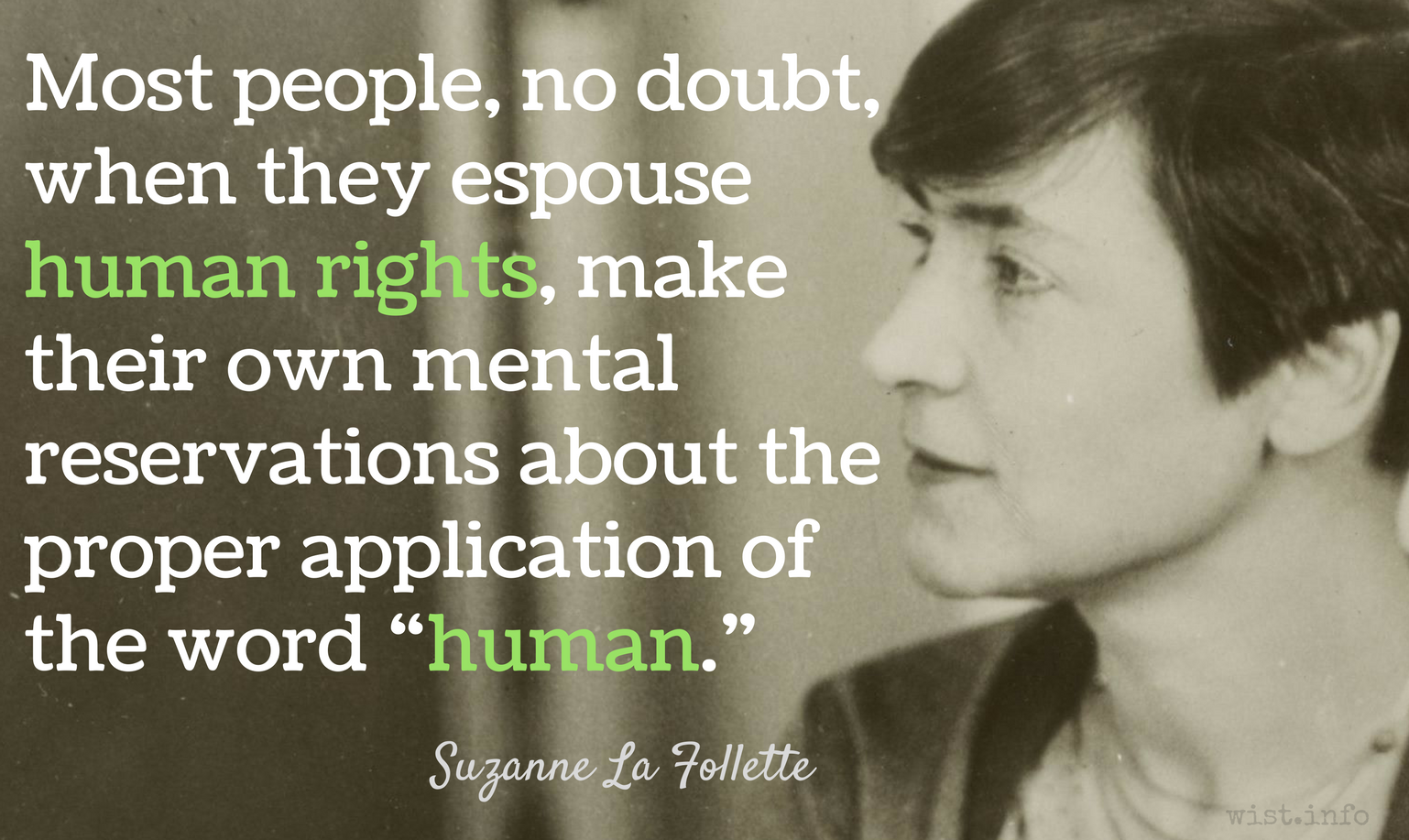
Most people, no doubt, when they espouse human rights, make their own mental reservations about the proper application of the word “human.”
Suzanne La Follette (1893–1983) American journalist, author, feminist
Concerning Women, “The Beginnings of Emancipation” (1926)
(Source)

It’s said that science will dehumanize people and turn them into numbers. That’s false, tragically false. Look for yourself. This is the concentration camp and crematorium at Auschwitz. This is where people were turned into numbers. Into this pond were flushed the ashes of some four million people. And that was not done by gas. It was done by arrogance, it was done by dogma, it was done by ignorance. When people believe that they have absolute knowledge, with no test in reality, this is how they behave. This is what men do when they aspire to the knowledge of gods.
Jacob Bronowski (1908–1974) Polish-English humanist and mathematician
The Ascent of Man, Ep. 11 “Knowledge or Certainty” (1973)
When I found the first camp like that I think I never was so angry in my life. The bestiality displayed there was not merely piled up bodies of people that had starved to death, but to follow out the road and see where they tried to evacuate them so they could still work, you could see where they sprawled on the road. You could go to their burial pits and see horrors that really I wouldn’t even want to begin to describe. I think people ought to know about such things. It explains something of my attitude toward the German war criminal. I believe he must be punished, and I will hold out for that forever.
Dwight David Eisenhower (1890–1969) American general, US President (1953–61)
Press Conference (18 Jun 1945)
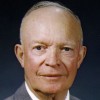
But the most interesting — although horrible — sight that I encountered during the trip was a visit to a German internment camp near Gotha. The things I saw beggar description. While I was touring the camp I encountered three men who had been inmates and by one ruse or another had made their escape. I interviewed them through an interpreter. The visual evidence and the verbal testimony of starvation, cruelty and bestiality were so overpowering as to leave me a bit sick. In one room, where there were piled up twenty or thirty naked men, killed by starvation, George Patton would not even enter. He said he would get sick if he did so. I made the visit deliberately, in order to be in position to give first-hand evidence of these things if ever, in the future, there develops a tendency to charge these allegations merely to “propaganda”.
Dwight David Eisenhower (1890–1969) American general, US President (1953–61)
Letter to George C. Marshall (15 Apr 1945)
Referring to the Ohrdruf concentration camp, part of the Buchenwald network of camps. It was the first camp liberated by US troops.
The sick in soul insist that it is humanity that is sick, and they are the surgeons to operate on it. They want to turn the world into a sickroom. And once they get humanity strapped to the operating table, they operate on it with an ax.
Eric Hoffer (1902–1983) American writer, philosopher, longshoreman
Passionate State of Mind, Aphorism 104 (1955)
(Source)
All propaganda directed against an opposing group has but one aim: to substitute diabolical abstractions for concrete persons. The propagandist’s purpose is to make one set of people forget that certain other sets of people are human. By robbing them of their personality, he puts them outside the pale of moral obligation. Mere symbols can have no rights — particularly when that of which they are symbolical is, by definition, evil.
Aldous Huxley (1894–1963) English novelist, essayist and critic
Essay (1936), “Words and Behaviour,” The Olive Tree, and Other Essays
(Source)

No loss of flood and lightning, no destruction of cities and temples by hostile forces of nature, has deprived man of so many noble lives and impulses as those which his intolerance has destroyed.

Since Auschwitz we know what man is capable of. And since Hiroshima we know what is at stake.
Viktor Frankl (1905–1997) German-American psychologist, writer
Man’s Search for Meaning (1959)