I found one day in school a boy of medium size ill-treating a smaller boy. I expostulated, but he replied: “The bigs hit me, so I hit the babies; that’s fair.” In these words he epitomized the history of the human race.
Bertrand Russell (1872–1970) English mathematician and philosopher
Education and the Social Order [Education and the Modern World], ch. 2 “The Negative Theory of Education” (1932)
(Source)
Quotations about:
abuse
Note not all quotations have been tagged, so Search may find additional quotes on this topic.

At least let no one argue that, because an abuse cannot be suppressed without injuring those who profit from it, the fact that it has existed for a time gives it the right to last forever.
[À moins qu’on ne prétende que, parce qu’un abus ne peut être détruit sans froisser ceux qui en profitent, il suffit qu’il existe un moment pour qu’il doive durer toujours.]
Frédéric Bastiat (1801–1850) French philosopher, economist, politician
Economic Sophisms [Sophismes Économiques], 1st Series, ch. 20 “Human Labor, National Labor [Travail Humain, Travail National]” (1845) [tr. Goddard (1964)]
(Source)
See Heinlein (1939).
(Source (French)). Other translations:It is a rather singular argument to maintain that, because an abuse which has been permitted a temporary existence, cannot be corrected without wounding the interests of those who have profited by it, it ought, therefore, to claim perpetual duration.
[tr. McCord (1848)]At all events, let no one pretend that because an abuse cannot be done away with, without inconvenience to those who profit by it, what has been suffered to exist for a time should be allowed to exist for ever.
[tr. Stirling (1873)]
The worst thing about sex is that we use it to hurt each other. It ought never to hurt; it should bring happiness, or at least, pleasure.
Robert A. Heinlein (1907–1988) American writer
Stranger in a Strange Land, ch. 33 [Jubal] (1961; 1991 ed.)
(Source)
The text is the same in both the originally published and uncut versions.
In civilised life domestic hatred usually expresses itself by saying things which would appear quite harmless on paper (the words are not offensive) but in such a voice, or at such a moment, that they are not far short of a blow in the face.
C. S. Lewis (1898–1963) English writer, literary scholar, lay theologian [Clive Staples Lewis]
The Screwtape Letters, Letter 3 (1942)
(Source)

Scorn Affronts: let Dogs Bark, and Asses Kick.
Thomas Fuller (1654–1734) English physician, preacher, aphorist, writer
Introductio ad Prudentiam, Vol. 1, # 34 (1725)
(Source)

It is characteristic of this form of punishment, inspired by all that is pitiless, that is to say brutalizing, that gradually, by a process of mindless erosion, it turns a man into an animal, sometimes a ferocious one.
[Le propre des peines de cette nature, dans lesquelles domine ce qui est impitoyable, c’est-à-dire ce qui est abrutissant, c’est de transformer peu à peu, par une sorte de transfiguration stupide, un homme en une bête fauve, quelquefois en une bête féroce.]Victor Hugo (1802–1885) French writer, journalist, human rights activist, politician
Les Misérables, Part 1 “Fantine,” Book 2 “The Fall,” ch. 7 (1.2.7) (1862) [tr. Denny (1976)]
(Source)
On the degradation of Jean Valjean while serving his hard labor sentence.
(Source (French)). Other translations:The peculiarity of punishment of this kind, in which what is pitiless, that is to say, what is brutalising, predominates, is to transform little by little, by a slow stupefaction, a man into an animal, sometimes into a wild beast.
[tr. Wilbour (1862)]The peculiarity of punishments of this nature, in which naught but what is pitiless, that is to say, brutalizing, prevails, is gradually, and by a species of stupid transfiguration, to transform a man into a wild beast, at times a ferocious beast.
[tr. Wraxall (1862)]The peculiarity of pains of this nature, in which that which is pitiless -- that is to say, that which is brutalizing -- predominates, is to transform a man, little by little, by a sort of stupid transfiguration, into a wild beast; sometimes into a ferocious beast.
[tr. Hapgood (1887)]The peculiarity of punishment of this kind, in which the pitiless or brutalizing part predominates, is to transform gradually by a slow numbing process a man into an animal, sometimes into a wild beast.
[tr. Wilbour/Fahnestock/MacAfee (1987)]It is in the nature of such punishment -- in which what prevails is the pitiless, in other words, the brutalizing -- to transform a man little by little, by a kind of stupid transfiguration, into a wild beast, sometimes a ferocious beast.
[tr. Donougher (2013)]
To sacrifice the principles of manners, which require compassion and respect, and bat people over the head with their ignorance of etiquette rules they cannot be expected to know is both bad manners and poor etiquette. That social climbers and twits have misused etiquette throughout history should not be used as an argument for doing away with it.
Judith Martin (b. 1938) American author, journalist, etiquette expert [a.k.a. Miss Manners]
Miss Manners Rescues Civilization, ch. 1 “The Case Against Etiquette” (1996)
(Source)

When, O Catiline, do you mean to cease abusing our patience? How long is that madness of yours still to mock us? When is there to be an end of that unbridled audacity of yours, swaggering about as it does now?
[Quo usque tandem abutere, Catilina, patientia nostra? Quam diu etiam furor iste tuus nos eludet? Quem ad finem sese effrenata iactabit audacia?]
Marcus Tullius Cicero (106–43 BC) Roman orator, statesman, philosopher
Orationes in Catilinam [Catilinarian Orations], No. 1, § 1, cl. 1 (1.1.1) (63-11-08 BC) [tr. Yonge (1856)]
(Source)
Urging Catiline, leader of a conspiracy against the Roman government, to leave the city.
(Source (Latin)). Alternate translations:How long, Catiline, will you abuse our patience? How long shall that fury of yours hector down even us too? To what bound shall your unbridled Audaciousness fly out?
[tr. Wase (1671)]How long, Catiline, will you dare to abuse our patience? how long are we to be the sport of your frantic fury? to what extremity do you mean to carry your unbridled insolence?
[tr. Sydney (1795)]How far at length, O Catiline! wilt thou trifle with our patience? How long still shall that frenzy of thine baffle us? To what limit shall they uncurbed effrontery boastfully display itself?
[tr. Mongan (1879)]How far at length wilt thou abuse with our patience, O Catiline? How long also that thy fury will elude us? To what end thy unbridled audacity will boast itself?
[tr. Underwood (1885)]How much further, Catilina, will you carry your abuse of our forbearance? How much longer will your reckless temper baffle our restraint? What bounds will you set to this display of your uncontrolled audacity?
[tr. Blakiston (1894)]How far at length will you abuse, O Catiline, our patience? How long also will that fury of yours elude us? To what end will that unbridled audacity flaunt itself?
[tr. Dewey (1916)]In the name of heaven, Catilina, how long do you propose to exploit our patience? Do you really suppose that your lunatic activities are going to escape our retaliation for evermore? Are there to be no limits to this audacious, uncontrollable swaggering?
[tr. Grant (1960)]How far will you continue to abuse our patience, Catiline? For how much longer will that rage of yours make a mockery of us? To what point will your unbridled audacity show itself?
[IB Notes]
Sticks and stones may break my bones, but words will always hurt me. Bones mend and become actually stronger in the very place they were broken and where they have knitted up; mental wounds can grind and ooze for decades and be re-opened by the quietest whisper.

I cannot think well of a man who sports with any woman’s feelings; and there may often be a great deal more suffered than a stander-by can judge of.

When one considers what adults in their relationships can do to each other, it is frightening to think of what an adult can do to a child.
Marcelene Cox (1900–1998) American writer, columnist, aphorist
“Ask Any Woman” column, Ladies’ Home Journal (1946-03)
(Source)

While then the worst man is he who displays vice both in his own affairs and in his dealings with his friends, the best man is not he who displays virtue in his own affairs merely, but he who displays virtue towards others; for this is the hard thing to do.
[κάκιστος μὲν οὖν ὁ καὶ πρὸς αὑτὸν καὶ πρὸς τοὺς φίλους χρώμενος τῇ μοχθηρίᾳ, ἄριστος δ᾽ οὐχ ὁ πρὸς αὑτὸν τῇ ἀρετῇ ἀλλὰ πρὸς ἕτερον: τοῦτο γὰρ ἔργον χαλεπόν.]
Aristotle (384–322 BC) Greek philosopher
Nicomachean Ethics [Ἠθικὰ Νικομάχεια], Book 5, ch. 1 (5.1.18) / 1130a.5-8 (c. 325 BC) [tr. Peters (1893)]
(Source)
(Source (Greek)). Other translations:Now he is the basest of men who practises vice not only in his own person, but towards his friends also; but he the best who practises virtue not merely in his own person but towards his neighbour, for this is a matter of some difficulty.
tr. Chase (1847), ch. 2]Worst of men is he whose wickedness affects not himself alone but his fellow with him; best of men is he whose virtue affects not himself alone but his fellow with him; for such a one has in all sooth a hard task.
[tr. Williams (1869)]As then the worst of men is he who exhibits his depravity both in his own life and in relation to his friends, the best of men is he who exhibits his virtue not in his own life only but in relation to others; for this is a difficult task.
[tr. Welldon (1892)]Now the worst man is he who exercises his wickedness both towards himself and towards his friends, and the best man is not he who exercises his virtue towards himself but he who exercises it towards another; for this is a difficult task.
[tr. Ross (1908)]As then the worst man is he who practises vice towards his friends as well as in regard to himself, so the best is not he who practises virtue in regard to himself but he who practises it towards others; for that is a difficult task.
[tr. Rackham (1934)]The worst sort of person, then, is the one who uses his depravity both in relation to himself and in relation to his friends, whereas the best sort is not the one who uses his virtue in relationship to himself but the one who uses it in relation to another person, since that is difficult work.
[tr. Reeve (1948)]The worst man, then, is the one whose evil habit affects both himself and his friends, while the best man is one whose virtue is directed not to himself, but to others, for this is a difficult task.
[tr. Apostle (1975)]So the worst person is the one who exercises his wickedness towards both himself and his friends, and the best is not the one who exercises his virtue towards himself but the one who exercises it towards another; because this is a difficult task.
[tr. Thomson/Tredennick (1976)]So the worst person is the one who exercises wickedness in relation to himself and in relation to his friends, and the best is not he who exercises his virtue in relation to himself but the one who exercises it in relation to others, since this is a difficult thing to do.
[tr. Crisp (2000)]Worst, then, is he who treats both himself and his friends in a corrupt way, but best is he who makes use of virtue not in relation to himself but in relation to another. For this is a difficult task.
[tr. Bartlett/Collins (2011)]
Chickenshit refers to behavior that makes military life worse than it need be: petty harassment of the weak by the strong; open scrimmage for power and authority and prestige; sadism thinly disguised as necessary discipline; a constant “paying off of old scores”; and insistence on the letter rather than the spirit of ordinances. Chickenshit is so called — instead of horse- or bull- or elephant-shit — because it is small-minded and ignoble and takes the trivial seriously. Chickenshit can be recognized instantly because it never has anything to do with winning the war.
Paul Fussell (1924–2012) American cultural and literary historian, author, academic
“Chickenshit: An Anatomy,” Wartime: Understanding and Behavior in the Second World War (1989)
(Source)
Sometimes misattributed to historian Stephen Ambrose, who used part of it (with attribution) in his Band of Brothers (1992).

When public men indulge themselves in abuse, when they deny others a fair trial, when they resort to innuendo and insinuation, to libel, scandal, and suspicion, then our democratic society is outraged, and democracy is baffled. It has no apparatus to deal with the boor, the liar, the lout, and the antidemocrat in general.
J. William Fulbright (1905–1995) American politician
Speech, US Senate (2 Feb 1954)
(Source)
In the Congressional Record, Vol. 100, p. 1105.

It might be argued that a man who employs this kind of skill with words for immoral purposes can do great harm, but the same goes for everything good except for virtue, and it goes above all for the most valuable things, such as strength, health, and generalship. After all, moral use of these things can do the greatest good, and immoral use the greatest harm.
[εἰ δ᾽ ὅτι μεγάλα βλάψειεν ἂν ὁ χρώμενος ἀδίκως τῇ τοιαύτῃ δυνάμει τῶν λόγων, τοῦτό γε κοινόν ἐστι κατὰ πάντων τῶν ἀγαθῶν πλὴν ἀρετῆς, καὶ μάλιστα κατὰ τῶν χρησιμωτάτων, οἷον ἰσχύος ὑγιείας πλούτου στρατηγίας: τούτοις γὰρ ἄν τις ὠφελήσειεν τὰ μέγιστα χρώμενος δικαίως καὶ βλάψειεν ἀδίκως.]
Aristotle (384–322 BC) Greek philosopher
Rhetoric [Ῥητορική; Ars Rhetorica], Book 1, ch. 1, sec. 13 (1.1.13) / 1355b (350 BC) [tr. Waterfield (2018)]
(Source)
(Source (Greek)). Other translations:But if it be urged that a man, using such a power of words for an unjust purpose, would do much harm, this is common to all the goods, with the exception of virtue; and especially in the case of the most useful, as for instance strength, health, wealth, and command: for by the right use of these a man may do very much good, and by the wrong very much harm.
[Source (1847)]If, however, any one should object that a person, unfairly availing himself of such powers of speaking, may be, in a very high degree, injurious; this is an objection which will like in some degree against every good indiscriminately, except virtue; and with especial force against those which are most advantageous, as strength, health, wealth, and generalship. Because employing these fairly, a person may be beneficial in points of the highest importance; and by employing them unfairly may be equally injurious.
[tr. Buckley (1850)]If it is objected that the abuser of the rhetorical faculty can do great mischief, this, at any rate, applies to all good things except virtue, and especially to the most useful things, as strength, health, wealth, generalship. By the right use of these things a man may do the greatest good, and by the unjust use, the greatest mischief.
[tr. Jebb (1873)]And if it be objected that one who uses such power of speech unjustly might do great harm, that is a charge which may be made in common against all good things except virtue, and above all against the things that are most useful, as strength, health, wealth, generalship. A man can confer the greatest of benefits by a right use of these, and inflict the greatest of injuries by using them wrongly.
[tr. Roberts (1924)]If it is argued that one who makes an unfair use of such faculty of speech may do a great deal of harm, this objection applies equally to all good things except virtue, and above all to those things which are most useful, such as strength, health, wealth, generalship; for as these, rightly used, may be of the greatest benefit, so, wrongly used, they may do an equal amount of harm.
[tr. Freese (1926)]And if someone using such a capacity for argument should do great harm, this at least, is common to all good things -- except virtue -- and especially so in the case of the most useful things, such as strength, health, wealth, and generalship. For someone using these things justly would perform the greatest benefits -- and unjustly, the greatest harm.
[tr. Bartlett (2019)]
Where does discipline end? Where does cruelty begin? Somewhere between these, thousands of children inhabit a voiceless hell.
[Où finit la correction? Où commence le martyre? Dans l’entre-deux, des milliers d’enfants peuplent un enfer qui ne fait pas de bruit.]
François Mauriac (1885–1970) French author, critic, journalist
Second Thoughts: Reflections on Literature and on Life (1961) [tr. Foulke]

Now the abuse of authority can be of two kinds. First, when what is commanded by the ruler is contrary to the purpose for which the ruler was appointed: for example, if some sinful act is commanded contrary to the virtue which the ruler is ordained to foster and preserve. In this case, not only is one not bound to obey the ruler, but one is bound not to obey him, as in the case of the holy martyrs who suffered death rather than obey the ungodly commands of tyrants.
Second, when what is demanded goes beyond what the order of authority can require: if, for example, a master were to exact a payment which a servant is not bound to give, or something of the kind. In this case the subject is not bound to obey; nor, however, is he bound not to obey.
Thomas Aquinas (1225–1274) Italian friar, philosopher, theologian
Commentary on the Sentences of Peter Lombard [Scriptum super libros Sententiarium], Book 2, dist. 44, quest. 2, art. 2 (1252-56) [tr. Dyson (2002)]
(Source)
Alt. trans. [Dawson]:With regard to the abuse of authority, this also may come about in two ways. First, when what is ordered by an authority is opposed to the object for which that authority was constituted (if, for example, some sinful action is commanded or one which is contrary to virtue, when it is precisely for the protection and fostering of virtue that authority is instituted). In such a case, not only is there no obligation to obey the authority, but one is obliged to disobey it, as did the holy martyrs who suffered death rather than obey the impious commands of tyrants.
Secondly, when those who bear such authority command things which exceed the competence of such authority; as, for example, when a master demands payment from a servant which the latter is not bound to make, and other similar cases. In this instance the subject is free to obey or disobey.

The man that lays his hand on woman,
Save in the way of kindness, is a wretch
Whom ’twere gross flattery to name a coward.
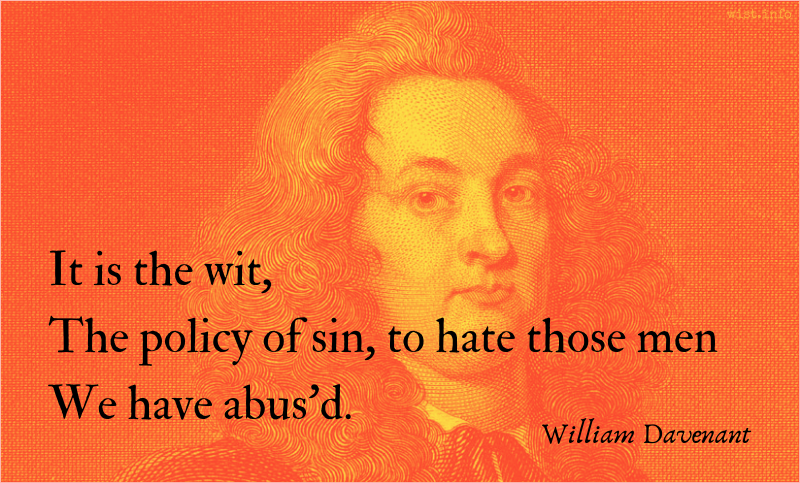
It is the wit,
The policy of sin, to hate those men
We have abus’d.
William Davenant (1606–1668) English poet and playwright [a.k.a. William D'Avenant]
The Just Italian, Act 3, sc. 1 [Sciolto] (1630)
(Source)

No one can be as calculatedly rude as the British, which amazes Americans, who do not understand studied insult and can only offer abuse as a substitute.
Paul Gallico (1897–1976) American author, sports journalist
In the New York Times (14 Jan 1962)
(Source)

It can truly be said: Men are the devils of the earth, and the animals are the tormented souls.
[Man möchte wahrlich sagen: die Menschen sind die Teufel der Erde und die Tiere die geplagten Seelen]
Arthur Schopenhauer (1788–1860) German philosopher
Parerga and Paralipomena, Vol. 2, ch. 15 “On Religion [Ueber Religion], § 179 “The Christian System [Über das Christenthum]” (1851) [tr. Hollingdale (1970)]
(Source)
(Source (German)). Other translation:One might say with truth, Mankind are the devils of the earth, and the animals the souls they torment.
[tr. Saunders (1890)]

If you want that good feeling that comes from doing things for other folks then you have to pay for it in abuse and misunderstanding.
Zora Neale Hurston (1891–1960) American writer, folklorist, anthropologist
Moses, Man of the Mountain [Moses] (1939)
(Source)

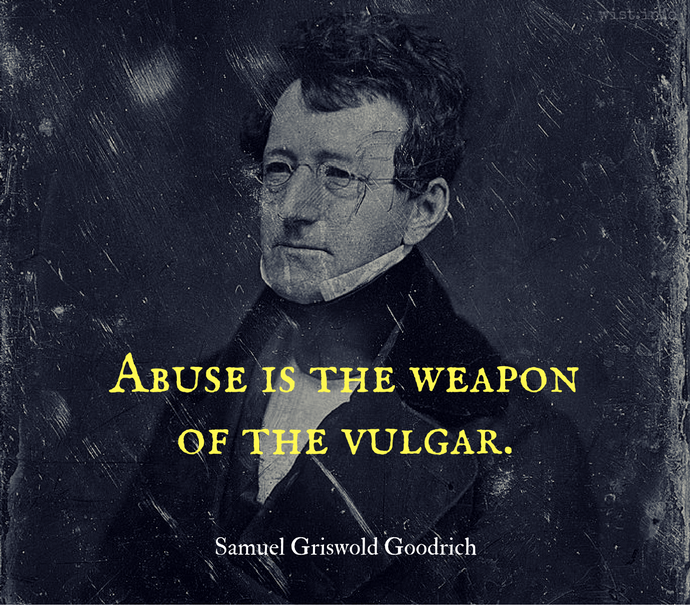
Abuse is the weapon of the vulgar.
Samuel Griswold Goodrich (1793–1860) American author [pseud. Peter Parley]
(Attributed)
Quoted in Maturin M. Ballou, Edge-Tools of Speech (1886)
Oppressed people are frequently very oppressive when first liberated. And why wouldn’t they be? They know best two positions. Somebody’s foot on their neck or their foot on somebody’s neck.
Florynce "Flo" Kennedy (1916–2000) American lawyer, feminist, civil rights activist
“Institutionalized Oppression vs. the Female” (1970)

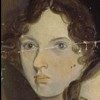
The tyrant grinds down his slaves and they don’t turn against him, they crush those beneath them.
Emily Brontë (1818–1848) British novelist, poet [pseud. Ellis Bell]
Wuthering Heights, ch. 11 [Heathcliff] (1847)
(Source)
All governments suffer a recurring problem: Power attracts pathological personalities. It is not that power corrupts but that it is magnetic to the corruptible. Such people have a tendency to become drunk on violence, a condition to which they are quickly addicted.
Frank Herbert (1920–1986) American writer
Chapterhouse: Dune (1985)
For the master’s tools will never dismantle the master’s house. They may allow us to temporarily beat him at his own game, but they will never enable us to bring about genuine change.
Audre Lorde (1934–1992) American writer, feminist, civil rights activist
“The Master’s Tools Will Never Dismantle the Master’s House” (1979)
(Source)
God loved the birds and invented trees.
Man loved the birds and invented cages.Jacques Deval (1895–1972) French playwright and director [pseud. of Jacques Boularan]
Afin de vivre bel et bien (1970)
Abuse is an indirect species of homage.
William Hazlitt (1778–1830) English writer
“Common Places” (22), Literary Examiner (Sep-Dec 1823)

Morality in sexual situations, when it is free from superstition, consists essentially of respect for the other person, and unwillingness to use that person solely as a means of personal gratification, without regard to his or her desires.
Bertrand Russell (1872–1970) English mathematician and philosopher
Marriage and Morals, ch. 11 (1929)
In every kind of debauch there enters much coldness of soul. It is a conscious and voluntary abuse of pleasure.
[Il entre, dans toute espèce de débauche, beaucoup de froideur d’àme; elle est un abus réfléchi et volontaire du plaisir.]
Joseph Joubert (1754–1824) French moralist, philosopher, essayist, poet
Pensées [Thoughts], ch. 5 “Des Passions et des Affections de l’Âme [On the Soul],” ¶ 13, 1805 entry (1850 ed.) [tr. Auster (1983)]
(Source)
(Source (French)). Other translations:Into every kind of excess there enters much coldness of soul; it is a thoughtful and voluntary abuse of pleasure.
[tr. Calvert (1866), ch. 5]There is much coldness of soul in every kind of excess; -- it is the deliberate and voluntary abuse of pleasure.
[tr. Lyttelton (1899), ch. 4, ¶ 11]There is an element of callousness in every kind of dissipation; it is a deliberate, willful abuse of pleasure.
[tr. Collins (1928), ch. 5]
In political institutions, almost everything we call an abuse was once a remedy.
[Presque tout ce que nous appelons un abus fut un remède dans les institutions politiques.]
Joseph Joubert (1754–1824) French moralist, philosopher, essayist, poet
Pensées [Thoughts], ch. 18 “Du Siècle [On the Age],” ¶ 21 (1850 ed.) [tr. Auster (1983), 1813 entry]
(Source)
(Source (French)). Other translation:In political institutions nearly everything that we now call an abuse, was once a remedy.
[tr. Lyttelton (1899), ch. 17, ¶ 8]
There are two modes of establishing our reputation; to be praised by honest men, and to be abused by rogues. It is best, however, to secure the former, because it will be invariably accompanied by the latter.
Charles Caleb "C. C." Colton (1780–1832) English cleric, writer, aphorist
Lacon: Or, Many Things in Few Words, Vol. 1, § 218 (1820)
(Source)
Though I’ve belted you an’ flayed you,
By the livin’ Gawd that made you,
You’re a better man than I am, Gunga Din!Rudyard Kipling (1865–1936) English writer
“Gunga Din,” st. 5 (1892)
Nothing discloses real character like the use of power. It is easy for the weak to be gentle. Most people can bear adversity. But if you wish to know what a man really is, give him power. This is the supreme test. It is the glory of Lincoln that, having almost absolute power, he never abused it, except upon the side of mercy.
Robert Green Ingersoll (1833–1899) American lawyer, freethinker, orator
“Abraham Lincoln,” Lecture (1894)
(Source)
Ingersoll used the final phrase here frequently about Lincoln, e.g., in The Liberty of Man, Woman, and Child, an 1877 lecture, he wrote: "Abraham Lincoln was, in my judgment, in many respects, the grandest man ever president of the United States. Upon his monument these words should be written: 'Here sleeps the only man in the history of the world, who, having been clothed with almost absolute power, never abused it, except on the side of mercy.'"
The phrase "But if you wish to know what a man really is, give him power" is often attributed, without citation, to Lincoln.
There are families in which the father will say to his child, “You’ll get a thick ear if you do that again,” while the mother, her eyes brimming over with tears, will take the child to her arms and murmur lovingly, “Now, darling, is it kind to Mummy to do that?” And who would maintain that the second method is less tyrannous than the first?
George Orwell (1903–1950) English journalist, essayist, writer [pseud. of Eric Arthur Blair]
Essay (1947-03), “Lear, Tolstoy and the Fool,” Polemic Magazine, No. 7
(Source)
Collected in Inside the Whale, and Other Essays (1962).

Facts too shocking to be contemplated occasionally force their way to the public ear, and the comment that one often hears made on them is more shocking than the thing itself. It is said, “Very likely such cases may now and then occur, but they are no sample of general practice.” If the laws of New England were so arranged that a master could now and then torture an apprentice to death, would it be received with equal composure? Would it be said, “These cases are rare, and no samples of general practice”? This injustice is an inherent one in the slave system, — it cannot exist without it.

As an atheist, I believe that all life is unspeakably precious, because it’s only here for a brief moment, a flare against the dark, and then it’s gone forever. No afterlives, no second chances, no backsies. So there can be nothing crueler than the abuse, destruction or wanton taking of a life. It is a crime no less than burning the Mona Lisa, for there is always just one of each.
So I cannot forgive. Which makes the notion of writing a character who CAN forgive momentarily attractive … because it allows me to explore in great detail something of which I am utterly incapable.
J. Michael (Joe) Straczynski (b. 1954) American screenwriter, producer, author [a/k/a "JMS"]
Usenet, rec.arts.sf.tv.babylon5, “JMS on Compuserve: Gesthemane Questions” (1995-12-04)
(Source)

The highest proof of virtue is to possess boundless power without abusing it.
Thomas Babington Macaulay (1800–1859) English writer and politician
“The Life and Writings of Addison,” Edinburg Review (1843)
(Source)
Review of Lucy Aikin, The Life of Joseph Addison (1843).
The stroke of the whip maketh marks in the flesh: but the stroke of the tongue breaketh the bones. Many have fallen by the edge of the sword: but not so many as have fallen by the tongue.
[πληγὴ μάστιγος ποιεῖ μώλωπα, πληγὴ δὲ γλώσσης συγκλάσει ὀστᾶ. πολλοὶ ἔπεσαν ἐν στόματι μαχαίρας, καὶ οὐχ ὡς οἱ πεπτωκότες διὰ γλῶσσαν.]
The Bible (The Old Testament) (14th - 2nd C BC) Judeo-Christian sacred scripture [Tanakh, Hebrew Bible], incl. the Apocrypha (Deuterocanonicals)
Book 22b. Sirach (Ecclesiasticus) 28:17ff (Sir 28:17-18) [KJV (1611)]
(Source)
See Howell (1659).
(Source (Greek)). Other translations:The stroke of a whip maketh a blue mark: but the stroke of the tongue will break the bones. Many have fallen by the edge of the sword, but not so many as have perished by their own tongue.
[DRA (1899); 28:21-22]A stroke of the whip raises a weal, but a stroke of the tongue breaks bones. Many have fallen by the edge of the sword, but many more have fallen by the tongue.
[JB (1966)]A whip can raise a welt, but a vicious tongue can break bones. More people have died as a result of loose talk than were ever killed by swords.
[GNT (1976)]The blow of a whip raises a welt, but a blow of the tongue crushes the bones. Many have fallen by the edge of the sword, but not as many as have fallen because of the tongue.
[NRSV (1989 ed.)]

ISABELLA:O, it is excellent
To have a giant’s strength, but it is tyrannous
To use it like a giant.William Shakespeare (1564–1616) English dramatist and poet
Measure for Measure, Act 2, sc. 2, l. 135ff (2.2.135-137) (1604)
(Source)