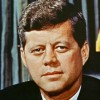
There has also been a change — a slippage — in our intellectual and moral strength. Seven lean years of drought and famine have withered a field of ideas. Blight has descended on our regulatory agencies — and a dry rot, beginning in Washington, is seeping into every corner of America — in the payola mentality, the expense account way of life, the confusion between what is legal and what is right. Too many Americans have lost their way, their will and their sense of historic purpose.
John F. Kennedy (1917–1963) American politician, author, journalist, US President (1961–63)
Speech (1960-07-15), “The New Frontier,” Presidential Nomination Acceptance Speech, Democratic National Convention, Memorial Coliseum, Los Angeles
(Source)
This passage was skipped in the speech as delivered.
Quotations about:
legality
Note not all quotations have been tagged, so Search may find additional quotes on this topic.
And then there are the unscrupulous for whom anything goes if it is within the letter of the law, or at least not too far outside; the numerous kind for whom legality and morality are synonyms. “The Fix” has become endemic in our political life.
Adlai Stevenson II (1900–1965) American politician, diplomat, statesman
Speech (1954-03-22), “The Educated Citizen,” Senior Class Banquet, Dillon Gymnasium, Princeton University
(Source)

It seems to me a very unjust thing to take away a man’s life for a little money, for nothing in the world can be of equal value with a man’s life: and if it be said, “that it is not for the money that one suffers, but for his breaking the law,” I must say, extreme justice is an extreme injury: for we ought not to approve of those terrible laws that make the smallest offences capital, nor of that opinion of the Stoics that makes all crimes equal; as if there were no difference to be made between the killing a man and the taking his purse, between which, if we examine things impartially, there is no likeness nor proportion.
[Omnino mihi uidetur inquam pater benignissime homini uitam eripi propter ereptam pecuniam prorsus iniquum esse. Siquidem cum humana uita ne omnibus quidem fortunae possessionibus paria fieri posse arbitror. Quod si laesam iustitiam, si leges uiolatas, hac rependi poena dicant, haud pecuniam; quid ni merito summum illud ius, summa uocetur iniuria! Nam neque legum probanda sunt tam Manliana imperia, ut sicubi in leuissimis parum obtemperetur, illico stringant gladium; neque tam Stoica scita, ut omnia peccata adeo existiment paria, uti nihil iudicent interesse, occidatne aliquis hominem, an nummum ei surripiat, inter quae (si quicquam aequitas ualet) nihil omnino simile aut affine.]
Thomas More (1478–1535) English lawyer, social philosopher, statesman, humanist, Christian martyr
Utopia, Book 1, ch. 1 “Discourses of Raphael Hythloday” (1518 ed.) [tr. Burnet/Morley (1901)]
(Source)
Debating on the propriety of English laws that condemned thieves to hanging.
(Source (Latin)). Other translations:Suerlye my lorde, I thinke it not ryght nor justice, that the losse of money should cause the losse of mans life. For myne opinion is, that all the goodes in the worlde are not hable to countervayle mans life. But if they would thus say; that the breakynge of justice, and the transgression of the lawes is recompensed with this punishment, and not the losse of the money, then why maye not this extreme and rigorous justice wel be called plaine injurie? For so cruell govemaunce, so streite rules, and unmercyful lawes be not allowable, that if a small offense be committed, by and by the sword should be drawen: nor so stoical ordinaunces are to be borne withall, as to counte al offenses of suche equalitie, that the killing of a man, or the takyng of his money from him were both a matter, and the one no more heinous offense then the other: betwene the whyche two, yf we have anye respecte to equitie, no similitude or equalitie consisteth.
[tr. Robynson (1551)]It seems to me a very unjust thing to take away a Man's Life for a little Mony; for notyhing in the World can be of equal value with a Man's Life: and if it is said, that it is not for the Mony that one suffers, but for his breaking the Law; I must say extream Justice is an extream Injury: for we ought not to approve of these terrible Laws that make the smallest Offences capital; nor of that Opinion of the Stoicks that makes all Crimes equal, as if there were no difference to be made between the killing of a Man, and the taking his Purse; between wich if we examine things impartially, there is no likeness nor proportion.
[tr. Burnet (1684)]It seemeth very unjust to me to take away life for a little money, for nothing can be of equal value with life. And if it be said, that the suffering is not for the money, but for the breach of the law, I answer, extreme justice is an extreme injury. For we ought not to approve of those terrible laws, which make the smallest offences capital, nor of that opinion of the stoics which maketh all crimes equal: as if no difference were to be made between killing a man and taking his purse, between which, in reality, there is the greatest disproportion.
[tr. Cayley (1808)]Surely my lord, I think it not right nor justice, that the loss of money should cause the loss of man’s life. For mine opinion is, that all the goods in the world are not able to countervail man’s life. But if they would thus say: that the breaking of justice, and the transgression of the laws is recompensed with this punishment, and not the loss of the money, then why may not this extreme justice well be called extreme injury? For neither so cruel governance, so strait rules, and unmerciful laws be allowable, that if a small offence be committed, by-and-by the sword should be drawn: nor so stoical ordinances are to be borne withal, as to count all offences of such equality that the killing of a man, or the taking of his money from him were both a matter, and the one no more heinous offence than the other: between the which two, if we have any respect to equity, no similitude or equality consisteth.
[tr. Robinson (1909 ed.)]Certainly, right reverend father and my kind lord, I think it quite unjust that a man should lose his life for the loss of money. For in my opinion not all the goods that fortune can bestow on us can be set in the scale against a man's life. But if they say that this penalty is attached to the offence against justice and the breaking of the laws, and not to the theft of money, one may well style this extreme justice as extreme wrong. For we ought not to approve of such stern rules of law as should justify the drawing of the sword, when they are disobeyed in trifles, nor on the other hand such Stoical ordinances as count all offences equal, so that there is no difference whether one kills a man or robs him of a coin, when if equity has any meaning, there is no similarity or connexion between the two cases. God has said, "Thou shalt not kill," and shall we so lightly kill a man for taking a little money?
[tr. Richards (1923)]Your Grace, it seems to me quite unjust to take a man's life because he's taken some money. To my mind, no amount of property is equivalent to a human life. If it's argued that the punishment is not for taking the money, but for breaking the law and violating justice, isn't this conception of absolute justice absolutely unjust? One really can’t approve of a régime so dictatorial that the slightest disobedience is punishable by death, nor of a legal code based on the Stoic paradox that all offences are equal — so that there’s no distinction in law between theft and murder, though in equity the two things are so completely different.
[tr. Turner (1965 ed.)]Certainly, most reverend and kind Father, I think it altogether unjust that a man should suffer the loss of his life for the loss of someone’s money. In my opinion, not all the goods that fortune can bestow on us can be set in the scale against a man’s life. If they say that this penalty is attached to the offense against justice and the breaking of the laws, hardly to the money stolen, one may well characterize this extreme justice as extreme wrong. For we ought not to approve such stern Manlian rules of law as would justify the immediate drawing of the sword when they are disobeyed in trifles nor such Stoical ordinances as count all offenses equal so that there is no difference between killing a man and robbing him of a coin when, if equity has any meaning, there is no similarity or connection between the two cases.
[tr. Richards/Surtz (1964)]It seems to me, most kind and reverend father, that it's altogether unjust to take away a man's life for the loss of someone's money. Nothing in the world that fortune can bestow is equal in value to a man's life. If they say the thief suffers not for the money, but for violation of justice and transgression of laws, then this extreme justice should really be called extreme injury. We ought not to approve of these fierce Manlian laws that invoke the sword for the smallest violations. Neither should we accept the Stoic view that considers all crimes equal, as if there were no difference between killing a man and taking a coin from him. If equity means anything, there is no proportion or relation at all between these two crimes.
[tr. Adams (1992 ed.)]

If thou allowest thyself to go to the utmost Extent of every thing that is lawful, thou art very near going further.
Thomas Fuller (1654–1734) English physician, preacher, aphorist, writer
Introductio ad Prudentiam, Vol. 2, # 2093 (1727)
(Source)

His father wasn’t the monster he could have been with the power he held over his slaves. He wasn’t a monster at all. Just an ordinary man who sometimes did the monstrous things his society said were legal and proper.

For the moral point of this matter is never reached by calling what happened by the name of “genocide” or by counting the many millions of victims: the extermination of whole peoples had happened before in antiquity, as well as in modern colonization. It is reached only when we realize that this happened within the frame of a legal order and that the cornerstone of this “new law” consisted of the command “Thou shalt kill,” not thy enemy but innocent people who were not even potentially dangerous, and not for any reason of necessity but, on the contrary, even against all military and other utilitarian considerations.

Unkindness has no Remedy at Law.
Thomas Fuller (1654–1734) English physician, preacher, aphorist, writer
Gnomologia: Adages and Proverbs (compiler), # 5402 (1732)
(Source)
The rack, or question, to extort a confession from criminals, is a practice of a different nature; […] an engine of the state, not of law.
William Blackstone (1723–1780) British jurist, judge, politician
Commentaries on the Laws of England, Book 4 “Of Public Wrongs,” ch. 25 “Arraignment” (1769)
The legal right of a taxpayer to decrease the amount of what otherwise would be his taxes, or altogether avoid them, by means which the law permits, cannot be doubted.
George Sutherland (1862–1942) Anglo-American jurist, Supreme Court Justice (1922–1938)
Gregory v. Helvering, 293 U.S. 465, 469 (1935)