POMPEY: It is vain for the coward to fly; death follows close behind;
It is only by defying it that the brave escape.[POMPEE: Le lâche fuit en vain; la mort vole à sa suite:
C’est en la défiant que le brave l’évite.]Voltaire (1694–1778) French writer [pseud. of Francois-Marie Arouet]
Le Triumvirat [The Triumvirate], Act 4, sc. 7 (1763)
(Source)
Quotations about:
coward
Note not all quotations have been tagged, so Search may find additional quotes on this topic.
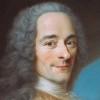
Any coward can fight a battle when he’s sure of winning; but give me the man who has pluck to fight when he’s sure of losing. That’s my way, sir; and there are many victories worse than a defeat.
George Eliot (1819–1880) English novelist [pseud. of Mary Ann Evans]
Scenes of Clerical Life, “Janet’s Repentance,” ch. 6 (1857)
(Source)
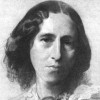
The fear of being laughed at makes cowards of us all.
Mignon McLaughlin (1913–1983) American journalist and author
The Neurotic’s Notebook, ch. 10 (1963)
(Source)

Even cowards can endure hardship; only the brave can endure suspense.
Mignon McLaughlin (1913–1983) American journalist and author
The Neurotic’s Notebook, ch. 3 (1963)
(Source)
CAESAR: Cowards die many times before their deaths;
The valiant never taste of death but once.
Of all the wonders that I yet have heard,
It seems to me most strange that men should fear,
Seeing that death, a necessary end,
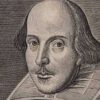
Will come when it will come.William Shakespeare (1564–1616) English dramatist and poet
Julius Caesar, Act 2, sc. 2, l. 34ff (2.2.34-39) (1599)
(Source)
The initial phrase has seemingly morphed in the retelling, though still being cited to Shakespeare: "A coward dies a thousand times before his death, but the valiant taste of death but once." This is the form most often seen, but is not Shakespeare.
In A Farewell to Arms (1929), Hemingway gives another paraphrase: "The coward dies a thousand deaths, the brave but one," obliquely attributed to Shakespeare, This, too, sometimes gets modified to make it scan better, e.g., "A coward dies a thousand deaths, the brave dies only once." He goes on to write, "The brave dies perhaps two thousand deaths if he’s intelligent. He simply doesn’t mention them."
Choose your leaders
with wisdom and forethought.
To be led by a coward
is to be controlled
by all that the coward fears.
To be led by a fool
is to be led
by the opportunists
who control the fool.
To be led by a thief
is to offer up
your most precious treasures
to be stolen.
To be led by a liar
is to ask
to be lied to.
To be led by a tyrant
is to sell yourself
and those you love
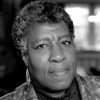
into slavery.Octavia Butler (1947–2006) American writer
Parable of the Talents, ch. 11, epigraph (1998)
(Source)
The epigraph is cited to the in-fiction Earthseed: The Books of the Living.
HENRY: Rather proclaim it, Westmoreland, through my host,
That he which hath no stomach to this fight,
Let him depart; his passport shall be made,
And crowns for convoy put into his purse:
We would not die in that man’s company,
That fears his fellowship to die with us.William Shakespeare (1564–1616) English dramatist and poet
Henry V, Act 4, sc. 3, l. 37ff (4.3.37-42) (1599)
(Source)
A cowardly leader is the most dangerous of men.
Stephen King (b. 1947) American author
Under the Dome (2009)

The brave only know how to forgive; it is the most refined and generous pitch of virtue human nature can arrive at. Cowards have done good and kind actions, cowards have even fought, nay some times, even conquered; but a coward never forgave. It is not in his nature; the power of doing it flows only from a strength and greatness of soul, conscious of its own force and security, and above the little temptations of resenting every fruitless attempt to interrupt its happiness.
Laurence Sterne (1713–1786) Anglo-Irish novelist, Anglican clergyman
Sermon 12, “Joseph’s History Considered”
(Source)
A brave man is sometimes a desperado: a bully is always a coward.
Thomas Chandler Haliburton (1796–1865) Canadian politician, judge, humorist
Sam Slick’s Wise Saws and Modern Instances, Vol. 1 (1853)
Silence becomes cowardice when occasion demands speaking out the whole truth and acting accordingly.
Mohandas Gandhi (1869–1948) Indian lawyer, anti-colonial nationalist, political ethicist [Mahatma Gandhi]
In Harijan (7 Apr 1946)
RICHARD: Conscience is but a word that cowards use,
Devised at first to keep the strong in awe:
Our strong arms be our conscience, swords our law.William Shakespeare (1564–1616) English dramatist and poet
Richard III, Act 5, sc. 3, l. 327ff (5.3.327-329) (1592)
(Source)
We do not go to cowards for tender dealing; there is nothing so cruel as panic; the man who has least fear for his own carcase, has most time to consider others.
Even cowards gain courage from companionship.
Homer (fl. 7th-8th C. BC) Greek author
The Iliad [Ἰλιάς], Book 13, l. 235 (13.235) (c. 750 BC) [tr. Butler (1898)]
(Source)
Poseidon, appearing as Thoas, talking with Idomeneus. Other translations:
- "We find, / That virtue co-augmented thrives in men of little mind." [tr. Chapman (1611), ll. 218-19]
- "Not vain the weakest, if their force unite." [tr. Pope (1715-20)]
- "Union much / Emboldens even the weakest." [tr. Cowper (1791), ll. 292-93]
- "For useful is the valour of men, even the very pusillanimous, if combined." [tr. Buckley (1860)]
- "E’en meaner men, united, courage gain." [tr. Derby (1864)]
- "Ay, and very cowards get courage from company." [tr. Leaf/Lang/Myers (1891)]
- "Prowess comes from fellowship even of right sorry folk." [tr. Murray (1924)]
- "Even the poorest fighters turn into brave men when they stand side by side." [tr. Rieu (1950)]
- "The worst cowards, banded together, have their power." [tr. Fagles (1990), l. 281]
Fortune is not on the side of the faint-hearted.
Sophocles (496–406 BC) Greek tragic playwright
Phaedra, fragment 842
Also "Fortune never helps the fainthearted" [Fragments, l. 666]
To sin by silence, when we should protest,
Makes cowards out of men.