

By definition, humor is gentle. The savage, the cruel, the harsh would fall under the heading of wit and/or satire, as the lawyers say. Now, my definitions are these: The wit makes fun of other persons; the satirist makes fun of the world; the humorist makes fun of himself, but in so doing, he identifies himself with people — that is, people everywhere, not for the purpose of taking them apart, but simply revealing their true nature.
James Thurber (1894–1961) American humorist, cartoonist, writer
Interview (1959-03-24) by Edward R. Murrow, Small World, CBS-TV
(Source)
When Siobhan McKenna, one of the other guests, made a comment about "cruel humor."
The transcript was printed as "That Girl in Galway" in the next (?) day's New York Post.
Quotations about:
mockery
Note not all quotations have been tagged, so Search may find additional quotes on this topic.
We learn more quickly and bring back to mind more readily
The things we laugh at than those we respect and revere.[Discit enim citius, meminitque libentius ilud
Quod quis deridet, quam quod probat et veneratur.]Horace (65–8 BC) Roman poet, satirist, soldier, politician [Quintus Horatius Flaccus]
Epistles [Epistularum, Letters], Book 2, ep. 1 “To Augustus,” l. 262ff (2.1.262-263) (14 BC) [tr. Palmer Bovie (1959)]
(Source)
On why he declines to write epic poetry: because he doubts his talents, and the public will remember only if it's a bad poem. Which is especially problematic if the poem is about someone (like Augustus) still alive.
(Source (Latin)). Other translations:A man may soner beare awaye and rather kepe in mynde
The thinge deryded, then that is prayse worthie in his kynde.
[tr. Drant (1567)]For Readers so malicious now are growne,
What's bad they'll con, what's good they let alone.
[tr. W. P.; ed. Brome (1666)]For what's derided by the Censuring Crowd,
Is thought on more than what is just and Good.
[tr. Creech (1684)]For quickly we discern,
With ease remember, and with pleasure learn,
Whate'er may ridicule and laughter move,
Not what deserves our best esteem and love.
[tr. Francis (1747)]For sooner caught and steadier to abide
On memory's tablet that which we deride,
Than what revere.
[tr. Howes (1845)]For one learns sooner, and more willingly remembers, that which a man derides, than that which he approves and venerates.
[tr. Smart/Buckley (1853)]For easier 'tis to learn and recollect
What moves derision than what claims respect.
[tr. Conington (1874)]For we learn quicker, gladlier recollect
What makes us laugh, than what commands respect.
[tr. Martin (1881)]The subject of our zeal sooner hears of, and is more inclined to remember, that which any one laughs at in the production than what he approves of and eulogizes.
[tr. Elgood (1893)]For a man learns more quickly and remembers more easily that which he laughs at, than that which he approves and reveres.
[E.g. (1907)]For one sooner learns
And easier remembers such concerns
As men deride that those men favor lend
And venerate.
[tr. Murison (1931)]For we all more quickly learn and easily remember
the poems we scorn than those we approve of and respect.
[tr. Fuchs (1977)]And writers of foolish poems often find
They're vividly and scornfully remembered.
[tr. Ferry (2001)]For a thing that causes merriment is always sooner learnt
and longer remembered than what commands respect and approval.
[tr. Rudd (2005 ed.)]Men remember more quickly, with greater readiness,
Things they deride, than those they approve and respect.
[tr. Kline (2015)]
Why is the goose-step not used in England? There are, heaven knows, plenty of army officers who would be only too glad to introduce some such thing. It is not used because the people in the street would laugh. Beyond a certain point, military display is only possible in countries where the common people dare not laugh at the army.
George Orwell (1903–1950) English journalist, essayist, writer [pseud. of Eric Arthur Blair]
Essay (1941-02-19), “The Lion and the Unicorn: Socialism and the English Genius,” Part 1 “England Your England,” sec. 2, The Searchlight Books [ed. Fyvel and Orwell]
(Source)
Part of Part 1, "England Your England" with the title "The Ruling Class" was previously published in Horizon (1940-12).

CALVIN: I’m thinking of starting my own talk radio show. I’ll spout simplistic opinions for hours on end, ridicule anyone who disagrees with me, and generally foster divisiveness, cynicism, and a lower level of public dialogue!
HOBBES: It would seem you were born for the job.
CALVIN: Imagine getting paid to act like a six-year-old!


FALSTAFF: I am not only witty in myself, but the cause that wit is in other men.
William Shakespeare (1564–1616) English dramatist and poet
Henry IV, Part 2, Act 1, sc. 2, l. 9ff (1.2.9-11) (c. 1598)
(Source)

But ne’ertheless I hope it is no crime
To laugh at all things — for I wish to know
What, after all, are all things — but a show?
The fear of being laughed at makes cowards of us all.
Mignon McLaughlin (1913–1983) American journalist and author
The Neurotic’s Notebook, ch. 10 (1963)
(Source)

Cynical is the name we give those we fear may be laughing at us.
Stephen Fry (b. 1957) British actor, writer, comedian
The Hippopotamus, ch. 4, sec. 3 [Ted] (2014)
(Source)

AMBITION, n. An overmastering desire to be vilified by enemies while living and made ridiculous by friends when dead.
Ambrose Bierce (1842–1914?) American writer and journalist
“Ambition,” The Cynic’s Word Book (1906)
(Source)
Included in The Devil's Dictionary (1911).
Originally published in the "Devil's Dictionary" column in the San Francisco Wasp, where the entry read:An overmastering desire to be abused by the newspapers during life, and have an epitaph by Hector A. Stuart after death.
Bierce frequently mocked the verse of Stuart, a San Francisco poet.

Miss Manners corrects only upon request. Then she does it from a distance, with no names attached, and no personal relationship, however distant, between the corrector and the correctee. She does not search out errors like a policeman leaping out of a speed trap. When Miss Manners observes people behaving rudely, she behaves politely to them, and then goes home and snickers about them afterward.
Judith Martin (b. 1938) American author, journalist, etiquette expert [a.k.a. Miss Manners]
Miss Manners’ Guide to Excruciatingly Correct Behavior, Introduction (1983)
(Source)

If, as certain small-minded philosophers believe, I shall feel nothing at all after death, then at least I don’t have to worry that they will be there to mock me after they die!
[Sin mortuus, ut quidam minuti philosophi censent, nihil sentiam, non vereor ne hunc errorem meum philosophi mortui irrideant.]Marcus Tullius Cicero (106–43 BC) Roman orator, statesman, philosopher
De Senectute [Cato Maior; On Old Age], ch. 23 / sec. 85 (23.85) (44 BC) [tr. Freeman (2016)]
(Source)
Critiquing the Epicurians, who would disagree with his belief in an immortal soul.
(Source (Latin)). Other translations:For if aftir this presente life I be dede as wele in soule as in body as that some yong and smale philosophers of whiche men name Epycures that affermyn, Certayne it is that I shall feele nothyng. And also I am not afferde that suche philosophers so ded mockyn me nor of this myne oppinion. Aftir whiche I verily beleve that the soules be undedly.
[tr. Worcester/Worcester/Scrope (1481)]And if it were not so, that after death I should feel nothing nor have any sense at all (as certain perrifoggers and bastard philosophers hold opinino) I fear not a whit least these lip-labourers and ideitical philosophers, when they themselves be dead, should scoff and make a mocking-stock at this mine assertion and belief, because they themselves shall also be without sense, and like to brute beasts.
[tr. Newton (1569)]But if when I am dead (as some small Philosophers say) I shall feel nothing, I fear not least the dead Philosophers should laugh at this my error.
[tr. Austin (1648)]If those who this Opinion have despis'd,
And their whole life to pleasure sacrific'd;
Should feel their error, they when undeceiv'd,
Too late will wish, that me they had believ'd.
[tr. Denham (1669)]But if after this Life I shall no longer be sensible, as some little Philosophers imagine, then am I in no Fear that dead Philosophers will laugh at my mistaken Opinion.
[tr. J. D. (1744)]And if, when dead, I should (as some minute Philosophers imagine) be deprived of all further Sense, I am safe at least in this, that those Blades themselves will have no Opportunity beyond the Grave to laugh at me for my Opinion.
[tr. Logan (1744)]I have the satisfaction in the meantime to be assured that if death should utterly extinguish my existence, as some minute philosophers assert, the groundless hope I entertained of an after-life in some better state cannot expose me to the derision of these wonderful sages, when they and I shall be no more.
[tr. Melmoth (1773)]But if (as certain super-subtle philosophers conclude) I shall feel nothing, I am not afraid lest these philosophers, when dead, should ridicule this error of mine.
[Cornish Bros. ed. (1847)]But if I, when dead, shall have no consciousness, as some narrow-minded philosophers imagine, I do not fear lest dead philosophers should ridicule this my delusion.
[tr. Edmonds (1874)]While if in death, as some paltry philosophers think, I shall have no consciousness, the dead philosophers cannot ridicule this delusion of mine.
[tr. Peabody (1884)]But if when dead, as some insignificant philosophers think, I am to be without sensation, I am not afraid of dead philosophers deriding my errors.
[tr. Shuckburgh (1895)]But if when dead;
As some philosophers of little note
Believe, I feel no more, there is no fear
These dead philosophers should mock me there.
[tr. Allison (1916)]But if when dead I am going to be without sensation (as some petty philosophers think), then I have no fear that these seers, when they are dead, will have the laugh on me!
[tr. Falconer (1923)]True, certain insignificant philosophers hold that I shall feel nothing after death. If so, then at least I need not fear that after their own deaths they will be able to mock my conviction!
[tr. Grant (1960, 1971 ed.)]If on the other hand, as certain petty philosophers have held, I shall have no sensation when I am dead, then I need have no fear that deceased philosophers will make fun of this delusion of mine.
[tr. Copley (1967)]Some second-rate philosophers suggest that when I am dead I will be conscious of nothing. But all that means is that, if I’m wrong, they won't be able to make fun of me after their death.
[tr. Cobbold (2012)]But anyway, if when I die my spirit also dies, I certainly won't give a flip about the opinions of dead philosophers.
[tr. Gerberding (2014)]If when I am dead I’ll have no sensation,
As some small philosophers think, I won’t fear
Accents of derision from their graves to hear.
[tr. Bozzi (2015)]
Laugh at your Friends, and if your Friends are sore;
So much the better, you may laugh the more.Alexander Pope (1688–1744) English poet
Epilogue to the Satires, Dialogue 1, ll. 55-56 (1738)
(Source)

Laughter is poison to fear.
George R. R. Martin (b. 1948) American author and screenwriter [George Raymond Richard Martin]
A Game of Thrones, “Catelyn” 8 [Catelyn Stark] (1996)
(Source)

Prepare for rhyme — I’ll publish, right or wrong:
Fools are my theme, let Satire be my song.George Gordon, Lord Byron (1788–1824) English poet
“English Bards and Scotch Reviewers,” l. 5ff (1809)
(Source)
I don’t think I ever hurt any man’s feelings by my little gags. I know I never willfully did it. When I have to do that to make a living I will quit.
To jest at physical deformities is to prove Yourself Unfit to breathe the air of Decency.
Minna Antrim (1861–1950) American epigrammatist, writer
Don’ts for Bachelors and Old Maids (1908)
(Source)

Though I called you “My lord,” you’ve no reason for pride:
For so to your slaves I have often replied.[Cum voco te dominum, noli tibi, Cinna, placere:
Saepe etiam servum sic resaluto tuum.]Martial (AD c.39-c.103) Spanish Roman poet, satirist, epigrammatist [Marcus Valerius Martialis]
Epigrams [Epigrammata], Book 5, epigram 57 (5.57) (AD 90) [tr. Pott & Wright (1921)]
(Source)
(Source (Latin)). Other translations:When "Sir" I call you, be not pleased; for know,
Cinna, I often call your servant so.
[tr. Wright (1663)]When I call you "My lord," do not be vain, Cinna. I often return your slave's salutation in a similar way.
[tr. Bohn's Classical (1897)]When I call you "master" don't pride yourself, Cinna. I often return even your slave's greeting so.
[tr. Ker (1919)]When I call you "lord," don't get conceited. I often return your slave's greeting too in that way.
[tr. Shackleton Bailey (1993)]I call you "Boss"? Don't show wild joy.
That's what I call my slaves' head boy.
[tr. Wills (2007)]When I call you "lord," don't swagger, Cinna. Why?
I often give your slave the same reply.
[tr. McLean (2014)]When I call you "Boss," Cinna, don't be so pleased with yourself; I often reply that way when your slave says hello, even.
[tr. Nisbet (2015)]Variation:
Though I do "Sir" thee, be not vain, I pray:
I "Sir" my monkey Jacko every day.
-- Cyrus Redding, "N. M. Mag., 1828"
To ridicule philosophy, that is really to act the philosopher.
[Se moquer de la philosophie c’est vraiment philosophe.]
Blaise Pascal (1623–1662) French scientist and philosopher
Thoughts [Pensées], Article 7, #35 (1670)
Pascal's works are sorted and classified by translators in a variety of ways, so numbering is inconsistent. Other translations:
- "To have no time for philosophy is to be a true philosopher." [tr. Krailsheimer (2003); Series 22, #513]
- "To make light of philosophy is to be a true philosopher." [tr. Paul (1885), "Various Thoughts"; also Trotter (1958), Sec. 1, #4]
- "To ridicule philosophy is really to philosophize." [#430]
- "To ridicule philosophy is truly philosophical."
- "To mock philosophy is to philosophize truly"
- "To mock philosophy is to be a true philosopher."

Thou canst not joke an Enemy into a Friend; but thou may’st a Friend into an Enemy.
Benjamin Franklin (1706–1790) American statesman, scientist, philosopher, aphorist
Poor Richard (1739 ed.)
(Source)
Behold the hippopotamus!
We laugh at how he looks to us,
And yet in moments dank and grim,
I wonder how we look to him.

To expose vices to everyone’s laughter is to deal them a mighty blow. People easily endure reproofs, but they cannot at all endure being made fun of. People have no objection to being considered wicked, but they are not willing to be considered ridiculous.
[C’est une grande atteinte aux vices que de les exposer à la risée de tout le monde. On souffre aisément des répréhensions, mais on ne souffre point la raillerie. On veut bien être méchant, mais on ne veut point être ridicule.]
Molière (1622–1673) French playwright, actor [stage name for Jean-Baptiste Poquelin]
Tartuffe, or the Hypocrite [Le Tartuffe, ou L’Imposteur], Preface (1669-03) [tr. Kerr]
(Source)
Moliere's preface explained once more the history of attacks on and suppression of his play, following up on the several petitions he had made to King Louis XIV. While the play had been first performed in 1664, it was only in 1669 that its final version was removed from the ban placed on it by Church officials.
(Source (French)). Other translations:To expose vices to the ridicule of all the world is a severe blow to them. Reprehensions are easily suffered, but not so ridicule. People do not mind being wicked; but they object to being made ridiculous.
[tr. Van Laun (1876)]Displaying vice to mockery of men deals it a great blow. Men will put up with admonition but are loath to be mocked. One might be willing to be wicked; one cannot bear to appear foolish.
[tr. Steiner (2008)]

If we must die, let it not be like hogs
Hunted and penned in an inglorious spot,
While round us bark the mad and hungry dogs,
Making their mock at our accursed lot.Claude McKay (1889–1948) Jamaican-American writer, poet, journalist
“If We Must Die,” The Liberator (Jul 1919)
(Source)

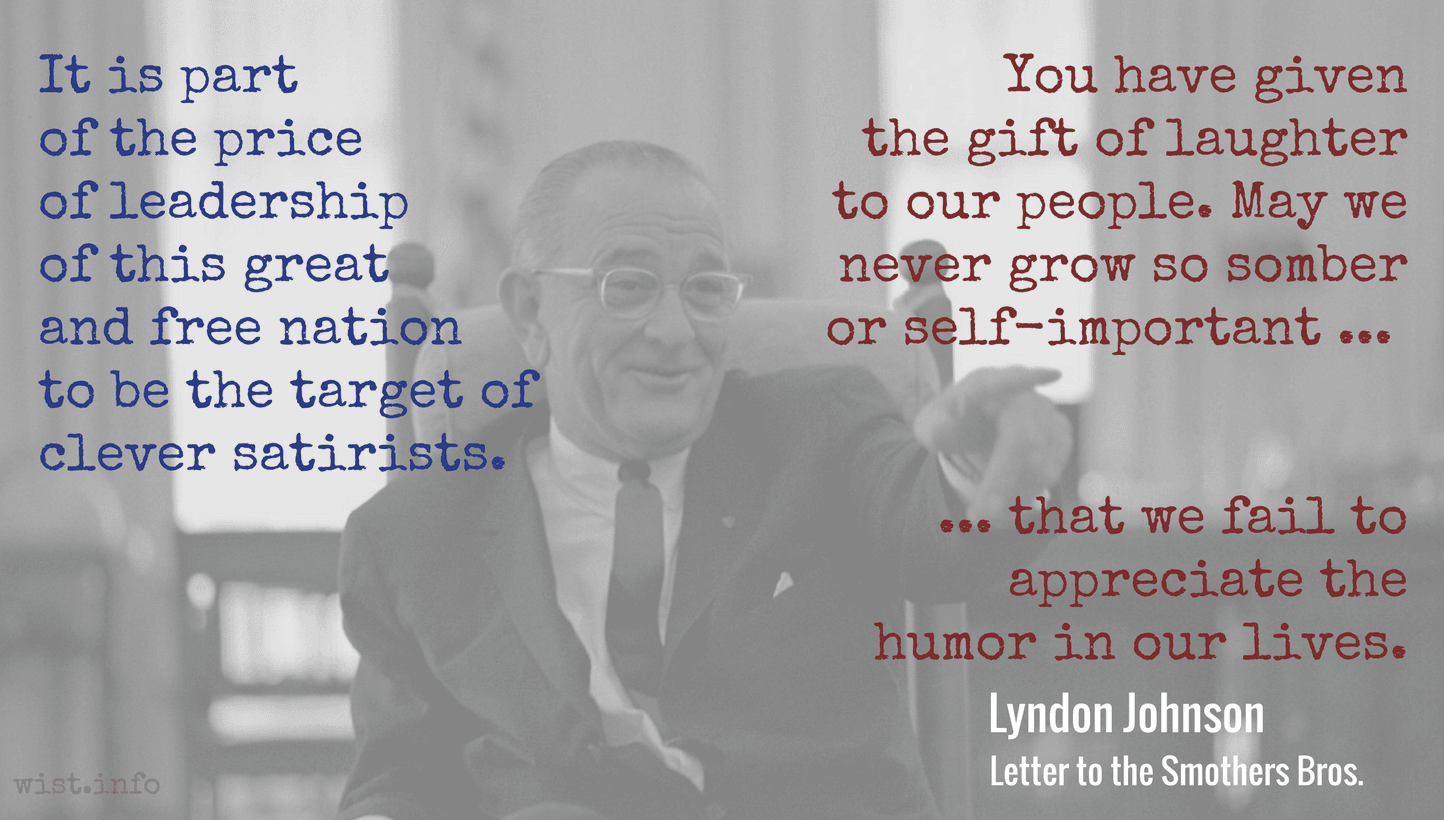
It is part of the price of leadership of this great and free nation to be the target of clever satirists. You have given the gift of laughter to our people. May we never grow so somber or self-important that we fail to appreciate the humor in our lives.

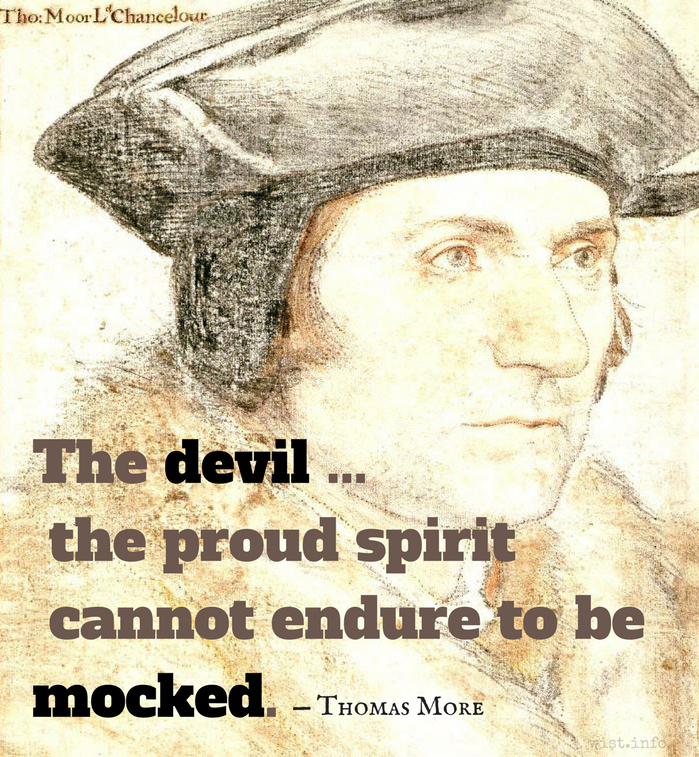
Some folk have been clearly rid of such pestilent fancies with very full contempt of them, making a cross upon their hearts and bidding the devil avaunt. And sometimes they laugh him to scorn, too, and then turn their mind unto some other matter. And when the devil hath seen that they have set so little by him, after certain essays, made in such times as he thought most fitting, he hath given that temptation quite over. And this he doth not only because the proud spirit cannot endure to be mocked, but also lest, with much tempting the man to the sin to which he could not in conclusion bring him, he should much increase his merit.
Thomas More (1478–1535) English lawyer, social philosopher, statesman, humanist, Christian martyr
Dialogue of Comfort Against Tribulation, Book 2, sec. 16 (1553)
(Source)
More often elided/paraphrased as "The devil ... the proud spirit cannot endure to be mocked" or "The devil, that proud spirit, cannot endure to be mocked."
C. S. Lewis used a mis-elided version as an epigraph to The Screwtape Letters (1942): "The devil ... the prowde spirit ... cannot endure to be mocked."
Sometimes given in the original (?) spellings: "The deuill ... the prowde spirit, cannot endure to be mock'd."

The best way to drive out the devil, if he will not yield to texts of Scripture, is to jeer and flout him, for he cannot bear scorn.
Martin Luther (1483–1546) German priest, theologian, writer, religious reformer
Table Talk
(Source)
Variations:
- "The best way to drive out the devil, if he will not go for texts of Scripture, is to jeer and flout him, for he cannot bear scorn."
- The best way to expel the devil, if he will not depart for texts from Holy Scripture, is to jeer and flout him. [Source]

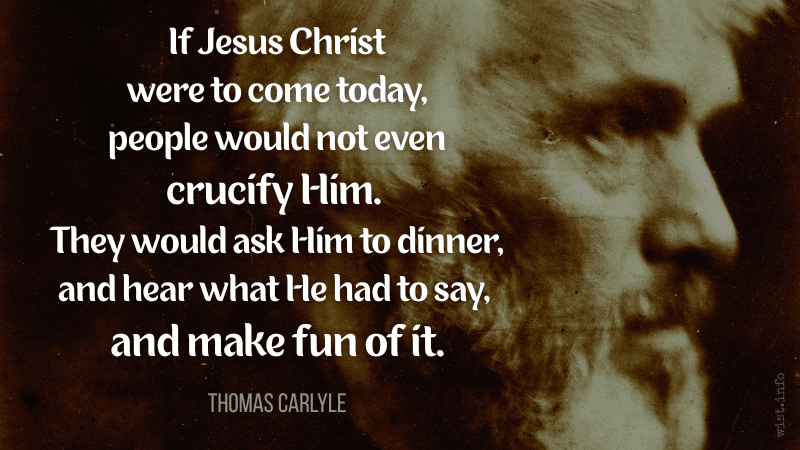
If Jesus Christ were to come today, people would not even crucify Him. They would ask Him to dinner, and hear what He had to say, and make fun of it.
Thomas Carlyle (1795–1881) Scottish essayist and historian
Remark (1850-01-12)
(Source)
Remark quoted by Joseph Neuberg in a letter to his sister. The letter was published in an essay (1884-08), "Carlyle and Neuberg," MacMillan's Magazine, Vol. 50. The author is not noted, but was a friend of Neuberg and his sister.
The same letter is cited in David A. Wilson, Life of Carlyle, Vol. 4 "Carlyle at His Zenith (1848-1853), ch. 10 (1927).
Keep away from people who try to belittle your ambitions. Small people always do that, but the really great make you feel that you, too, can become great.
Mark Twain (1835–1910) American writer [pseud. of Samuel Clemens]
(Attributed)
Quoted in Gay Zenola MacLaren, Morally We Roll Along (1938). A recollection of something Twain said to the author when she was a child. For further discussion, see Quote Origin: Keep Away from People Who Try to Belittle Your Ambitions – Quote Investigator®.

More to the point, nameless hideous monsters are freaking terrifying. You always fear what you don’t know, what you don’t understand, and the first step to having understanding of something is to know what to call it. It’s a habit of mine to give names to anything I wind up interacting with if it doesn’t have one readily available. Names have power — magically, sure, but far more important, they have psychological power. Something horrible with a name holds less power over you, less terror, than something horrible without one.
“Octokongs,” I pronounced grimly. “Why did it have to be octokongs?”Jim Butcher (b. 1971) American author
Skin Game (2014)

My pain may be the reason for somebody’s laugh, but my laugh must never be the reason for somebody’s pain.
Charlie Chaplin (1889–1977) English comic actor, film director, composer
(Attributed)
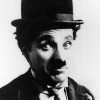
Wherever a Knave is not punished, an honest Man is laugh’d at.
George Savile, Marquis of Halifax (1633–1695) English politician and essayist
“Of Punishment,” Political, Moral, and Miscellaneous Thoughts and Reflections (1750)
(Source)

“Why do men feel threatened by women?” I asked a male friend of mine. (I love that wonderful rhetorical device, “a male friend of mine.” It’s often used by female journalists when they want to say something particularly bitchy but don’t want to be held responsible for it themselves. It also lets people know that you do have male friends, that you aren’t one of those fire-breathing mythical monsters, The Radical Feminists, who walk around with little pairs of scissors and kick men in the shins if they open doors for you. “A male friend of mine” also gives — let us admit it — a certain weight to the opinions expressed.) So this male friend of mine, who does by the way exist, conveniently entered into the following dialogue. “I mean,” I said, “men are bigger, most of the time, they can run faster, strangle better, and they have on the average a lot more money and power.” “They’re afraid women will laugh at them,” he said. “Undercut their world view.” Then I asked some women students in a quickie poetry seminar I was giving, “Why do women feel threatened by men?” “They’re afraid of being killed,” they said.
Margaret Atwood (b. 1939) Canadian writer, literary critic, environmental activist
“Writing the Male Character,” Hagey Lecture, U. of Waterloo (9 Feb 1982)
(Source)
Published in a revised version as "Writing the Male Character," Second Words: Selected Critical Prose, 1960-1982 (1983).
Usually paraphrased, "Men are afraid that women will laugh at them. Women are afraid that men will kill them."


Some by their continual grinning, and shewing their Teeth, make Men doubt whether they honor them, or laugh at them.
Thomas Fuller (1654–1734) English physician, preacher, aphorist, writer
Introductio ad Prudentiam, Vol. 1, # 1395 (1725)
(Source)

My note to you I certainly did not expect to see in print; yet I have not been much shocked by the newspaper comments on it. Those comments constitute a fair specimen of what has occurred to me through life. I have endured a great deal of ridicule without much malice; and have received a great deal of kindness, not quite free from ridicule. I am used to it.
Abraham Lincoln (1809–1865) American lawyer, politician, US President (1861–65)
Letter (1863-11-02) to James H. Hackett
(Source)
Lincoln's first letter (1863-08-17) to Hackett, a famous comedic stage actor, in which he talked about Shakespeare's plays, was published in the New York Herald, and drew criticism and mockery from Lincoln's detractors.

There are none more abusive to others than they that lie most open to it themselves; but the humor goes round, and he that laughs at me today will have somebody to laugh at him tomorrow.
Seneca the Younger (c. 4 BC-AD 65) Roman statesman, philosopher, playwright [Lucius Annaeus Seneca]
Moral Essays, “On Anger [De ira]“
In the middle ages of Christianity opposition to the State opinions was hushed. The consequence was, Christianity became loaded with all the Romish follies. Nothing but free argument, raillery, and even ridicule will preserve the purity of religion.
Thomas Jefferson (1743–1826) American political philosopher, polymath, statesman, US President (1801–09)
Essay (1776-10?), “Notes on Religion”
(Source)
Labeled by Jefferson "Scraps Early in the Revolution." Modern phrasing. Original:In the middle ages of Xty opposition to the State opins was hushed. The consequence was, Xty became loaded with all the Romish follies. Nothing but free argument, raillery & even ridicule will preserve the purity of religion.

But he that touches me, (hands off! I cry, —
Avaunt, and at your peril come not nigh!)
Shall for his pains be chaunted up and down,
The jest and byeword of a chuckling Town.[At ille,
Qui me conmorit (melius non tangere, clamo),
Fiebit et insignis tota cantabitur urbe.]Horace (65–8 BC) Roman poet, satirist, soldier, politician [Quintus Horatius Flaccus]
Satires [Saturae, Sermones], Book 2, # 1 “Sunt quibus in Satira,” l. 44ff (2.2.44-46) (30 BC) [tr. Howes (1845)]
(Source)
On the dangers of antagonizing a satirist.
(Source (Latin)). Other translations:[...] that none woulde worke me wo.
But worke they doo, but who so does, though he be divelyshe fell,
I blason farre and nere his armes, and wanton touches tell.
He may go howle, and pule for wo, the citizens will scorn hym,
And cause him wyshe full many a tyme, his damme had never borne hym.
[tr. Drant (1567)]And none bereave
The peace I seek. But if there do, believe
Me they will rew't, when with my keen Stile stung,
Through the whole town they shall in pomp be sung.
[tr. Fanshawe; ed. Brome (1666)]Let none hurt Peaceful Me with envious Tongue,
For if he does, He shall repent the wrong:
The warning's fair, his Vices shall be shown,
And Life expos'd to all the Cens'ring Town.
[tr. Creech (1684)]But who provokes me, or attacks my fame,
"Better not touch me, friend," I loud exclaim,
His eyes shall weep the folly of his tongue.
By laughing crowds in rueful ballad sung.
[tr. Francis (1747)]But that man who shall provoke me (I give notice, that it is better not to touch me) shall weep [his folly], and as a notorious character shall be sung through all the streets of Rome.
[tr. Smart/Buckley (1853)]But he who shall have once provoked me -- 'twill be better that he touch me not, I cry -- shall rue it, and, become notorious, shall be the theme of jest, through all the town.
[tr. Millington (1870)]But should one seek
To quarrel with me, you shall hear him shriek:
Don't say I gave no warning: up and down
He shall be trolled and chorused through the town.
[tr. Conington (1874)]But if one stir me up ("Better not touch me!" I shout), he shall smart for it and have his name sung up and down the town.
[tr. Fairclough (Loeb) (1926)]But the man who provokes me will weep (HANDS OFF! I WARN YOU)
and his name will be widely rehearsed all over town.
[tr. Palmer Bovie (1959)]But any guy
who gives me any trouble (my motto is “Hands off!”)
will become a tearful celebrity, sung about all over town.
[tr. Fuchs (1977)]But attack -- it’s better not to, believe me -- and live
To regret it, your name paraded all over Rome!
[tr. Raffel (1983)]But he who attacks me (O I warn you!
keep your hands to yourself!)
will have cause enough for weeping.
He will be pointed out and ridiculed
by everyone in Rome.
[tr. Alexander (1999)]"Hands off" is my motto:
anybody who gives me any trouble, he'll be
swiftly famous for his pain and snuffling.
[tr. Matthews (2002)]But whoever stirs me up (better keep your distance, I’m telling you!)
will be sorry; he’ll become a thing of derision throughout the city.
[tr. Rudd (2005 ed.)]But he
Who provokes me (better not touch, I cry!) will suffer,
And his blemishes will be sung throughout the City.
[tr. Kline (2015)]
Monty Python’s usual schoolboy humour is here let loose on a period of history appropriately familiar to every schoolboy in the West, and a faith which could be shaken by such good-humoured ribaldry would be a very precarious faith indeed.
(Other Authors and Sources)
The British Board Of Film Censors, Report on Life of Brian (1979)

“Never laugh at live dragons, Bilbo you fool!” he said to himself, and it became a favorite saying of his later, and passed into a proverb.
J.R.R. Tolkien (1892–1973) English writer, fabulist, philologist, academic [John Ronald Reuel Tolkien]
The Hobbit, ch. 12 “Inside Information” (1937)
(Source)
Ridicule is the only weapon which can be used against unintelligible propositions. Ideas must be distinct before reason can act upon them; and no man ever had a distinct idea of the Trinity. It is the mere Abracadabra of the mountebanks calling themselves the priests of Jesus.
Thomas Jefferson (1743–1826) American political philosopher, polymath, statesman, US President (1801–09)
Letter (1816-07-30) to Francis Adrian Van der Kemp
(Source)
There’s no credit to being a comedian, when you have the whole Government working for you. All you have to do is report the facts. I don’t even have to exaggerate.
Will Rogers (1879–1935) American humorist
(Attributed)
Quoted in P. J. O'Brien, Will Rogers, Ambassador of Good Will, Prince of Wit and Wisdom, ch. 9 (1935).
You haven’t achieved equality until you’re a legitimate target for humor.
Scott Adams (b. 1957) American cartoonist
The Dilbert Blog, “Welcome to the Club” (20 Nov 2006)

For your race, in its poverty, has unquestionably one really effective weapon — laughter. Power, money, persuasion, supplication, persecution — these can lift at a colossal humbug — push it a little — weaken it a little, century by century; but only laughter can blow it to rags and atoms at a blast. Against the assault of laughter nothing can stand. You are always fussing and fighting with your other weapons. Do you ever use that one? No; you leave it lying rusting. As a race, do you ever use it at all? No; you lack sense and the courage.
Mark Twain (1835–1910) American writer [pseud. of Samuel Clemens]
Story (1916), The Mysterious Stranger, ch. 10
(Source)
Satan speaking. Often paraphrased: "The human race has one really effective weapon, and that is laughter."
The novella was published posthumously (and with significant alterations by Twain's executor).
The above is taken from the Paine-Duneka text. An earlier version (of this story and passage) appear in The Chronicle of Young Satan, ch. 10 (c. 1898-12):For your race, in its poverty, has unquestionably one really effective weapon -- laughter. Power, Money, Persuasion, Supplication, Persecution -- these can lift at a colossal humbug, -- push it a little -- crowd it a little -- weaken it a little, century by century: but only Laughter can blow it to rags and atoms at a blast. Against the assault of Laughter nothing can stand. You are always fussing and fighting with your other weapons: do you ever use that one? No, you leave it lying rusting. As a race, do you ever use it at all? No -- you lack sense and the courage.
Human beings reveal their character most clearly by what they find ridiculous.
[Durch nichts bezeichnen die Menschen mehr ihren Charakter als durch das, was sie lächerlich finden.]
Johann Wolfgang von Goethe (1749–1832) German poet, statesman, scientist
Elective Affinities [Die Wahlverwandtschaften], Part 2, ch. 4, “From Ottilie’s Journal [Aus Ottiliens Tagebuche]” (1809) [tr. Hollingdale (1971)]
(Source)
(Source (German)). Another translation:There is nothing in which people more betray their character than in what they find to laugh at.
[Niles ed. (1872)]Men show their characters in nothing more clearly than in what they think laughable.
[Source]
For an opposite perspective, see Lichtenberg.

Why laugh? Change but the name, and the tale is told of you.
[Quid rides? Mutato nomine de te
fabula narratur.]Horace (65–8 BC) Roman poet, satirist, soldier, politician [Quintus Horatius Flaccus]
Satires [Saturae, Sermones], Book 1, # 1 “Qui fit, Mæcenas,” l. 68ff (1.1.68-69) (35 BC) [tr. Fairclough (Loeb) (1926)]
(Source)
After the Miser scoffs at the story of Tantalus.
Latin sometimes given as "... fabula de te narratur."
(Source (Latin)). Other translations:Takynge but his name,
This tale maye well be toulde of the, thou arte the veray same.
[tr. Drant (1567)]Do you but change the name
Of you is saide the same.
[tr. Florio (1603): Montaigne, Essays, Preface]Why laughst thou Miser? if thy name should be
A little chang'd, the Fables told of thee.
[tr. A. B.; ed. Brome (1666)]What dost Thou laugh? and think that Thou art
Fool change the Name, the Story's told of Thee.
[tr. Creech (1684)]Wherefore do you laugh?
Change but the name, of thee the tale is told.
[tr. Francis (1747)]You smile, as if the story were not true!
Change but the name, and it applies to you.
[tr. Howes (1845)]Why do you laugh? The name changed, the tale is told of you.
[tr. Smart/Buckley (1853)]Well, why that laugh? but change the name, and the then the story's told of you.
[tr. Millington (1870)]Laughing, are you? why?
Change but the name, of you the tale is told.
[tr. Conington (1874)]You laugh? Well, just change the name and you'll find that this story,
as a matter of fact, means YOU.
[tr. Palmer Bovie (1959)]What's so funny? Change the name and it's you
the myth's about.
[tr. Fuchs (1977)]You laugh? Change
The name, and it's your story too!
[tr. Raffel (1983)]Why laugh? Change the name of the fable
and it applies to you.
[tr. Alexander (1999)]What are you laughing at? Just change the name and the joke's on you.
[Source (2002)]You laugh? Change but
the names and this old story's about you.
[tr. Matthews (2002)]What are you laughing at? Change the name and you're the subject
of the story.
[tr. Rudd (2005 ed.)]Why do you mock him? Alter a name and the same tale
Is told of you.
[tr. Kline (2015)]
As useless laws weaken necessary laws, those that can be evaded weaken legislation.
[Comme les lois inutiles affaiblissent les lois nécessaires, celles qu’on peut éluder affaiblissent la législation.]
Charles-Lewis de Secondat, Baron de Montesquieu (1689–1755) French political philosopher
Spirit of Laws [The Spirit of the Laws; De l’esprit des lois], Book 29, ch. 16 (1748) [tr. Cohler/Miller/Stone (1989)]
(Source)
(Source (French)). Other translations:As useless laws debilitate such as are necessary, so those that may be easily eluded weaken the legislation.
[tr. Nugent (1750)]As needless laws weaken necessary laws, laws that can be eluded weaken legislation.
[tr. Stewart (2018)]
Variant: "Useless laws weaken the necessary laws."
The same thought, that "Useless laws weaken necessary laws [Les loix inutiles affaiblissent celles qui sont les necessaires.]" also is recorded in his Pensées Diverses [Assorted Thoughts], # 630 / 1007 "General Maxims of Politics," No. 6 (1720-1755). Variant: "Les loix inutiles affaiblissent les necessaires."
Other translations of that work:Useless laws debilitate such as are necessary.
[ed. Guterman (1963)]Useless laws weaken necessary ones.
[tr. Clark (2012)]
Humor distorts nothing, and only false gods are laughed off their pedestals.

‘Twas the saying of an ancient Sage, “That Humour was the only Test of Gravity, and Gravity of Humour. For a Subject which would not bear Raillery is suspicious; and a Jest which would not bear a serious Examination is certainly false Wit.”
Anthony Cooper, 3rd Earl of Shaftesbury (1671–1713) English politician and philosopher
Characteristics, Treatise 2 “Freedom of Wit and Humour,” Part 1, sec. 5 (1709)
(Source)
Shaftesbury, according to his footnote, is paraphrasing from Aristotle, Rhetoric, Book 3, ch. 18, 1419b, in turn quoting Gorgias Leontinus. The phrase is sometimes incorrectly attributed directly to Aristotle. The Greek here is:δεῖν ἔφη Γοργίας τὴν μὲν σπουδὴν διαφθείρειν τῶν ἐναντίων γέλωτι, τὸν δὲ γέλωτα σπουδῇ
The Latin translation of the Greek is "Seria risu, risum seriis discutere" ("In arguing one should meet serious pleading with humor, and humor with serious pleading"). Shaftesbury's second sentence is actually his own commentary. Lord Chesterfield, in a letter to his son (1752-02-06), renders down the Latin as "Ridicule is the best test of truth" (Chesterfield disagrees with the sentiment).
Shaftesbury actually misuses the quotation. In context Gorgias is offering rhetorical advice in argument, to meet seriousness with humor, and humor with seriousness, not to use humor as a test of the argument.
Shaftesbury used to this theme on a number of occasions. Elsewhere in the same Treatise, Part 1, sec. 1 (1709):Truth, 'tis supposed, may bear all lights; and one of those principal lights, or natural mediums, by which things are to be viewed, in order to a thorough recognition, is ridicule itself, or that manner of proof by which we discern whatever is liable to just raillery in any subject.
In Characteristics, Treatise 1 "Enthusiasm," sec. 2 (1708):How comes it to pass, then, that we appear such cowards in reasoning, and are so afraid to stand the test of ridicule? O! say we, the subjects are too grave. Perhaps so: but let us see first whether they are really grave or no: for in the manner we may conceive them they may, peradventure, be very grave and weighty in our imagination, but very ridiculous and impertinent in their own nature.
Thomas Carlyle in Foreign Review, No. 6, "Voltaire" (1829), lacking access to the Internet, noted:We have oftener than once endeavoured to attach some meaning to that aphorism, vulgarly imputed to Shaftesbury, which however we can find nowhere in his works, that "ridicule is the test of truth."
Carlyle also disagreed with the sentiment, on the grounds that finding something humorous is subjective, and there is no reason to think that a subjective reaction defines the truth of the matter.

For ridicule shall frequently prevail,
And cut the knot, when graver reasons fail.[Ridiculum acri
Fortius et melius magnas plerumque secat res.]Horace (65–8 BC) Roman poet, satirist, soldier, politician [Quintus Horatius Flaccus]
Satires [Saturae, Sermones], Book 1, # 10 “Nempe incomposito,” l. 14ff (1.10.14-15) (35 BC) [tr. Francis (1747)]
(Source)
On varying and selecting the proper tone and style when writing.
(Source (Latin)). Other translations:A Drolling merry stile does better hit
Great matters, then a down-right railing Wit.
[tr. A. B.; ed. Brome (1666)]A waggish sneer
Doth nick the great Ones more then a severe.
[tr. Creech (1684)]For oft a smile beyond a frown prevails,
And raillery triumphs where invective fails.
[tr. Howes (1845)]For ridicule often decides matters of importance more effectually and in a better manner, than severity.
[tr. Smart/Buckley (1853)]The satire's jest will generally solve all matters of great moment with more spirit and success than declamation's gravity.
[tr. The Millington (1870)]And pleasantry will often cut clean through
Hard knots that gravity would scarce undo.
[tr. Conington (1874)]Humour very often cuts the knot of serious questions more trenchantly and successfully than severity.
[tr. Wickham (1903)]Jesting oft cuts hard knots more forcefully and effectively than gravity.
[tr. Fairclough (Loeb) (1926)]A jest often decides matters of importance more effectively and happily than seriousness.
[tr. Wells, ed. Kraemer (1936)]A good witticism is often conclusive and forceful
Where a sober remark is not.
[tr. Palmer Bovie (1959)]Frequently a clever stroke is better,
abler in cutting at big problems than something serious.
[tr. Fuchs (1977)]Most times, ridicule cuts sharp and clean
when it deals with serious matters
and arouses indignation for the most part.
[tr. Alexander (1999)]Jokes can slice
knots that blunt earnest attack.
[tr. Matthews (2002)]Humour is often stronger
and more effective than sharpness in cutting knotty issues.
[tr. Rudd (2005 ed.)]Ridicule usually
Cuts through things better, more swiftly, than force.
[tr. Kline (2015)]