Don’t abandon old friends,
because newer ones are not their equals.
New friends are like new wine;
when wine ages,
you will drink it with good cheer.[Μὴ ἐγκαταλίπῃς φίλον ἀρχαῖον,
ὁ γὰρ πρόσφατος οὐκ ἔστιν ἔφισος αὐτῷ·
οἶνος νέος φίλος νέος·
ἐὰν παλαιωθῇ, μετ᾽ εὐφροσύνης πίεσαι αὐτόν.]The Bible (The Old Testament) (14th - 2nd C BC) Judeo-Christian sacred scripture [Tanakh, Hebrew Bible], incl. the Apocrypha (Deuterocanonicals)
Book 22b. Sirach (Ecclesiasticus) 9:10 (Sir 9:10) [tr. CEB (2011)]
(Source)
See Herbert (1640), Bacon (1624).
More on the history and acceptance of this Apocryphal book here and here.
(Source (Greek)). Alternate translations:Forsake not an old friend; for the new is not comparable to him: a new friend is as new wine; when it is old, thou shalt drink it with pleasure.
[tr. KJV (1611)]Forsake not an old friend, for the new will not be like to him.
A new friend is as new wine: it shall grow old, and thou shalt drink it with pleasure.
[tr. DRA (1899), 9:14-15]Do not desert an old friend;
the new one will not be his match.
New friend, new wine;
when it grows old, you drink it with pleasure.
[tr. JB (1966); NJB (1985)]Never abandon old friends; you will never find a new one who can take their place. Friendship is like wine; it gets better as it grows older.
[tr. GNT (1992 ed.)]Do not abandon old friends,
for new ones cannot equal them.
A new friend is like new wine;
when it has aged, you will drink it with pleasure. [tr. NRSV (2021 ed.)]Do not abandon an old friend, for the recent one is not his equal.
New wine is like a new friend; & if it ages, maybe you will drink it.
[tr. RJPS (2023 ed.), 9:13-14]
Quotations about:
friends
Note not all quotations have been tagged, so Search may find additional quotes on this topic.

MEDEA: Let no one think of me
As humble or weak or passive; let them understand
I am of a different kind: dangerous to my enemies,
Loyal to my friends. To such a life glory belongs.[ΜΉΔΕΙΑ:μηδείς με φαύλην κἀσθενῆ νομιζέτω
μηδ᾽ ἡσυχαίαν, ἀλλὰ θατέρου τρόπου,
βαρεῖαν ἐχθροῖς καὶ φίλοισιν εὐμενῆ:
810τῶν γὰρ τοιούτων εὐκλεέστατος βίος.]Euripides (485?-406? BC) Greek tragic dramatist
Medea [Μήδεια], l. 807ff (431 BC) [tr. Vellacott (1963)]
(Source)
(Source (Greek)). Other translations:None shall think lightly of me, as if weak,
Of courage void, or with a soul too tame,
But form'd by Heaven in a far different mould.
The terror of my foes, and to my friends
Benignant : for most glorious are the lives
Of those who act with such determin'd zeal.
[tr. Wodhull (1782)]Let me not be deem'd
A poor, low-thoughted, tame, and timid thing:
No; to my foes relentless is my soul,
But to my friends all gentleness; and such
Are held through life in honour's highest rank.
[tr. Potter (1814)]Let none believe me weak and lethargic
Nor tame in spirit, but far other souled;
Dour to my foes, but to my friends most helpful:
For the lives of such do wear the nobler grace.
[tr. Webster (1868)]Let no one deem me a poor weak woman who sits with folded hands, but of another mould, dangerous to foes and well-disposed to friends; for they win the fairest fame who live their life like me.
[tr. Coleridge (1891)]Let no one think me mean-spirited and weak, nor of a gentle temper, but of a contrary disposition to my foes relentless, and to my friends kind: for the lives of such sort are most glorious.
[tr. Buckley (1892)]Let none account me impotent, nor weak,
Nor meek of spirit! — Nay, in other sort,
Grim to my foes, and kindly to my friends,
For of such is the life most glorious.
[tr. Way (Loeb) (1894)]Names have I
Among your folk? One light? One weak of hand?
An eastern dreamer? — Nay, but with the brand
Of strange suns burnt, my hate, by God above,
A perilous thing, and passing sweet my love!
For these it is that make life glorious.
[tr. Murray (1906)]Let no man think of me as mean or weak
Or a quiet soul, -- nay very far from it! --
As dangerous a foe as loyal friend.
For such are they that live most honourable.
[tr. Lucas, ed. Higham (1938)]Let no one think me a weak one, feeble-spirited,
A stay-at-home, but rather just the opposite,
One who can hurt my enemies and help my friends;
For the lives of such persons are most remembered.
[tr. Warner (1944)]Let no one think of me as “poor” or “weak”
Or “retiring”, but quite the contrary, a millstone
Around my enemies’ necks, a boon to my friends.
The lives of people like that are most renowned.
[tr. Podlecki (1989)]Let no one think me weak, contemptible, untroublesome. No, quite the opposite, hurtful to foes, to friends kindly. Such persons live a life of greatest glory.
[tr. Kovacs (Loeb) (1994)]Let no one think me a weak and feeble woman, or one to let things pass, but rather one of the other sort, a generous friend but an enemy to be feared. It is people like that who achieve true fame in life.
[tr. Davie (1996)]Let no one think that I am some weak and sickly woman, or one of those quiet spirits!
Quite the opposite! I am most friendly to my friends and most fearsome to my enemies. It’s only people like me who live a life of glory.
[tr. Theodoridis (2004)]Let no one think that I am mean or weak
nor peaceful, but of the other sort,
a weight upon my enemies but to my friends most kind.
It is to such people the heroic way of life belongs.
[tr. Luschnig (2007)]Let no one think that I’m a trivial woman,
a feeble one who sits there passively.
No, I’m a different sort — dangerous
to enemies, but well disposed to friends.
Lives like mine achieve the greatest glory.
[tr. Johnston (2008), l. 957ff]Let no one think me weak, worthless, or docile. Let me be thought the opposite of these: harsh with my ehemies, gentle with my friends. Such people live lives of great renown.
[tr. Kovacs / Kitzinger (2016)]Let no one think me weak, contemptible,
untroublesome; no, quite the opposite,
hurtful to foes, kindly to friends;
such persons live a life of greatest glory.
[tr. Kovacs; ed. Yeroulanos (2016)]Let no one think me insignificant or weak,
or gentle -- I am quite the opposite;
a heavy burden on my enemies
and a great help to my friends;
people like this live the most glorious life.
[tr. Ewans (2022)]Let no one consider me trifling and weak, as one who lives in serenity [hēsukhiā], but of another mold: dangerous to enemies [ekhthroi], and well-disposed to philoi. They win the fairest kleos who live their life like me.
[tr. Coleridge / Ceragioli / Nagy / Hour25]Let no one think of me as weak, contemptible, untroublesome. No, quite the opposite: hurtful to foes, to friends kindly. Such people live a life of greatest glory.
[tr. Kovacs / Zhang / Rogak]
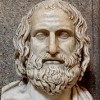
CHORUS: I hope the man who does not honour his friends, the man who does not open an honest heart to them, I hope that man dies a horrible, a miserable death. Such a man will certainly never be a friend of mine!
[ΚΥΚΛΩΨ: ἀχάριστος ὄλοιθ᾽ ὅτῳ πάρεστιν
μὴ φίλους τιμᾶν καθαρᾶν ἀνοί-
ξαντα κλῇδα φρενῶν: ἐμοὶ
μὲν φίλος οὔποτ᾽ ἔσται.]Euripides (485?-406? BC) Greek tragic dramatist
Medea [Μήδεια], l. 659ff, Antistrophe 2 (431 BC) [tr. Theodoridis (2004)]
(Source)
(Source (Greek)). Other translations:Perish the wretch devoid of worth.
Engrossed by mean and selfish ends.
Whose heart expands not, those he lov'd, to aid;
Never may I lament attachments thus repaid.
[tr. Wodhull (1782)]Unpitied may he die,
Who to a friend assistance can deny;
Nor, to afflicted virtue kind,
Unlocks the treasures of his mind!
[tr. Potter (1814)]Let shameful blight
Slay him who gives not friends their right,
Unlocking them his heart's pure store:
Let him be friend of mine no more.
[tr. Webster (1868)]May he perish and find no favour, whoso hath not in him honour for his friends, freely unlocking his heart to them. Never shall he be friend of mine.
[tr. Coleridge (1891)]Thankless may he perish who desires not to assist his friends, having unlocked the pure treasures of his mind; never shall he be friend to me.
[tr. Buckley (1892)]But he, who regardeth not friends, accursed may he perish, and hated,
Who opes not his heart with sincerity's key to the hapless-fated --
Never such shall be friend of mine!
[tr. Way (Loeb) (1894)]Ah, but the man -- cursèd be he,
Cursèd beyond recover,
Who openeth, shattering, seal by seal,
A friend's clean heart, then turns his heel,
Deaf unto love: never in me
Friend shall he know nor lover.
[tr. Murray (1906)]Perish the fiend! whose iron heart
To fair Affection’s truth unknown,
Bids her he fondly lov’d depart,
Unpitied, helpless, and alone;
Who ne’er unlocks with silver key,
The milder treasures of his soul;
May such a friend be far from me,
And Ocean’s storms between us roll!
[tr. Byron (1907)]O let him die ungraced whose heart
Will not reward his friends,
Who cannot open an honest mind
No friend will he be of mine.
[tr. Warner (1944)]May dishonor and ruin fall on the man
Who, having unlocked the secrets
Of a friend's frank heart, can then disown him!
He shall be no friend of mine.
[tr. Vellacott (1963)]Perish unloved the one
who does not unlock a pure heart to friends;
No friend of mind will he ever be.
[tr. Podlecki (1989)]May that man die unloved who cannot honor his friends, unlocking to them his honest mind. To me at any rate he shall never be friend.
[tr. Kovacs (Loeb) (1994)]Untouched by grace or favour may he die, the man who cannot honour his loved ones, by opening a heart that harbours no guile! Never shall he be friend of mine.
[tr. Davie (1996)]Without grace may he perish who
does not treat his loved ones honorably
unbolting his heart in pure love.
He will never be a friend of mine.
[tr. Luschnig (2007)]The man who shames his family,
who does not open up his heart
and treat them in all honesty --
may he perish unlamented.
With him I never could be friends.
[tr. Johnston (2008)]May an ungrateful person be destroyed, one who does not honour family and friends when he has opened up their hearts and found them pure; may such a person never be my friend.
[tr. Ewans (2022)]May he perish without grace [kharis], whoever could treat his philoi without timē, not opening the key of his phrenes. Never will he be philos to me.
[tr. Coleridge / Ceragioli / Nagy / Hour25]May that man die unloved who cannot honour his friends, unlocking to them his honest mind. To me at any rate he shall never be a friend.
[tr. Kovacs / Zhang / Rogak]
MEDEA: I shall never accept the favors of friends of yours,
Nor take a thing from you, so you need not offer it.
There is no benefit in the gifts of a bad man.[ΜΉΔΕΙΑ: οὔτ᾽ ἂν ξένοισι τοῖσι σοῖς χρησαίμεθ᾽ ἂν
οὔτ᾽ ἄν τι δεξαίμεσθα, μηδ᾽ ἡμῖν δίδου:
κακοῦ γὰρ ἀνδρὸς δῶρ᾽ ὄνησιν οὐκ ἔχει.]Euripides (485?-406? BC) Greek tragic dramatist
Medea [Μήδεια], l. 616ff (431 BC) [tr. Warner (1944)]
(Source)
(Source (Greek)). Other translations:No use I of thy friends
Will make, nor aught accept; thy presents spare.
For nothing which the wicked man can give
Proves beneficial.
[tr. Wodhull (1782)]I shall not use thy friends, nor will accept
Aught of thy treasures: give not me; the gifts
Of a bad man can bring no good with them.
[tr. Potter (1814)]Guest-friends of thine shall never profit me.
Nor will I aught of thee: proffer me nothing,
For there's no service in a bad man's gift.
[tr. Webster (1868)]I will have naught to do with friends of thine, naught will I receive of thee, offer it not to me; a villain's gifts can bring no blessing.
[tr. Coleridge (1891)]I will neither use thy friends, nor will I receive aught; do not give to me, for the gifts of a bad man bring no assistance.
[tr. Buckley (1892)]Thy friends! — nothing will I of friends of thine.
No whit will I receive, nor offer thou.
No profit is there in a villain's gifts.
[tr. Way (Loeb) (1894)]The gifts of a bad man bring no good with them.
[tr. Morgan; Bartlett's (1903)]I will not seek thy friends. I will not take
Thy givings. Give them not. Fruits of a stem
Unholy bring no blessing after them.
[tr. Murray (1906)]Nothing would induce me to have dealings with your friends,
Nor to take any gift of yours; so offer none.
A lying traitor's gifts carry no luck.
[tr. Vellacott (1963)]I wouldn’t have any dealings with your friends,
Nor take what you gave, don’t bother offering.
“The gifts of an evil giver bring no gain.”
[tr. Podlecki (1989)]I will accept no help from your friends nor will I take anything from you, so do not offer it. The gifts of a base man bring no benefit.
[tr. Kovacs (Loeb) (1994)]I would not on any terms resort to friends of yours or accept anything from you; make me no such offer; gifts from wicked people bring only harm.
[tr. Davie (1996)]I need neither your money nor your friends. Gifts from an evil man are of no use at all to anyone.
[tr. Theodoridis (2004)]We will not be making use of your friends;
I will not take anything from you; don’t give me anything.
The gift of a bad man brings no pleasure.
[tr. Luschnig (2007)]I’ll accept no assistance from your friends,
nor anything from you. Don’t make the offer.
Gifts from a worthless man are without value.
[tr. Johnston (2008)]I would not use your friends nor take a thing from you, so do not give; the gifts of a bad man can do great harm.
[tr. Ewans (2022)]Neither would I make use of your xenoi, nor would I accept anything from you; cease to offer it. Gifts from a kakos man bring no benefit.
[tr. Coleridge / Ceragioli / Nagy / Hour25]I will accept no help from your friends nor will I take anything from you, so do not offer it. The gifts of a dishonourable man bring no benefit.
[tr. Kovacs / Zhang / Rogak]
CHORUS: The fiercest anger of all, the most incurable
is that which rages in the place of dearest love.[ΚΥΚΛΩΨ: Δεινή τις ὀργὴ καὶ δυσίατος πέλει,
ὅταν φίλοι φίλοισι συμβάλωσ᾽ ἔριν.]Euripides (485?-406? BC) Greek tragic dramatist
Medea [Μήδεια], l. 520ff (431 BC) [tr. Vellacott (1963)]
(Source)
Of the estrangement Jason and Medea. Some translations say this line is given by the chorus leader, not the chorus as a whole.
(Source (Greek)). Other translations:How sharp their wrath, how hard to be appeas'd
When friends with friends begin the cruel strife.
[tr. Wodhull (1782)]When friends with friends at variance kindle strife,
Fierce is their anger and immedicable.
[tr. Potter (1814)]Terrible is that anger, and to assuage
Most difficult, when friends with friends join battle.
[tr. Webster (1868)]There is a something terrible and past all cure, when quarrels arise 'twixt those who are near and dear.
[tr. Coleridge (1891)]Dreadful is that anger and irremediable, when friends with friends kindle strife.
[tr. Buckley (1892)]Awful is wrath, and past all balm of healing,
When they that once loved clash in feud of hate.
[tr. Way (Loeb) (1894)]Dire and beyond all healing is the hate
When hearts that loved are turned to enmity.
[tr. Murray (1906)]It is a strange form of anger, difficult to cure, when two friends turn upon each other in hatred.
[tr. Warner (1944)]A terrible thing is temper and knows no cure
When dear ones wrangle and fall to fighting each other.
[tr. Podlecki (1989)]Terrible and hard to heal is the wrath that comes when kin join in conflict with kin.
[tr. Kovacs (Loeb) (1994)]Terrible is the anger and almost beyond cure, when strife severs those whom love once joined.
[tr. Davie (1996)]Friend against friend! An anger most implacable!
[tr. Theodoridis (2004)]Anger is frightening and hard to remedy
when loved ones join in strife with loved ones.
[tr. Luschnig (2007)]When members of a family fight like this,
rage pushes them beyond all compromise.
[tr. Johnston (2008)]It is a deinē anger and past all cure, whenever philoi fall to strife [eris] with philoi.
[tr. Coleridge / Ceragioli / Nagy / Hour25]
Think no Cost too much in the Purchasing [of] good Books; this is next to the acquiring of good Friends. But remember, they are better Ornaments in thy Head than in thy Library.
Thomas Fuller (1654–1734) English physician, preacher, aphorist, writer
Introductio ad Prudentiam, Vol. 2, # 2390 (1727)
(Source)

If men of eminence are exposed to censure on one hand, they are as much liable to flattery on the other. If they receive reproaches which are not due to them, they likewise receive praises which they do not deserve. In a word, the man in a high post is never regarded with an indifferent eye, but always considered as a friend or an enemy.
Joseph Addison (1672–1719) English essayist, poet, statesman
Essay (1711-06-26), The Spectator, No. 101
(Source)

Books should be chosen, as Friends ought to be; few, but choice ones; yet thou may’st have many Acquaintance.
Thomas Fuller (1654–1734) English physician, preacher, aphorist, writer
Introductio ad Prudentiam, Vol. 2, # 1995 (1727)
(Source)
If your children spend most of their time in other people’s houses, you’re lucky; if they all congregate at your house, you’re blessed.
Mignon McLaughlin (1913–1983) American journalist and author
The Second Neurotic’s Notebook, ch. 2 (1966)
(Source)

Being over seventy is like being engaged in a war. All our friends are going or gone and survive amongst the dead and the dying as on a battlefield.
Muriel Spark (1918–2006) Scottish writer, poet, essayist
Memento Mori, ch. 4 [Miss Jean Taylor] (1959)
(Source)

There are three faithful friends, an old wife, an old dog, and ready money.
Benjamin Franklin (1706–1790) American statesman, scientist, philosopher, aphorist
Poor Richard (1738 ed.)
(Source)

Most of our misfortunes are more supportable than the comments of our friends upon them.
Charles Caleb "C. C." Colton (1780–1832) English cleric, writer, aphorist
Lacon: Or, Many Things in Few Words, Vol. 1, § 517 (1820)
(Source)

Life is to be fortified by many friendships. To love, and to be loved, is the greatest happiness of existence. If I lived under the burning sun of the equator, it would be a pleasure to me to think that there were many human beings on the other side of the world who regarded and respected me; I could and would not live if I were alone upon the earth, and cut off from the remembrance of my fellow-creatures. It is not that a man has occasion often to fall back upon the kindness of his friends; perhaps he may never experience the necessity of doing so; but we are governed by our imaginations, and they stand there as a solid and impregnable bulwark against all the evils of life.
Sydney Smith (1771–1845) English clergyman, essayist, wit
Memoir of the Reverend Sydney Smith, by His Daughter, Lady Holland, Vol. 1, ch. 6 (1855)
(Source)

I have never thought there was much to be said in favour of dragging on long after all one’s friends were dead.
Murasaki Shikibu (c. 973 - c. 1014/1025) Japanese novelist, poet, lady-in-waiting [紫式部]
The Tale of Genji [源氏物語], ch. 29 “The Royal Visit [行幸]” [Princess Omiya] (AD 1001-1015) [tr. Waley (1928)]
(Source)

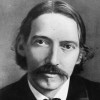
It’s impossible to be loyal to your family, your friends, your country, and your principles, all at the same time.
Mignon McLaughlin (1913–1983) American journalist and author
The Neurotic’s Notebook, ch. 5 (1963)
(Source)
Instinctively we divide mankind into friends and foes — friends, towards whom we have the morality of co-operation; foes, towards whom we have that of competition. But this division is constantly changing; at one moment a man hates his business competitor, at another, when both are threatened by Socialism or by an external enemy, he suddenly begins to view him as a brother. Always when we pass beyond the limits of the family it is the external enemy which supplies the cohesive force. In times of safety we can afford to hate our neighbour, but in times of danger we must love him.
Bertrand Russell (1872–1970) English mathematician and philosopher
Lecture (1948-12-26), “Social Cohesion and Human Nature,” Reith Lecture, “Authority and the Individual” No. 1, BBC Radio
(Source)

He that has never known adversity is but half acquainted with others, or with himself. Constant success shows us but one side of the world. For, as it surrounds us with friends, who will tell us only our merits, so it silences those enemies from whom alone we can learn our defects.
Charles Caleb "C. C." Colton (1780–1832) English cleric, writer, aphorist
Lacon: Or, Many Things in Few Words, Vol. 1, § 513 (1820)
(Source)
Keep not ill men company, lest you increase the number.
George Herbert (1593–1633) Welsh priest, orator, poet.
Jacula Prudentum, or Outlandish Proverbs, Sentences, &c. (compiler), # 314 (1640 ed.)
(Source)

With books, as with companions, it is of more consequence to know which to avoid, than which to chuse; for good books are as scarce as good companions, and in both instances, all that we can learn from bad ones, is, that so much time has been worse than thrown away.
Charles Caleb "C. C." Colton (1780–1832) English cleric, writer, aphorist
Lacon: Or, Many Things in Few Words, Vol. 1, Preface (1820)
(Source)
Perhaps the greatest rudenesses of our time come not from the callousness of strangers, but from the solicitousness of intimates who believe that their frank criticisms are always welcome, and who feel free to “be themselves” with those they love, which turns out to mean being their worst selves, while saving their best behavior for strangers.
Judith Martin (b. 1938) American author, journalist, etiquette expert [a.k.a. Miss Manners]
Common Courtesy, “Those Who Would Change the Country’s Manners Encounter Citizen Resistance” (1985)
(Source)

That man must be everyone’s personal enemy who has behaved like a public enemy to his own friends. No wise man ever felt that a traitor ought to be trusted.
[Omnium est communis inimicus qui fuit hostis suorum. Nemo umquam sapiens proditori credendum putavit.]
Marcus Tullius Cicero (106–43 BC) Roman orator, statesman, philosopher
In Verrem [Against Verres; Verrine Orations], Action 2, Book 1, ch. 15 / sec. 38 (1.15.38) (70 BC) [tr. Greenwood (1928)]
(Source)
(Source (Latin)). Other translations:He is the common enemy of all men who has once been the enemy of his own connections. No wise man ever thought that a traitor was to be trusted
[tr. Yonge (1903)]He is a common enemy who has been a foe to his own people. No man of sense has ever considreed a traitor worthy of credence.
[ed. Harbottle (1906)]
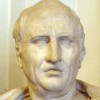
“In society,” M… would say, “you have three sorts of friends: those who love you, those who couldn’t care less about you, and those who hate you.”
«Dans le monde, disait M…, vous avez trois sortes d’amis: vos amis qui vous aiment, vos amis qui ne se soucient pas de vous, et vos amis qui vous haïssent.»
Nicolas Chamfort (1741–1794) French writer, epigrammist (b. Nicolas-Sébastien Roch)
Products of Perfected Civilization [Produits de la Civilisation Perfectionnée], Part 2 “Characters and Anecdotes [Caractères et Anecdotes],” ch. 8 (1795) [tr. Parmée (2003), ¶343]
(Source)
(Source (French)). Other translations:“In the world,” remarked some one to me, “you have three kinds of friends: the friends who love you, the friends who do not trouble their heads about you, and the friends who hate you.”
[tr. Hutchinson (1902)]M— said, "In society you have three kinds of friends: your friends who are fond of you, your friends who don’t care either way, and your friends who detest you."
[tr. Merwin (1969)]"In the world," said M..., you have three sorts of friends: the friends who love you; the friends who don't care about you, and the friends who hate you."
[tr. Pearson (1973)]You have three sorts of friend in polite society, M— used to say. Friends who are fond of you; friends who are unconcerned about you; friends who detest you.
[tr. Dusinberre (1992)]"There are three sorts of friends in high society," M— used to say. "Friends who are fond of you, friends who don't care about you, and friends who detest you."
[tr. Dusinberre (1992), "Sampler"]

Laugh at your Friends, and if your Friends are sore;
So much the better, you may laugh the more.Alexander Pope (1688–1744) English poet
Epilogue to the Satires, Dialogue 1, ll. 55-56 (1738)
(Source)

When the character of a man is not clear to you, look at his friends.
Proverbs, Sayings, and Adages
Japanese proverb

The question was once put to him, how we ought to behave to our friends; and the answer he gave was, “As we should wish our friends to behave to us.”
[ἐρωτηθεὶς πῶς ἂν τοῖς φίλοις προσφεροίμεθα, ἔφη, “ὡς ἂν εὐξαίμεθα αὐτοὺς ἡμῖν προσφέρεσθαι.”]
Aristotle (384–322 BC) Greek philosopher
Attributed in Diogenes Laërtius, Lives and Opinions of Eminent Philosophers [Vitae Philosophorum], Book 5, sec. 11 [tr. Yonge (1853)]
(Source)
(Source (Greek)). Other translations:To the question how we should behave to friends, he answered, "As we should wish them to behave to us."
[tr. Hicks (1925), sec. 21]When asked how we should act towards friends, he said “as we would pray they act towards us!”
[tr. @sentantiq (2016)]When asked how we should behave to friends, he said, "As we would wish them to behave to us."
[tr. Mensch (2018)]
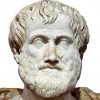
Dear George:
Remember, no man is a failure who has friends.
Thanks for the wings!
Love, Clarence.Frank Capra 1897–1991) Italian-American film director, producer, writer [b. Francesco Rosario Capra]
It’s a Wonderful Life (1946) [with Frances Goodrich, Albert Hackett]
(Source)

And bad luck reveals those who are not real friends, but just happen to be so because of utility.
[ἡ δ᾽ ἀτυχία δηλοῖ τοὺς μὴ ὄντως [20] ὄντας φίλους, ἀλλὰ διὰ τὸ χρήσιμον τυχόντας.]
Aristotle (384–322 BC) Greek philosopher
Eudemian Ethics [Ἠθικὰ Εὐδήμεια], Book 7, ch. 2 / 1238a.19-20 [tr. Reeve (2021)]
(Source)
(Source (Greek)). Other translations:Misfortune shows those who are not really friends, but friends only for some accidental utility.
[tr. Solomon (1915)]Misfortune shows those who are not friends really but only because of some casual utility.
[tr. Rackham (1981)]But misfortune shows those who are friends not really but because of chance utility.
[tr. Simpson (2013)]
Most artists, ashamed of their need for encouragement, try to carry their work to term like a secret pregnancy. … We bunker in with our projects, beleaguered by our loneliness and the terrible secret that we carry: We need friends to our art. We need them as desperately as friends to our hearts. Our projects, after all, are our brainchildren, and what they crave is a loving extended family, a place where “How’d it go today?” can refer to a turn at the keys or the easel as easily as a turn in the teller’s cage.”
Julia Cameron (b. 1948) American teacher, author, filmmaker, journalist
“Taking Heart,” The Sound of Paper (2005)
(Source)

Continuous association with base men increases a disposition to crime.
[Φαύλων ὁμιλίη συνεχὴς ἕξιν κακίης συναύξει.]
Democritus (c. 460 BC - c. 370 BC) Greek philosopher
Frag. 184 (Diels) [tr. Freeman (1948)]
(Source)
Cited in Diels as "184. (194 N.)"; collected in Joannes Stobaeus (Stobaios) Anthologium II, 31, 90.
Other translations:
- "Frequent association with the wicked increases a disposition to vice." [tr. Barnes (1987)]
- "Associating with scoundrels frequently increases the possession of wickedness." [tr. @sententiq (2020), Fr. 234]
- "By associating with scoundrels, you will turn out a scoundrel"
- "Continuous association with the wicked increases bad character."

In politics you have no friends, only allies.
John F. Kennedy (1917–1963) American politician, author, journalist, US President (1961–63)
(Attributed)
A frequent maxim of Kennedy's.

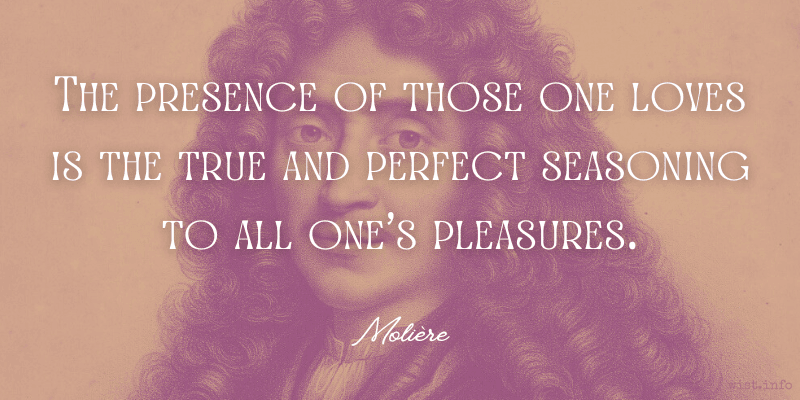
ACASTE: The presence of those one loves is the true and perfect seasoning to all one’s pleasures.
[C’est un merveilleux assaisonnement aux plaisirs qu’on goûte que la présence des gens qu’on aime.]
Molière (1622–1673) French playwright, actor [stage name for Jean-Baptiste Poquelin]
Le Misanthrope, Act 5, sc. 4 (1666) [tr. Wilbur (1954)]
(Source)
Reading a letter from Céliméne to Clitandre.
(Source (French)). Other translations:The presence of all those we love is an excellent relish to our pleasures.
[tr. Van Laun (1878)]The presence of people we love gives a wonderful relish to pleasures.
[tr. Mathew (1890)]It is a wonderful seasoning of all enjoyments to think of those we love.
[tr. Wormeley (1894)]The society fo those we love is a wonderful relish to our pleasure.
[tr. Waller (1903)]The presence of people we like gives a marvelous relish to our pleasures.
[tr. Page (1913)]The presence of people one is really fond of is the best seasoning for social amusements.
[tr. Bishop (1957)]A marvelous seasoning for the pleasures we enjoy is the presence of the persons we love.
[tr. Frame (1967)]

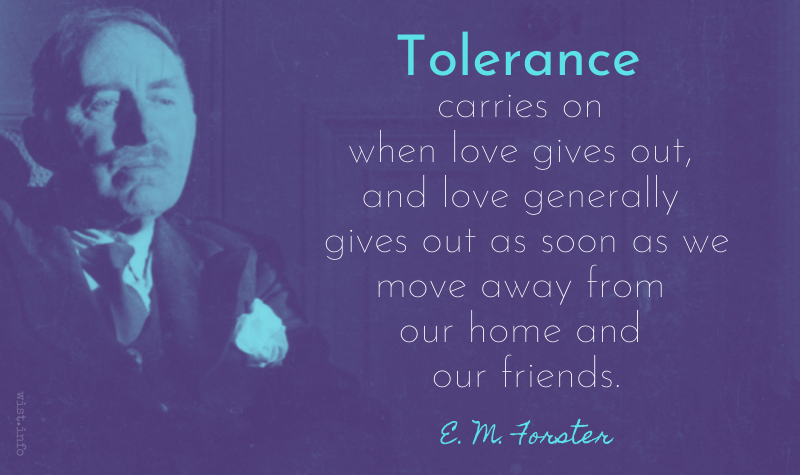
[Tolerance] carries on when love gives out, and love generally gives out as soon as we move away from our home and our friends.
E. M. Forster (1879–1970) English novelist, essayist, critic, librettist [Edward Morgan Forster]
“The Unsung Virtue of Tolerance,” radio broadcast (Jul 1941)
(Source)
Published as "Tolerance," Two Cheers for Democracy (1951)
Animals are such agreeable friends — they ask no questions, they pass no criticisms.
George Eliot (1819–1880) English novelist [pseud. of Mary Ann Evans]
“Mr. Gilfil’s Love Story,” ch. 7, Scenes of Clerical Life (1857)
(Source)
We can have no better clue to a man’s character than the company he keeps.
Niccolò Machiavelli (1469–1527) Italian politician, philosopher, political scientist
The Discourses on Livy, Book 3, ch. 34, § 2 (1517) [tr. Thomson (1883)]
(Source)
Other translations:One can have no greater indication of a man than the company that he keeps.
[tr. Mansfield / Tarcov (1996)]There can be no clearer indication about a man than the company he keeps.
[tr. Bondanella / Bondanella (1997)]


Man has three friends on whose company he relies. First, wealth — which goes with him only while good fortune lasts. Second, his relatives — they go only as far as the grave and leave him there. The third friend, his good deeds, go with him beyond the grave.
The Talmud (AD 200–500) Collection of Jewish rabbinical writings
(Attributed)
I could not find an actual citation for this quotation, but the story (the explanation of a parable, in which a man is summoned before a king, and while his dearest friend will not go with him, and his second best friend will only go to the palace gates, his least-loved friend goes with him before the throne) shows up with different translation in multiple sources:
- The Talmud: Selections, Part 5 "Civil and Criminal Laws -- the Holy Days" - "The Day of Atonement" [tr. Polano (1876)].
- Isaac Aboav, Lamp of Light [Menorat Hamoar] [14th C], Fifth Lamp "Teshuvah," Sec. 2 [ch. 3] in Leonard Kravitz and Kerry Olitzky, Journey of the Soul: Traditional Sources on the Teshuvah (1995).
- Talmudic and Other Legends [tr., comp. Weiss (1888 ed.), "Man's Three Friends" (Pirke R. Eliezer).

When the character of a man is not clear to you, look at his friends.
Proverbs, Sayings, and Adages
Japanese proverb
I have had playmates, I have had companions;
In my days of childhood, in my joyful school days —
All, all are gone, the old familiar faces.Charles Lamb (1775–1834) Welsh-English essayist
“Old Familiar Faces” (1798)

Fate chooses our relatives, we choose our friends.
Jacques Delille (1738–1813) French poet, translator
“Malheur et Pitié,” Canto 1 (1803)

Be as careful of the books you read as of the company you keep, for your habits and character will be as much influenced by the former as the latter.
Edwin Paxton Hood (1820–1885) English nonconformist minister and author
Self-Formation (1858 ed.)

We are as liable to be corrupted by our books as by our companions.
Henry Fielding (1707–1754) English novelist, dramatist, satirist
“A Fragment of a Comment on Lord Bolingbroke’s Essays” (1755)
That is what trust is, you know: if we never had secrets from our friends and loved ones, there would never be any need for them to trust us.
Steven Brust (b. 1955) American writer, systems programmer
Orca [Kiera] (1996)

Be very circumspect in the choice of thy company. In the society of thine equals thou shalt enjoy more pleasure; in the society of thy superiors thou shalt find more profit. To be the best in the company is the way to grow worse. The best means to grow better is to be the worst there.

Under a tyranny, most friends are a liability. One quarter of them turn “reasonable” and become your enemies, one quarter are afraid to speak, and one quarter are killed and you die with them. But the blessed final quarter keep you alive.
Sinclair Lewis (1885–1951) American novelist, playwright
It Can’t Happen Here (1935)
Of all the horrid, hideous notes of woe,
Sadder than owl songs or the midnight blast,
Is that portentous phrase, “I told you so,”
Utter’d by friends, those prophets of the past,
Who, ‘stead of saying what you now should do,
Own they foresaw that you would fall at last.
Good friends, good books, and a sleepy conscience: This is the ideal life.
Mark Twain (1835–1910) American writer [pseud. of Samuel Clemens]
Note (1898-07-04), Mark Twain’s Notebook, ch. 21 “In Vienna” (1935) [ed. Albert Bigelow Paine]
(Source)
Written while summering at a resort outside of Vienna. Paine notes, "Written in the Archduchess's album" (referring to Marie Theresa of Austria).

Our companions please us less from the charms we find in their conversation than from those they find in ours.
Fulke Greville (1554–1628) 1st Baron Brooke; Elizabethan poet, dramatist, and statesman
Maxims, Characters and Reflections, 98 (1757 ed.)

But this truth from long experience I assert, that he who has the most friends and the fewest enemies, is the strongest; will rise the highest with the least envy; and fall, if he does fall, the gentlest, aud the most pitied.
Lord Chesterfield (1694–1773) English statesman, wit [Philip Dormer Stanhope]
Letter to his son, #293 (11 Nov 1752)
(Source)

Being honest may not get you many friends, but it’ll always get you the right ones.
John Lennon (1940–1980) English rock musician, singer, songwriter
(Attributed)
Frequently attributed to Lennon, but with no actual source ever provided.

I don’t care about whose DNA has recombined with whose. When everything goes to hell, the people who stand by you without flinching — they are your family.
Jim Butcher (b. 1971) American author
Proven Guilty (2006)

I am not altogether on anybody’s side, because nobody is altogether on my side, if you understand me.
J.R.R. Tolkien (1892–1973) English writer, fabulist, philologist, academic [John Ronald Reuel Tolkien]
The Lord of the Rings, Vol. 2: The Two Towers, Book 3, ch. 4 “Treebeard” [Treebeard] (1954)
(Source)

Perhaps travel cannot prevent bigotry, but by demonstrating that all peoples cry, laugh, eat, worry, and die, it can introduce the idea that if we try and understand each other, we may even become friends.
Maya Angelou (1928–2014) American poet, memoirist, activist [b. Marguerite Ann Johnson]
Wouldn’t Take Nothing for My Journey Now, ch. 2 “Passports to Understanding” (1993)
(Source)

In the end, we will remember not the words of our enemies, but the silence of our friends.
Martin Luther King, Jr. (1929–1968) American clergyman, civil rights leader, social activist, preacher
“The Trumpet of Conscience,” Steeler Lecture (Nov 1967)

To be glad of life because it gives you to chance to love and to work and to play and to look up at the stars — to be satisfied with your possessions but not content with yourself until you have made the best of them — to despise nothing in the world except falsehood and meanness, and to fear nothing except cowardice — to be governed by you admirations rather than by your disgusts — to covet nothing that is your neighbors except his kindness of heart and gentleness of manners — to think seldom of your enemies, often of your friends, and every day of Christ; to spend as much time as you can in God’s out-of doors — these are the little guideposts on the foot-path to peace.
Henry Van Dyke (1852–1933) American clergyman and writer
“The Foot-path to Peace,” Tacoma Times (1 Jan 1904)
(Source)
Often shortened to: "Be glad for life because it gives you the chance to love and to work and to look up at the stars."
Don’t be dismayed at good-byes.
A farewell is necessary before you can meet again.
And meeting again, after moments or lifetimes,
is certain for those who are friends.Richard Bach (b. 1936) American writer
Illusions: The Adventures of a Reluctant Messiah, ch. 18, epigraph (1977)
(Source)
It is not so much our friends’ help that helps us as the confidence of their help.
Epicurus (341–270 BC) Greek philosopher
The Vatican Sayings
Other translations: "It is not so much our friends' help that helps us as the confident knowledge that they will help us."
I live in the crowd of jollity, not so much to enjoy company as to shun myself.
Samuel Johnson (1709–1784) English writer, lexicographer, critic
The History of Rasselas, Prince of Abissinia, ch. 26 (1759)
(Source)

So wherever I am, there’s always Pooh,
There’s always Pooh and Me.
“What would I do?” I said to Pooh,
“If it wasn’t for you,” and Pooh said: “True,
It isn’t much fun for One, but Two
Can stick together,” says Pooh, says he.
“That’s how it is,” says Pooh.A. A. Milne (1882–1956) English poet and playwright [Alan Alexander Milne]
Now We Are Six, “Us Two,” st. 5 (1927)
(Source)