If you find many people who are hard and indifferent to you in a world that you consider to be unhospitable and cruel — as often, indeed, happens to a tender-hearted, stirring young creature — you will also find there are noble hearts who will look kindly on you, and their help will be precious to you beyond price.
Thomas Carlyle (1795–1881) Scottish essayist and historian
Speech (1866-04-02), “On the Choice of Books,” Inaugural Address as Lord Rector, University of Edinburgh
(Source)
Quotations about:
support
Note not all quotations have been tagged, so Search may find additional quotes on this topic.

Bear ye one another’s burdens, and so fulfil the law of Christ.
[Ἀλλήλων τὰ βάρη βαστάζετε καὶ οὕτως ἀναπληρώσετε τὸν νόμον τοῦ Χριστοῦ.]
The Bible (The New Testament) (AD 1st - 2nd C) Christian sacred scripture
Book 9. Letter to the Galatians 6: 2 (Gal 6:2) [KJV (1611)]
(Source)
See Thomas à Kempis (c. 1420).
(Source (Greek)). Other translations:You should carry each other's troubles and fulfil the law of Christ.
[JB (1966)]Carry each other's burdens; that is how to keep the law of Christ.
[NJB (1985)]Help carry one another's burdens, and in this way you will obey the law of Christ.
[GNT (1992 ed.)]Carry each other’s burdens and so you will fulfill the law of Christ.
[CEB (2011)]Bear one another’s burdens, and in this way you will fulfill the law of Christ.
[NRSV (2021 ed.)]

Times are changed with him who marries; there are no more by-path meadows, where you may innocently linger, but the road lies long and straight and dusty to the grave. Idleness, which is often becoming and even wise in the bachelor, begins to wear a different aspect when you have a wife to support.
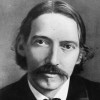
Robert Louis Stevenson (1850–1894) Scottish essayist, novelist, poet
Essay (1881), “Virginibus Puerisque, Part 2”
(Source)
First published in Virginibus Puerisque and Other Papers, ch. 1, part 2 (1881).
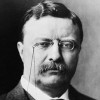
I shall support every official from the President down who does well, and shall oppose every such official who does ill. I shall not put the personal comfort of the President or of any other public servant above the welfare of the country.
Theodore Roosevelt (1858–1919) American politician, statesman, conservationist, writer; US President (1901–09)
Essay (1918-05), “Lincoln and Free Speech,” Metropolitan Magazine, Vol. 47, No. 6
(Source)
On censorship actions by the Wilson Administration taken against critics of its handling of war efforts.
Reprinted in Appendix C of his The Great Adventure (1918), and as ch. 7 of that book in Vol. 21 of The Works of Theodore Roosevelt (1925), The Great Adventure.
Each man thought: one of the others is bound to say something soon, some protest and then I will murmur agreement, not actually say anything. I am not as stupid as that, but definitely murmur very firmly, so that the others will be in no doubt that I thoroughly disapprove, because at a time like this it behooves all decent men to nearly stand up and be almost heard …
But no one said anything. The cowards, each man thought.

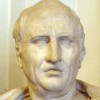
Well then, is there anyone — besides those who were glad that he had turned into a king — who did not want this deed to happen, or failed to approve of it afterwards? So all are guilty. All loyal citizens, so far as was in their power, killed Caesar. Not everyone had a plan, not everyone had the courage, not everyone had the opportunity — but everyone had the will.
[Ecquis est igitur exceptis eis qui illum regnare gaudebant qui illud aut fieri noluerit aut factum improbarit? Omnes ergo in culpa. Etenim omnes boni, quantum in ipsis fuit, Caesarem occiderunt: aliis consilium, aliis animus, aliis occasio defuit; voluntas nemini.]
Marcus Tullius Cicero (106–43 BC) Roman orator, statesman, philosopher
Philippics [Philippicae; Antonian Orations], No. 2, ch. 12 / sec. 29 (2.12/2.29) (44-10-24 BC) [tr. Berry (2006)]
(Source)
(Source (Latin)). Other translations:Is there anyone, then, except those who rejoiced in his kingly sway, who either was unwilling that the deed should be done or has impugned it since? All therefore share in the fault, for all loyal citizens, so far as rested with them, took part in Cæsar's death. Some wanted the necessary powers of contrivance, some the courage, some the opportunity; but not one the will.
[tr. King (1877)]Is there then any man, except those that were glad of his reign, who repudiated that deed, or disapproved of it when it was done? All therefore are to blame, for all good men, so far as their own power went, slew Caesar; some lacked a plan, others courage, others opportunity: will no man lacked.
[tr. Ker (Loeb) (1926)]Is there any one then, except you yourself and these men who wished him to become a king, who was unwilling that that deed should be done, or who disapproved of it after it was done? All men, therefore, are guilty as far as this goes. In truth, all good men, as far as it depended on them, bore a part in the slaying of Caesar. Some did not know how to contrive it, some had not courage for it, some had no opportunity, -- every one had the inclination.
[tr. Yonge (1903)]Yet, with the exception of the men who wanted to make an autocratic monarch of him, all were happy for this to happen -- or were glad when it had happened. So everyone is guilty! For every decent person, in so far as he had any say in the matter, killed Caesar! Plans, courage, opportunities were in some case lacking; but the desire nobody lacked.
[tr. Grant (1960)]Is there anyone, with the exception of those who were happy that he was our king, who did not want it done or disapproved that it was done? Everyone is at fault, then. Indeed, all decent men, as far as they could, killed Caesar; some may have lacked a plan, others courage, and still others the opportunity, but no one lacked the desire.
[tr. McElduff (2011)]
Give words of comfort, of defence, and hope,
To mortals crushed by sorrow and by error.
And though thy feet through shadowy paths may grope,
Thou shalt not walk in loneliness or terror.Ella Wheeler Wilcox (1850–1919) American author, poet, temperance advocate, spiritualist
Poem (1906), “Give,” st. 2, New Thought Pastels
(Source)

Life is to be fortified by many friendships. To love, and to be loved, is the greatest happiness of existence. If I lived under the burning sun of the equator, it would be a pleasure to me to think that there were many human beings on the other side of the world who regarded and respected me; I could and would not live if I were alone upon the earth, and cut off from the remembrance of my fellow-creatures. It is not that a man has occasion often to fall back upon the kindness of his friends; perhaps he may never experience the necessity of doing so; but we are governed by our imaginations, and they stand there as a solid and impregnable bulwark against all the evils of life.
Sydney Smith (1771–1845) English clergyman, essayist, wit
Memoir of the Reverend Sydney Smith, by His Daughter, Lady Holland, Vol. 1, ch. 6 (1855)
(Source)

Endeavour rather to get the Approbation of a few good Men, than the Huzza of the Mob.
Thomas Fuller (1654–1734) English physician, preacher, aphorist, writer
Introductio ad Prudentiam, Vol. 1, # 512 (1725)
(Source)

When we take people merely as they are, we make them worse; when we treat them as if they were what they should be, we improve them as far as they can be improved.
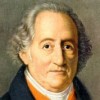
[Wenn wir die Menschen nur nehmen, wie sie sind, so machen wir sie schlechter; wenn wir sie behandeln, als wären sie, was sie sein sollten, so bringen wir sie dahin, wohin sie zu bringen sind.]Johann Wolfgang von Goethe (1749–1832) German poet, statesman, scientist
Wilhelm Meister’s Apprenticeship, Book 8, ch. 4 (1796) [tr. Carlyle (1824)]
(Source)
Theresa, quoting Wilhelm in a letter to him.
(Source (German)). Another translation:If all we do is take people as they are, we shall make them worse; if we treat them as if they were what they ought to be, we shall lead them to that place where they are to be led.
[tr. Waidson (1972)]
The following very similar passage is often cited to Haim Ginott, Teacher and Child: A Book for Parents and Teachers (1972), but does not appear in that work:If we treat people as they are, we make them worse. If we treat people as they ought to be, we help them become what they are capable of becoming.
Knowing that others have gone through similar tragedies may be a help, but it should be remembered that every tragedy is not only commonplace but also unique.
Judith Martin (b. 1938) American author, journalist, etiquette expert [a.k.a. Miss Manners]
Miss Manners Rescues Civilization, ch. 9 “Jettisoning Professional Behavior” (1996)
(Source)

I have always believed that the key to a happy marriage was the ability to say with a straight face, “Why, I don’t know what you’re worrying about. I thought you were very funny last night, and I’m sure everybody else did, too.”
Judith Martin (b. 1938) American author, journalist, etiquette expert [a.k.a. Miss Manners]
Common Courtesy, “Those Who Would Change the Country’s Manners Encounter Citizen Resistance” (1985)
(Source)
I have an understanding with my husband: on any day when I haven’t done any writing, I must play him three games of chess. The trouble is, if I have been working, I enjoy the chess; if not, all I want to play is Russian roulette.
Mignon McLaughlin (1913–1983) American journalist and author
The Second Neurotic’s Notebook, ch. 10 (1966)
(Source)

It is often said that the Church is a crutch. Of course it’s a crutch. What makes you think you don’t limp?
William Sloane Coffin, Jr. (1924–2006) American minister, social activist
Credo, “The Church” (2004)
(Source)

If you have the privilege of a fine education, well, you have it because somebody made it possible. If you have the privilege to gain wealth and a bit of the world’s goods, well, you have it because somebody made it possible. So don’t boast, don’t be arrogant.
Martin Luther King, Jr. (1929–1968) American clergyman, civil rights leader, social activist, preacher
“Conquering Self-Centeredness,” sermon, Dexter Ave. Baptist Church, Montgomery (11 Aug 1957)
(Source)

The delight of social relations between friends is fostered by a shared attitude to life, together with certain differences of opinion on intellectual matters, through which either one is confirmed in one’s own views, or else one gains practice and instruction through argument.
[Le plaisir de la société entre les amis se cultive par une ressemblance de goût sur ce qui regarde les moeurs, et par quelques différences d’opinions sur les sciences: par là ou l’on s’affermit dans ses sentiments, ou l’on s’exerce et l’on s’instruit par la dispute.]
Jean de La Bruyère (1645–1696) French essayist, moralist
The Characters [Les Caractères], ch. 5 “Of Society and Conversation [De la Société et de la Conversation],” § 61 (5.61) (1688) [tr. Stewart (1970)]
(Source)
(Source (French)). Other translations:The pleasure of Society amongst Friends is cultivated by a likeness of Inclinations, as to Manners; and a difference in Opinion, as to Sciences: the one confirms and humours us in our sentiments; the other exercises and instructs us by disputation.
[Bullord ed. (1696)]The Pleasure of Society amongst Friends, is cultivated by a likeness of Inclinations, as to Manners, and by some difference in Opinion, as to Sciences: The one confirms us in our Sentiments, the other exercises and instructs us by Disputation.
[Curll ed. (1713)]The pleasure of social intercourse amongst friends is kept up by a similarity of morals and manners, and by slender differences in opinion about science; this confirms us in our sentiments, exercises our faculties or instructs us through arguments.
[tr. Van Laun (1885)]

Parents should work together as efficiently as two bookends.
Marcelene Cox (1900–1998) American writer, columnist, aphorist
“Ask Any Woman” column, Ladies’ Home Journal (1957-08)
(Source)

We never get anywhere in this world without the forces of history and individual persons in the background helping us to get there.
Martin Luther King, Jr. (1929–1968) American clergyman, civil rights leader, social activist, preacher
“Conquering Self-Centeredness,” sermon, Dexter Ave. Baptist Church, Montgomery, Ala. (11 Aug 1957)
(Source)
Virtue is not left to stand alone. He who practises it will have neighbors.
[德不孤、必有鄰。]
Confucius (c. 551- c. 479 BC) Chinese philosopher, sage, politician [孔夫子 (Kǒng Fūzǐ, K'ung Fu-tzu, K'ung Fu Tse), 孔子 (Kǒngzǐ, Chungni), 孔丘 (Kǒng Qiū, K'ung Ch'iu)]
The Analects [論語, 论语, Lúnyǔ], Book 4, verse 25 (4.25) (6th C. BC – AD 3rd C.) [tr. Legge (1861)]
(Source)
Differing commentary on the text can be found; it may mean that virtue attracts others to its side, or it may be a comment on virtue needing to be practiced in a social setting.
(Source (Chinese)). Other translations:Virtue dwells not alone: she must have neighbors.
[tr. Jennings (1895)]Moral worth is never left alone; society is sure to grow round him.
[tr. Ku Hung-Ming (1898)]Virtue never dwells alone; it always has neighbors.
[tr. Soothill (1910)]Virtue attracts friends.
[tr. Soothill (1910), Alternate]Candidness is not fatherless, it is bound to have neighbors.
[tr. Pound (1933)]Moral force (tê) never dwells in solitude; it will always bring neighbors.
[tr. Waley (1938)]High moral conduct does not remain alone; it is sure to attract neighbors.
[tr. Ware (1950)]Virtue never stands alone. It is bound to have neighbors.
[tr. Lau (1979)]Virtue is not solitary. It is bound to have neighbors.
[tr. Dawson (1993)]Virtue is not solitary; it always has neighbors.
[tr. Leys (1997)]The virtuous are not solitary. They surely have neighbors.
[tr. Huang (1997)]A virtuous person is not alone, certainly has his companions.
[tr. Cai/Yu (1998)]Excellent persons (de) do not dwell alone; they are sure to have neighbors.
[tr. Ames/Rosemont (1998)]Virtue is not solitary; it must have neighbors.
[tr. Brooks/Brooks (1998)]Integrity's never alone. It always has neighbors.
[tr. Hinton (1998)]Virtue is never solitary; it always has neighbors.
[tr. Slingerland (2003)]Virtue is not alone. It invariably has neighbors.
[tr. Watson (2007)]Virtue does not stand alone. It is bound to have neighbors.
[tr. Annping Chin (2014)]A virtuous person is never lonely because there is always a comrade nearby.
[tr. Li (2020)]

The job of a friend is not to decide what should be done, not to run interference or pick up the slack. The job of a friend is to understand, and to supply energy and hope, and in doing so to keep those they value on their feet a little longer, so that they can fight another round and grow strong in themselves.
Merle Shain (1935–1989) Canadian journalist and author
When Lovers Are Friends, ch. 9 (1980)
(Source)

I’m not sure there can be loving without commitment, although commitment takes all kinds of forms, and there can be commitment for the moment as well as commitment for all time. The kind that is essential for loving marriages — and love affairs, as well — is a commitment to preserving the essential quality of your partner’s soul, adding to them as a person rather than taking away.
Merle Shain (1935–1989) Canadian journalist and author
Some Men are More Perfect Than Others, ch. 9 “Being True” (1973)
(Source)
Women are good listeners, but it’s a waste of time telling your troubles to a man unless there is something specific you want him to do.
Mignon McLaughlin (1913–1983) American journalist and author
The Neurotic’s Notebook, ch. 3 (1963)
(Source)
A boo is a lot louder than a cheer. If you have 10 people cheering and one person booing, all you hear is the booing.
Lance Armstrong (b. 1971) American road racing cyclist
In “King of the Hill,” Sports Illustrated (2 Aug 2002)
(Source)

boss there is always
a comforting thought
in time of trouble when
it is not our trouble.Don Marquis (1878–1937) American journalist and humorist
“comforting thoughts,” archy does his part (1935)
(Source)

What can be more delightful than to have someone to whom you can say everything with the same absolute confidence as to yourself? Is not prosperity robbed of half its value if you have no one to share your joy?
[Quid dulcius quam habere quicum omnia audeas sic loqui ut tecum? Qui esset tantus fructus in prosperis rebus, nisi haberes, qui illis aeque ac tu ipse gauderet?]
Marcus Tullius Cicero (106–43 BC) Roman orator, statesman, philosopher
Laelius De Amicitia [Laelius on Friendship], ch. 6 / sec. 22 (44 BC) [tr. Shuckburgh (1909)]
(Source)
Original Latin. Peabody (below) attributes the first sentence here to Ennius, whom Cicero quotes in the previous sentence, but nobody else does. Other translations:What can be more delightful than to have one to whom you can speak on all subjects just as to yourself? Where would be the great enjoyment in prosperity if you had not one to rejoice in it equally with yourself?
[tr. Edmonds (1871)]What sweeter joy than in the kindred soul, whose converse differs not from self-communion? How could you have full enjoyment of prosperity, unless with one whose pleasure in it was equal to your own?
[tr. Peabody (1887)]What is sweeter than to have someone with whom you may dare discuss anything as if you were communing with yourself? How could your enjoyment in times of prosperity be so great if you did not have someone whose joy in them would be equal to your own?
[tr. Falconer (1923)]What is sweeter than to have someone with whom you dare to discuss everything, as if with yourself? How could there be great joy in prosperous things, if you did not have someone who would enjoy them equally much as you yourself?
[Source]
A society is most vigorous, and appealing, when both partisan and critic are legitimate voices in the permanent dialogue that is the testing of ideas and experience. One can be a critic of one’s country without being an enemy of its promise.
Daniel Bell (1919–2011) American sociologist, writer, editor, academic
The End of Ideology, Introduction (1961 ed.)
(Source)
Totalitarianism appeals to the very dangerous emotional needs of people who live in complete isolation and in fear of one another.
Hannah Arendt (1906–1975) German-American philosopher, political theorist
Interview (1973-10) with Roger Errera, Office de Radiodiffusion-Télévision Française (ORTF)
This portion of the interview was published in The New York Review of Books (1978-10-26).
Other parts of the interview were turned into an episode of the French TV series "Un certain regard," directed by Jean-Claude Lubtchansky, first broadcast 1974-07-06.

Often have I marvelled how each one of us loves himself above all men, yet sets less store by his own opinion of himself than by that of everyone else.
[Πολλάκις ἐθαύμασα πῶς ἑαυτὸν μὲν ἕκαστος μᾶλλον πάντων φιλεῖ, τὴν δὲ ἑαυτοῦ περὶ αὑτοῦ ὑπόληψιν ἐν ἐλάττονι λόγῳ τίθεται ἢ τὴν τῶν ἄλλων.]
Marcus Aurelius (AD 121–180) Roman emperor (161–180), Stoic philosopher
Meditations [To Himself; Τὰ εἰς ἑαυτόν], Book 12, ch. 4 (12.4) (AD 161-180) [tr. Haines (Loeb) (1916)]
(Source)
(Source (Greek)). Other translations:I have often wondered how it should come to pass, that every man loving himself best, should more regard other men's opinions concerning himself than his own.
[tr. Casaubon (1634), 12.3]I have often wonder'd how it comes to pass, that every Body should love themselves best, and yet value their Neighbours Opinion about themselves, more than their own.
[tr. Collier (1701)]I have often wondered how each man should love himself more than any other; and yet make less account of his own opinion concerning himself, than of the opinions of others.
[tr. Hutcheson/Moor (1742)]I have often wondered, whence it comes to pass, that although every one loves himself more than he does any other man, he should yet pay a greater regard to the opinion of other people concerning him than to his own.
[tr. Graves (1792)]I have often wondered how it is that every man loves himself more than all the rest of men, but yet sets less value on his own opinion of himself than on the opinion of others.
[tr. Long (1862)]I have often wondered how it comes to pass that everybody should love themselves best, and yet value their neighbor's opinion about themselves more than their own.
[tr. Collier/Zimmern (1887)]How strange it is, that every one loves himself above all others, yet attaches less weight to his own view of himself, than to that of other men.
[tr. Rendall (1898)]I have wondered often how it comes that, while every man loves himself beyond all others, yet he holds his own opinion of himself in less esteem than the opinion of others.
[tr. Hutcheson/Chrystal (1902)]I often wonder how it is that every one loves himself more than all the world and yet takes less account of his own judgement of himself than of the judgement of the world.
[tr. Farquharson (1944)]I often marvel how it is that though each man loves himself beyond all else, he should yet value his own opinion of himself less than that of others.
[tr. Staniforth (1964)]I have often marvelled at how everyone loves himself above all others, yet places less value on his own opinion of himself than that of everyone else.
[tr. Hard (1997 ed.); Hard (2011 ed.)]It never ceases to amaze me: we all love ourselves more than other people, but care more about their opinion than our own.
[tr. Hays (2003)]I have often wondered how it is that everyone loves himself more than anyone else, but rates his own judgement of himself below that of others.
[tr. Hammond (2006)]I have often been amazed at how every person loves himself more than he loves others yet places less value on his own judgment of himself than of the judgments of others concerning him.
[tr. Needleman/Piazza (2008)]How is it that every person loves themselves more than any other person, yet still gives more value to the opinions of others than the opinion they hold of themselves?
[tr. McNeill (2019)]

Most artists, ashamed of their need for encouragement, try to carry their work to term like a secret pregnancy. … We bunker in with our projects, beleaguered by our loneliness and the terrible secret that we carry: We need friends to our art. We need them as desperately as friends to our hearts. Our projects, after all, are our brainchildren, and what they crave is a loving extended family, a place where “How’d it go today?” can refer to a turn at the keys or the easel as easily as a turn in the teller’s cage.”
Julia Cameron (b. 1948) American teacher, author, filmmaker, journalist
“Taking Heart,” The Sound of Paper (2005)
(Source)

One looks back with appreciation to the brilliant teachers, but with gratitude to those who touched our human feelings. The curriculum is so much necessary raw material, but warmth is the vital element for the growing plant and for the soul of the child.
Carl Jung (1875–1961) Swiss psychologist
Lecture (1942-12), “The Gifted Child [Der Begabte],” Basel School Council, Switzerland [tr. Hull (1954)]
(Source)
Reprinted in Schweitzer Erziehungs Rundschau, 16 (1943) and Psychologie und Erziehung (1946), finally collected in The Development of Personality, ch. 5 (1954) [tr. Hull].
You have it easily in your power to increase the sum total of this world’s happiness now. How? By giving a few words of sincere appreciation to someone who is lonely or discouraged. Perhaps you will forget tomorrow the kind words you say today, but the recipient may cherish them over a lifetime.
Dale Carnegie (1888–1955) American writer, lecturer
In Dorothy Carnegie, The Quick and Easy Way to Effective Speaking (1962)
To Herbert Westbrook, without whose never-failing advice, help, and encouragement, this book would have been finished in half the time.
P. G. Wodehouse (1881–1975) Anglo-American humorist, playwright and lyricist [Pelham Grenville Wodehouse]
A Gentleman of Leisure, Dedication (1910)
(Source)
To be vested with enormous authority is a fine thing; but to have the onlooking world consent to it is a finer.
Mark Twain (1835–1910) American writer [pseud. of Samuel Clemens]
Novel (1889), A Connecticut Yankee in King Arthur’s Court, Part 3 “The Tale of the Lost Land,” ch. 8 “The Boss”
(Source)

Historians have a word for Germans who joined the Nazi party, not because they hated Jews, but out of a hope for restored patriotism, or a sense of economic anxiety, or a hope to preserve their religious values, or dislike of their opponents, or raw political opportunism, or convenience, or ignorance, or greed.
That word is “Nazi.” Nobody cares about their motives any more.
They joined what they joined. They lent their support and their moral approval. And, in so doing, they bound themselves to everything that came after. Who cares any more what particular knot they used in the binding?Andrew R. Moxon (contemp.) American writer, critic [a.k.a. Julius Goat]
Essay (2017-01-16), “Sky,” Blogspot
(Source)
Frequently mis-attributed to Twitter, where Moxxon also posted under his @JuliusGoat handle. The original Julius Goat Blogspot site is no longer online.
The first two paragraphs were read into the Congressional Record by Rep. Liz Cheney of Wyoming (2020-01-27).

Your Honor, years ago I recognized my kinship with all living beings, and I made up my mind then that I was not one bit better than the meanest on earth. I said then, and I say now, that while there is a lower class, I am in it; and while there is a criminal element, I am of it; and while there is a soul in prison, I am not free.
Eugene V. Debs (1855–1926) American union leader, activist, socialist, politician
Statement to the Court (1918-09-18)
(Source)
On being convicted of sedition for urging resistance to the draft. Often paraphrased:As long as there is a lower class, I am in it. As long as there is a criminal element, I am of it. As long as there is a soul in prison, I am not free.
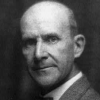
Terrorism set up by reformers may be just as bad as Government terrorism and it is often worse because it draws a certain amount of false sympathy.
Mohandas Gandhi (1869–1948) Indian lawyer, anti-colonial nationalist, political ethicist [Mahatma Gandhi]
In Young India (18 Dec 1924)
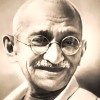
Speak well of your friend in public, admonish him in secret.
Publilius Syrus (d. 42 BC) Assyrian slave, writer, philosopher [less correctly Publius Syrus]
Sententiae [Moral Sayings], # 870 [tr. Lyman, Jr (1862)]
Them as can do has to do for them as can’t. And someone has to speak up for them as has no voices.
Terry Pratchett (1948–2015) English author
Discworld No. 30, The Wee Free Men (2003)
There is no greater challenge than to have someone relying upon you; no greater satisfaction than to vindicate his expectation.
Kingman Brewster, Jr. (1919–1988) American educator, diplomat
Baccalaureate address, Yale (12 Jun 1966)

The first impression that one gets of a ruler and of his brains is from seeing the men that he has about him.
Niccolò Machiavelli (1469–1527) Italian politician, philosopher, political scientist
The Prince, ch. 22 (1513) [tr. Ricci (1903)]
Variant: "The first method for estimating the intelligence of a ruler is to look at the men he has around him!"

The fundamental thing to do for every man is to give him a chance to reach a place in which he will make the greatest possible contribution to the public welfare. Understand what I say there. Give him a chance, not push him up if he will not be pushed. Help any man who stumbles; if he lies down, it is a poor job to try to carry him; but if he is a worthy man, try your best to see that he gets a chance to show the worth that is in him.
Theodore Roosevelt (1858–1919) American politician, statesman, conservationist, writer; US President (1901–09)
Speech (1910-08-31), “The New Nationalism,” John Brown Memorial Park dedication, Osawatomie, Kansas
(Source)
People don’t support you because they like you. You can count on a person’s support only when you do something for him or something to him.
Lyndon B. Johnson (1908–1973) American politician, educator, US President (1963–69)
(Attributed)
(Source)
On support from Congress. An "embittered" comment made to Richard Nixon after Johnson had left the Presidency. Quoted in Richard Nixon, In the Arena: A Memoir of Victory, Defeat, and Renewal, ch. 21 (1990).

Power corresponds to the human ability not just to act but to act in concert. Power is never the property of an individual; it belongs to a group and remains in existence only so long as the group keeps together. When we say of somebody that he is “in power” we actually refer to his being empowered by a certain number of people to act in their name.
Hannah Arendt (1906–1975) German-American philosopher, political theorist
On Violence, ch. 2 (1970)
(Source)
This book is an expansion of her essay (1969-02-27) "Reflections on Violence," The New York Review of Books; this passage is not in the original.
The desire of the esteem of others is as real a want of nature as hunger — and the neglect and contempt of the world as severe a pain as the gout or stone.
John Adams (1735–1826) American lawyer, Founder, statesman; US President (1797–1801)
Essay (1790), “Discourses on Davila: A Series of Papers on Political History,” No. 4, Gazette of the United States
(Source)

An empire founded by arms needs to be sustained by arms.
[Un empire fondé par les armes a besoin de se soutenir par les armes.]
Charles-Lewis de Secondat, Baron de Montesquieu (1689–1755) French political philosopher
Considerations on the Causes of the Greatness of the Romans and Their Decline [Considérations sur les causes de la grandeur des Romains et de leur décadence], ch. 18 (1734, 1748 ed.) [tr. Baker (1882)]
(Source)
(Source (French)). Other translations:An empire, founded by arms, must likewise have arms for its support.
[tr. B--- (1734)]An Empire founded by Arms, must likewise have Arms for its Support.
[ed. Guterman (1963)]An empire founded by war has to maintain itself by war.
[E.g. (1960)]An empire founded by arms needs to be sustained by arms.
[tr. Lowenthal (1965)]

Cautious, careful people, always casting about to preserve their reputation and social standing, never can bring about a reform. Those who are really in earnest must be willing to be anything or nothing in the world’s estimation, and publicly and privately, in season and out, avow their sympathy with despised and persecuted ideas and their advocates, and bear the consequences.
Susan B. Anthony (1820–1906) American reformer, aboltionist, sufferagist
“On the Campaign for Divorce Law Reform” (1860)

The object of preaching is, constantly to remind mankind of what mankind are constantly forgetting; not to supply the defects of human intelligence, but to fortify the feebleness of human resolutions.
No one man can terrorize a whole nation, unless we are all his accomplices.
Edward R. Murrow (1908–1965) American journalist
See It Now (7 Mar 1954)
(Source)
Comment to the production team before the episode on Senator Joseph R McCarthy’s Communist witch hunt.

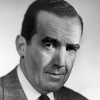
TIMON: ‘Tis not enough to help the feeble up,
But to support him after.William Shakespeare (1564–1616) English dramatist and poet
Timon of Athens, Act 1, sc. 1, l. 107ff (1.1.107-108) (1606) [with Thomas Middleton]
(Source)

No one wants advice — only corroboration.
John Steinbeck (1902–1968) American writer
The Winter of Our Discontent, Part I, ch. 6 (1961)
(Source)


If you don’t understand that you work for your mislabeled “subordinates,” then you know nothing of leadership. You know only tyranny.
Dee W. Hock (1929–2022) American businessman
“Unit of One Anniversary Handbook,” Fast Company (1997-02-28)
(Source)

He who begins by loving Christianity better than truth, will proceed by loving his own sect or church better than Christianity, and end in loving himself better than all.
Samuel Taylor Coleridge (1772–1834) English poet and critic
Aids to Reflection (1825)

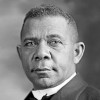
There are two ways of exerting one’s strength; one is pushing down, the other is pulling up.
Booker T. Washington (1856–1915) American educator, writer
(Attributed)
It is not so much our friends’ help that helps us as the confidence of their help.
Epicurus (341–270 BC) Greek philosopher
The Vatican Sayings
Other translations: "It is not so much our friends' help that helps us as the confident knowledge that they will help us."