

Zeal for the public good is the characteristic of a man of honour, and a gentleman, and must take place of pleasures, profits, and all other private gratifications. Whoever wants this motive is an open enemy, or an inglorious neuter to mankind, in proportion to the misapplied advantages with which nature and fortune have blessed him.
Richard Steele (1672–1729) Anglo-Irish writer, journalist, playwright, politician
Letter (1713) to William Pulteney, Dedication of Volume 2 of The Guardian
(Source)
Because the dedication was signed as "The Guardian," Bohn attributed this to Joseph Addison, one of the major contributors to the paper.
Quotations about:
privilege
Note not all quotations have been tagged, so Search may find additional quotes on this topic.
Who is the father of privilege? Chance. And who is his son? Abuse.
[Quel est le père du privilège ? le hasard. Et quel est son fils ? l’abus.]
Victor Hugo (1802–1885) French writer, journalist, human rights activist, politician
The Man Who Laughs [L’Homme qui rit; The Laughing Man; By Order of the King], Part 2, Book 8, ch. 7 (2.8.7) (1869) [tr. Phillips (1894)]
(Source)
Gwynpaine addressing the House of Lords.
(Source (French)). Other translations:What is the father of Privilege? Chance. What is his son? Abuse.
[tr. Steele (1869); tr. Steele (Auth.) (1871)]Who is the father of privilege? Chance. And what is the son? Abuse.
[tr. Hapgood (1888)]Who is the power of privilege? Chance. And what is its son? Abuse.
[tr. Lavelle (2003)]
The various codes which were presented to you at Crossgates — religious, moral, social, and intellectual — contradicted one another of you worked out their implications. The essential conflict was between the tradition of nineteenth-century asceticism and the actually existing luxury and snobbery of the pre-1914 age. On the one side were low-church Bible Christianity, sex puritanism, insistence on hard work, respect for academic distinction, disapproval of self-indulgence: on the other, contempt for “braininess” and worship of games, contempt for foreigners and the working class, an almost neurotic dread of poverty, and, above all, the assumption not only that money and privilege are the things that matter, but that it is better to inherit them than to have to work for them. Broadly, you were bidden to be at once a Christian and a social success, which is impossible.
George Orwell (1903–1950) English journalist, essayist, writer [pseud. of Eric Arthur Blair]
Essay (1948-06), “‘Such, Such Were the Joys …’,” sec. 5, Partisan Review (1952-09)
(Source)
Speaking of the school he attended. This autobiographical essay was drafted around 1939, revised around 1946, and then completed in May or June of 1948. Collected in Such, Such Were the Joys, essay 8 (1953), though the full, unredacted version was not published until 2000.
The ascent of the privileged, not only in the Lager [prison camp] but in all human coexistence, is an anguishing but unfailing phenomenon: only in utopias is it absent. It is the duty of righteous men to make war on all undeserved privilege, but one must not forget that this is a war without end. Where there exists power exercised by the few or by only one against the many, privilege is born and proliferates, even against the will of the power itself; but on the other hand it is normal for power to tolerate and encourage it.
Primo Levi (1919–1987) Italian Jewish chemist and writer
The Drowned and the Saved, ch. 2 “The Grey Zone” (1986) [tr. Rosenthal (1888)]
(Source)
Writing of the grey zone, the protekcja [privilege], of those who existed between being prisoners and the military running the camps. It was granted to those who collaborated / compromised with the prison structure (such as the Kapos), and included marginally better treatment and chances of survival.
We understand the philosophy of those who offer resistance, of those who conduct a counter offensive against the American people’s march of social progress. It is not an opposition which comes necessarily from wickedness — it is an opposition that comes from subconscious resistance to any measure that disturbs the position of privilege.
It is an unfortunate human failing that a full pocketbook often groans more loudly than an empty stomach.Franklin Delano Roosevelt (1882–1945) American lawyer, politician, statesman; US President (1933–45)
Speech (1940-11-01), Campaign Address, Brooklyn Academy of Music, New York
(Source)
The weaker the man in authority, layman or cleric, the stronger his insistence that all his privileges be acknowledged.
Austin O'Malley (1858–1932) American ophthalmologist, professor of literature, aphorist
Keystones of Thought (1914)
(Source)
A lot of men got upset at the feminist movement because they had all the toys and we wanted some.
Judith Martin (b. 1938) American author, journalist, etiquette expert [a.k.a. Miss Manners]
Interview (1997-03), “She Says: Miss Manners,” by Sandy Fernández, Ms magazine, Vol. 7, No. 5 (1997-03/04)
(Source)

The man who steals a buckle is put to death, the man who steals a state becomes a prince.
[竊鉤者誅,竊國者侯 – traditional]
[窃钩者诛,窃国者侯 – simplified]Chuang Tzu (369–286 BC) Chinese Taoist philosopher [Zhuang Zhou (莊周), Zhuangzi ( 莊子)]
Zhuangzi (Chuang Tzŭ), ch. 10 “Quqie [胠篋; Rifling Trunks]” (3rd C BC) [tr. Graham (1981)]
(Source)
See O'Neill (1921).
(Source (Chinese, traditional; simplified)). Other translations:One man steals a purse, and is punished. Another steals a State, and becomes a Prince.
[tr. Giles (1889)]Here is one who steals a hook (for his girdle); -- he is put to death for it: here is another who steals a state; -- he becomes its prince.
[tr. Legge (1891)]A poor man must swing
For stealing a belt buckle
But if a rich man steals a whole state
He is acclaimed
As statesman of the year.
[tr. Merton (1965)]This one steals a buckle and he is executed, that one steals a country and he becomes its ruler.
[tr. Palmer (1996)]He who steals a belt buckle pays with his life; he who steals a state gets to be a feudal lord.
[tr. Watson (2013)]One steals a hook -- he is put to death. Another steals a state -- he becomes a prince.
[tr. Yang/Höchsmann (2007)]He who steals a belt buckle is executed, but he who steals a state is made a feudal lord.
[tr. Ziporyn (2009)]
This adage can be found in a wide array of forms, with the same basic structure (steal something small, get punished; steal something big, get rewarded), usually stripped of its Chinese/Taoist origin, e.g.:Steal money you're a thief; steal a country you're a king.
["Japanese proverb"]Stealing a dog is said to be immoral. Still, they steal a country and call it righteousness.
[Source]To steal a purse is rightly held a crime.
To steal a country is an act sublime.
[Percy Russell (1919)]One who steals a pearl is persecuted as a thief. One who steals a nation is revered as a king.
[Source]When you steal a pin, you are executed; but if you steal a country, you become a king.
[Chinese historian Sima Qian (c. 145 – c. 86 BC)]One who steals a little is a thief. One who steals a little bit more is a robber. And one who steals a nation is a king.
[Source]To steal a fruit means theft, while to steal a country does not.
["Old Chinese saying"]Those that steal a loaf of bread are hanged as thieves - those that steal a country are made emperor.
[Source]Steal an apple and you're a thief. Steal a country and you're a statesman.
[Disney's Aladdin (2019)]

The others you know without my telling you. They are such fools that they seem to expect that, though the Republic is lost, their fish-ponds will be safe.
[Ceteros iam nosti; qui ita sunt stulti, ut amissa re publica piscinas suas fore salvas sperare videantur.]
Marcus Tullius Cicero (106–43 BC) Roman orator, statesman, philosopher
Epistulae ad Atticum [Letters to Atticus], Book 1, Letter 18, sec. 6 (1.18.6) (60 BC) [tr. Shuckburgh (1900)]
(Source)
(Source (Latin)). Alternate translation:The others you know well enough -- fools who seem to hope that their fish-ponds may be saved, though the country go to rack and ruin.
[tr. Winstedt (1912)]As for the rest of the Optimates, you know them. They are so stupid as to suppose that their own fishponds can be unharmed even though the constitution go to pot.
[tr. McKinlay (1926), # 13]The others you know. They seem fools enough to expect to keep their fish-ponds after losing constitutional freedom.
[tr. Shackleton Bailey (1968)]
When I contemplate the common lot of mortality, I must acknowledge that I have drawn a high prize in the lottery of life. The far greater part of the globe is overspread with barbarism or slavery: in the civilized world the most numerous class is condemned to ignorance and poverty; and the double fortune of my birth in a free and enlightened country, in an honourable and wealthy family, is the lucky chance of an unit against millions.
If you have the privilege of a fine education, well, you have it because somebody made it possible. If you have the privilege to gain wealth and a bit of the world’s goods, well, you have it because somebody made it possible. So don’t boast, don’t be arrogant.
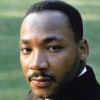
Martin Luther King, Jr. (1929–1968) American clergyman, civil rights leader, social activist, preacher
“Conquering Self-Centeredness,” sermon, Dexter Ave. Baptist Church, Montgomery (11 Aug 1957)
(Source)
A girl should not expect special privileges because of her sex but neither should she “adjust” to prejudice and discrimination. She must learn to compete then, not as a woman, but as a human being.
Betty Friedan (1921–2006) American writer, feminist, activist
The Feminine Mystique, ch. 14 (1963)
(Source)

Imagine my horror at discovering that the United States is more calcified by class than Britain, especially toward the top. The big difference is that most of the people on the highest rung in America are in denial about their privilege. The American myth of meritocracy allows them to attribute their position to their brilliance and diligence, rather than to luck or a rigged system. At least posh people in England have the decency to feel guilty.
Richard V. Reeves (b. 1969) British historian, journalist, political theorist
“Stop Pretending You’re Not Rich,” New York Times (10 Jun 2017)
(Source)

Once more, let me remind you what fascism is. It need not wear a brown shirt, or a green shirt — it may even wear a dress shirt. Fascism begins the moment a ruling class, fearing the people may use their political democracy to gain economic democracy, begins to destroy political democracy in order to retain its power of exploitation and special privilege.
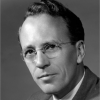
Tommy Douglas (1904–1986) Scottish-Canadian politician [Thomas Clement Douglas]
(Attributed)
Pessimism about man serves to maintain the status quo. It is a luxury for the affluent, a sop to the guilt of the politically inactive, a comfort to those who continue to enjoy the amenities of privilege.
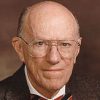
Leon Eisenberg (1922–2009) American psychiatrist and medical educator
“The Human Nature of Human Nature,” Science (14 Apr 1972)
(Source)
Based on an address at Faculty of Medicine Day, McGill University Sesquicentennial Celebration, Montreal, Canada (1 Oct 1971).
Simplicity of life, even the barest, is not a misery, but the very foundation of refinement: a sanded floor and whitewashed walls, and the green trees, and flowery meads, and living waters outside; or a grimy palace amid the smoke with a regiment of housemaids always working to smear the dirt together so that it may be unnoticed; which, think you, is the most refined, the most fit for a gentleman of those two dwellings?
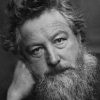
William Morris (1834–1896) British textile designer, writer, socialist activist
“The Prospects of Architecture in Civilization,” speech, London (10 Mar 1880)
(Source)
When once a social order is well established, no matter what injustice it involves, those who occupy a position of advantage are not long in coming to believe that it is the only possible and reasonable order.
Suzanne La Follette (1893–1983) American journalist, author, feminist
(Attributed)

Jenneth turned a blind eye to his part in their incipient suffering, a privilege that came with never really having suffered.
Emily Kate (E. K.) Johnston (contemp.) Canadian author
Ahsoka (2016)

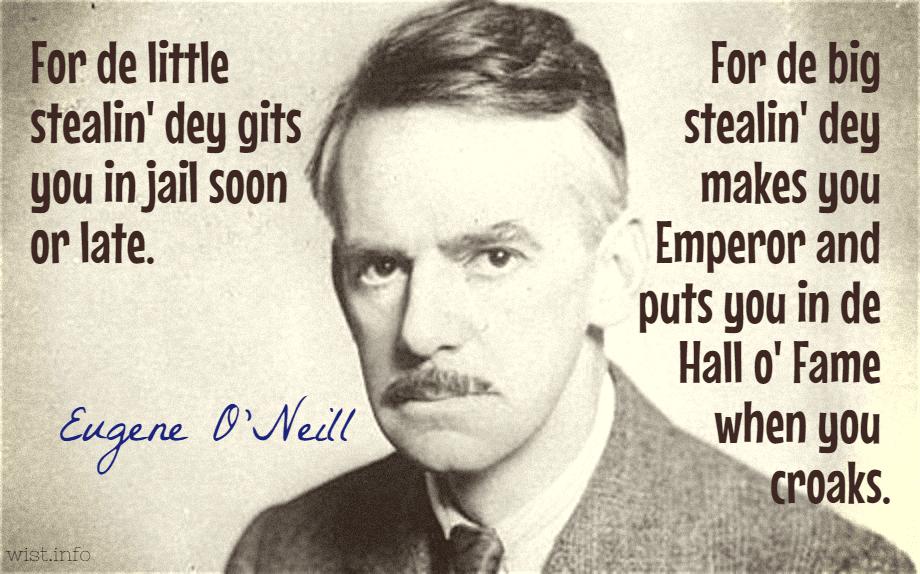
JONES: For de little stealin’ dey gits you in jail soon or late. For de big stealin’ dey makes you Emperor and puts you in de Hall o’ Fame when you croaks.
Eugene O'Neill (1888–1953) Irish American playwright, Nobel laureate
The Emperor Jones, Act 1 (1921)
(Source)
See Chuang Tzu.
Same sex marriage isn’t gay privilege, it’s equal rights. Privilege would be something like gay people not paying taxes. Like churches don’t.

The men leaned back on their heels, put their hands in their trouser-pockets, and proclaimed their views with the booming profundity of a prosperous male repeating a thoroughly hackneyed statement about a matter of which he knows nothing whatever.
Sinclair Lewis (1885–1951) American novelist, playwright
Babbitt, ch. 8 (1922)
Privilege should not be tolerated because it is to the advantage of a minority; nor yet because it is to the advantage of a majority. No doctrinaire theories of vested rights or freedom of contract can stand in the way of our cutting out abuses from the body politic.
Theodore Roosevelt (1858–1919) American politician, statesman, conservationist, writer; US President (1901–09)
Lecture (1910-06-07), “Biological Analogies in History,” Romanes Lecture, Oxford University
(Source)
So long as governmental power existed exclusively for the king and not at all for the people, then the history of liberty was a history of the limitation of governmental power. But now the governmental power rests in the people, and the kings who enjoy privilege are the kings of the financial and industrial world; and what they clamor for is the limitation of governmental power, and what the people sorely need is the extension of governmental power.
Theodore Roosevelt (1858–1919) American politician, statesman, conservationist, writer; US President (1901–09)
Speech (1912-09-14), San Francisco
(Source)
Everything is un-American that tends either to government by a plutocracy, or government by a mob. To divide along the lines of section or caste or creed is un-American. All privilege based on wealth, and all enmity to honest men merely because they are wealthy, are un-American — both of them equally so. Americanism means the virtues of courage, honor, justice, truth, sincerity, and hardihood — the virtues that made America. The things that will destroy America are prosperity-at-any-price, peace-at-any-price, safety-first instead of duty-first, the love of soft living, and the get-rich-quick theory of life.
Theodore Roosevelt (1858–1919) American politician, statesman, conservationist, writer; US President (1901–09)
Letter to S. Stanwood Menken (10 Jan 1917)
In every wise struggle for human betterment one of the main objects, and often the only object, has been to achieve in large measure equality of opportunity. In the struggle for this great end, nations rise from barbarism to civilization, and through it people press forward from one stage of enlightenment to the next.
One of the chief factors in progress is the destruction of special privilege. The essence of any struggle for healthy liberty has always been, and must always be, to take from some one man or class of men the right to enjoy power, or wealth, or position, or immunity, which has not been earned by service to his or their fellows. That is what you fought for in the Civil War, and that is what we strive for now.Theodore Roosevelt (1858–1919) American politician, statesman, conservationist, writer; US President (1901–09)
Speech (1910-08-31), “The New Nationalism,” John Brown Memorial Park dedication, Osawatomie, Kansas
(Source)
Practical equality of opportunity for all citizens, when we achieve it, will have two great results. First, every man will have a fair chance to make of himself all that in him lies; to reach the highest point to which his capacities, unassisted by special privilege of his own and unhampered by the special privilege of others, can carry him, and to get for himself and his family substantially what he has earned. Second, equality of opportunity means that the commonwealth will get from every citizen the highest service of which he is capable. No man who carries the burden of the special privileges of another can give to the commonwealth that service to which it is fairly entitled.
Theodore Roosevelt (1858–1919) American politician, statesman, conservationist, writer; US President (1901–09)
Speech (1910-08-31), “The New Nationalism,” John Brown Memorial Park dedication, Osawatomie, Kansas
(Source)
The greatest enemy of justice is privilege.
[Der größte Feind des Rechtes ist das Vorrecht.]
Marie von Ebner-Eschenbach (1830–1916) Austrian writer
Aphorisms [Aphorismen], No. 219 (1880) [tr. Scrase/Mieder (1994)]
(Source)
(Source (German)). Other translation:The greatest enemy of the law of right is the law of prerogative.
[tr. Wister (1883)]
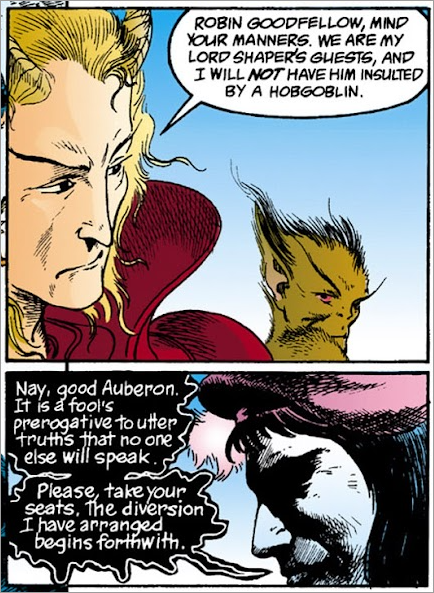
DREAM: It is a fool’s prerogative to utter truths that no one else will speak.
Neil Gaiman (b. 1960) British author, screenwriter, fabulist
Sandman, Book 3. Dream Country, # 19 “A Midsummer Night’s Dream” (1990)
(Source)
Because the story includes William Shakespeare as a character, and is named after Shakespeare's play (which is performed in the story), this line is sometimes misattributed to Shakespeare himself.
See also this later comment by Dream.
ALL ANIMALS ARE EQUAL
BUT SOME ANIMALS ARE MORE
EQUAL THAN OTHERSGeorge Orwell (1903–1950) English journalist, essayist, writer [pseud. of Eric Arthur Blair]
Animal Farm, ch. 10 (1946)