Behind the politics of big talk and little action lies the simple fact that most of the big men who run this show want little government.
Adlai Stevenson II (1900–1965) American politician, diplomat, statesman
Speech (1955-10-29), “The Crisis in Agriculture,” Democratic Rally, Duluth, Minnesota
(Source)
Quotations about:
elite
Note not all quotations have been tagged, so Search may find additional quotes on this topic.
There are some among philosophers and statesmen who think that the State can have an excellence of its own, and not merely as a means to the welfare of the citizens. I cannot see any reason to agree with this view. “The State” is an abstraction; it does not feel pleasure or pain, it has no hopes or fears, and what we think of as its purposes are really the purposes of individuals who direct it. When we think concretely, not abstractly, we find, in place of “the State,” certain people who have more power than falls to the share of most men. And so glorification of “the State” turns out to be, in fact, glorification of a governing minority. No democrat can tolerate such a fundamentally unjust theory.
Bertrand Russell (1872–1970) English mathematician and philosopher
Lecture (1949-01-30), “Individual and Social Ethics,” Reith Lecture, “Authority and the Individual” No. 6, BBC Radio
(Source)
The people were certain that their freedom was at risk. Their leaders did not agree.
[Populus libertatem agi putabat suam. Dissentiebant principes.]
Marcus Tullius Cicero (106–43 BC) Roman orator, statesman, philosopher
Pro Sestio [For Publius Sestius], ch. 48 / sec. 103 (56-02 BC) [tr. @sentantiq (2020)]
(Source)
In the actual examples around the statement, the leadership (optimates) fear measures granting more voice to the masses, establishing a secret ballot, and providing food to poor at the cost of taxing the rich; Cicero supports that conservative opinion.
(Source (Latin)). Other translations:The people thought their liberty was at stake in that measure. The leading men were of a different opinion.
[tr. Hickie (1888)]The people thought that its liberties were at stake; the chief men of the state dissented.
[tr. Yonge (1891)]The People thought that their liberty was at stake. The leaders of the State held a different opinion.
[tr. Gardner (Loeb) (1958)]
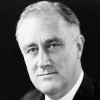
We understand the philosophy of those who offer resistance, of those who conduct a counter offensive against the American people’s march of social progress. It is not an opposition which comes necessarily from wickedness — it is an opposition that comes from subconscious resistance to any measure that disturbs the position of privilege.
It is an unfortunate human failing that a full pocketbook often groans more loudly than an empty stomach.Franklin Delano Roosevelt (1882–1945) American lawyer, politician, statesman; US President (1933–45)
Speech (1940-11-01), Campaign Address, Brooklyn Academy of Music, New York
(Source)
DON LOUIS: No, no, birth is nothing where virtue is not. […] Know that a man of noble birth who leads an evil life is a monster in nature; virtue is the prime title of nobility; I care much less for the name a man signs than for the deeds he does; and I should feel more esteem for the son of a porter who was a true man, than for the son of a king who lived as you do.
[Non, non, la naissance n’est rien où la vertu n’est pas. […] Apprenez enfin qu’un gentilhomme qui vit mal est un monstre dans la nature ; que la vertu est le premier titre de noblesse ; que je regarde bien moins au nom qu’on signe, qu’aux actions qu’on fait, et que je ferais plus d’état du fils d’un crocheteur, qui serait honnête homme, que du fils d’un monarque qui vivrait comme vous.]
Molière (1622–1673) French playwright, actor [stage name for Jean-Baptiste Poquelin]
Don Juan [Dom Juan], Act 4, sc. 6 (1665) [tr. Page (1908)]
(Source)
Don Louis (Don Luis) speaking to his son, Don Juan.
(Source (French)). Other translations:No, no; Birth is nothing, where there's no Virtue. [...] Know, in short, that a Gentleman who lives ill, is a Monster in nature, that Virtue is the prime Title to Nobility, that I look much less upon the Name we subscribe, than the Actions that we perform, and that I shou'd value more being the Son of a Porter, who was an honest Man, than the Son of a Monarch who liv'd as you do.
[tr. Clitandre (1672)]No, no! Rank is nothing without virtue. [...] Know, finally, that a nobleman who leads a wicked life is a monster in nature; that virtue is the prime badge of nobility; that I regard much less the name which a man bears than the actions which he commits, and that I should value more highly a porter's son who was an honest man, than a monarch's son who led such a life as yours.
[tr. Van Laun (1876)]No, no; birth is nothing where virtue is not. [...] Know that a man of noble blood who leads a bad life is a monster in nature, and that virtue is the first title to nobility. I look less to the name that is signed, than to the actions; and I should be more proud of being the son of an honest porter than that of a monarch who lived your life.
[tr. Wall (1879)]No, no; where virtue is wanting birth does not signify anything. [...] Know, indeed, that a man of noble blood who leads a bad life is an unnatural monster; that virtue is the chief title to nobility; that I regard far less the name which one signs than the actions which one performs; and that I would rather be the son of a porter and honest than the son of a monarch and like you.
[tr. Waller (1904)]No, no, birth means nothing without virtue. [...] A nobleman who lives by evil is a natural monster. The first title to nobility is rectitude. For me the name a man signs counts for much less than the actions he performs, and I esteem a farm-laborer's honest son more highly than a king's son who lives as you do.
[tr. Bermel (1987)]
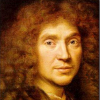
People with advantages are loath to believe that they just happen to be people with advantages. They come readily to define themselves as inherently worthy of what they possess; they come to believe themselves “naturally” elite, and, in fact, to imagine their possessions and their privileges as natural extensions of their own elite selves.
C. Wright Mills (1916–1962) American sociologist, academic, author [Charles Wright Mills]
The Power Elite, ch. 1 “The Higher Circles,” sec. 4 (1956)
(Source)
A person is not a democrat thanks to his ignorance of literature and the arts, nor an elitist because he or she has cultivated them. The possession of knowledge makes for unjust power over others only if used for that very purpose: a physician or lawyer or clergyman can exploit or humiliate others, or he can be a humanitarian and a benefactor. In any case, it is absurd to conjure up behind anybody who exploits his educated status the existence of an “elite” scheming to oppress the rest of us.
Jacques Barzun (1907–2012) French-American historian, educator, polymath
Essay (1989), “Exeunt the Humanities,” The Culture We Deserve
(Source)
An earlier version of this essay appeared as "This Business of the Humanities," Three Talks by Jacques Barzun, Northern Kentucky University (1980).
Why weren’t these problems obvious to the Maya kings, who could surely see their forests vanishing and their hills becoming eroded? Part of the reason was that the kings were able to insulate themselves from problems afflicting the rest of society. By extracting wealth from commoners, they could remain well fed while everyone else was slowly starving. What’s more, the kings were occupied with their own power struggles. They had to concentrate on fighting one another and keeping up their images through ostentatious displays of wealth. By insulating themselves in the short run from the problems of society, the elite merely bought themselves the privilege of being among the last to starve.
Jared Diamond (b. 1937) American geographer, historian, ornithologist, author
“The Ends of the World as We Know Them,” New York Times (1 Jan 2005)
(Source)
A blueprint for disaster in any society is when the elite are capable of insulating themselves.
Jared Diamond (b. 1937) American geographer, historian, ornithologist, author
“Choosing Success,” interview by Catherine Sepp, National Review (30 Jun 2005)
(Source)
Who, pray, are benefiting by all this waste and confusion? The dew, a mere small percentage of the population of the world. All the remainder submit, because they think “it always has been so and it must always be so.” The work of those who have a conception of a true society of the future, must devote all their efforts towards disabusing the people’s minds of the ancient false hoods. It can be done. Many other hoary lies have passed away, so will this one, too.
Lucy Parsons (1851–1942) American labor organizer, anarchist, orator [a.k.a. Lucy Gonzalez]
“Property Rights vs. Human Rights,” The Liberator (22 Nov 1905)
(Source)
To change our laws and culture, the green movement must attract and include the majority of all people, not just the majority of affluent people.
Anthony Kapel "Van" Jones (b. 1968) American news commentator, author, lawyer
The Green Collar Economy (2008)

I believe that every human being with a physically normal brain can learn a great deal and can be surprisingly intellectual. I believe that what we badly need is social approval of learning and social rewards for learning. We can all be members of the intellectual elite and then, and only then, will a phrase like “America’s right to know” and, indeed, any true concept of democracy, have any meaning.
Isaac Asimov (1920–1992) Russian-American author, polymath, biochemist
“A Cult of Ignorance,” Newsweek (21 Jan 1980)
(Source)
Once more, let me remind you what fascism is. It need not wear a brown shirt, or a green shirt — it may even wear a dress shirt. Fascism begins the moment a ruling class, fearing the people may use their political democracy to gain economic democracy, begins to destroy political democracy in order to retain its power of exploitation and special privilege.
Tommy Douglas (1904–1986) Scottish-Canadian politician [Thomas Clement Douglas]
(Attributed)
I believe in aristocracy, though — if that is the right word, and if a democrat may use it. Not an aristocracy of power, based upon rank and influence, but an aristocracy of the sensitive, the considerate and the plucky. Its members are to be found in all nations and classes, and all through the ages, and there is a secret understanding between them when they meet. They represent the true human tradition, the one permanent victory of our queer race over cruelty and chaos. Thousands of them perish in obscurity, a few are great names. They are sensitive for others as well as for themselves, they are considerate without being fussy, their pluck is not swankiness but the power to endure, and they can take a joke.
CRASSUS: One of the disadvantages of being a patrician is that occasionally you’re obliged to act like one.
Dalton Trumbo (1905–1976) American screenwriter and novelist [James Dalton Trumbo]
Spartacus (1960) [novel by Howard Fast]
It was crowded in the Curry Gardens on the corner of God Street and Blood Alley, but only with the cream of society — at least, with those people who are found floating on the top and who, therefore, it’s wisest to call the cream.
People say law, but they mean wealth.
My father deals with millionaires and billionaires on a daily basis, the sort of people who have egos just this side (and sometimes way over the edge) of sociopathy. The sort of person who thinks he’s the apex predator wading through a universe of sheep.

LARGE MAN WITH DEAD BODY: Who’s that then?
THE DEAD COLLECTOR: I dunno, must be a king.
LARGE MAN WITH DEAD BODY: Why?
THE DEAD COLLECTOR: He hasn’t got shit all over him.
Monty Python (b. 1969) British comedy troupe [Graham Chapman, John Cleese, Terry Gilliam, Eric Idle, Terry Jones, Michael Palin]
Monty Python and the Holy Grail (1975)
The devil’s most devilish when respectable.
Elizabeth Barrett Browning (1806–1861) English poet
“Aurora Leigh” (1857)