

PERICLES: Kings are Earth’s gods; in vice their law’s their will;
And if Jove stray, who dares say Jove doth ill?William Shakespeare (1564–1616) English dramatist and poet
Pericles, Act 1, sc. 1, l. 108ff (1.1.108-109) (1607) [with George Wilkins]
(Source)
Quotations about:
royalty
Note not all quotations have been tagged, so Search may find additional quotes on this topic.

NURSE: Terrible is the temperament of royalty,
Who are rarely controlled, always imperious;
It is hard for them to give up their wrath.
To get used to living like everybody else
Is better.[ΤΡΟΦΌΣ: δεινὰ τυράννων λήματα καί πως
ὀλίγ᾽ ἀρχόμενοι, πολλὰ κρατοῦντες
χαλεπῶς ὀργὰς μεταβάλλουσιν.
τὸ γὰρ εἰθίσθαι ζῆν ἐπ᾽ ἴσοισιν
κρεῖσσον.]Euripides (485?-406? BC) Greek tragic dramatist
Medea [Μήδεια], l. 119ff (431 BC) [tr. Podlecki (1989)]
(Source)
(Source (Greek)). Other translations:For the souls
Of Kings are prone to cruelty, so seldom
Subdued, and over others wont to rule,
That it is difficult for such to change
Their angry purpose. Happier I esteem
The lot of those who still are wont to live
Among their equals.
[tr. Wodhull (1782)]Kings have a fiery quality of soul,
Accustom'd to command, if once they feel
control, though small, their anger blazes out
Not easily extinguish'd: hence I deem
An equal mediocrity of life
More to be wish'd.
[tr. Potter (1814)]Dread are the humours of princes: as wont
To be ruled in few things and in many to lord,
It is hard to them to turn from their wrath.
But to lead one's life in the level ways
Is best.
[tr. Webster (1868)]Strange are the tempers of princes, and maybe because they seldom have to obey, and mostly lord it over others, change they their moods with difficulty. 'Tis better then to have been trained to live on equal terms.
[tr. Coleridge (1891)]Dreadful are the dispositions of tyrants, and somehow in few things controlled, in most absolute, they with difficulty lay aside their passion. The being accustomed then to live in mediocrity of life is the better.
[tr. Buckley (1892)]Ah princes -- how fearful their moods are! --
Long ruling, unschooled to obey, --
Unforgiving, unsleeping their feuds are.
Better life's level way.
[tr. Way (Loeb) (1894)]Rude are the wills of princes: yea,
Prevailing alway, seldom crossed,
On fitful winds their moods are tossed:
'Tis best men tread the equal way.
[tr. Murray (1906)]Great people’s tempers are terrible, always
Having their own way, seldom checked,
Dangerous they shift from mood to mood.
How much better to have been accustomed
To live on equal terms with one’s neighbors.
[tr. Warner (1944)]Oh, it's a bad thing
To be born of high race, and brought up wilful and powerful in a great house, unruled
And ruling many: for then if misfortune comes it is unendurable, it drives you mad. I say that poor people
Are happier: the little commoners and humble people, the poor in spirit.
[tr. Jeffers (1946)]The mind of a queen
Is a thing to fear. A queen is used
To giving commands, not obeying them;
And her rage once roused is hard to appease.
To have learnt to live on the common level
Is better.
[tr. Vellacott (1963)]The minds of royalty are dangerous: since they often command and seldom obey, they are subject to violent changes of mood. For it is better to be accustomed to live on terms of equality.
[tr. Kovacs (1994)]They have frightening natures, those of royal blood; because, I imagine, they’re seldom overruled and generally have their way, they do not easily forget a grudge. Better to have formed the habit of living on equal terms with your neighbours.
[tr. Davie (1996)]How afraid I am of these royal rages! It’s so hard for such rages to subside.
Kings and queens have always been spoiled by power. They’re not used to taking orders. No, they’d much rather give them!
Kings and Queens only do what they want and forget about everyone else!
Oh, how much better it is to live a balanced life: to be an equal among equals.
[tr. Theodoridis (2004)]Tyrants’ tempers are insufferable:
they are seldom under control, their power is far-reaching.
It is hard for them to swallow their rages.
To get used to living on terms of equality
is better.
[tr. Luschnig (2007)]The pride of rulers is something to fear --
they often order men, but seldom listen,
and when their tempers change it’s hard to bear.
It’s better to get used to living life
as an equal common person.
[tr. Johnston (2008)]The temperaments of royalty are fearsome;
because they're almost unrestrained
and are so powerful, it is rare
for them to overcome their rage.
To be accustomed to live in equality
is best.
[tr. Ewans (2022)]Terrible / wonderful [deina] are the tempers of turannoi; maybe because they seldom have to obey, and mostly lord it over others, they change their moods with difficulty. It is better then to have been trained to live in equality.
[tr. Coleridge / Ceragioli / Nagy / Hour25]
KING RICHARD: For within the hollow crown
That rounds the mortal temples of a king
Keeps Death his court, and there the antic sits,
Scoffing his state and grinning at his pomp,
Allowing him a breath, a little scene,
To monarchize, be feared, and kill with looks,
Infusing him with self and vain conceit,
As if this flesh which walls about our life
Were brass impregnable; and humored thus,
Comes at the last and with a little pin
Bores through his castle wall, and farewell, king!William Shakespeare (1564–1616) English dramatist and poet
Richard II, Act 3, sc. 2, l. 165ff (3.2.165-175) (1595)
(Source)
KING RICHARD: Not all the water in the rough rude sea
Can wash the balm off from an anointed king.
The breath of worldly men cannot depose
The deputy elected by the Lord.
For every man that Bolingbroke hath pressed
To lift shrewd steel against our golden crown,
God for His Richard hath in heavenly pay
A glorious angel. Then, if angels fight,
Weak men must fall, for heaven still guards the right.William Shakespeare (1564–1616) English dramatist and poet
Richard II, Act 3, sc. 2, l. 55ff (3.2.55) (1595)
(Source)
Richard makes his case for the Divine Right of Kings. He is then immediately informed that the non-angelic armies he was counting on to fight Bolingbroke aren't coming.
BOLINGBROKE: How long a time lies in one little word!
Four lagging winters and four wanton springs
End in a word; such is the breath of kings.William Shakespeare (1564–1616) English dramatist and poet
Richard II, Act 1, sc. 3, l. 218ff (1.3.218-220) (1595)
(Source)
After King Richard casually reduces his banishment of Bolingbroke from ten years to six.
Were a historian like Tacitus to write a history of the best of our kings, giving an exact account of all the tyrannical acts and abuses of authority, the majority of which lie buried in the profoundest obscurity, there would be few reigns which would not inspire us with the same horror as that of Tiberius.
[Si un historien, tel que Tacite, eût écrit l’histoire de nos meilleurs rois, en faisant un relevé exact de tous les actes tyranniques, de tous les abus d’autorité, dont la plupart sont ensevelis dans l’obscurité la plus profonde, il y a peu de règnes qui ne nous inspirassent la même horreur que celui de Tibère.]
Nicolas Chamfort (1741–1794) French writer, epigrammist (b. Nicolas-Sébastien Roch)
Products of Perfected Civilization [Produits de la Civilisation Perfectionée], Part 1 “Maxims and Thoughts [Maximes et Pensées],” ch. 8, ¶ 482 (1795) [tr. Hutchinson (1902)]
(Source)
(Source (French)). Other translations:If such an historian as Tacitus had written the chronicle of our nobler kings, making an exact statement of all those tyrannical actions and abuses of authority which are now for the most part buried in deep darkness, few of their reigns would inspire less horror than that of Tiberius.
[tr. Mathers (1926)]If a historian such as Tacitus had written the histories of our best kings, with precise accounts of their tyrannical actions, and all their abuses of authority, most of which have been buried in the deepest obscurity, there are few reigns that would not arouse in us the same horror as that of Tiberius.
[tr. Merwin (1969)]If a chronicler such as Tacitus had written the history of our best kings, preparing an exact amount of all tyrannical acts, of all the abuses of authority, of which the majority are concealed by fathomless obscurity, there would be few reigns which would [not?] inspire us with the same horror as that of Tiberius.
[tr. Pearson (1973)]

Princes like to be helped, but not surpassed. When you counsel someone, you should appear to be reminding him of something he had forgotten, not of the light he was unable to see.
[Gustan de ser ayudados los príncipes, pero no excedidos, y que el aviso haga antes viso de recuerdo de lo que olvidaba que de luz de lo que no alcanzó.]
Baltasar Gracián y Morales (1601–1658) Spanish Jesuit priest, writer, philosopher
The Art of Worldly Wisdom [Oráculo Manual y Arte de Prudencia], § 7 (1647) [tr. Maurer (1992)]
(Source)
(Source (Spanish)). Other translations:Princes are willing to be assisted, but not surpassed. Those who advise them ought to speak as if they put them in mind of what they forgot, and not as teaching them what they knew not.
[Flesher ed. (1685)]They [princes] will allow a man to help them but not to surpass them, and will have any advice tendered them appear like a recollection of something they have forgotten rather than as a guide to something they cannot find.
[tr. Jacobs (1892)]They [kings] may abide being helped, but not surpassed, wherefore let advice given them appear more a jog to what they forgot, than a light to what they could not find.
[tr. Fischer (1937)]

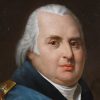
Punctuality is the politeness of kings.
[L’exactitude est la politesse des rois.]
Louis XVIII (1755–1824) French monarch (1814–1824) ["Louis the Desired"]
(Attributed)
Attributed in Souvenirs de J. Lafitte (1844)
LARGE MAN WITH DEAD BODY: Who’s that then?
THE DEAD COLLECTOR: I dunno, must be a king.
LARGE MAN WITH DEAD BODY: Why?
THE DEAD COLLECTOR: He hasn’t got shit all over him.
Monty Python (b. 1969) British comedy troupe [Graham Chapman, John Cleese, Terry Gilliam, Eric Idle, Terry Jones, Michael Palin]
Monty Python and the Holy Grail (1975)
When I was a fighting man, the kettle-drum they beat,
The people scattered gold-dust before my horse’s feet;
But now I am a great king, the people hound my track
With poison in my wine-cup, and daggers at my back.Robert E. Howard (1906–1936) American author
“The Phoenix on the Sword” (1932)

Sail, quoth the King; hold, saith the Wind.
Thomas Fuller (1654–1734) English physician, preacher, aphorist, writer
Gnomologia: Adages and Proverbs (compiler), # 4064 (1732)
(Source)
And his hands would plait the priest’s entrails,
For want of a rope, to strangle kings.[Et ses mains ourdiraient les entrailles du prêtre,
Au défaut d’un cordon pour étrangler les rois.]Denis Diderot (1713–1784) French editor, philosopher
Poem (1772), “Les Éleuthéromanes”
(Source)
The work is also sometimes referred to as "Dithrambe sur fête de rois."
(Source (French)). Other translations:And his hands would plait a priest's entrails;
In lieu of a rope for strangling kings.
[Source]His hands would plait the priest’s guts,
if he had no rope, to strangle kings.
[E.g.]
Jean-François de La Harpe, Lycée, ou Cours de Littérature Ancienne et Moderne (1822), attributes this variant to Diderot as the "crowning touch" of his philosophy:With the guts of the last priest,
Let us strangle the last king
[Et des boyaux du dernier prêtre
Serrons le cou du dernier roi.]
Alternately:And [with] the guts of the last priest
Let's shake the neck of the last king.
[E.g.]
This phrasing of Diderot's is most likely derived from a passage by Jean Meslier (c. 1664–1733), a French priest. In his Testament [Common Sense], Vol. 1, ch. 2 [ed. Charles (1864)], he told (and approved) of an "ignorant, uneducated man" who said (English, French):He said he wished [...] that all the great men in the world and all the nobility could be hanged, and strangled with the guts of priests.
[Il souhaitoit [...] que tous les grands de la terre et que tous les nobles fussent pendus et étranglés avec les boïaux des prêtres.]
Other translations of Meslier:His wish was that all the rulers of the earth and all the nobles be hanged and strangled with the guts of priests.
[tr. Shreve (2009)]
Bill Brown, the 2007 translator of Veneigem's The Resistance to Christianity (1993), noted that Voltaire, who edited an early edition of Meslier's Testament, rewrote the passage to provide another French variant (with Brown's English translation):I would like, and this would be the last and most ardent of my wishes, I would like it that the last king was strangled with the guts of the last priest.
[Je voudrais, et ce sera le dernier et le plus ardent de mes souhaits, je voudrais que le dernier des rois fût etranglé avec les boyaux du dernier prêtre.]
Other variants, in general:
- "Men will never be free until the last king is strangled with the entrails of the last priest."
- "Humanity will only be happy when the last priest has been hung with the guts of the last prince."
I shall be an autocrat: that’s my trade. And the good Lord will forgive me: that’s his.
[Moi, je serai autocrate: c’est mon metier. Et le bon Dieu me pardonnnera: c’est son metier.]
Catherine II (1762–1796) Russian empress [Catherine the Great; b. Sophie of Anhalt-Zerbst]
(Attributed)

ARTHUR: I am your king.
WOMAN: Well, I didn’t vote for you.
ARTHUR: You don’t vote for kings.
WOMAN: Well how’d you become king then?
ARTHUR: (angelic music plays) The Lady of the Lake, her arm clad in the purest shimmering samite, held aloft Excalibur from the bosom of the water, signifying by divine providence that I, Arthur, was to carry Excalibur. (angelic music stops) That is why I am your king.
DENNIS: (interrupting) Listen, strange women lying in ponds distributing swords is no basis for a system of government. Supreme executive power derives from a mandate from the masses, not from some farcical aquatic ceremony.
ARTHUR: Be quiet!
DENNIS: You can’t expect to wield supreme executive power just ’cause some watery tart threw a sword at you!
ARTHUR: Shut up!
DENNIS: I mean, if I went around saying I was an emperor just because some moistened bint had lobbed a scimitar at me, they’d put me away!
ARTHUR: (grabbing him by the collar) Shut up! Will you shut up!
Monty Python (b. 1969) British comedy troupe [Graham Chapman, John Cleese, Terry Gilliam, Eric Idle, Terry Jones, Michael Palin]
Monty Python and the Holy Grail, sc. 3 (1975)
(Source)
(Source (Video); dialog verified)