The people were certain that their freedom was at risk. Their leaders did not agree.
[Populus libertatem agi putabat suam. Dissentiebant principes.]
Marcus Tullius Cicero (106–43 BC) Roman orator, statesman, philosopher
Pro Sestio [For Publius Sestius], ch. 48 / sec. 103 (56-02 BC) [tr. @sentantiq (2020)]
(Source)
In the actual examples around the statement, the leadership (optimates) fear measures granting more voice to the masses, establishing a secret ballot, and providing food to poor at the cost of taxing the rich; Cicero supports that conservative opinion.
(Source (Latin)). Other translations:The people thought their liberty was at stake in that measure. The leading men were of a different opinion.
[tr. Hickie (1888)]The people thought that its liberties were at stake; the chief men of the state dissented.
[tr. Yonge (1891)]The People thought that their liberty was at stake. The leaders of the State held a different opinion.
[tr. Gardner (Loeb) (1958)]
Quotations about:
masses
Note not all quotations have been tagged, so Search may find additional quotes on this topic.
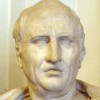
Men, it has been well said, think in herds; it will be seen that they go mad in herds, while they only recover their senses slowly, and one by one.
Charles Mackay (1814–1889) Scottish poet, journalist, song writer
Memoirs of Extraordinary Popular Delusions and the Madness of Crowds, Preface (1841)
(Source)

The boldest thinker may have his moments of languor and discouragement, when he feels as if he could willingly exchange faiths with the old beldame crossing herself at the cathedral-door, — nay, that, if he could drop all coherent thought, and lie in the flowery meadow with the brown-eyed solemnly unthinking cattle, looking up to the sky, and all their simple consciousness staining itself blue, then down to the grass, and life turning to a mere greenness, blended with confused scents of herbs, — no individual mind-movement such as men are teased with, but the great calm cattle-sense of all time and all places that know the milky smell of herds, — if he could be like these, he would be content to be driven home by the cow-boy, and share the grassy banquet of the king of ancient Babylon. Let us be very generous, then, in our judgment of those who leave the front ranks of thought for the company of the meek non-combatants who follow with the baggage and provisions. Age, illness, too much wear and tear, a half-formed paralysis, may bring any of us to this pass.
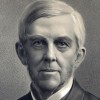
Every age has its peculiar folly; some scheme, project, or phantasy into which it plunges, spurred on either by the love of gain, the necessity of excitement, or the mere force of imitation. Failing in these, it has some madness, to which it is goaded by political or religious causes, or both combined.
Charles Mackay (1814–1889) Scottish poet, journalist, song writer
Memoirs of Extraordinary Popular Delusions and the Madness of Crowds, “The Crusades” (1841)
(Source)
He won over the ignorant masses with shows, building projects, largesses, and banquets. His followers he bound to him by rewards, his opponents by an apparent clemency. In short, he succeeded in bringing a free country, partly because of its fear, partly because of its passivity, to an acceptance of servitude.
[Muneribus, monumentis, congiariis, epulis multitudinem imperitam delenierat; suos praemiis, adversarios clementiae specie devinxerat. Quid multa? Attulerat iam liberae civitati partim metu partim patientia consuetudinem serviendi.]
Marcus Tullius Cicero (106–43 BC) Roman orator, statesman, philosopher
Philippics [Philippicae; Antonian Orations], No. 2, ch. 45 / sec. 116 (2.45/2.116) (44-10-24 BC) [tr. Berry (2006)]
(Source)
Talking of Julius Caesar and his ambitions of becoming a king.
(Source (Latin)). Other translations:He had conciliated the ignorant multitude with gladiatorial shows, with the erection of public buildings, with largesses, with feasts; he had bound his own followers to him with rewards, his opponents with a show of clemency; he had already rendered slavery familiar to a free state, partly by fear, partly by patience.
[tr. King (1877)]He had conciliated the ignorant multitude by presents, by monuments, by largesses of food, and by banquets; he had bound his own party to him by rewards, his adversaries by the appearances of clemency. Why need I say much on such a subject? He had already brought a free city, partly by fear, partly by patience, into a habit of slavery.
[tr. Yonge (1903)]He had won the affections of the ignorant populace by means of entertainments, banquets, largesses, and other public benefactions, while he had bound his immediate followers to him by his liberality, his opponents by an appearance of clemency. In a word, he had so revolutionised public feeling, that partly from fear, and partly from acquiescence, a state which prided itself upon its freedom had become accustomed to subjection.
[ed. Harbottle (1906)]By shows, buildings, largesses, banquets he had conciliated the ignorant crowd; his own followers he had bound to him by rewards, his adversaries by a show of clemency: in brief, he had already brought to a free community -- partly by fear, partly by endurance -- a habit of servitude.
[tr. Ker (Loeb) (1926)]He softened up the ignorant masses with games, buildings, gifts and feasts. He bound his followers to himself with rewards, his opponents with the appearance of clemency. Why go on? He brought to a free state acceptance of slavery, partly through fear, partly through familiarity.
[tr. McElduff (2011)]
To found the reward for virtuous actions on the approval of others is to choose too uncertain and shaky a foundation. Especially in an age as corrupt and ignorant as this, the good opinion of the people is a dishonor. Whom can you trust to see what is praiseworthy?
[De fonder la recompence des actions vertueuses, sur l’approbation d’autruy, c’est prendre un trop incertain et trouble fondement, signamment en un siecle corrompu et ignorant, comme cettuy cy la bonne estime du peuple est injurieuse. A qui vous fiez vous, de veoir ce qui est louable?]Michel de Montaigne (1533–1592) French essayist
Essays, Book 3, ch. 2 (3.2), “Of Repentance [Du Repentir]” (1586) [tr. Frame (1943)]
(Source)
This essay first appeared in the 1588 ed. The second sentence/phrase (on the age being so corrupt) and following were added for the 1595 ed.
(Source (French)). Other translations:To ground the recompence of vertuous actions, upon the approbation of others, is to undertake a most uncertaine or troubled foundation, namely in an age so corrupt and times so ignorant, as this is: the vulgar peoples good opinion is injurious. Whom trust you in seeing what is commendable?
[tr. Florio (1603)]To ground the Recompence of virtuous Actions upon the Approbation of others, is too uncertain and unsafe a Foundation; especially in so corrupt and ignorant an Age as this, the good Opinion of the Vulgar is injurious. Upon whom do you relie to shew you what is recommendable?
[tr. Cotton (1686)]To ground the recompense of virtuous actions upon the approbation of others is too uncertain and unsafe a foundation, especially in so corrupt and ignorant an age as this, wherein the good opinion of the vulgar is injurious: upon whom do you rely to show you what is recommendable?
[tr. Cotton/Hazlitt (1877)]To base the reward of virtuous actions on the approbation of others is to choose a too uncertain and obscure foundation. Especially in a corrupt and ignorant age like this, the good opinion of the vulgar is offensive; to whom do you trust to perceive what is praiseworthy?
[tr. Ives (1925)]Basing the recompense of virtuous deeds on another’s approbation is to accept too uncertain and confused a foundation -- especially since in a corrupt and ignorant period like our own to be in good esteem with the masses is an insult: whom would you trust to recognize what was worthy of praise!
[tr. Screech (1987)]

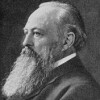
For the old notions of civil liberty and social order did not benefit the masses of the people. Wealth increased, without relieving their wants. The progress of knowledge left them in abject ignorance. Religion flourished, but failed to reach them. Society, whose laws were made by the upper class alone, announced that the best thing for the poor is not to be born, and the next best, to die in childhood, and suffered them to live in misery and crime and pain. As surely as the long reign of the rich has been employed in promoting the accumulation of wealth, the advent of the poor to power will be followed by schemes for diffusing it. Seeing how little was done by the wisdom of former times for education and public health, for insurance, association, and savings, for the protection of labour against the law of self-interest, and how much has been accomplished in this generation, there is reason in the fixed belief that a great change was needed, and that democracy has not striven in vain.
John Dalberg, Lord Acton (1834–1902) British historian, politician, writer
“Review of Sir Erskine May’s Democracy in Europe,” The Quarterly Review (1878-01)
(Source)
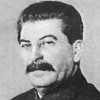
The art of leadership is a serious matter. One must not lag behind a movement, because to do so is to become isolated from the masses. But one must not rush ahead, for to rush ahead is to lose contact with the masses. He who wishes to lead a movement and at the same time keep touch with the vast masses, must conduct a fight on two fronts, against those who lag behind and against those who rush ahead.
Josef Stalin (1879–1953) Georgian revolutionary and Soviet dictator
Leninism, Vol. 2 (1926) [tr. Paul (1933)]
(Source)
Often elided, "He who wishes to lead a movement must conduct a fight on two fronts, against those who lag behind and against those who rush ahead."
When I was a fighting man, the kettle-drum they beat,
The people scattered gold-dust before my horse’s feet;
But now I am a great king, the people hound my track
With poison in my wine-cup, and daggers at my back.Robert E. Howard (1906–1936) American author
“The Phoenix on the Sword” (1932)
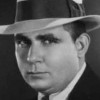
The man who makes it his business to please the multitude is never done.
Michel de Montaigne (1533–1592) French essayist
The Autobiography of Michel de Montaigne, ch. 34 [ed. Marven Lowenthal (1935)]
(Source)
Lowenthal created an "autobiography" from the wide array of first-person statements, experiences, and observations made by Montaigne across his essays, letters, etc. I have been unable to find from where this particular statement is translated or interpolated.
I much prefer the sharpest criticism of a single intelligent man to the thoughtless approval of the masses.
Johannes Kepler (1571–1630) German astronomer
(Attributed)

Nothing makes the multitude angrier than when someone forces them to change their opinion of him.
Herman Hesse (1877–1962) German-born Swiss poet, novelist, painter
Reflections, #100 [ed. V. Michels (1974)]

It is said public opinion will not bear it. Really? Public opinion, I am sorry to say, will bear a great deal of nonsense. There is scarce any absurdity so gross, whether in religion, politics, science, or manners, which it will not bear.
Ralph Waldo Emerson (1803–1882) American essayist, lecturer, poet
Journal (1827)
Also in "Success," Society and Solitude (1870).
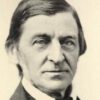
The people that once bestowed commands, consulships, legions, and all else, now meddles no more and longs eagerly for just two things — bread and circuses!
[Nam qui dabat olim imperium, fasces, legiones, omnia, nunc se continet atque duas tantum res anxius optat, panem et circenses.]
Juvenal (c.55–127) Roman satirist [Decimus Junius Juvinalis]
Satires, Satire 10, l. 78-79
Alt. trans.: "The people long for only two things: bread and circuses."
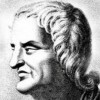
Democracy is the theory that intelligence is dangerous. It assumes that no idea can be safe until those who can’t understand it have approved it. It defines truth as anything which at least fifty-one men in every hundred believe. Thus it is firmly committed to the doctrines that one bath a week is enough, that “I seen” is the past tense of “I see,” and that Friday is an unlucky day.
H. L. Mencken (1880–1956) American writer and journalist [Henry Lewis Mencken]
“Pertinent and Impertinent,” Smart Set (Jun 1913) [as Owen Hatteras]
(Source)
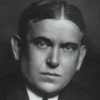
In each great revolutionary struggle the masses are led on by vague dreams of human brotherhood, and then, when the new ruling class is well established in power, they are thrust back into servitude. This is practically the whole of political history, as Burnham sees it. […] History consists of a series of swindles, in which the masses are first lured into revolt by the promise of Utopia, and then, when they have done their job, enslaved over again by the new masters.
George Orwell (1903–1950) English journalist, essayist, writer [pseud. of Eric Arthur Blair]
Essay (1946-05), “Second Thoughts on James Burnham,” Polemic Magazine
(Source)
Summarizing Burnham's view of history as given in The Managerial Revolution (1940) and The Machiavellians (1942). Orwell does not agree with Burnham's thesis.
Published separately as a pamphlet, James Burnham and the Managerial Revolution (1946).

No snowflake in an avalanche ever feels responsible.
[Żaden płatek śniegu nie czuje się odpowiedzialny za lawinę.]
Stanislaw Lec (1909–1966) Polish aphorist, poet, satirist
More Unkempt Thoughts [Myśli nieuczesane nowe] (1964) [tr. Gałązka (1969)]
(Source)
Another translation: "Each snowflake in an avalanche pleads not guilty."
More discussion of this quotation here: No Snowflake in an Avalanche Ever Feels Responsible – Quote Investigator.