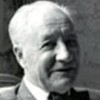
If men of eminence are exposed to censure on one hand, they are as much liable to flattery on the other. If they receive reproaches which are not due to them, they likewise receive praises which they do not deserve. In a word, the man in a high post is never regarded with an indifferent eye, but always considered as a friend or an enemy. For this reason persons in great stations have seldom their true characters drawn till several years after their deaths. Their personal friendships and enmities must cease, and the parties they were engaged in be at an end, before their faults or their virtues can have justice done them. When writers have the least opportunity of knowing the truth, they are in the best disposition to tell it.
It is therefore the privilege of posterity to adjust the characters of illustrious persons, and to set matters right between those antagonists who by their rivalry for greatness divided a whole age into factions.Joseph Addison (1672–1719) English essayist, poet, statesman
Essay (1711-06-26), The Spectator, No. 101
(Source)
The last line is sometimes shortened to:It is the privilege of posterity to set matters right between those antagonists who, by their rivalry for greatness, divided a whole age.
Quotations about:
assessment
Note not all quotations have been tagged, so Search may find additional quotes on this topic.

Persons in great stations have seldom their true characters drawn till several years after their deaths. Their personal friendships and enmities must cease, and the parties they were engaged in be at an end, before their faults or their virtues can have justice done to them.
Joseph Addison (1672–1719) English essayist, poet, statesman
Essay (1711-06-26), The Spectator, No. 101
(Source)
Your children are neither as bad nor as good as you imagine. But then, neither are you.
Mignon McLaughlin (1913–1983) American journalist and author
The Neurotic’s Notebook, ch. 2 (1963)
(Source)

To found the reward for virtuous actions on the approval of others is to choose too uncertain and shaky a foundation. Especially in an age as corrupt and ignorant as this, the good opinion of the people is a dishonor. Whom can you trust to see what is praiseworthy?
[De fonder la recompence des actions vertueuses, sur l’approbation d’autruy, c’est prendre un trop incertain et trouble fondement, signamment en un siecle corrompu et ignorant, comme cettuy cy la bonne estime du peuple est injurieuse. A qui vous fiez vous, de veoir ce qui est louable?]Michel de Montaigne (1533–1592) French essayist
Essays, Book 3, ch. 2 (3.2), “Of Repentance [Du Repentir]” (1586) [tr. Frame (1943)]
(Source)
This essay first appeared in the 1588 ed. The second sentence/phrase (on the age being so corrupt) and following were added for the 1595 ed.
(Source (French)). Other translations:To ground the recompence of vertuous actions, upon the approbation of others, is to undertake a most uncertaine or troubled foundation, namely in an age so corrupt and times so ignorant, as this is: the vulgar peoples good opinion is injurious. Whom trust you in seeing what is commendable?
[tr. Florio (1603)]To ground the Recompence of virtuous Actions upon the Approbation of others, is too uncertain and unsafe a Foundation; especially in so corrupt and ignorant an Age as this, the good Opinion of the Vulgar is injurious. Upon whom do you relie to shew you what is recommendable?
[tr. Cotton (1686)]To ground the recompense of virtuous actions upon the approbation of others is too uncertain and unsafe a foundation, especially in so corrupt and ignorant an age as this, wherein the good opinion of the vulgar is injurious: upon whom do you rely to show you what is recommendable?
[tr. Cotton/Hazlitt (1877)]To base the reward of virtuous actions on the approbation of others is to choose a too uncertain and obscure foundation. Especially in a corrupt and ignorant age like this, the good opinion of the vulgar is offensive; to whom do you trust to perceive what is praiseworthy?
[tr. Ives (1925)]Basing the recompense of virtuous deeds on another’s approbation is to accept too uncertain and confused a foundation -- especially since in a corrupt and ignorant period like our own to be in good esteem with the masses is an insult: whom would you trust to recognize what was worthy of praise!
[tr. Screech (1987)]

We do not judge men by what they are in themselves, but by what they are relatively to us.
Anne Sophie Swetchine (1782–1857) Russian-French author and salonist [Madame Swetchine]
The Writings of Madame Swetchine, “Airelles”, #25 (1869) [ed. Count de Falloux, tr. Preston]
(Source)

Whoso would be a man, must be a nonconformist. He who would gather immortal palms must not be hindered by the name of goodness, but must explore if it be goodness. Nothing is at last sacred but the integrity of your own mind.
Ralph Waldo Emerson (1803–1882) American essayist, lecturer, poet
Essay (1841), “Self-Reliance,” Essays: First Series, No. 2
(Source)
This essay was inspired by his reading of Walter Savage Landor in 1833, with passages pulled from his lecture "Individualism," last in his course on "The Philosophy of History" (1836–1837), with other passages from the lectures "School," "Genius," and "Duty" in his course on "Human Life" (1838–1839).

For when the One Great Scorer comes to mark against your name,
He writes — not that you won or lost — but how you played the Game.
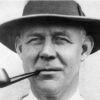
People who like this sort of thing will find this the sort of thing they like.
Abraham Lincoln (1809–1865) American lawyer, politician, US President (1861–65)
(Attributed)
One of the earliest references to something like this was in an 1863 newspaper ad for Lincoln’s favorite humorist, Artemus Ward, that included this faux testimonial (possibly written by Ward): “I have never heard any of your lectures, but from what I can learn I should say that for people who like the kind of lectures you deliver, they are just the kind of lectures such people like. Yours respectfully, O. Abe.”
Quoted in G.W.E. Russell, Collections and Recollections, ch. 30 (1898), regarding “an unreadably sentimental book.”
According to Anthony Gross, Lincoln’s Own Stories (1902), Lincoln’s was speaking to Robert Dale Owen, who had insisted on reading to Lincoln a long manuscript on spiritualism. "Well, for those who like that sort of thing, I should think it is just about the sort of thing they would like."
In Emanual Hertz, ed., "Father Abraham," Lincoln Talks: A Biography in Anecdote (1939), the response was to a young poet asking him about his newly published poems.
More discussion of this quotation: Ralph Keyes, The Quote Verifier.

Never judge someone by who he’s in love with; judge him by his friends. People fall in love with the most appalling people. Take a cool, appraising glance at his pals.
Cynthia Heimel (1947–2018) American feminist, humorist, writer
But Enough about You (1986)
(Source)
A "Sister Soignée" quote.

No man is a failure who is enjoying life.
William Feather (1889–1981) American publisher, author
(Attributed)
Widely attributed to Feather (e.g. Laurence Peter, Peter's Quotations (1977)), but no citation to be found online. A particularly common quote (usually without attribution) in school yearbooks, collections of wisdom / happiness quotations, etc.The earliest use of it that I can find is as anonymous column filler in The Deaf-Mutes' Journal, Vol. 61, No. 50 (1932-12-15).
A variant adds "No man is a success who isn't."