

But every man is more than just himself; he also represents the unique, the very special and always significant and remarkable point at which the world’s phenomena intersect, only once in this way and never again. That is why every man’s story is important, eternal, sacred; that is why every man, as long as he lives and fulfills the will of nature, is wondrous, and worthy of every consideration.
Herman Hesse (1877–1962) German-born Swiss poet, novelist, painter
Demian (1919)
Quotations by:
Hesse, Herman
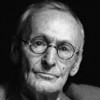
I wanted to try to live in accord with the promptings which came from my true self. Why is that so difficult?
Herman Hesse (1877–1962) German-born Swiss poet, novelist, painter
Demian, ch. 3 (1919) [tr. Roloff and Lebeck (1965)]
If you hate a person, you hate something in him that is part of yourself. What isn’t part of ourselves doesn’t disturb us.
Herman Hesse (1877–1962) German-born Swiss poet, novelist, painter
Demian, ch. 6 (1919)
Young people have many pleasures and many sorrows, because they only have themselves to think of, so every wish and every notion assume importance; every pleasure is tasted to the full, but also every sorrow ….
Herman Hesse (1877–1962) German-born Swiss poet, novelist, painter
Gertrude (1910) [tr. H. Rosner]
Man’s life seems to me like a long, weary night that would be intolerable if there were not occasionally flashes of light, the sudden brightness of which is so comforting and wonderful, that the moments of their appearance cancel out and justify the years of darkness.
Herman Hesse (1877–1962) German-born Swiss poet, novelist, painter
Gertrude (1910) [tr. H. Rosner]
We cannot evade life’s course, but we can school ourselves to be superior to fortune and also to look unflinchingly upon the most painful things.
Herman Hesse (1877–1962) German-born Swiss poet, novelist, painter
Gertrude (1910) [tr. H. Rosner]
That’s the way it is when you love. It makes you suffer, and I have suffered much in the years since. But it matters little that you suffer, so long as you feel alive with a sense of the close bond that connects all living things, so long as love does not die!
Herman Hesse (1877–1962) German-born Swiss poet, novelist, painter
Peter Camenzind (1904)
Nothing makes the multitude angrier than when someone forces them to change their opinion of him.
Herman Hesse (1877–1962) German-born Swiss poet, novelist, painter
Reflections, #100 [ed. V. Michels (1974)]
Those that cannot think or take responsibility for themselves need, and clamor for, a leader.
Herman Hesse (1877–1962) German-born Swiss poet, novelist, painter
Reflections, #106 [ed. Michels (1974)]
A man who is “ill-adjusted to the world” is always on the point of finding himself. One who is adjusted to the world neer finds himself, but gets to be a cabinet minister.
Herman Hesse (1877–1962) German-born Swiss poet, novelist, painter
Reflections, #149 [ed. Michels (1974)]
No man can go too far in independence or in adaptation with impunity.
Herman Hesse (1877–1962) German-born Swiss poet, novelist, painter
Reflections, #245 [ed. Michels (1974)]
Faith and doubt go hand in hand, they are complementaries. One who never doubts will never truly believe.
Herman Hesse (1877–1962) German-born Swiss poet, novelist, painter
Reflections, #291 (1974) [ed. V. Michels]
Soft is stronger than hard, water than rock, love than violence.
Herman Hesse (1877–1962) German-born Swiss poet, novelist, painter
Reflections, #363 [ed. Michels (1974)]
Any attempt to replace the personal conscience by a collective conscience does violence to the individual and is the first step toward totalitarianism.
Herman Hesse (1877–1962) German-born Swiss poet, novelist, painter
Reflections, ch. 32 [ed. Volker Michels (1974)]
Most people are like a falling leaf that drifts and turns in the air, flutters, and falls to the ground. But a few others are like stars which travel one defined path: no wind reaches them, they have within themselves their guide and path.
Herman Hesse (1877–1962) German-born Swiss poet, novelist, painter
Siddhartha, ch 2 “Amongst the People” (1922) [tr. Rosner (1951)]
Learn what is to be taken seriously and laugh at the rest.
Herman Hesse (1877–1962) German-born Swiss poet, novelist, painter
Steppenwolf (1927) [tr. Creighton, rev. Milleck (1963)]
(Source)
Now the bourgeois treasures nothing more highly than the self (rudimentary as his may be). And so at the cost of intensity, he achieves his own preservation and security. His harvest is a quiet mind which he prefers to being possessed by God, as he does comfort to pleasure, convenience to liberty, and a pleasant temperature to that deathly inner consuming fire. The bourgeois is consequently by nature a creature of weak impulses; anxious, fearful of giving himself away and easy to rule. Therefore, he has substituted majority for power, law for force, and the polling booth for responsibility.
[Der Bürger nun schätzt nichts höher als das Ich (ein nur rudimentär entwickeltes Ich allerdings). Auf Kosten der Intensität also erreicht er Erhaltung und Sicherheit, statt Gottbesessenheit erntet er Gewissensruhe, statt Lust Behagen, statt Freiheit Bequemlichkeit, statt tödlicher Glut eine angenehme Temperatur. Der Bürger ist deshalb seinem Wesen nach ein Geschöpf von schwachem Lebensantrieb, ängstlich, jede Preisgabe seiner selbst fürchtend, leicht zu regieren. Er hat darum an Stelle der Macht die Majorität gesetzt, an Stelle der Gewalt das Gesetz, an Stelle der Verantwortung das Abstimmungsverfahren.]
Herman Hesse (1877–1962) German-born Swiss poet, novelist, painter
Steppenwolf, “Treatise of the Steppenwolf,” ch. 2 (1927) [tr Breighton (1929)]
(Source)
Usually paraphrased down to:The bourgeois prefers comfort to pleasure, convenience to liberty, and a pleasant temperature to the deathly inner consuming fire.
(Source (German)). Other translation:Now the bourgeois values nothing higher than the ego (an only rudimentarily developed ego, to be sure). Thus at the expense of intensity he achieves preservation and security; instead of divine possession he reaps peace of mind, instead of pleasure, comfort, instead of freedom, convenience, instead of deadly heat a pleasant temperature. The bourgeois is therefor by nature a creature of weak life impulse, anxious, fearful of every expenditure of himself, easy to rule. Therefore he has put the majority in the place of power, in the place of power the law, in the place of accountability the ballot box.
[tr. Wayne (2010)]
Courage has need of reason, but it is not reason’s child; it springs from deeper strata.
[Der Mut bedarf der Vernunft, aber er ist nicht ihr Kind, er kommt aus tieferen Schichten.]
Herman Hesse (1877–1962) German-born Swiss poet, novelist, painter
Letter to Herrn K. Sch. (9 Jan 1951)
(Source)
Extracted as an aphorism in Reflections, #129 (1974). The source letter can be foumd in Briefe, Zweite erweiterte Ausgabe [Letters, Second Expanded Edition] (1964).