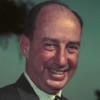
The anatomy of patriotism is complex. But surely intolerance and public irresponsibility cannot be cloaked in the shining armor of rectitude and righteousness. Nor can the denial of the right to hold ideas that are different — the freedom of man to think as he pleases. To strike freedom of the mind with the fist of patriotism is an old and ugly subtlety.
Adlai Stevenson II (1900–1965) American politician, diplomat, statesman
Speech (1952-08-27), “The Nature of Patriotism,” American Legion Convention, Madison Square Garden, New York City
(Source)
Quotations about:
irresponsibility
Note not all quotations have been tagged, so Search may find additional quotes on this topic.
INCORPORATION, n. The act of uniting several persons into one fiction called a corporation, in order that they may be no longer responsible for its actions. A, B and C are a corporation. A robs, B steals and C (it is necessary that there be one gentleman in the concern) cheats. It is a plundering, thieving, swindling corporation. But A, B and C, who have jointly determined and severally executed every crime of the corporation, are blameless. It is wrong to mention them by name when censuring their acts as a corporation, but right when praising.
Ambrose Bierce (1842–1914?) American writer and journalist
“Incorporation,” “Devil’s Dictionary” column, San Francisco Wasp (1885-10-03)
(Source)
Not collected in later books.

MRS. DARLING: (from the window) Peter, where are you? Let me adopt you too. (She is the loveliest age for a woman, but too old to see PETER clearly.)
PETER: Would you send me to school?
MRS. DARLING: (obligingly) Yes.
PETER: And then to an office?
MRS. DARLING: I suppose so.
PETER: Soon I should be a man?
MRS. DARLING: Very soon.
PETER: (passionately) I don’t want to go to school and learn solemn things. No one is going to catch me, lady, and make me a man. I want always to be a little boy and to have fun.
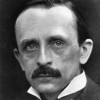
J. M. Barrie (1860–1937) Scottish novelist and dramatist [James Matthew Barrie]
Peter Pan, Act 5 (1904, pub. 1928)
(Source)
In Barrie's novelization, Peter and Wendy, ch. 17 "When Wendy Grew Up" (1911), this is rendered:Mrs. Darling came to the window, for at present she was keeping a sharp eye on Wendy. She told Peter that she had adopted all the other boys, and would like to adopt him also.
“Would you send me to school?” he inquired craftily.
“Yes.”
“And then to an office?”
“I suppose so.”
“Soon I should be a man?”
“Very soon.”
“I don’t want to go to school and learn solemn things,” he told her passionately. “I don’t want to be a man. O Wendy’s mother, if I was to wake up and feel there was a beard!”
“Peter,” said Wendy the comforter, “I should love you in a beard;” and Mrs. Darling stretched out her arms to him, but he repulsed her.
“Keep back, lady, no one is going to catch me and make me a man.”
Miss Manners is amazed at the number of otherwise gentle souls who turn nasty when they are driving. And they all suffer from the wonderful, ostrich-like delusion that they cannot be identified because they are safely inside their cars. It seems silly to her to have to say what good driving manners are. They are the same as the simplest, most obvious of non-driving manners, except that each person is surrounded by thousands of dollars of treacherous metal.
Judith Martin (b. 1938) American author, journalist, etiquette expert [a.k.a. Miss Manners]
“Miss Manners,” syndicated column (1981-03-29)
(Source)

However, it is my judgment in these things that when you see something that is technically sweet, you go ahead and do it and you argue about what to do about it only after you have had your technical success. That is the way it was with the atomic bomb.
J. Robert Oppenheimer (1904–1967) American theoretical physicist, "Father of the Atomic Bomb" [Julius Robert Oppenheimer]
“In the matter of J. Robert Oppenheimer,” testimony transcript, US Atomic Energy Commission, Personnel Security Board (1954-04-13)
(Source)

Benevolence is a natural instinct of the human mind. When A sees B in grievous distress, his conscience always urges him to entreat C to help him.
Sydney Smith (1771–1845) English clergyman, essayist, wit
(Attributed)
(Source)
In Hesketh Pearson, The Smith of Smiths, ch. 10 (1934).

Misbehavior and punishment are not opposites that cancel each other; on the contrary, they breed and reinforce each other. Punishment does not deter misconduct. It makes the offender more skillful in escaping detection. When children are punished they resolve to be more careful, not more obedient or responsible.
Haim Ginott (1922–1973) Israeli-American school teacher, child psychologist, psychotherapist [b. Haim Ginzburg]
Between Parent and Child: Revised and Updated Edition, ch. 5 “Discipline” (2003 ed.) [with A. Ginott and H. W. Goddard]
(Source)
The conflict between what one is and who one is expected to be touches all of us. And sometimes, rather than reach for what one could be, we choose the comfort of the failed role, preferring to be the victim of circumstance, the person who didn’t have a chance.
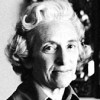
Merle Shain (1935–1989) Canadian journalist and author
Hearts That We Broke Long Ago, Part 3, ch. 7 (1983)
(Source)

Folly is a child of power. We all know, from unending repetitions of Lord Acton’s dictum, that power corrupts. We are less less aware that it breeds folly: that the power to command frequently causes failure to think: that the responsibility of power often fades as its exercise augments.
It is easy to dodge our responsibilities, but we cannot dodge the consequences of dodging our responsibilities.
Josiah Stamp (1880–1941) English industrialist, economist, statistician, banker
(Attributed)
First attributed to Stamp in "Gems of Thought," Kingston Daily Freeman [New York] (3 Jan 1928). More discussion here.
In my defense, I was left unsupervised.
Sig Lines

There is also this: when we renounce the self and become part of a compact whole, we not only renounce personal advantage but are also rid of personal responsibility. There is no telling to what extremes of cruelty and ruthlessness a man will go when he is freed from the fears, hesitations, doubts and the vague stirrings of decency that go with individual judgement. When we lose our individual independence in the corporateness of a mass movement, we find a new freedom — freedom to hate, bully, lie, torture, murder and betray without shame and remorse. Herein undoubtedly lies part of the attractiveness of a mass movement.
Eric Hoffer (1902–1983) American writer, philosopher, longshoreman
True Believer: Thoughts on the Nature of Mass Movements, Part 3, ch. 14, § 77 (3.14.77) (1951)
(Source)
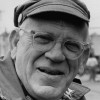
They were careless people, Tom and Daisy — they smashed up things and creatures and then retreated back into their money or their vast carelessness, or whatever it was that kept them together, and let other people clean up the mess they had made.
F. Scott Fitzgerald (1896–1940) American writer [Francis Scott Key Fitzgerald]
The Great Gatsby, ch. 9 (1925)
Don’t say that he’s hypocritical,
Say rather that he’s apolitical.
“Once the rockets are up, who cares where they come down?
That’s not my department,” says Wernher von Braun.Tom Lehrer (b. 1928) American mathematician, satirist, songwriter
“Wernher Von Braun,” That Was the Year That Was (1965)
The central belief of every moron is that he is the victim of a mysterious conspiracy against his common rights and true desserts. He ascribes all his failure to get on in the world, all of his congenital incapacity and damnfoolishness, to the machinations of werewolves assembled in Wall Street, or some other such den of infamy. If these villains could be put down, he holds, he would at once become rich, powerful and eminent. Nine politicians out of every ten, of whatever party, live and have their being by promising to perform
this putting down. In brief, they are knaves who maintain themselves by preying on the idiotic vanities and pathetic hopes of half-wits.H. L. Mencken (1880–1956) American writer and journalist [Henry Lewis Mencken]
Baltimore Evening Sun (15 Jun 1936)
People everywhere enjoy believing things that they know are not true. It spares them the ordeal of thinking for themselves and taking the responsibility for what they know.
Brooks Atkinson (1894–1984) American drama critic and journalist
Once Around the Sun, “February 2” (1951)
(Source)
CALVIN: Do you believe our destinies are determined by the stars?
HOBBES: Nah.
CALVIN: Oh, I do.
HOBBES: Really? How come?
CALVIN: Life’s a lot more fun when you’re not responsible for your actions.


No snowflake in an avalanche ever feels responsible.
[Żaden płatek śniegu nie czuje się odpowiedzialny za lawinę.]
Stanislaw Lec (1909–1966) Polish aphorist, poet, satirist
More Unkempt Thoughts [Myśli nieuczesane nowe] (1964) [tr. Gałązka (1969)]
(Source)
Another translation: "Each snowflake in an avalanche pleads not guilty."
More discussion of this quotation here: No Snowflake in an Avalanche Ever Feels Responsible – Quote Investigator.