We readily acknowledge in others an advantage in courage, in bodily strength, in experience, in agility, in beauty; but an advantage in judgment we yield to no one. And the arguments that come from simple natural reasoning in others, we think we would have found if we had merely glanced in that direction.
[Nous reconnoissons aysément és autres, l’advantage du courage, de la force corporelle, de l’experience, de la disposition, de la beauté: mais l’advantage du jugement; nous ne le cedons à personne: Et les raisons qui partent du simple discours naturel en autruy, il nous semble qu’il n’a tenu qu’à regarder de ce costé-là, que nous ne les ayons trouvees.]
Michel de Montaigne (1533–1592) French essayist
Essays, Book 2, ch. 17 (2.17), “Of Presumption [De la Presomption]” (1578) [tr. Frame (1943)]
(Source)
This essay was in the 1st (1580) edition, as was this passage (Screech identifies parts of the passage as being part of the final (1595) edition).
See La Rochefoucauld (1666), Franklin (1745).
(Source (French)). Other translations:We easily know in others, the advantage of courage, of bodily strength, of experience, of disposition and of beautie, but we never yeelde the advantage of judgement to any body: And the reasons, which part from the simple naturall discourse in others, we thinke, that had we but looked that way, we had surely found them.
[tr. Florio (1603)]We readily enough confess an advantage of courage, strength, experience, geod-nature, and beauty in others; but an advantage in judgment we yield to none, and the reasons that simply proceed from the natural sense of others, we think, if we had but turned our thoughts that way, we should ourselves have found them out.
[tr. Cotton (1686)]We easily enough confess in others an advantage of courage, strength, experience, activity, and beauty, but an advantage in judgment we yield to none; and the reasons that proceed simply from the natural conclusions of others, we think, if we had but turned our thoughts that way, we should ourselves have found out as well as they.
[tr. Cotton/Hazlitt (1877)]We easily recognise in others superiority of courage, of bodily strength, of experience, of activity, of beauty, of rank; but superiority of judgement we concede to no one; and the reasonings that proceed from simple natural intelligence in another, it seems to us that, had we but looked in that direction, we should have found them.
[tr. Ives (1925)]We readily recognize in others a superiority in courage, physical strength, experience, agility, or beauty. But a superior judgement we concede to nobody. And we think that we could ourselves have discovered the reasons which occur naturally to others, if only we had looked in the same direction.
[tr. Cohen (1958)]In others we readily acknowledge superior courage, physical strength, experience, agility and beauty: but superior judgement we concede to none. And such arguments in another as derive from pure inborn wit we think that we would have discovered too if only we had looked at things from the same angle.
[tr. Screech (1987)]
Quotations about:
blind spot
Note not all quotations have been tagged, so Search may find additional quotes on this topic.
Only a child sees things with perfect clarity, because it hasn’t developed all those filters which prevent us from seeing things that we don’t expect to see.
Douglas Adams (1952–2001) English author, humorist, screenwriter
Dirk Gently No. 1, Dirk Gently’s Holistic Detective Agency, ch. 23 [Dirk] (1987)
(Source)

Everybody has something about which they are proud to be broad-minded but they also have other things about which you would be wasting your breath if you tried to convince them that they were a bigot.
Ogden Nash (1902–1971) American poet
“Seeing Eye to Eye is Believing,” Good Intentions (1942)
(Source)
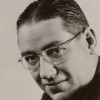
Although men are accused for not knowing their own weakness, yet perhaps as few know their own strength. It is in men as in soils, where sometimes there is a vein of gold which the owner knows not of.
Jonathan Swift (1667–1745) English writer and churchman
Thoughts on Various Subjects (1706)
(Source)
Jenneth turned a blind eye to his part in their incipient suffering, a privilege that came with never really having suffered.
Emily Kate (E. K.) Johnston (contemp.) Canadian author
Ahsoka (2016)

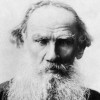
Slavery was contrary to all the moral principles advocated by Plato and Aristotle, yet neither of them saw this because to renounce slavery would have meant the collapse of the life they were living.
Leo Tolstoy (1828–1910) Russian novelist and moral philosopher
The Kingdom of God Is Within You, ch. 6 (1893) [tr. Maude (1936)]
O wad some Pow’r the giftie gie us
To see oursels as others see us!
It wad frae mony a blunder free us,
An’ foolish notion ….Robert Burns (1759–1796) Scottish national poet
“To a Louse,” l.43-46 (1786)
The poem is reprinted in various forms and anglicizations of Burns' Scottish, e.g.,O wad some Power the giftie gie us
To see oursels as ithers see us!
It wad frae monie a blunder free us
An foolish notionO would some Power the gift to give us
To see ourselves as others see us!
It would from many a blunder free us,
And foolish notion: