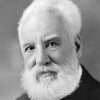
We readily acknowledge in others an advantage in courage, in bodily strength, in experience, in agility, in beauty; but an advantage in judgment we yield to no one. And the arguments that come from simple natural reasoning in others, we think we would have found if we had merely glanced in that direction.
[Nous reconnoissons aysément és autres, l’advantage du courage, de la force corporelle, de l’experience, de la disposition, de la beauté: mais l’advantage du jugement; nous ne le cedons à personne: Et les raisons qui partent du simple discours naturel en autruy, il nous semble qu’il n’a tenu qu’à regarder de ce costé-là, que nous ne les ayons trouvees.]
Michel de Montaigne (1533–1592) French essayist
Essays, Book 2, ch. 17 (2.17), “Of Presumption [De la Presomption]” (1578) [tr. Frame (1943)]
(Source)
This essay was in the 1st (1580) edition, as was this passage (Screech identifies parts of the passage as being part of the final (1595) edition).
See La Rochefoucauld (1666), Franklin (1745).
(Source (French)). Other translations:We easily know in others, the advantage of courage, of bodily strength, of experience, of disposition and of beautie, but we never yeelde the advantage of judgement to any body: And the reasons, which part from the simple naturall discourse in others, we thinke, that had we but looked that way, we had surely found them.
[tr. Florio (1603)]We readily enough confess an advantage of courage, strength, experience, geod-nature, and beauty in others; but an advantage in judgment we yield to none, and the reasons that simply proceed from the natural sense of others, we think, if we had but turned our thoughts that way, we should ourselves have found them out.
[tr. Cotton (1686)]We easily enough confess in others an advantage of courage, strength, experience, activity, and beauty, but an advantage in judgment we yield to none; and the reasons that proceed simply from the natural conclusions of others, we think, if we had but turned our thoughts that way, we should ourselves have found out as well as they.
[tr. Cotton/Hazlitt (1877)]We easily recognise in others superiority of courage, of bodily strength, of experience, of activity, of beauty, of rank; but superiority of judgement we concede to no one; and the reasonings that proceed from simple natural intelligence in another, it seems to us that, had we but looked in that direction, we should have found them.
[tr. Ives (1925)]We readily recognize in others a superiority in courage, physical strength, experience, agility, or beauty. But a superior judgement we concede to nobody. And we think that we could ourselves have discovered the reasons which occur naturally to others, if only we had looked in the same direction.
[tr. Cohen (1958)]In others we readily acknowledge superior courage, physical strength, experience, agility and beauty: but superior judgement we concede to none. And such arguments in another as derive from pure inborn wit we think that we would have discovered too if only we had looked at things from the same angle.
[tr. Screech (1987)]
Quotations about:
wits
Note not all quotations have been tagged, so Search may find additional quotes on this topic.
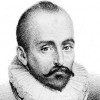
Conflict acting on intelligence creates imagination. Faced with conflict, creatures are forced to imagine what will happen, where the next threat will come from. If there has never been conflict, imagination never develops. Wits arise in answer to danger, to pain, to tragedy. No one ever got smarter eating easy apples.

Alas, how right the ancient saying is:
We, who are old, are nothing else but noise
And shape. Like mimicries of dreams we go,
And have no wits, although we think us wise.
[φεῦ φεῦ, παλαιὸς αἶνος ὡς καλῶς ἔχει·
γέροντες οὐδέν ἐσμεν ἄλλο πλὴν ψόφος
καὶ σχῆμ’, ὀνείρων δ’ ἕρπομεν μιμήματα·
νοῦς δ’ οὐκ ἔνεστιν, οἰόμεσθα δ’ εὖ φρονεῖν.]Euripides (485?-406? BC) Greek tragic dramatist
Æolus [Αἴολος], frag. 25 (TGF) [tr. Bowra (1938)]
(Source)
Nauck frag. 25, Barnes frag. 56, Musgrave frag. 18. (Source (Greek)). Other translations:How true this antient saying; we old men
Are nought but trouble, and an empty shadow,
We crawl about, the semblances of dreams.
And of our mental faculties deprived.
Still fancy we with wisdom are endued.
[tr. Wodhull (1809)]Oh, alas, how true the ancient saying is: we old men are nothing but noise and mere shapes, and we move as imitations of dreams; there is no intelligence in us, yet we think we have good sense.
[tr. Collard & Cropp (2008)]Alas, the ancient proverb holds well:
We old men are nothing other than a sound
and an image, lurking imitations of dreams.
We have no mind and but we think we know how to think well.
[tr. @sentantiq (2014)]
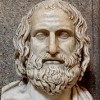
There cannot be mental atrophy in any person who continues to observe, to remember what he observes, and to seek answers for his unceasing hows and whys about things.
Alexander Graham Bell (1847–1922) Scottish-American scientist, inventor, engineer
(Attributed)
Comment to a reporter a few months before he died, as quoted in the Alexander Graham Bell Family Papers at the Library of Congress.