

That thro certain Humours or Passions, and from Temper merely, a Man may be completely miserable; let his outward Circumstances be ever so fortunate.
Anthony Cooper, 3rd Earl of Shaftesbury (1671–1713) English politician and philosopher
“An Inquiry Concerning Virtue, or Merit”
Quotations by:
Shaftesbury, Earl of
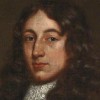
Truth is the most powerful thing in the world, since even fiction itself must be governed by it, and can only please by its resemblance.
Anthony Cooper, 3rd Earl of Shaftesbury (1671–1713) English politician and philosopher
Characteristicks of Men, Manners, Opinions, Times, Vol. 1 “A Letter Concerning Enthusiasm” (1711)
We may have an excellent Ear in Musick, without being able to perform in any kind. We may judge well of Poetry, without being Poets, or possessing the least of a Poetick Vein: But we can have no tolerable Notion of Goodness, without being tolerably good.
Anthony Cooper, 3rd Earl of Shaftesbury (1671–1713) English politician and philosopher
Characteristicks of Men, Manners, Opinions, Times, Vol. 1, “A Letter Concerning Enthusiasm” (1711)
All Politeness is owing to Liberty. We polish one another, and rub off our Corners and rough Sides by a sort of amicable Collision. To restrain this, is inevitably to bring a Rust upon Men’s Understandings.
Anthony Cooper, 3rd Earl of Shaftesbury (1671–1713) English politician and philosopher
Characteristicks of Men, Manners, Opinions, Times, Vol. 1, “Sensus Communis” (1711)
True courage … has so little to do with Anger, that there lies always the strongest Suspicion against it, where this Passion is highest. The true Courage is the cool and calm. The bravest of Men have the least of a brutal bullying Insolence; and in the very time of Danger are found the most serene, pleasant, and free. Rage, we know, can make a Coward forget himself and fight. But what is done in Fury, or Anger, can never be plac’d to the account of Courage.
Anthony Cooper, 3rd Earl of Shaftesbury (1671–1713) English politician and philosopher
Characteristicks of Men, Manners, Opinions, Times, Vol. 1, “Sensus Communis” (1711)
‘Tis the hardest thing in the world to be a good Thinker, without being a strong Self-Examiner.
Anthony Cooper, 3rd Earl of Shaftesbury (1671–1713) English politician and philosopher
Characteristicks of Men, Manners, Opinions, Times, Vol. 1, “Soliloquy: or Advice to an Author” (1711)
‘Tis not Wit merely, but a Temper which must form the Well-Bred Man. In the same manner, ’tis not a Head merely, but a Heart and Resolution which must compleat the real Philosopher.
Anthony Cooper, 3rd Earl of Shaftesbury (1671–1713) English politician and philosopher
Characteristicks of Men, Manners, Opinions, Times, Vol. 2 “Miscellany III” (1711)
For if he wou’d try effectually to acquire the real Science or TASTE of Life; he wou’d certainly discover, “That a RIGHT MIND, and GENEROUS AFFECTION, had more Beauty and Charm, than all other Symmetrys in the World besides.”
Anthony Cooper, 3rd Earl of Shaftesbury (1671–1713) English politician and philosopher
Characteristicks of Men, Manners, Opinions, Times, Vol. 3, “Miscellany III,” ch. 3 (1711)
(Source)
‘Twas the saying of an ancient Sage, “That Humour was the only Test of Gravity, and Gravity of Humour. For a Subject which would not bear Raillery is suspicious; and a Jest which would not bear a serious Examination is certainly false Wit.”
Anthony Cooper, 3rd Earl of Shaftesbury (1671–1713) English politician and philosopher
Characteristics, Treatise 2 “Freedom of Wit and Humour,” Part 1, sec. 5 (1709)
(Source)
Shaftesbury, according to his footnote, is paraphrasing from Aristotle, Rhetoric, Book 3, ch. 18, 1419b, in turn quoting Gorgias Leontinus. The phrase is sometimes incorrectly attributed directly to Aristotle. The Greek here is:δεῖν ἔφη Γοργίας τὴν μὲν σπουδὴν διαφθείρειν τῶν ἐναντίων γέλωτι, τὸν δὲ γέλωτα σπουδῇ
The Latin translation of the Greek is "Seria risu, risum seriis discutere" ("In arguing one should meet serious pleading with humor, and humor with serious pleading"). Shaftesbury's second sentence is actually his own commentary. Lord Chesterfield, in a letter to his son (1752-02-06), renders down the Latin as "Ridicule is the best test of truth" (Chesterfield disagrees with the sentiment).
Shaftesbury actually misuses the quotation. In context Gorgias is offering rhetorical advice in argument, to meet seriousness with humor, and humor with seriousness, not to use humor as a test of the argument.
Shaftesbury used to this theme on a number of occasions. Elsewhere in the same Treatise, Part 1, sec. 1 (1709):Truth, 'tis supposed, may bear all lights; and one of those principal lights, or natural mediums, by which things are to be viewed, in order to a thorough recognition, is ridicule itself, or that manner of proof by which we discern whatever is liable to just raillery in any subject.
In Characteristics, Treatise 1 "Enthusiasm," sec. 2 (1708):How comes it to pass, then, that we appear such cowards in reasoning, and are so afraid to stand the test of ridicule? O! say we, the subjects are too grave. Perhaps so: but let us see first whether they are really grave or no: for in the manner we may conceive them they may, peradventure, be very grave and weighty in our imagination, but very ridiculous and impertinent in their own nature.
Thomas Carlyle in Foreign Review, No. 6, "Voltaire" (1829), lacking access to the Internet, noted:We have oftener than once endeavoured to attach some meaning to that aphorism, vulgarly imputed to Shaftesbury, which however we can find nowhere in his works, that "ridicule is the test of truth."
Carlyle also disagreed with the sentiment, on the grounds that finding something humorous is subjective, and there is no reason to think that a subjective reaction defines the truth of the matter.